
Tabelog 100 #19
Our verdict
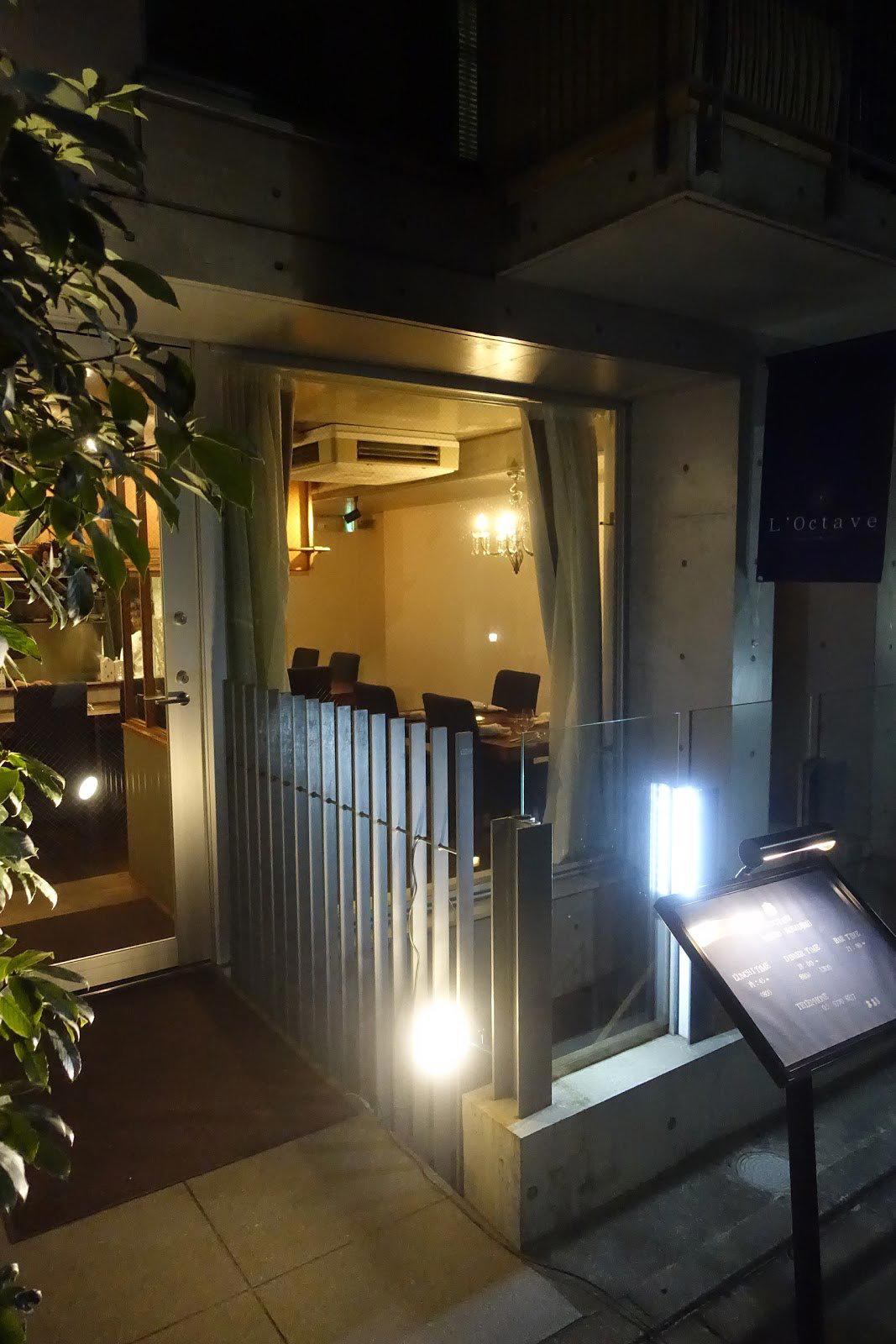
Located in Sendagaya, Shibuya, ロクターヴ ハヤト コバヤシ operates at the quieter edge of Tokyo's high-end dining scene, where the format is structured around a progressive tasting sequence rather than à la carte choice. The address places it outside the central Ginza-Roppongi corridor, in a residential pocket that attracts a specific, destination-minded clientele. Visitors should confirm current hours and booking arrangements directly before planning a visit.

Pearl is the En Primeur Club membership app, where members save venues, book tables and use the concierge.
The menu
What to order
- Roasted Gunma black wagyu
- Kuro Awabi steak
- Beef Tartare
Sendagaya and the Counter Dining Tradition
Tokyo's premium tasting-menu restaurants have, over the past decade, distributed themselves unevenly across the city. Ginza and Roppongi still concentrate the largest share of high-profile counters, but a secondary tier has taken shape in quieter residential neighbourhoods: Yoyogi, Tomigaya, and the Sendagaya stretch of Shibuya. These addresses suit a particular format of dining, one where the physical setting is modest by design, capacity is deliberately small, and the progression of courses carries the full weight of the experience. ロクターヴ ハヤト コバヤシ, located in Sendagaya's low-rise 3-chome block, belongs to that secondary tier.
The shift away from landmark-address dining reflects a broader pattern across Tokyo's upper-middle and premium tasting-menu segment. Venues in established districts price partly against their real estate overhead; those in quieter postcodes can direct more of their operating logic toward the food itself. Sendagaya, sandwiched between Shinjuku and Harajuku, carries none of the ceremonial restaurant-district associations of Ginza, which is precisely the point for the restaurants that have chosen it.
The Architecture of a Progressive Tasting Menu
In Tokyo's structured tasting format, the meal is rarely a collection of dishes. It is a sequence, and the sequence is the argument. The opening courses establish a register, typically something light and high-acid, before the kitchen builds toward richer, more technically demanding preparations in the middle third. The final savoury courses anchor the progression before the transition into sweets, which in the better kitchens function as a deliberate deceleration rather than an afterthought.
This narrative arc has roots in kaiseki's seasonal logic and in the French tasting-menu tradition, and Tokyo now hosts counters that draw on both. RyuGin works the kaiseki lineage with high technical precision; L'Effervescence and Sézanne operate firmly within the French tradition but source with Japanese discipline; Crony sits in a more genre-fluid middle ground. The Kobayashi venue, by its naming convention, signals an eight-part structure, the French word octave suggesting both a musical progression and a specific course count, though the exact format should be confirmed at the time of booking.
That naming logic matters because it frames diner expectation before the meal begins. An announced structure tells guests to think of the experience as a single composed arc rather than a series of individual choices. At the highest tier of Tokyo's tasting-menu market, this framing is standard; at this price and address level, it signals alignment with counters that compete on choreography as much as ingredient quality.
Sendagaya as a Dining Address
Sendagaya 3-chome is a few minutes on foot from Sendagaya Station on the Chuo-Sobu Line, or from Kita-Sando Station on the Fukutoshin Line. The neighbourhood is primarily residential and low-traffic, which gives ground-floor restaurant addresses a different character than the same square footage would have in Minami-Aoyama or Azabu. The MotelIa Brut building at the address is a small-scale mixed-use structure, typical of the area's recent light-commercial development along residential streets.
Dining in this kind of address requires some prior commitment from the guest: you are going specifically rather than passing through. That self-selection tends to shape the room's atmosphere. Compare the walk-in possibility at some Ginza counters, where a last-minute cancellation can seat an opportunistic diner, with the advance-planning required at a venue in this postcode. The Sendagaya address effectively pre-filters for guests who have already decided the meal is worth the effort.
How It Fits the Tokyo High-End Tasting Scene
Tokyo's top-tier French and French-adjacent tasting menus now span a wide range of price and ambition. At the recognised apex, venues like L'Effervescence and Sézanne carry Michelin recognition and book well ahead, with covers limited by counter or small-room design. Below that, a second layer of venues operates with similar format discipline but lower media saturation, which sometimes translates to shorter booking windows and a more local, less tourist-heavy clientele.
For context on where quality signals cluster across Japan's broader premium dining geography: HAJIME in Osaka represents the French-kaiseki synthesis at its most architectural; Gion Sasaki in Kyoto anchors the kaiseki tradition in its historical city; akordu in Nara and Goh in Fukuoka show how regional cities have developed their own structured tasting formats outside the Tokyo-Osaka axis. Within Tokyo itself, Harutaka holds the sushi-counter equivalent of this positioning: a small-seat format with strong lineage and a booking profile that rewards planning.
Internationally, the appetite for small-counter progressive tasting has also shaped restaurants like Atomix in New York City and Le Bernardin, both of which operate with a similarly deliberate relationship between course sequence and diner experience. Tokyo's contribution to this global format is the density and range of its practitioners, from the most awarded rooms to neighbourhood venues like this one that operate with the same structural logic at a more accessible scale.
For further coverage of where Tokyo's French-influenced and structured tasting venues sit relative to each other, the EP Club Tokyo restaurants guide maps the full competitive set across neighbourhoods and price tiers.
Planning Your Visit
Quick reference: ロクターヴ ハヤト コバヤシ, 3-30-9 Sendagaya, Shibuya, Tokyo 151-0051, Japan. Booking and hours: confirm directly.
Frequently asked questions
What's the address for ロクターヴ ハヤト コバヤシ?
ロクターヴ ハヤト コバヤシ is located at Japan, 〒151-0051 Tokyo, Shibuya, Sendagaya, 3 Chome−30−9 モデ リア ブリュット 101, Tokyo.
Why is ロクターヴ ハヤト コバヤシ located in Sendagaya rather than Ginza or Roppongi?
Sendagaya 3-chome, a few minutes from Sendagaya Station on the Chuo-Sobu Line, sits in a quieter Shibuya corridor where rents and foot traffic differ sharply from Ginza's restaurant cluster. Over the past decade, a number of Tokyo's serious tasting-menu kitchens have moved into residential-adjacent neighbourhoods precisely to control costs and format without the pressure of high-visibility locations. the ground-floor unit in a small residential-commercial building signals that audience is reached by reputation rather than passing trade.
What do people recommend at ロクターヴ ハヤト コバヤシ?
The format appears to be a fixed tasting progression rather than an à la carte selection, so there is no single dish to order over another. The sequence itself is the experience. At this type of Sendagaya counter, guests typically follow the kitchen's full menu from first course to last without substitution.
Is ロクターヴ ハヤト コバヤシ reservation-only?
Given the small-scale residential-commercial building on Sendagaya 3-chome and the structured tasting format implied by the venue, walk-ins are almost certainly not accommodated.
What's the signature at ロクターヴ ハヤト コバヤシ?
In Tokyo's structured tasting-menu format, the signature is typically the mid-sequence course where the kitchen's central technique is most clearly expressed. The venue's name references an octave, suggesting an eight-part progression where that central movement falls around courses four or five.
Can ロクターヴ ハヤト コバヤシ accommodate dietary restrictions?
At Tokyo's small tasting-menu counters of this type, the standard practice is to declare restrictions well in advance of arrival, ideally at the time of booking. Last-minute requests at a fixed-progression format are difficult for any kitchen operating with limited covers.
Pricing, Compared
Comparable venues nearby, for context on price, style, and recognition.
| Venue | Cuisine | Price | Awards | Notes |
|---|---|---|---|---|
| ロクターヴ ハヤト コバヤシThis venue (the venue you are viewing) | Modern French Gastronomy | $150–200 | Tabelog 100 #19 | Not listed |
| オー・プロヴァンソー | Classical French Bistro | $100–150 | Not listed | Chiyoda, Classical French Bistro |
| クラージュ | Modern French with Japanese Ingredients | $100–150 | Michelin Plate | Minato, Modern French with Japanese Ingredients |
| 茶禅華 | Classical French Cuisine | Not listed | Not listed | Minato, Classical French Cuisine |
| Air | Modern French with Japanese Ingredients | $50–100 | Not listed | Chūō, Modern French with Japanese Ingredients |
| Comptoir Misago | Cozy French Bistro & Wine Bar | $50–100 | Tabelog 100 #6 | Minato, Cozy French Bistro & Wine Bar |
Recognition history
Dated appearances from independent guides and award organizations, with the underlying list record or original source where available.
Tabelog 100 #19 · No. 19
Tabelog · Tabelog 100 - French - TOKYO - 2025
Continue exploring
More in Tokyo
Restaurants in Tokyo
All restaurants in Tokyo →



Bars in Tokyo
All bars in Tokyo →






Details
- Intimate
- Elegant
- Sophisticated
- Whimsical
- Date Night
- Special Occasion
- Celebration
- Open Kitchen
- Chefs Counter
- Local Sourcing
- Tasting Menu
- Counter Dining
- Wine
Current opening hours
- Monday
- 6–11 PM
- Tuesday
- 6–11 PM
- Wednesday
- 6–11 PM
- Thursday
- 6–11 PM
- Friday
- 6–11 PM
- Saturday
- 12–11 PM
- Sunday
- 12–11 PM
Hours can change for holidays and private events. Last verified .
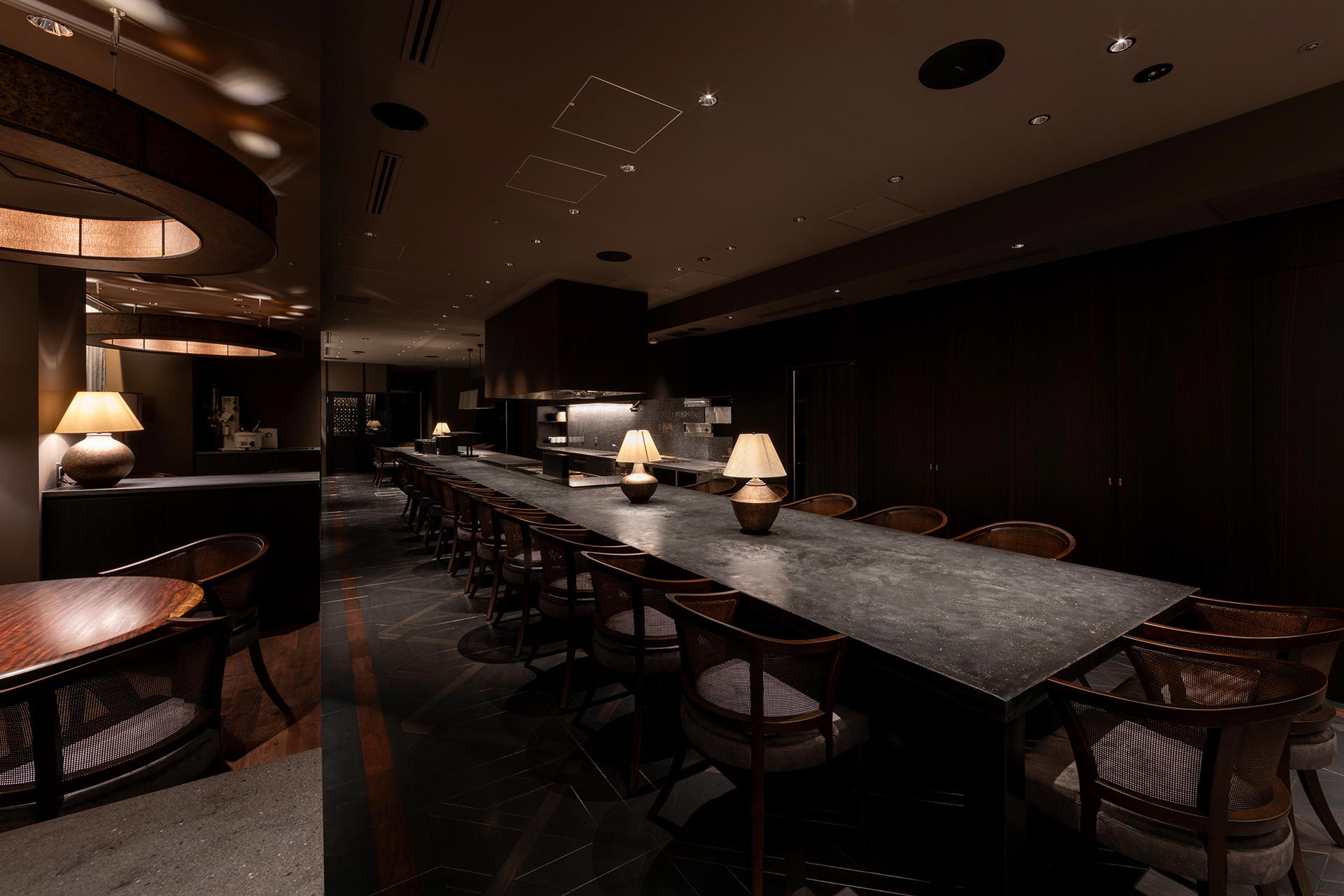
Intimate counter and table setting with open kitchen allowing direct interaction between chef and guests; warm, conversational atmosphere with whimsical plating and presentation.