



Built in 1910 and restored with over 100 textile references and a Pritzker-winning spa by Álvaro Siza Vieira, Vidago Palace holds Leading Hotels of the World membership and a regional Luxury Spa Hotel award. Set in a wooded park roughly one hour from Porto near the historic Chaves thermal springs, its 70 rooms span Edwardian ballrooms and de Gournay-wallpapered suites, with four restaurants, an 18-hole golf course, and a thermal spa program rooted in centuries of use.
Pearl is the En Primeur Club membership app — saves, bookings, and concierge access live there. Same editors, same standards.
- Address
- Parque de Vidago, Apartado 16, 5425-307 Vidago
- Phone
- +351 276 990 920
- Website
- vidagopalace.com
- Directions
- Get directions
 Saves & bookings on Pearl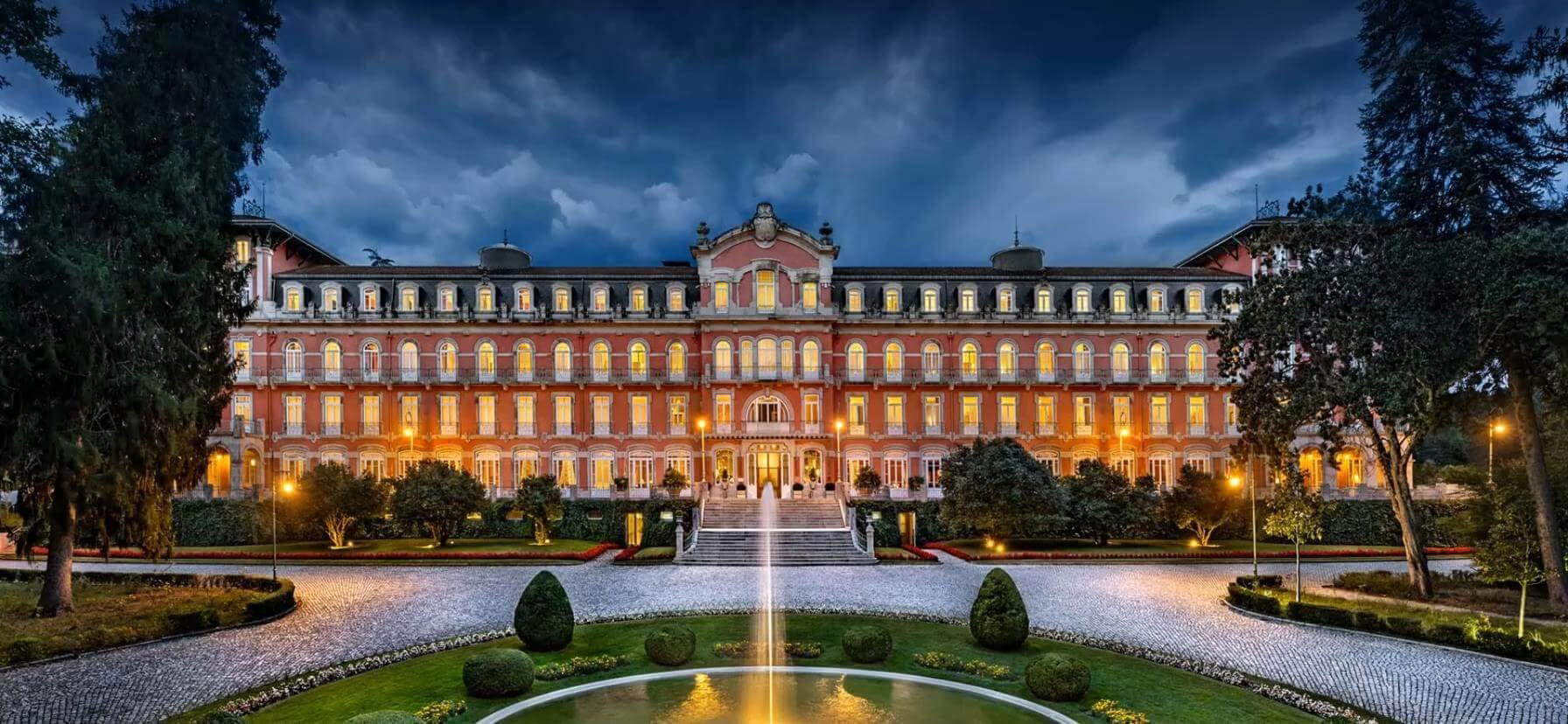
A Belle Époque Palace in Portugal’s Thermal North
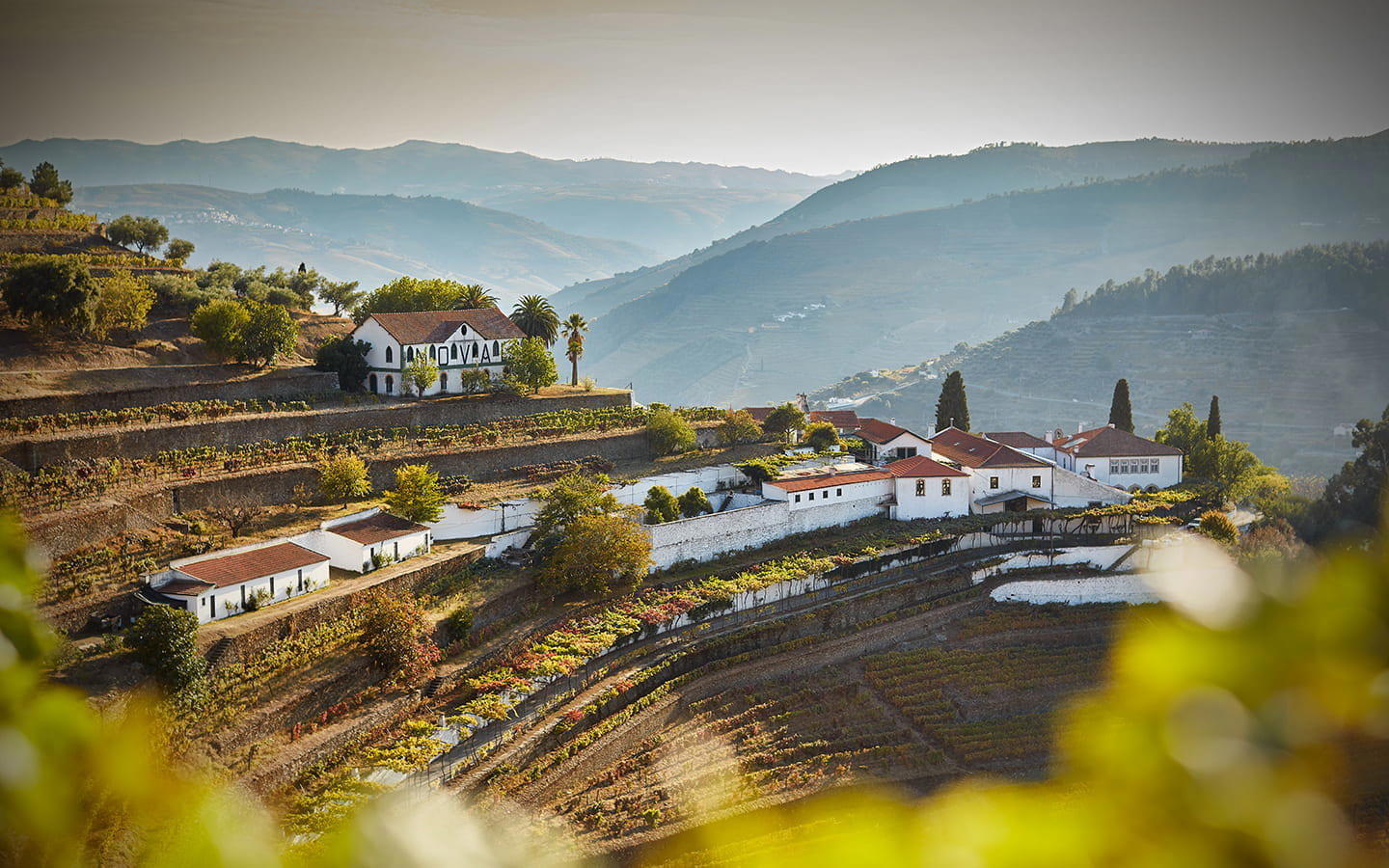
Approaching Vidago Palace through its wooded park, the building reads less like a hotel than a statement of a particular European moment. The Belle Époque facade, completed in 1910 at the close of the Edwardian era, was designed to communicate permanence and social standing. It succeeded. For decades, the property drew the Portuguese elite and European aristocracy to this corner of northern Portugal, roughly an hour from Porto, where the thermal springs near Chaves had been prized for their healing properties since Roman times. The palace closed to fashion, then reopened with its reputation intact. That arc, from Edwardian grand hotel to contemporary luxury resort, is the architectural and cultural argument the building keeps making.
The Design Conversation Between Two Eras
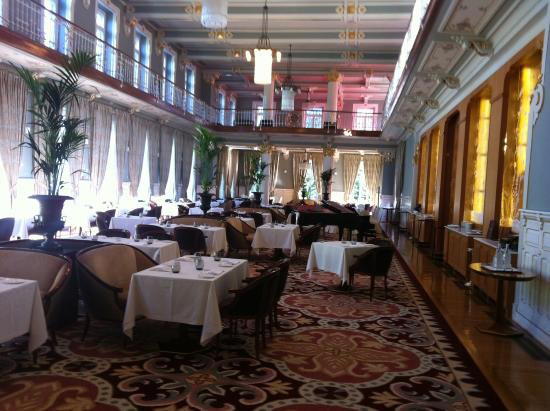
The recent restoration placed the palace in a productive tension with itself. Interior architects José Pedro Lopes Vieira and Diogo Rosa Lã worked to return the original interior language: rich drapery, gleaming marble staircases, stately columns, silk wallpaper, Venetian chandeliers, and floors tiled with colorful mosaics. The brief was fidelity, with more than 100 textile references sourced to reconstruct the warmth and material specificity of the original rooms. Specialist craftsmen were engaged for each finish. The result downstairs is explicitly aristocratic, a version of late Edwardian hospitality that reads as curated archaeology rather than reproduction.
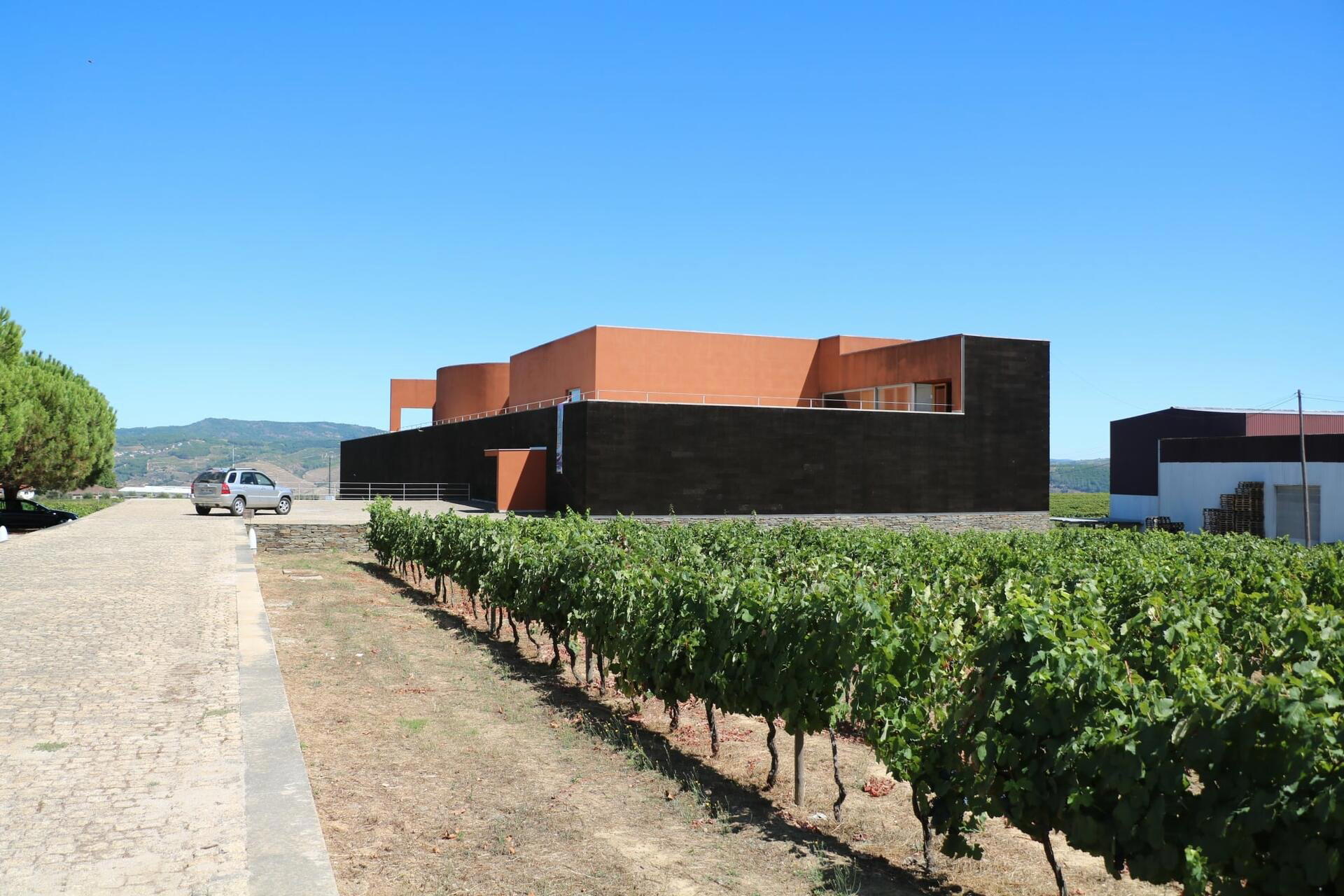
What makes the project architecturally interesting is where it refuses to be consistent. Pritzker Prize-winning architect Álvaro Siza Vieira was commissioned to design the new Spa and Clubhouse, and his response was a deliberate rupture. The spa’s ultramodern structure diverges from the classical architecture of the hotel both inside and out, moving from a warm, ornamented environment to a minimalist one. Siza Vieira’s intervention is not camouflaged: the encounter between the two styles is meant to be visible, and the complementarity emerges from contrast rather than continuity. For travellers oriented by design history, this is a meaningful addition: it is rare to find a project that pairs preserved Edwardian interiors with new construction by an architect of Siza Vieira’s stature, without either register apologising for itself. Properties navigating similar heritage-plus-contemporary briefs, like Bussaco Palace Hotel in Luso or Hotel Britânia Art Deco in Lisbon, tend to resolve the tension by flattening it. Vidago Palace lets it stand.
The Rooms: English Countryside Translated North
Upstairs, the aesthetic register shifts. The 70 bedrooms and suites lean toward a dapper, retro-inflected English countryside sensibility rather than a traditional Portuguese one. Floor-to-ceiling windows frame parkland views; roll-leading bathtubs occupy bathrooms; private terraces framed by wisteria come with standard room allocations. The seating areas use fancifully upholstered bergères chairs, a choice that lands somewhere between formal and playful. At the suite level, the investment increases sharply: separate living rooms, antique furnishings, leather sofas, and hand-painted de Gournay wallpaper, one of the more legible signals of the property’s position in Portugal’s luxury hotel tier.
For comparison within the broader northern Portugal category, the design ambition here exceeds what you find at most contemporary boutique properties. Ventozelo Hotel and Quinta in Ervedosa do Douro and M Maison Particulière Porto each occupy their own design register, but neither is working with a 1910 palace shell and a Siza Vieira spa addition.
The Thermal Program
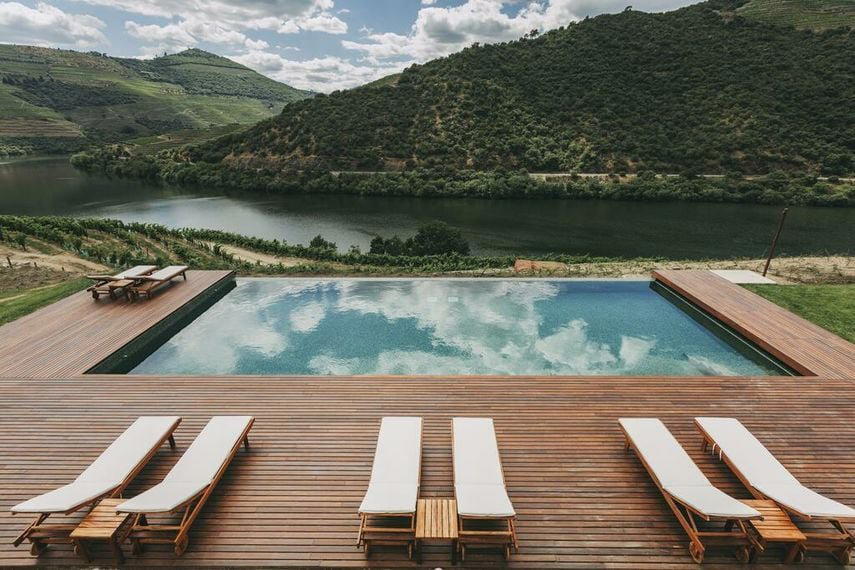
The Chaves thermal springs have been drawing visitors since Roman occupation. Portuguese kings used them. The palace was built, in part, to serve that tradition in an appropriately grand frame. The spa’s contemporary structure, designed by Siza Vieira, channels the area’s famous waters through a marble facility offering hydrotherapy and thermal treatments, inserting a centuries-old therapeutic tradition into thoroughly modern infrastructure. The 15-metre indoor pool and 25-metre exterior pool extend the water program beyond treatment into daily use. The spa holds a Regional Winner award for Luxury Spa Hotel and a Continent Winner designation for Luxury Hotel, placing it in a recognised tier for European wellness destinations.
Dining, the Grounds, and Everything Between
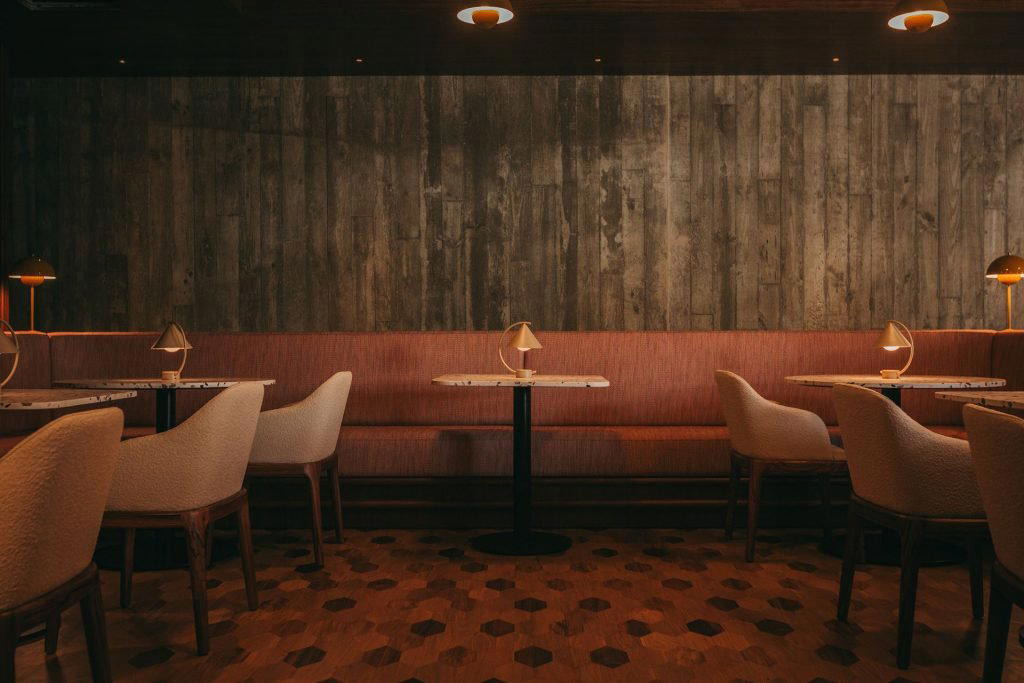
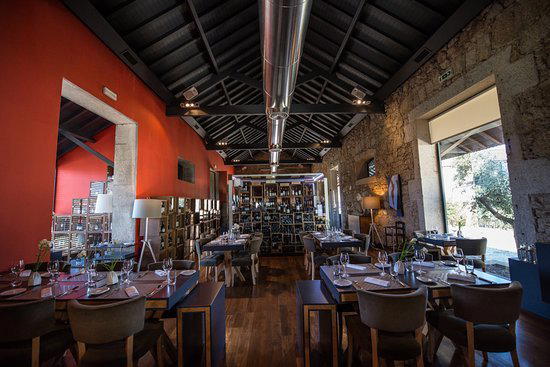
The Salão Nobre Dining Room occupies what was the original ballroom, a conversion that uses the room’s scale rather than fighting it. The palace operates four restaurants and four bars in total, ranging from the conservatory known as the Winter Garden, where breakfast is served, to poolside dining and Douro Valley wine tastings held in the cellar. The range is wide enough that guests staying several nights can rotate through meaningfully different contexts without leaving the property. For a deeper map of the region’s dining options beyond the hotel, our full Vidago restaurants guide covers the surrounding area.
Grounds also include an 18-hole golf course designed by Cameron and Powell, a well-stocked library with multimedia equipment, a gym, a children’s pool, a babysitting service, and conference facilities. The property functions simultaneously as a leisure retreat and a corporate venue, which is a common format at this scale of Portuguese palace hotel but not always executed with this depth of recreational infrastructure.
Vidago Palace holds Leading Hotels of the World membership as of 2025, the standard signal of alignment with international luxury hotel expectations around service consistency and physical standard. At a listed rate of approximately $247 per night, the property occupies a different price tier from urban Portuguese five-star hotels, a function partly of geography and partly of the resort format rather than any deficit in standard. Properties like the Four Seasons Ritz Lisbon or the InterContinental Porto Palacio das Cardosas draw on the commercial density of their cities; Vidago’s value proposition is withdrawal, thermal heritage, and architectural weight in a rural park setting.
Within the broader Portuguese heritage hotel category, useful comparisons include Casa da Calçada in Amarante and Carmo’s Boutique Hotel in Ponte de Lima, both of which work within heritage buildings in northern Portugal but at a smaller scale and without the same resort infrastructure. Further afield, Casa Velha do Palheiro in São Gonçalo offers a comparable country estate format in Madeira. For travellers who want coastal Algarve alternatives with spa credentials, Anantara Vilamoura Algarve Resort in Quarteira and Bela Vista Hotel and Spa in Praia da Rocha occupy that category. Other properties across Portugal worth noting in the design-led or heritage tier: Hospedaria da Pensão Agrícola in Conceicao e Cabanas de Tavira, Douro Valley Casa Vale do Douro in Cambres, Villa Epicurea in Sesimbra, Craveiral Farmhouse in São Teotónio, Masana Algarve in Albufeira, Q.ta da Corte in Valença do Douro, 3HB Faro in Faro, Boutique Hotel Teatro in Angra do Heroísmo, Casa das Penhas Douradas in Manteigas, Casa Mãe Hotel in Lagos, Casas da Lapa Nature and Spa Hotel in Seia, and Colégio Charm House in Tavira. For those cross-referencing grand European palace hotels at a different scale, Aman Venice, Aman New York, and The Fifth Avenue Hotel in New York City represent how the historic-building-plus-contemporary-intervention format plays out at the international tier.
Planning Your Stay
Vidago Palace is located at Parque de Vidago, approximately one hour by road from Porto. The address is Parque de Vidago, Apartado 16, 5425-307 Vidago, Portugal. Rates start at approximately $247 per night. The hotel offers 70 rooms and suites across a mix of standard rooms with parkland terraces and suites with de Gournay wallpaper and separate living areas. Given the breadth of on-site programming, from golf to thermal treatments to Douro Valley wine tastings, a minimum stay of two to three nights allows meaningful use of the facilities. The conference center and event salons make the property viable for corporate and private event use alongside leisure travel.
Recognition history
Dated appearances from independent guides and award organizations, with the underlying list record or original source where available.
Michelin 2 Keys
Michelin
Virtuoso Luxury Hotel Partner
Virtuoso
Leading Hotels of World Member
Leading Hotels of World
Michelin 2 Keys
Michelin
World Luxury Hotel Awards WLHA Regional Winner
World Luxury Hotel Awards
World Luxury Hotel Awards WLHA Continent Winner
World Luxury Hotel Awards
At a Glance
- Elegant
- Classic
- Ornate
- Sophisticated
- Quiet
- Romantic Getaway
- Wellness Retreat
- Honeymoon
- Anniversary
- Golf Course
- Historic Building
- Panoramic View
- Destination Spa
- Spa
- Pool
- Indoor Pool
- Outdoor Pool
- Golf Course
- Fitness Center
- Tennis Court
- Room Service
- Concierge
- Restaurant
- Garden
- Mountain
- Spa
- Pool
- Indoor Pool
- Outdoor Pool
- Golf Course
- Fitness Center
- Tennis Court
- Room Service
- Concierge
- Restaurant
Ornate Belle Époque interiors with marble staircases, silk wallpaper, Venetian chandeliers, and elegant lighting creating a timeless, regal atmosphere.
Know Before You Go
- Getting there
- Parque de Vidago, Apartado 16, 5425-307 Vidago