
A clifftop retreat in Portugal's Serra da Estrela Natural Park, Casa das Penhas Douradas occupies one of the country's most architecturally considered mountain settings. Built from cork, birch, and local wool, its 17 rooms combine custom wooden furnishings with large picture windows framing high-altitude scenery. From around $214 per night, it sits in a distinct tier of Portuguese design-led hospitality with genuine regional character.
Pearl is the En Primeur Club membership app — saves, bookings, and concierge access live there. Same editors, same standards.
- Address
- 6260 Manteigas, Portugal
- Phone
- +351 275 981 045
- Website
- casadaspenhasdouradas.pt
- Directions
- Get directions
 Saves & bookings on Pearl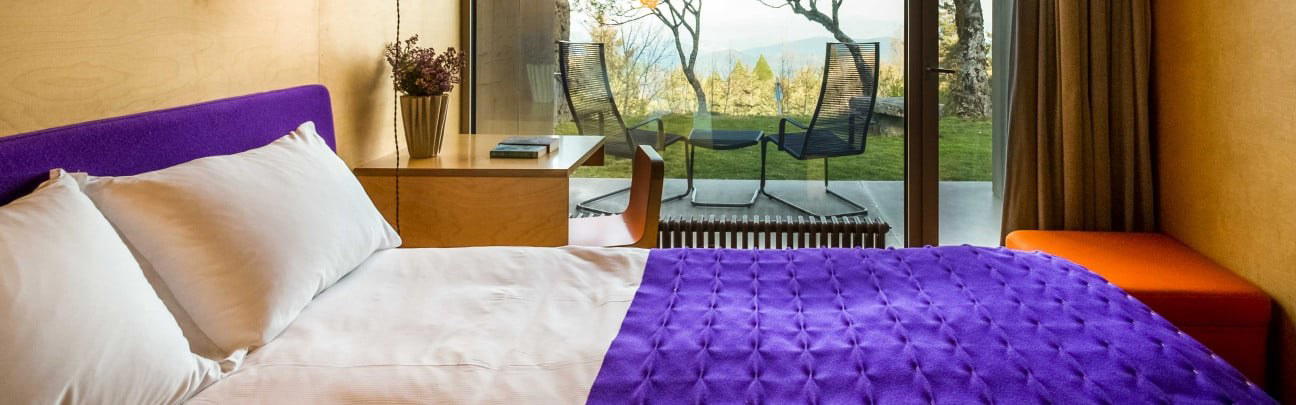
A Clifftop Perch in the Serra da Estrela
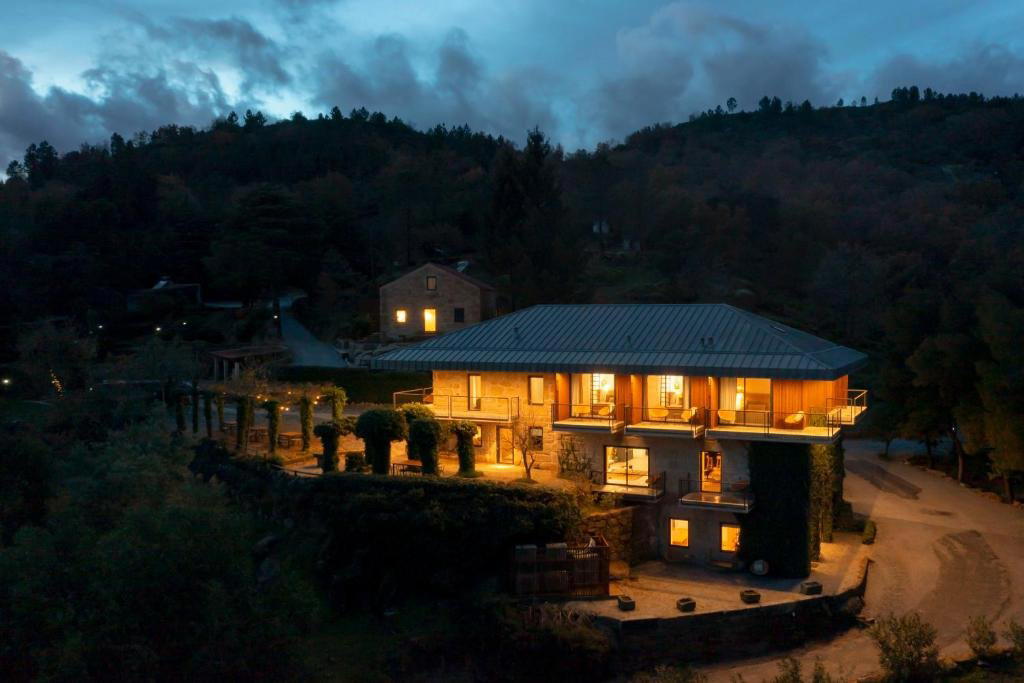
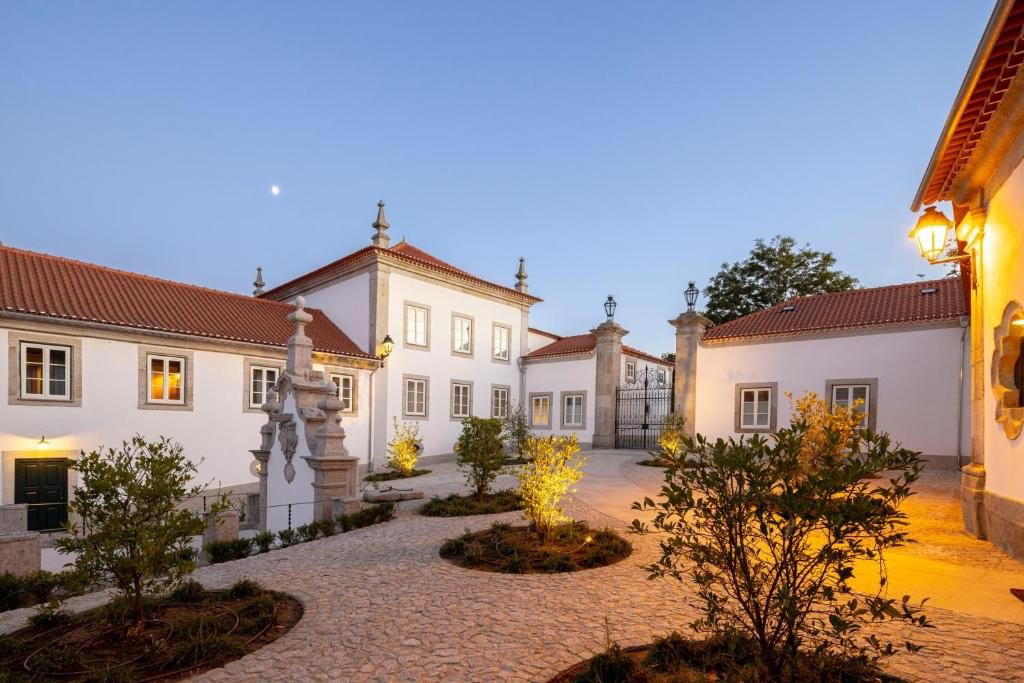
The approach to Manteigas already filters for a certain kind of traveller. Portugal's highest mountain range, the Serra da Estrela, does not yield quickly: the roads narrow, the granite shoulders of the landscape press in, and the altitude shifts the air before you reach the village. By the time Casa das Penhas Douradas comes into view on its clifftop position above the valley, the architecture reads less like a hotel and more like a film set that someone forgot to dismantle. The visual reference, chalet massing, muted palette, symmetrical geometry, sits closer to mid-century central European ski culture than to the whitewashed vernacular of lowland Portugal, and that deliberate displacement is precisely the point.
Mountain hospitality in Portugal has historically occupied one of two registers: the utilitarian pensão serving hikers, or the grand parador-style property with period interiors and institutional service. What has emerged more recently in the Serra da Estrela is a smaller third category: design-led properties that draw on regional material culture without reproducing it literally. Casa das Penhas Douradas belongs to that cohort. The buildings are relatively new constructions, not conversions of historic stock, which gave the architects freedom to build formally for the site rather than work around existing constraints. The result is a structure that reads as coherently designed from the outside in.
Materials as Architecture
The editorial case for this property begins with the material palette. Cork, birch wood, and regional wool appear throughout the construction and interiors, not as decorative gesture but as structural and insulating choices appropriate to a property operating at altitude in a range that receives snow cover. That specificity matters. Portuguese cork is one of the country's most technically sophisticated raw materials, with acoustic and thermal properties that suit mountain construction. Using it here is neither romantic nor arbitrary.
The interior design sits in a productive tension between local material sourcing and imported aesthetic reference. Vintage and modern Scandinavian furniture pieces appear alongside custom wooden furnishings made for the rooms. The combination avoids the trap that catches many regional design hotels: the attempt to be entirely autochthonous, which frequently produces spaces that feel curated for a tourist's idea of place rather than for the comfort of someone actually sleeping there. The Scandinavian thread brings a functional discipline that the local materials alone might not achieve, and it aligns the property with a broader pan-European mountain design conversation that guests from outside Portugal will read immediately.
17 rooms are configured around large picture windows, a decision that subordinates almost every other interior choice to the view. Custom wooden furnishings keep the visual field clean. Suites extend the program with small libraries and separate living rooms, which shifts those categories from the conventional hotel suite model toward something closer to a well-designed private mountain apartment. For properties in this price bracket, the reading and working infrastructure matters: a mountain stay of two or three nights works only if the rooms are genuinely habitable during the hours between outdoor activity and dinner.
The Wes Anderson Problem (and Why It Doesn't Quite Apply)
Wes Anderson comparison arrives quickly with this property, and it is worth addressing directly. The reference, used widely in travel writing to shorthand a certain kind of symmetrical, colour-controlled, retro-inflected design, has become a lazy critical move. Applied to Casa das Penhas Douradas, it captures something real about the exterior composition and the deliberate visual precision, but it understates the material seriousness of the construction. Anderson's aesthetic is fundamentally surface: colour, framing, period detail. What distinguishes this property is that its design choices go below the surface into the structure and the sourcing. The look may be cinematic; the building logic is regional and ecological.
That distinction places Casa das Penhas Douradas in a different competitive conversation from design hotels that are primarily about styling. Its comparable set includes properties like Casa de São Lourenço / Burel Panorama Hotel in the same valley, and further afield in Portugal, design-led rural retreats such as Ventozelo Hotel & Quinta in Ervedosa Do Douro and Craveiral Farmhouse in Sao Teotonio. What these properties share is a commitment to site-specific material thinking that separates them from the hotel groups operating at comparable price points in Lisbon and the Algarve.
Spa, Pool, and the Nordic Bath
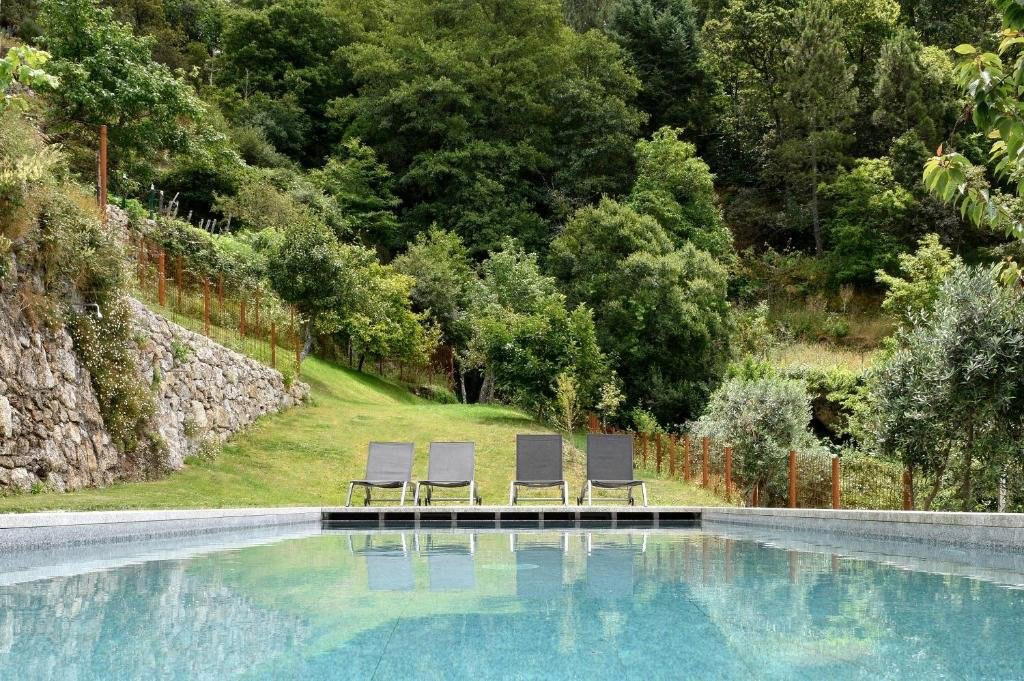
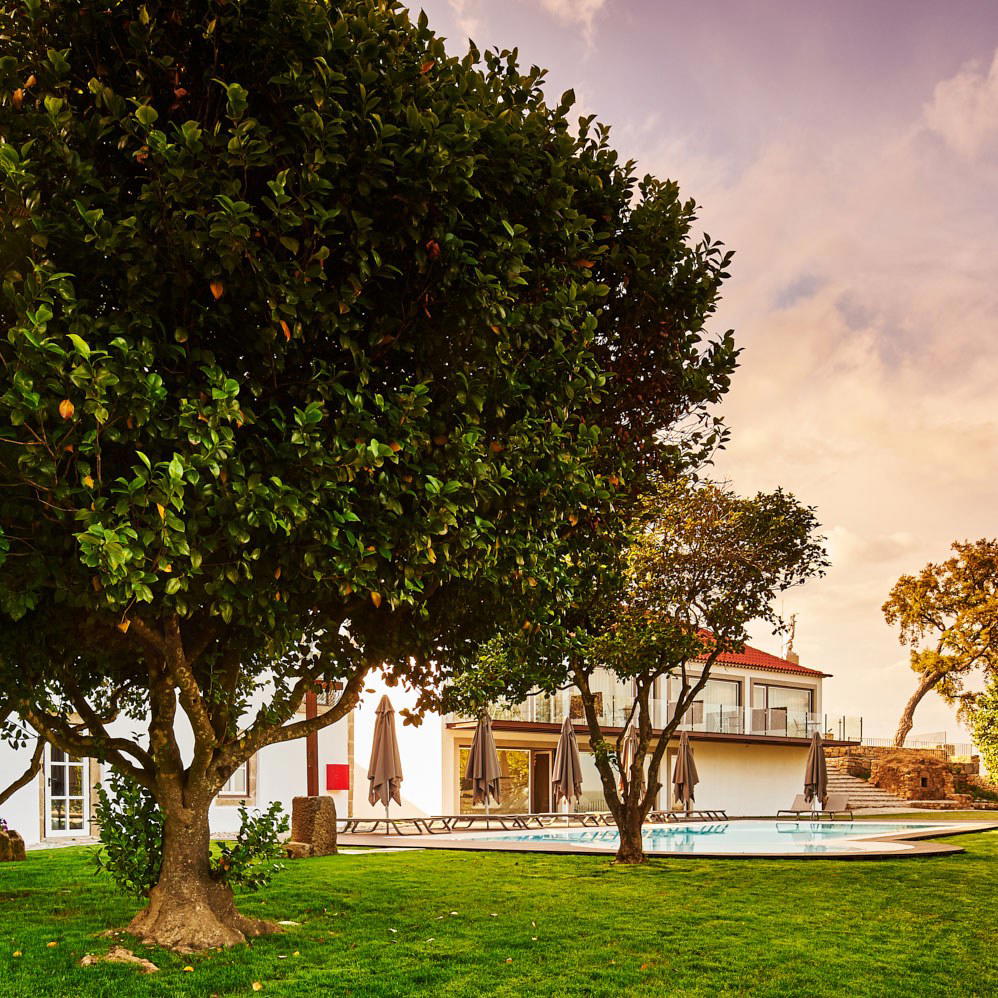
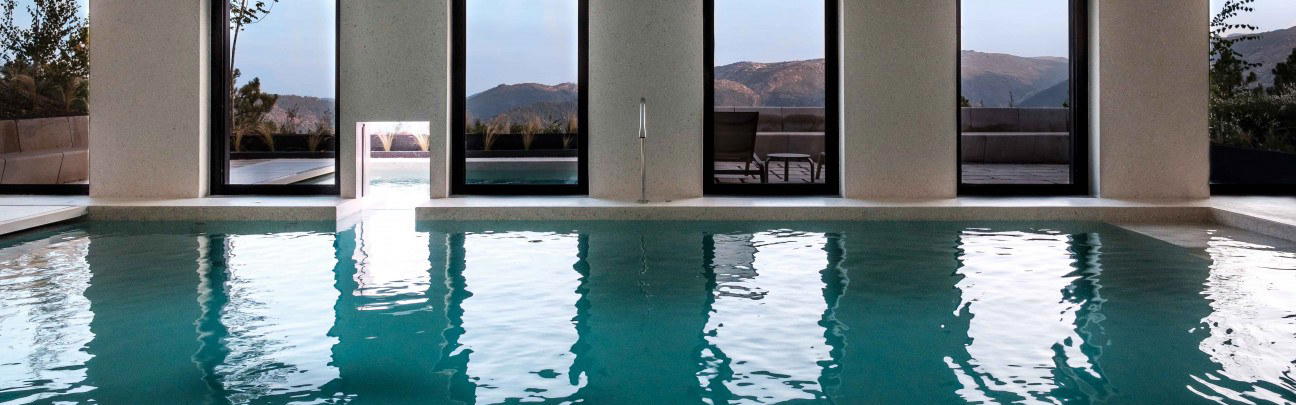
The spa program here leans on Nordic influences, which is consistent with the interior design references but also practically appropriate for the altitude and climate. An open-air Nordic bath alongside a glass-encased heated pool positions the property for year-round use, including winter visits when the Serra da Estrela's ski area at Torre is operational. Mountain hotels that invest in cold-weather spa infrastructure tend to perform more consistently across the calendar than those that depend on warm-season outdoor amenities alone. The glass enclosure of the heated pool ensures that the view remains part of the experience regardless of weather, a design decision with direct commercial logic behind it.
The Restaurant and the View
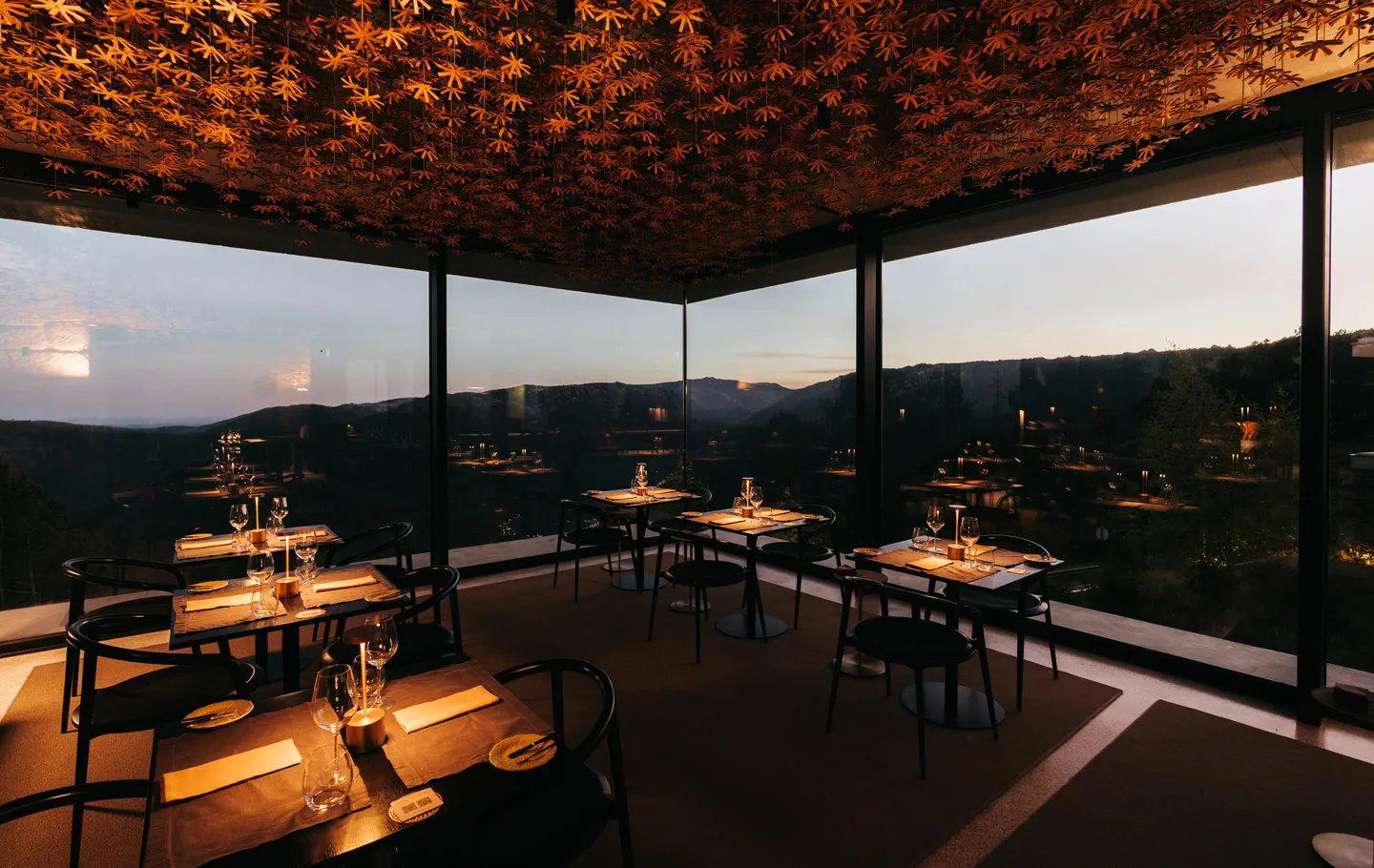
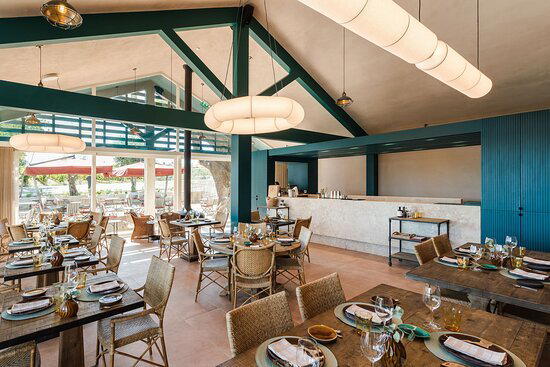
The hotel's restaurant occupies a glass-encased space with the same panoramic orientation as the pool. Restaurant design in mountain hotels often neglects the view as an active element of the dining experience, relying instead on generic alpine styling. The glass treatment here makes the landscape continuous with the interior, which changes how a meal reads depending on the time of day and season. The restaurant's physical design signals an ambition to match the accommodation standard.
Planning Your Stay
Room rates begin around $200 per night across the property's 18 rooms. That price point sits in the mid-premium tier for Portuguese mountain hospitality, above the converted village guesthouses and below the resort-scale properties in other parts of the country. Visitors travelling from Lisbon face a drive of approximately 3.5 hours; from Porto, the journey runs around 2.5 hours. The Serra da Estrela Natural Park draws activity-focused visitors throughout the year, with winter ski season at Torre and summer hiking both generating demand.Hospedaria da Pensão Agrícola in Conceição e Cabanas de Tavira, M Maison Particulière Porto, and Casas da Lapa, Nature & Spa Hotel in Seia represent strong alternatives in different regions of the country. Those interested in urban Portuguese design hotels will find relevant context at Hotel Britania Art Deco in Lisbon. For further browsing, Bussaco Palace Hotel in Luso, Carmo's Boutique Hotel in Ponte de Lima, Villa Epicurea in Sesimbra, Casa da Calçada in Amarante, Casa Mãe Hotel in Lagos, Douro Valley - Casa Vale do Douro in Cambres, Q.ta da Corte in Valença Do Douro, Masana Algarve in Albufeira, Anantara Vilamoura Algarve Resort in Quarteira, Bela Vista Hotel & Spa in Praia da Rocha, Boutique Hotel Teatro in Angra do Heroísmo, Colégio Charm House in Tavira, 3HB Faro in Faro, and Casa Velha do Palheiro in São Gonçalo complete the picture of design-conscious accommodation across Portugal's distinct regions.
How It Stacks Up
Comparable venues nearby, for context on price, style, and recognition.
| Venue | Cuisine | Price | Awards | Notes |
|---|---|---|---|---|
| Casa das Penhas DouradasThis venue — the venue you are viewing | Boutique design hotel inspired by local mountain tradition | $$$$ | Michelin 1 Key | Not listed |
| Casa de São Lourenço / Burel Panorama Hotel | Contemporary luxury design hotel with heritage textile integration, blending modern minimalism with traditional Portuguese mountain hospitality. | $$$$ | 5-Star | Manteigas |
| Casa de São Lourenço | Contemporary luxury boutique hotel blending heritage preservation with minimalist modern design, celebrating Portuguese culture and mountain landscape. | $$$$ | 5-Star | Serra da Estrela |
| Torel Quinta da Vacaria - Douro Valley | Modern luxury boutique in historic vineyard quinta | $$$$ | Michelin 1 Key | Peso da Régua |
| Pousada Mosteiro Crato | Converted 14th-century fortified monastery with Gothic architecture | $$$$ | 5-Star | Flor da Rosa, Crato |
| Quinta Nova de Nossa Senhora do Carmo | Historic wine estate manor house blending authentic Portuguese heritage with refined luxury | $$$$ | 5-Star | Covas do Douro |
Recognition history
Dated appearances from independent guides and award organizations, with the underlying list record or original source where available.
Mr & Mrs Smith Smith Seal of Approval
Mr & Mrs Smith
Michelin 1 Key
Michelin
Continue exploring
More in Manteigas
Hotels in Manteigas
Browse all →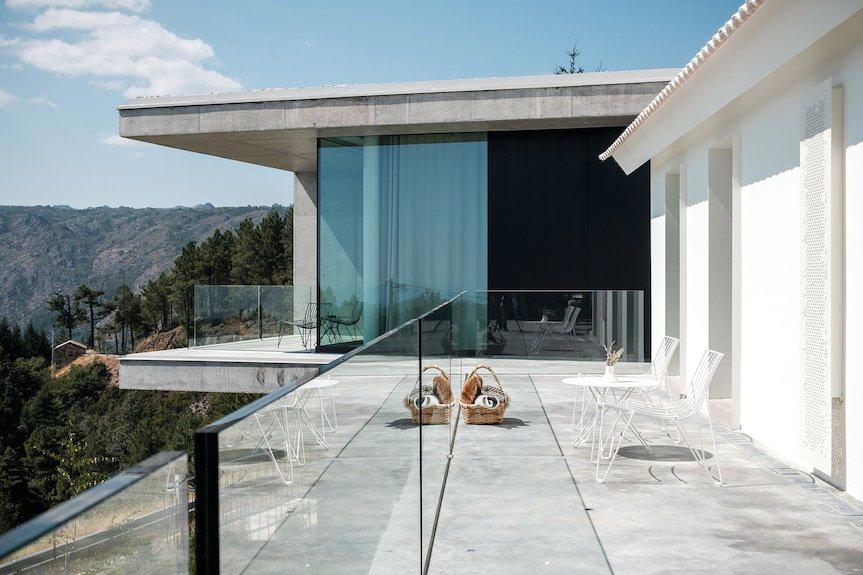
Restaurants in Manteigas
Browse all →

At a Glance
- Scenic
- Cozy
- Rustic
- Romantic
- Quiet
- Elegant
- Romantic Getaway
- Wellness Retreat
- Weekend Escape
- Panoramic View
- Historic Building
- Terrace
- Wi Fi
- Pool
- Spa
- Sauna
- Restaurant
- Room Service
- Business Center
- Mountain
- Garden
- Wi Fi
- Pool
- Spa
- Sauna
- Restaurant
- Room Service
- Business Center
Cozy and stylish with warm lighting, soundproof rooms, and serene atmosphere praised for total rest amid far-reaching mountain landscapes.