
On the west side of the island of Kyushu, within Saga Prefecture, is the historic town of Ureshino, a place known for its tea plantations and its hot springs. Ureshina Yadoyo is a hotel that combines these two attractions in an organic way, alongside the typically Japanese spring-fed onsen baths is a sauna that adds the scent of tea leaves for an added restorative boost. The rooms are traditional in their inspiration but contemporary in their finish, and each one has its own private semi-outdoor spring-fed bath, as well as extensive facilities for brewing tea. A fine restaurant showcases local flavors, and tea ceremonies are held for guests’ benefit.
Pearl is the En Primeur Club membership app — saves, bookings, and concierge access live there. Same editors, same standards.
- Address
- 2400-30 Shimojuku, Ureshinocho, Ureshino, Japan
- Phone
- +81-954-20-2188
 Saves & bookings on Pearl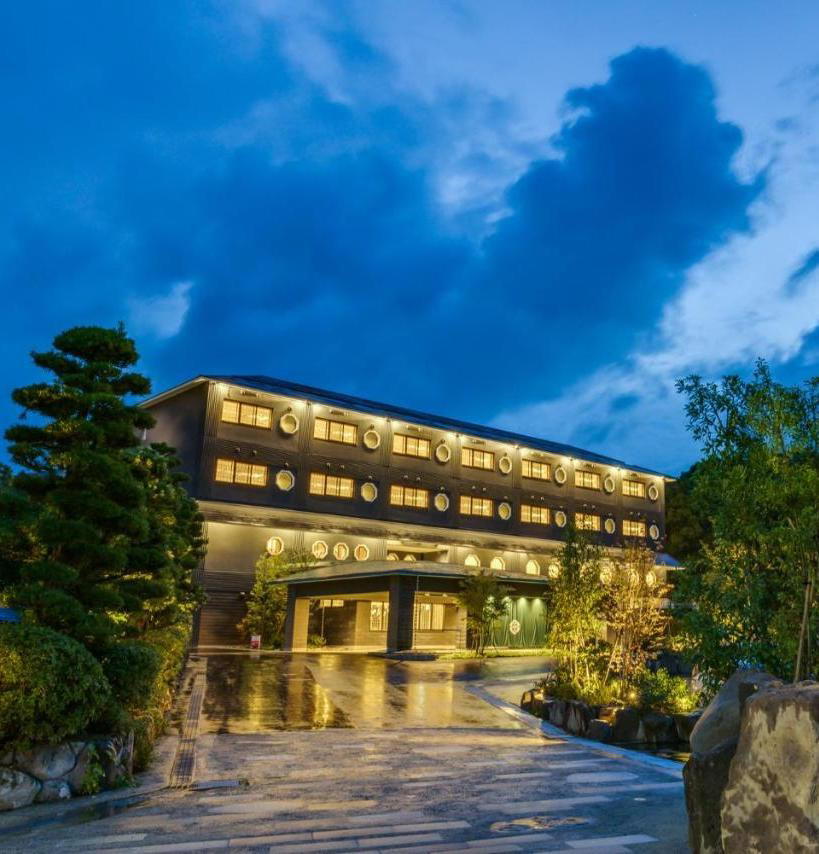
Where Kyushu's Hot Spring Tradition Meets Considered Design
Ureshino sits in Saga Prefecture, roughly two hours by road from Fukuoka, in a valley where hot spring culture has been continuous for centuries. The town's thermal waters are alkaline and notably silky in texture, a quality that has shaped Ureshino's reputation as a skin-care destination within Japan's onsen circuit. That reputation is less about spectacle and more about a particular domestic travel tradition: the overnight ryokan stay as restorative ritual, where the quality of the water, the architecture, and the meal are understood as inseparable. Ureshino Yadoya operates in that tradition, and its 2025 Michelin Selected designation places it in a defined tier within it.
The Physical Proposition: Architecture as the Primary Argument
Japan's leading onsen stays have long understood that the built environment is the product. The question is not merely whether a bath is available, but how the approach to the bath is arranged, whether the transition from indoor to outdoor space is handled with care, and whether natural materials are used in ways that reference local craft traditions rather than merely gesture toward them. In Ureshino's broader context, where newer resort developments have moved toward open-plan, glass-forward aesthetics, properties that maintain structural discretion and material integrity occupy a smaller, more deliberate tier.
Ureshino Yadoya, addressed at 2400-30 Shimojuku in the Ureshinocho district, positions itself within that more restrained register. The address places it away from the main commercial strip of the town, in keeping with the ryokan tradition of creating a threshold experience: the sense that arrival at the property marks a genuine transition from the ordinary pace of travel. Michelin's hotel selection criteria in Japan weigh this kind of environmental coherence heavily, distinguishing properties where the physical experience is consistent from check-in through to departure.
Michelin Selected: What the Designation Actually Signals
The Michelin Selected classification, as applied in the 2025 guide, is not a starred category but a quality floor. In the Japanese ryokan context, it functions as a statement that the property has passed editorial scrutiny across a combination of comfort, setting, and character. Michelin's hotel coverage in Japan skews toward properties where traditional hospitality formats are executed with discipline, and the Ureshino category is populated by properties competing on the quality of their thermal facilities, their kaiseki or local-food programs, and the calibration of service to a guest seeking recovery rather than activity.
Within Saga Prefecture, this kind of recognition is meaningful as a navigational signal. Ureshino does not have the volume of premium ryokan options that Hakone or Kyoto's surrounds offer, which means that properties earning Michelin attention operate in a smaller comparable set. For context, properties like Gora Kadan in Hakone and Asaba in Izu have long anchored a benchmark for what a Michelin-recognized ryokan delivers in terms of spatial design, thermal quality, and meal program coherence. Ureshino Yadoya earns its designation in a different geography, one where the alkaline mineral content of the water itself is a distinguishing resource that no architectural decision alone can replicate.
The Onsen Ryokan Format and How Ureshino Uses It
The ryokan stay in Japan is a structured format with clear conventions: seasonal kaiseki meals served in the room or a private dining space, yukata provided for in-property movement, and bath access arranged around a sequence of morning and evening use. The format rewards properties that execute each element without visible effort, where the coordination between meal timing, bath preparation, and room turndown operates as a system the guest never has to manage. This is the underlying logic behind why architectural coherence matters so much in Michelin's assessment of Japanese ryokan: the physical space either supports that invisible coordination or creates friction that undermines it.
Ureshino's thermal water profile gives the water a characteristic softness, and it is the environmental context within which the property operates. This anchors Ureshino Yadoya in a specific geographical tradition that runs from the town's historical use as a medicinal spring site through to its current positioning as a weekend destination for guests from Fukuoka, Nagasaki, and international travelers routing through Kyushu.
Positioning Within Japan's Premium Ryokan Spectrum
Japan's ryokan market has stratified considerably over the past decade. At one end, large onsen resort complexes with high room counts and standardized facilities address a volume-oriented domestic travel segment. At the other, a smaller group of properties competes on architectural singularity, limited capacity, and the kind of food program that would merit independent recognition. Properties like Zaborin in Kutchan and Nasu Mukunone in Nasu sit toward that architectural-singular end. Kamenoi Besso in Yufu, also in Kyushu, represents a comparison point in the regional context: a property with deep historical roots and a design sensibility that treats garden, bath, and structure as a unified composition.
The hotel's Michelin Selected status places it in the credentialed middle tier of this spectrum: properties that have passed quality scrutiny but occupy a different competitive register than the ultra-limited, design-forward properties that function more as destination objects than as places primarily oriented around the ryokan ritual. That middle tier serves a specific traveler: one who wants a credentialed, high-quality overnight experience in a genuine onsen town rather than a property whose reputation derives from architectural novelty or celebrity association. Visitors researching the wider Kyushu onsen circuit, or extending a trip through the island's less-trafficked prefectures, should also consider GOTO RETREAT by Onko Chishin in Goto and Halekulani Okinawa for contrast within the wider regional offer. For those building an itinerary that passes through central Honshu before or after Kyushu, HOTEL THE MITSUI KYOTO, Amanemu in Mie, and Nishimuraya Honkan in Kinosaki-cho represent comparable standards in different onsen traditions.
Planning a Stay
Ureshino is accessible from Nagasaki or Fukuoka airports, both within a two-hour drive, and the town itself is compact enough that a car is especially practical mode of arrival for guests not using a private transfer. Ryokan stays in Ureshino are typically booked directly or through Japanese travel agencies, and advance booking is advisable for autumn and spring periods when domestic leisure travel concentrates. The property's Michelin Selected status suggests a quality floor that warrants treating the booking as one requiring the same care as reservations at properties like Fufu Nikko or Fufu Kawaguchiko, where demand from a quality-aware domestic and international audience means rooms move quickly during peak periods.
At-a-Glance Comparison
Comparable venues nearby, for context on price, style, and recognition.
| Venue | Cuisine | Price | Awards | Notes |
|---|---|---|---|---|
| Ureshino YadoyaThis venue — the venue you are viewing | Modern luxury ryokan with contemporary finishes and traditional Japanese inspiration, designed as a wellness destination. | $$$$ | 3-Star | Not listed |
| 角館山荘侘桜 | 茅葺古民家を移築した伝統的な山荘 | $$$$ | 3-Star | 西木町 |
| House of Finn Juhl Hakuba | Boutique design ski lodge renovated with Danish-Japanese fusion. | $$$$ | 3-Star | Hokujo |
| 四季亭 | 純和風旅館 | $$$ | 3-Star | つなぎ温泉 |
| Miroku Nara by THE SHARE HOTELS | Lifestyle hotel sharing local Nara culture and nature. | $$$ | 3-Star | Nara |
| L'isola THE BIRD | Contemporary wellness resort with modernist design principles and natural materials emphasizing relaxation and connection to landscape. | $$$ | 3-Star | Kami Amakusa |
Recognition history
Dated appearances from independent guides and award organizations, with the underlying list record or original source where available.
Michelin Selected
Michelin
At a Glance
- Modern
- Elegant
- Quiet
- Romantic
- Wellness Retreat
- Romantic Getaway
- Anniversary
- Destination Spa
- Private Dining
- Garden
- Terrace
- Panoramic View
- Sauna
- Spa
- Wi Fi
- Restaurant
- Bar
- Garden
- Garden
- Sauna
- Spa
- Wi Fi
- Restaurant
- Bar
- Garden
Contemporary minimalist design blended with traditional Japanese aesthetics, creating a serene and peaceful atmosphere enhanced by natural hot spring waters and tea-infused wellness experiences.