Google: 4.3 · 9,759 reviews
TWA Hotel
Occupying Eero Saarinen's landmark 1962 TWA Flight Center at JFK, TWA Hotel is the only hotel in New York where mid-century aviation architecture forms the physical shell of the guest experience. The Sunken Lounge, rooftop infinity pool overlooking active runways, and 512 rooms restored to period detail make it a singular address for travelers drawn to design history over Manhattan convenience.
 Discover on Pearl
Pearl is the En Primeur Club membership app — saves, bookings, and concierge access live there. Same editors, same standards.
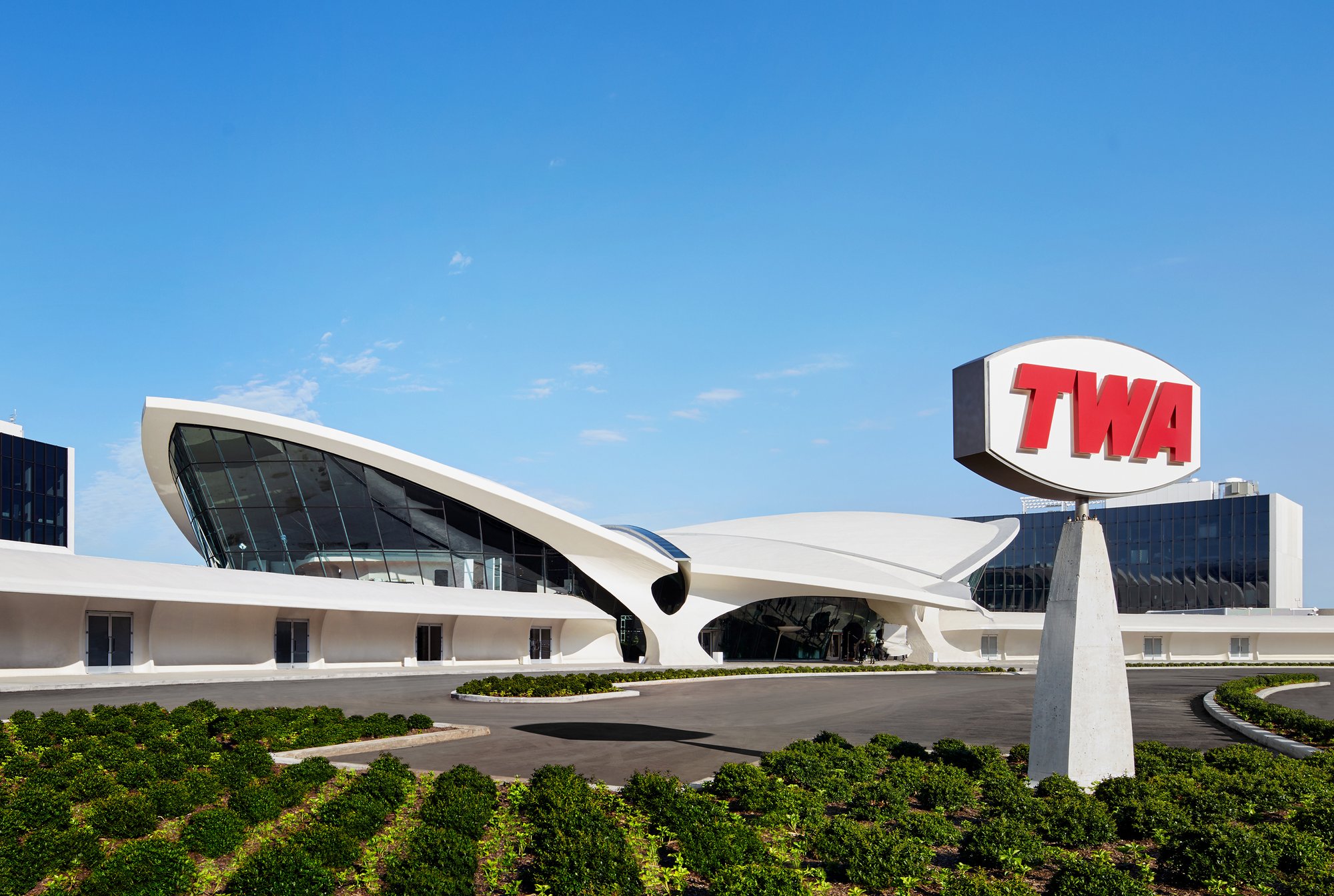
Where Aviation History Became a Hotel Floor Plan
There is a category of hotel that earns attention not through thread counts or spa menus but through the weight of the space itself. Eero Saarinen's TWA Flight Center, completed in 1962 and shuttered in 2001, sat empty at JFK for nearly two decades before its 2019 conversion into a functioning hotel. The building's concrete wings, Y-shaped columns, and continuously curved interior surfaces were designed to communicate flight before a passenger reached a gate. That architectural intention is still legible today, which makes TWA Hotel unusual in the adaptive-reuse category: the original structure is not a backdrop but the primary experience.
For travelers choosing between a Manhattan address and an airport stay, the calculus here is different than it looks. The hotel sits directly on the terminal footprint at JFK, accessible from the AirTrain without touching a taxi queue. That logistical fact appeals to a specific traveler: the long-haul connector, the early-departure business guest, the architecture enthusiast routing a New York trip around the building rather than the borough. Manhattan properties like Aman New York, The Carlyle, A Rosewood Hotel, or The Mark offer proximity to the Upper East Side, Central Park, and the city's dining core. TWA Hotel offers something those addresses cannot: a building that functions as its own destination.
The Sunken Lounge and the Architecture of Arrival
The Sunken Lounge sits at the heart of the original terminal, a circular conversation pit that Saarinen designed as a social hinge between departure halls. Red carpeting, tulip-shaped furniture in period upholstery, and curved concrete walls that absorb sound in a way flat surfaces never do — the atmosphere is specific and consistent. Hotel bars that occupy converted spaces often struggle to reconcile new programming with old geometry. Here the geometry dictates the programming, which keeps the room coherent in a way that purpose-built hotel bars frequently are not.
The Connie, a Lockheed Constellation aircraft parked outside the terminal and converted into a cocktail bar, extends the aviation motif into an actual artifact. Drinks served inside a pressurized fuselage from the same era as the terminal building occupy a different register than a themed bar that gestures at a concept through wall graphics. Whether you find the Connie charming or gimmicky depends largely on your tolerance for experiential hospitality formats, but the object itself is historically genuine.
Rooms, Suites, and the Period Restoration Question
512 rooms across the two connected hotel wings were purpose-built for the conversion, meaning they do not occupy original terminal space but connect directly to it. Room design follows the period palette: rotary phone replicas, curved furniture silhouettes, and an absence of the neutral-toned minimalism that dominates most airport hotel categories. The approach creates consistency with the public spaces at the cost of the blank-canvas functionality that frequent travelers often prefer in airport-adjacent rooms.
Suite inventory at TWA Hotel includes the Howard Hughes Suite, named after the airline executive who commissioned the terminal. At the upper end of the property's accommodation tier, it represents the hotel's most direct engagement with the TWA brand narrative: larger square footage, period detailing carried further than standard rooms, and runway views that contextualize the location in a way that could not be replicated at an urban address. For travelers who want that specific combination of design provenance and airside proximity, the suite tier here occupies a niche that properties like The Fifth Avenue Hotel or Casa Cipriani New York address from the opposite direction — design and brand without the airport adjacency.
Dining and the Question of Wine at an Airport Hotel
Airport hotel dining operates under structural constraints that urban properties do not face: captive audience dynamics, irregular hours, and a guest base with one foot already pointed toward a departure gate. TWA Hotel's food and beverage program spans multiple outlets across the terminal footprint, with Paris Café occupying a section of the original terminal building. The editorial angle worth noting is not the individual menu but the broader pattern: hotels that commit to period-consistent design tend to extend that commitment into beverage programming, leaning toward curated lists over high-volume pour strategies.
In the airport hotel category specifically, wine list depth is rarely a differentiator. The guest profile skews toward efficiency. At TWA Hotel, the tension between an architecturally serious space and the practical realities of airport hospitality is most visible in the beverage program. A property in this design tier, compared against urban boutique competitors like Crosby Street Hotel or The Whitby Hotel, operates in a different commercial environment where cellar depth is a secondary priority. The Sunken Lounge cocktail program is the more natural fit for the space and the guest occasion.
The Rooftop Pool and the View That Earns Its Keep
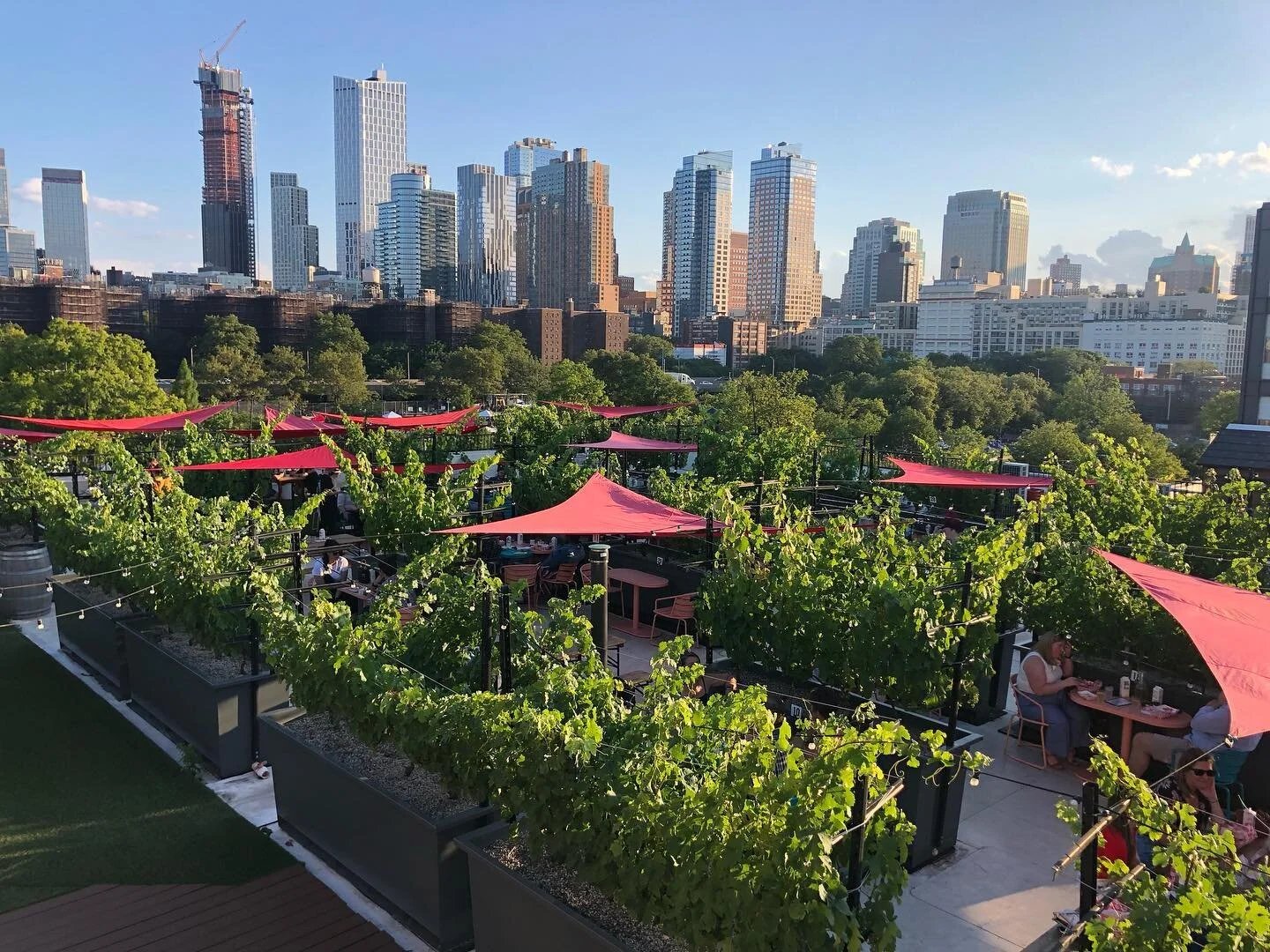
The rooftop infinity pool is one of the more unusual amenity positions in New York hospitality. Looking out over active JFK runways, it turns a feature that every urban luxury hotel offers , rooftop water , into something functionally different through placement alone. Properties like The Greenwich Hotel position their amenities against the backdrop of Tribeca architecture. At TWA Hotel, the backdrop is operational aviation infrastructure, which either appeals directly to the guest's reason for being there or does not appeal at all. The pool is heated and available year-round, which extends its usefulness beyond the summer season.
How TWA Hotel Fits Into New York's Hotel Map
New York's premium hotel market divides broadly between Manhattan addresses that compete on neighborhood access and a smaller set of properties that compete on architectural or experiential identity. TWA Hotel sits in the latter group, alongside properties that have converted historically significant structures into hospitality uses. The comparison set for this property is not Midtown luxury towers or Upper East Side institutions but adaptive-reuse hotels internationally where the building itself is the reason to stay. In that frame, TWA Hotel competes favorably: few conversions globally work with source material of this architectural caliber.
For a broader view of where this property sits within New York's hospitality scene, our full New York City guide maps the city's hotels and restaurants across neighborhoods and price tiers. Travelers looking at other design-led properties outside New York might consider Troutbeck in Amenia for architectural character in a different register, Post Ranch Inn in Big Sur for site-driven design, or Amangiri in Canyon Point for landscape-responsive architecture. Those properties share a common logic with TWA Hotel: the physical envelope is not decorative but structural to the guest experience.
Other American design-forward properties worth cross-referencing include SingleThread Farm Inn in Healdsburg, 1 Hotel San Francisco, and Sage Lodge in Pray. Internationally, Aman Venice and Bvlgari Hotel Tokyo operate from similarly significant architectural contexts. For resort-scale alternatives in the US, Four Seasons at The Surf Club in Surfside, Little Palm Island Resort in Little Torch Key, and Kona Village, A Rosewood Resort occupy different geographic and aesthetic registers. Auberge du Soleil in Napa, Canyon Ranch Tucson, Hotel Bel-Air in Los Angeles, Raffles Boston, and Badrutt's Palace Hotel in St. Moritz round out the peer map for travelers comparing legacy-building hotel conversions at the premium tier.
Planning a Stay
TWA Hotel is reachable via the AirTrain from any JFK terminal, making it logistically accessible without ground transport. The hotel's 512 rooms and multiple food and beverage outlets support both single-night layover stays and longer visits oriented around the architecture. Booking direct through the hotel's own channels is standard for this property type. Guests who intend to spend meaningful time in Manhattan should weigh the AirTrain commute against alternatives like The Greenwich Hotel in Tribeca or Crosby Street Hotel in SoHo, both of which place the city's dining and cultural programming within walking distance rather than a transit connection away.
Cuisine-First Comparison
A short peer set to help you calibrate price, style, and recognition.
| Venue | Cuisine | Awards | Notes |
|---|---|---|---|
| TWA Hotel | This venue | ||
| Aman New York | Michelin 3 Key | ||
| The Carlyle, A Rosewood Hotel | Michelin 2 Key | ||
| Pendry Manhattan West | Michelin 2 Key | ||
| Ace Hotel Brooklyn | Michelin 1 Key | ||
| The Ludlow Hotel | Michelin 1 Key |
Continue exploring
More in New York City
Hotels in New York City
Browse all →
Bars in New York City
Browse all →
Restaurants in New York City
Browse all →
At a Glance
- Iconic
- Modern
- Trendy
- Sophisticated
- Business Trip
- Weekend Escape
- Rooftop Pool
- Historic Building
- Panoramic View
- Pool
- Fitness Center
- Room Service
- Concierge
- Valet Parking
- Skyline
Midcentury modern glamour with brass lighting, walnut furnishings, and a retro 1960s vibe evoking the golden age of air travel.