The Ludlow Hotel


1 Michelin Key · Design Hotels Member · Mr & Mrs Smith Seal of Approval
A Michelin 1 Key hotel on the Lower East Side, The Ludlow Hotel brings 184 rooms of vintage-inflected design to a neighbourhood that has historically punched below its weight in quality accommodation. Related to the Bowery, the Marlton, and the Maritime, it carries genuine New York hospitality pedigree, and its Dirty French restaurant from Major Food Group gives it a social centre with real culinary credentials.

Pearl is the En Primeur Club membership app, where members save venues, book tables and use the concierge.
Where Ludlow Street Meets a Lobby Worth Lingering In
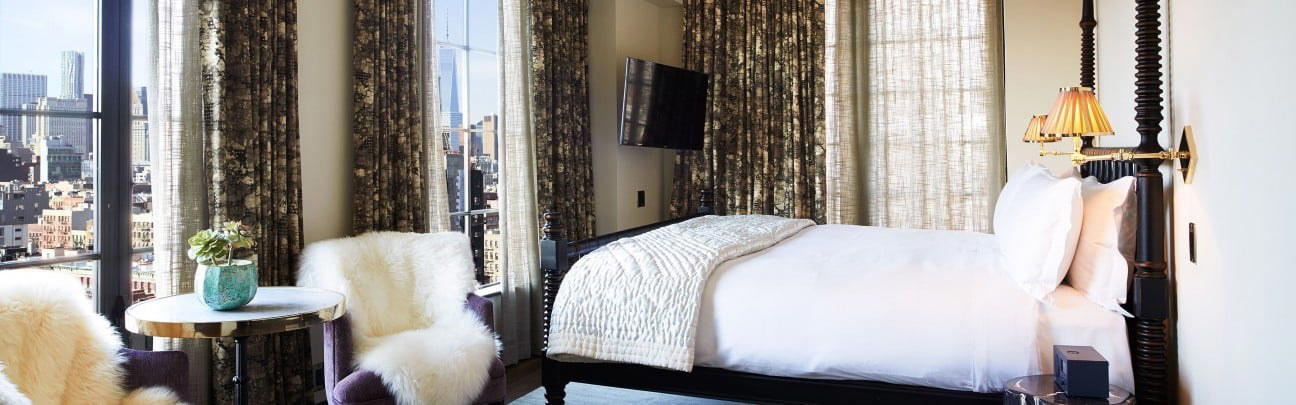
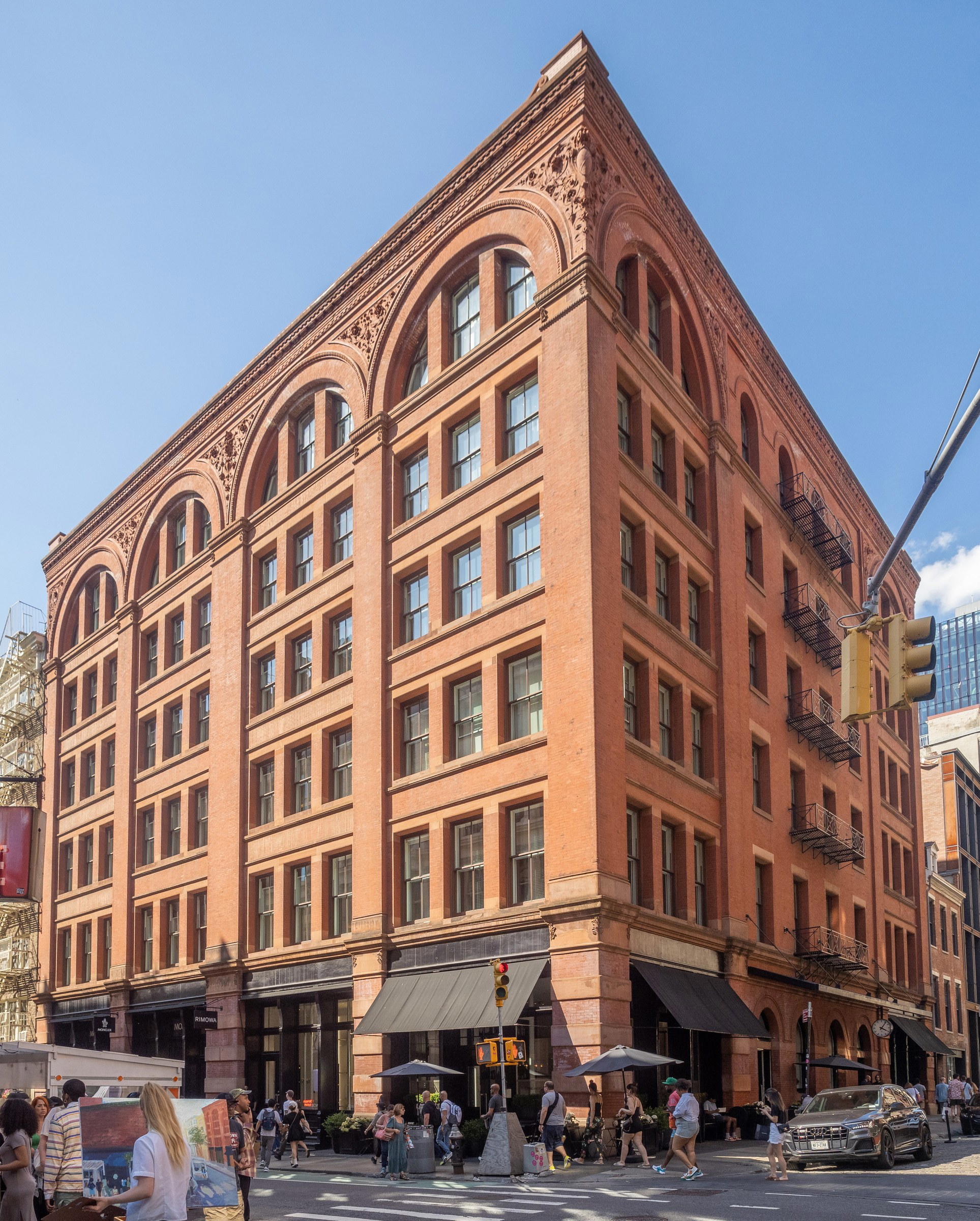
The Lower East Side has always resisted the polish that overtook SoHo and eventually crept into the Bowery corridor. Ludlow Street in particular spent decades as a strip of vinyl record stores, late-night venues, and the kind of bars that didn't bother with a dress code. Against that backdrop, the arrival of The Ludlow Hotel at 180 Ludlow St wasn't so much a gentrification signal as a hospitality acknowledgment: the neighbourhood had density of culture and a near-total absence of rooms worth booking. The hotel's public spaces lean into that history rather than sanitizing it. Large casement windows flood the interiors with natural light, the vintage styling carries a loft-like looseness, and the lobby reads less like a hotel anteroom than a room you'd actually choose to sit in.
A Michelin Key and What It Signals for the Lower East Side
In 2024, Michelin awarded The Ludlow Hotel one Key, placing it inside the smaller tier of New York properties that inspectors regard as genuinely worth a detour. That designation matters in neighbourhood context. The Lower East Side has historically been under-represented in the city's premium hospitality inventory; the area's dining and nightlife density never translated into a corresponding hotel tier. A Michelin Key changes the calculus for travellers who use critical recognition as a filter, positioning The Ludlow alongside properties in more established hotel districts rather than treating it as a neighbourhood curiosity. For comparison, hotels at the ultra-luxury end of Manhattan, Aman New York on Fifth Avenue or The Carlyle, A Rosewood Hotel on the Upper East Side, occupy a different price and format tier entirely. The Ludlow operates in a separate register: neighbourhood-embedded, design-conscious, and socially animated in a way that those properties are not.
At a rate from $749 per night across 184 rooms, the hotel occupies the upper-middle tier of the Manhattan market, priced above the functional business hotels that populate Midtown but well below the trophy properties on the Upper East Side and in Hudson Yards. That positioning reflects the neighbourhood's own character: creative and expensive, but not attempting to be palatial.
The Lineage Behind the Property
New York hotel groups with tight, curated portfolios tend to produce more internally consistent properties than large chains precisely because the operational logic doesn't get diluted across hundreds of locations. The Ludlow shares lineage with the Bowery Hotel, the Marlton, and the Maritime, a set of New York properties that collectively built a reputation for rooms with genuine visual personality and lobbies that function as social infrastructure. That lineage is traceable in the physical language of The Ludlow: the open, light-filled rooms and the vintage-inflected styling echo what made those earlier addresses work. The hotel is part of Marriott International's portfolio, which provides logistical reliability at scale while the property-level identity remains driven by the original aesthetic vision of its local operators.
For travellers comparing independent design hotels in downtown Manhattan, The Greenwich Hotel in Tribeca represents a close peer in terms of neighbourhood character and design emphasis, while Crosby Street Hotel in SoHo operates in the same downtown creative corridor. Each of those properties anchors its identity differently; The Ludlow's distinction lies in its LES address and the social energy that comes with it.
Dirty French and the Public Spaces That Define the Stay
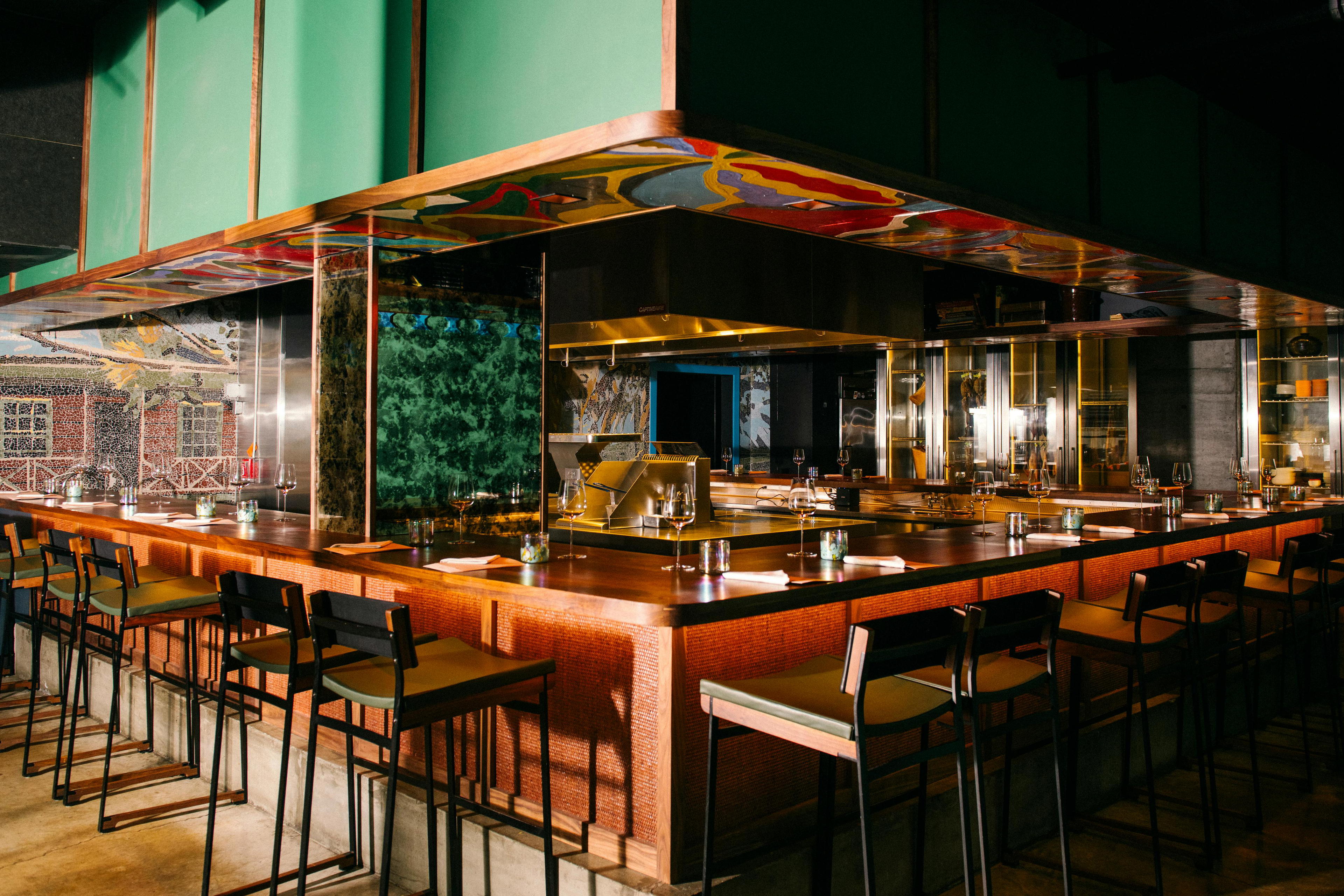
The restaurant attached to a hotel often functions as little more than a fallback for guests who don't want to go outside. Dirty French, the Major Food Group restaurant operating within The Ludlow, carries enough of its own reputation to work as a destination rather than a convenience. Major Food Group, the group behind Carbone and Pó, has a consistent track record for producing rooms and menus with independent followings. The presence of a credentialled operator at the ground floor level raises the social temperature of the hotel's public spaces in a way that a captive hotel restaurant rarely achieves.
Beyond the restaurant, the lobby lounge and the trellis garden extend the hotel's role as a neighbourhood social node. The Lower East Side's nightlife tradition means that the guest profile at The Ludlow skews toward people who are in the neighbourhood because they want to be, not because they took the nearest available room to a Midtown meeting. That self-selection produces public spaces with more energy than you'd find in a business-oriented property.
The Rooms: What the Light and Layout Deliver
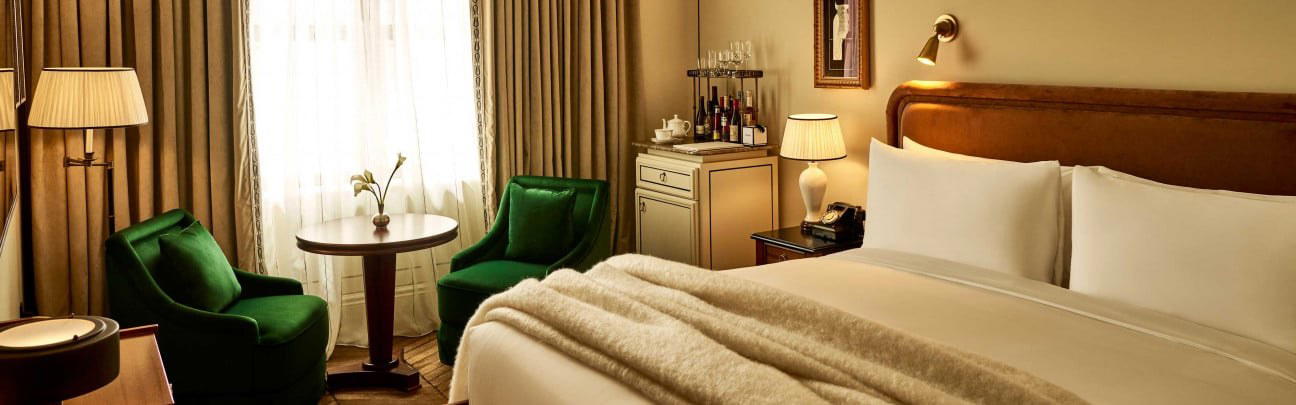
Across 184 rooms, the design logic prioritizes openness over ornamentation. Casement windows are the defining feature, pulling in street light and keeping the rooms from feeling like sealed boxes, a problem that affects a disproportionate number of Manhattan hotel rooms at any price point. The vintage styling is described as historically rooted but freshly finished, which in practice means the aesthetic reads as intentional rather than nostalgic. The Lower East Side's own architectural character, a mix of tenement-era buildings and more recent conversions, gives the hotel a natural visual frame that heavier, more formal design schemes would work against.
For travellers who prioritise design coherence and neighbourhood integration over the kind of amenity stacking found at properties like The Fifth Avenue Hotel or The Mark uptown, The Ludlow's approach represents a deliberate trade-off in the right direction. You're not here for the spa floor. You're here because the neighbourhood is still interesting and the room actually reflects that.
Travellers considering the broader US luxury market will find The Ludlow sits in a distinct urban category. Properties like Post Ranch Inn in Big Sur, Amangiri in Canyon Point, or SingleThread Farm Inn in Healdsburg offer retreat-oriented experiences at a distance from urban density. The Ludlow represents the opposite proposition: immersion in a specific New York neighbourhood, with the critical recognition to confirm that the execution matches the ambition. For those exploring the Eastern Seaboard, Raffles Boston in Boston and Troutbeck in Amenia offer useful comparison points at different scales. Further afield, Four Seasons at The Surf Club in Surfside and Little Palm Island Resort & Spa in Little Torch Key cover Florida's luxury hotel spectrum. International comparisons include Aman Venice in Venice, Badrutt's Palace Hotel in St. Moritz, and Bvlgari Hotel Tokyo in Tokyo, all occupying different positions in the global hotel tier conversation. See our full New York City restaurants guide for broader context on where The Ludlow fits within the city's dining and hospitality map.
Know Before You Go
- Address: 180 Ludlow St, New York, NY 10002
- Price from: $749 per night
- Rooms: 184
- Awards: Michelin 1 Key (2024)
- Hotel Group: Marriott International
- On-site dining: Dirty French (Major Food Group)
- Neighbourhood: Lower East Side, Manhattan
What It’s Closest To
Comparable venues nearby, for context on price, style, and recognition.
| Venue | Cuisine | Price | Awards | Notes |
|---|---|---|---|---|
| The Ludlow HotelThis venue (the venue you are viewing) | Trendy Lower East Side boutique with loft-style lofts and terrace suites | $300–500 | 1 Michelin Key · Design Hotels Member | Not listed |
| The Twenty Two New York | Luxurious members' club in a historic Edwardian brownstone blending heritage glamour with contemporary tastemakers. | Not listed | 1 Michelin Key · Mr & Mrs Smith Seal of Approval | Midtown South-Flatiron-Union Square |
| The Mercer | Loft-style luxury boutique in historic SoHo building | Not listed | 1 Michelin Key | SoHo-Little Italy-Hudson Square |
| The Peninsula New York | Historic luxury landmark with modern ornate renovations | Not listed | 1 Michelin Key · La Liste Top Hotels | Midtown-Times Square |
| 1 Hotel Central Park | Rustic-chic boutique hotel blending industrial design with sustainable luxury, emphasizing natural materials and environmental consciousness. | $300–500 | 1 Michelin Key | Midtown-Times Square |
| Mandarin Oriental, New York | Luxury urban tower hotel with Asian-inspired serenity amid Manhattan energy | Not listed | Michelin Selected · La Liste Top Hotels | Upper West Side-Lincoln Square |
Recognition history
Dated appearances from independent guides and award organizations, with the underlying list record or original source where available.
Michelin 1 Key
Michelin
Design Hotels Member
Design Hotels
Mr & Mrs Smith Seal of Approval
Mr & Mrs Smith
Full recognition history (5 entries)
Michelin 1 Key
Michelin
Michelin 1 Key
Michelin
Continue exploring
More in New York City
Hotels in New York City
All hotels in New York City →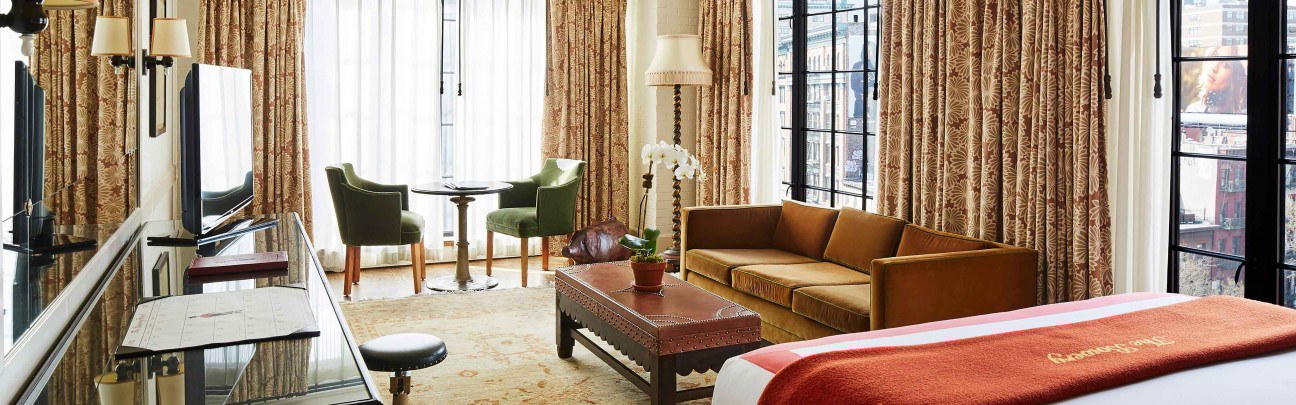

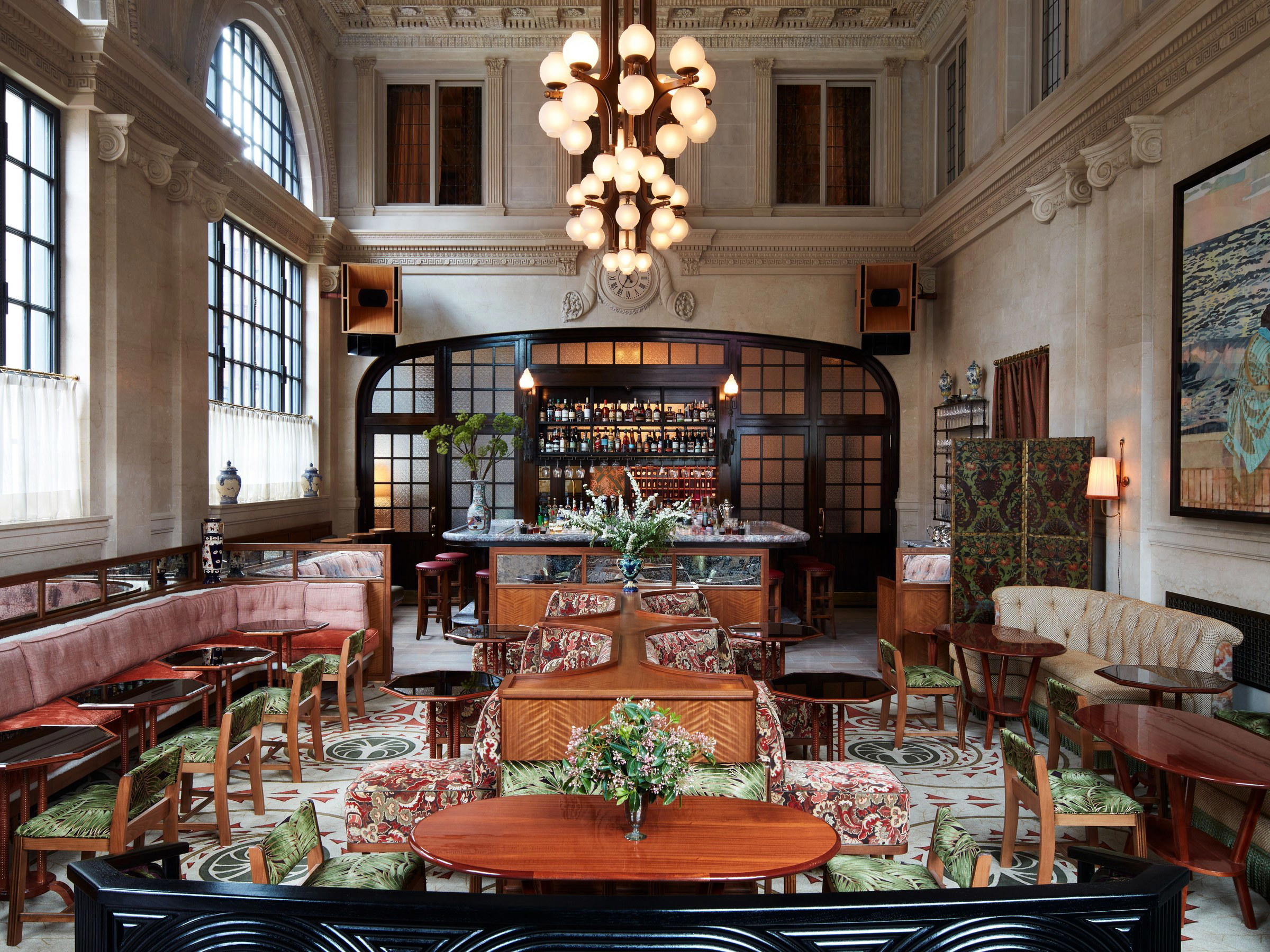
Bars in New York City
All bars in New York City →




Details
- Trendy
- Modern
- Sophisticated
- Elegant
- Romantic Getaway
- Weekend Escape
- Business Trip
- Rooftop Pool
- Terrace
- Historic Building
- Panoramic View
- Wi Fi
- Fitness Center
- Room Service
- Concierge
- Laundry Service
- Skyline
- Street Scene
- Wheelchair Accessible
- Elevator
Cozy and inviting lobby lounge with natural light, complemented by stylish, soundproofed rooms featuring premium bedding and luxurious marble bathrooms.