
Among Kathmandu's award-winning mountain retreats, The Terraces Resort and Spa holds dual recognition as a Regional Winner for Luxury Mountain Resort and Country Winner for Luxury Eco Resort, a comparable set that places it well above the city's standard hotel tier. The property addresses a specific demand: meaningful altitude-adjacent lodging for travellers who want Himalayan proximity without sacrificing considered comfort.
Pearl is the En Primeur Club membership app — saves, bookings, and concierge access live there. Same editors, same standards.
- Address
- Kathmandu 44709, Nepal
- Phone
- +977 980-2322755
- Website
- terracesresort.com
- Directions
- Get directions
 Saves & bookings on Pearl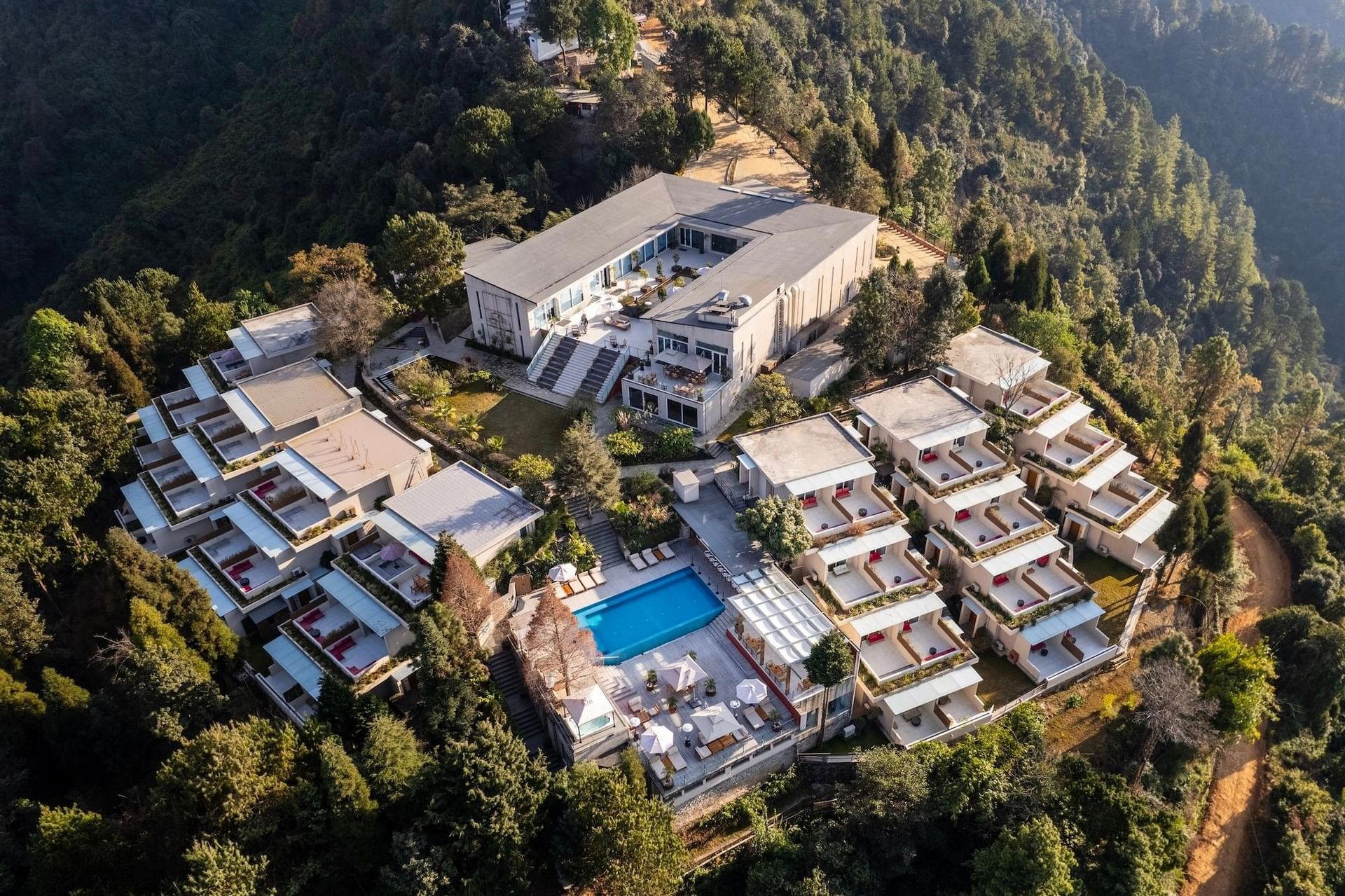
Where the Valley Meets the Mountain Edge
Approaching Kathmandu from the air, the Himalayan chain appears as a wall rather than a horizon, an abrupt visual threshold between the lowland sprawl and something altogether different. That threshold is precisely what a category of Kathmandu-area properties has learned to exploit. Rather than competing on city-centre convenience, the better mountain retreats position themselves on the valley rim, where the physical address does work that no lobby design could replicate. The Terraces Resort and Spa operates in this register, holding both Regional Winner status for Luxury Mountain Resort and Country Winner recognition for Luxury Eco Resort, credentials that locate it in a narrow peer tier where environmental positioning and considered infrastructure matter as much as room count.
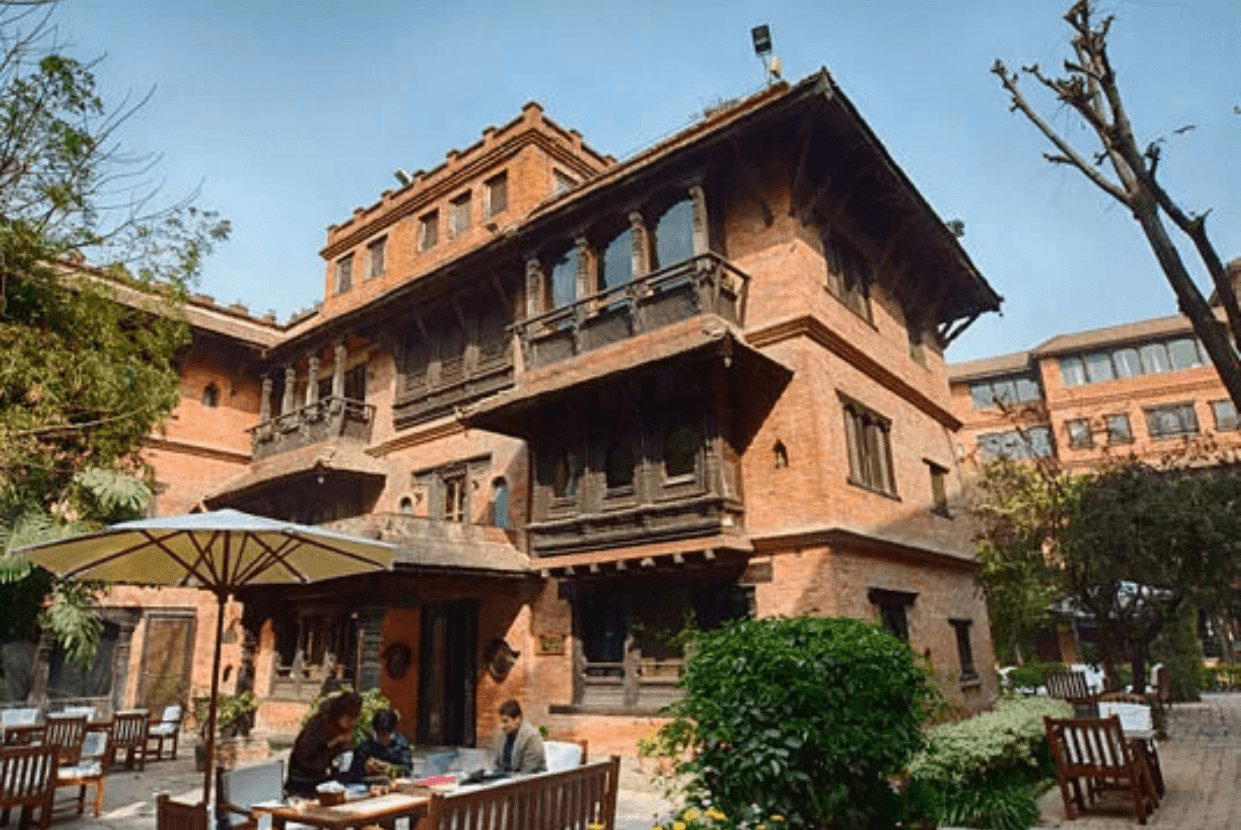
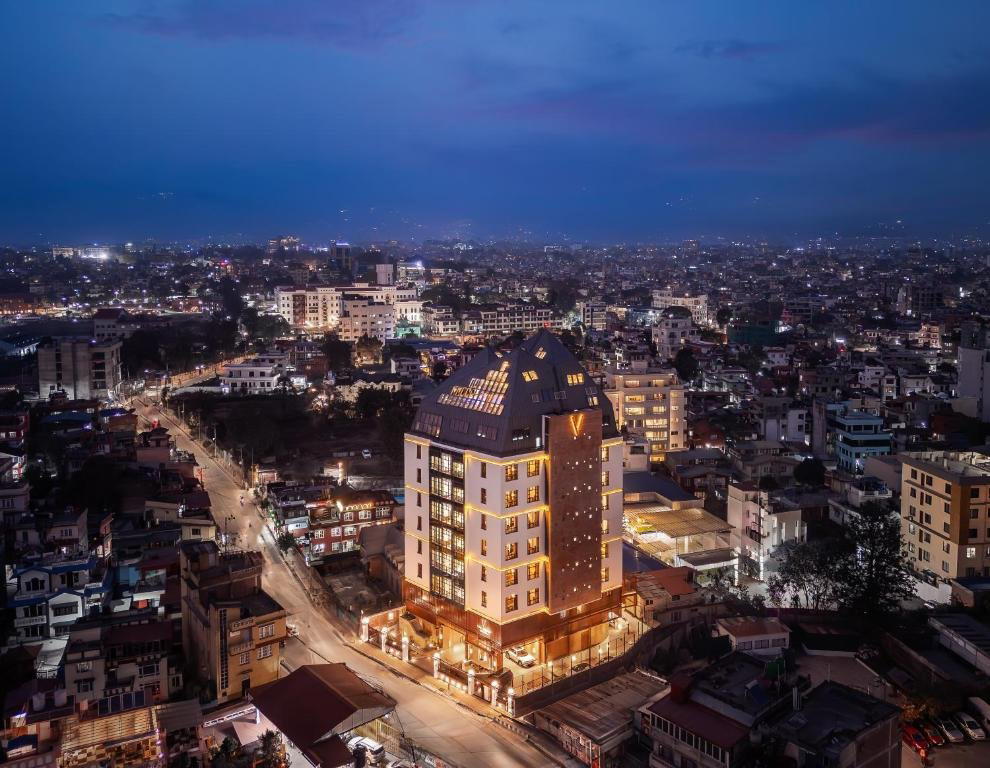
That dual-award profile is worth pausing on. Nepal's hospitality sector has fragmented sharply in recent years between high-volume trekking lodges serving expedition circuits and a smaller cohort of design-conscious properties targeting longer-stay leisure travellers. The awards The Terraces holds signal membership in the second group, placing it alongside properties like The Dwarika's Hotel and Dwarika's Sanctuary in Dhulikhel as recognised anchors of considered Kathmandu-region accommodation. Where Aloft Kathmandu Thamel and Varnabas Museum Hotel serve the urban-facing demand, The Terraces is built around its address: the altitude, the ridgeline access, and what Kathmandu looks like when you are standing above it rather than inside it.
The Logic of Elevation in Himalayan Hospitality
In mountain hospitality globally, position above a valley or city centre carries a specific set of trade-offs. Access becomes slower. Infrastructure becomes more demanding to deliver and maintain. But what the address provides in return is a relationship to landscape that ground-level urban properties simply cannot manufacture. The same principle that makes Amangiri in Canyon Point compelling is operating here at a different price and cultural register: the physical setting is the central argument.
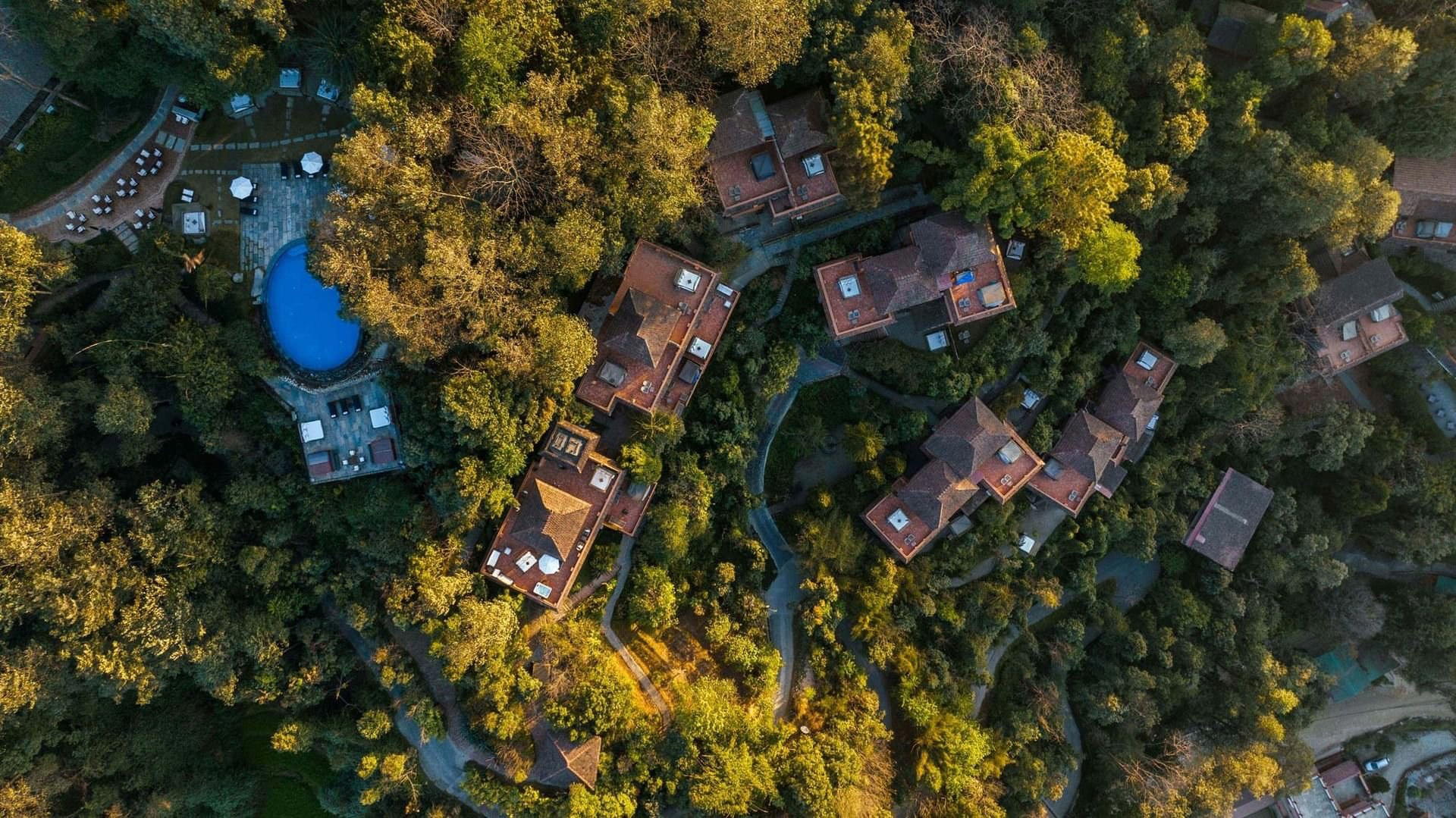
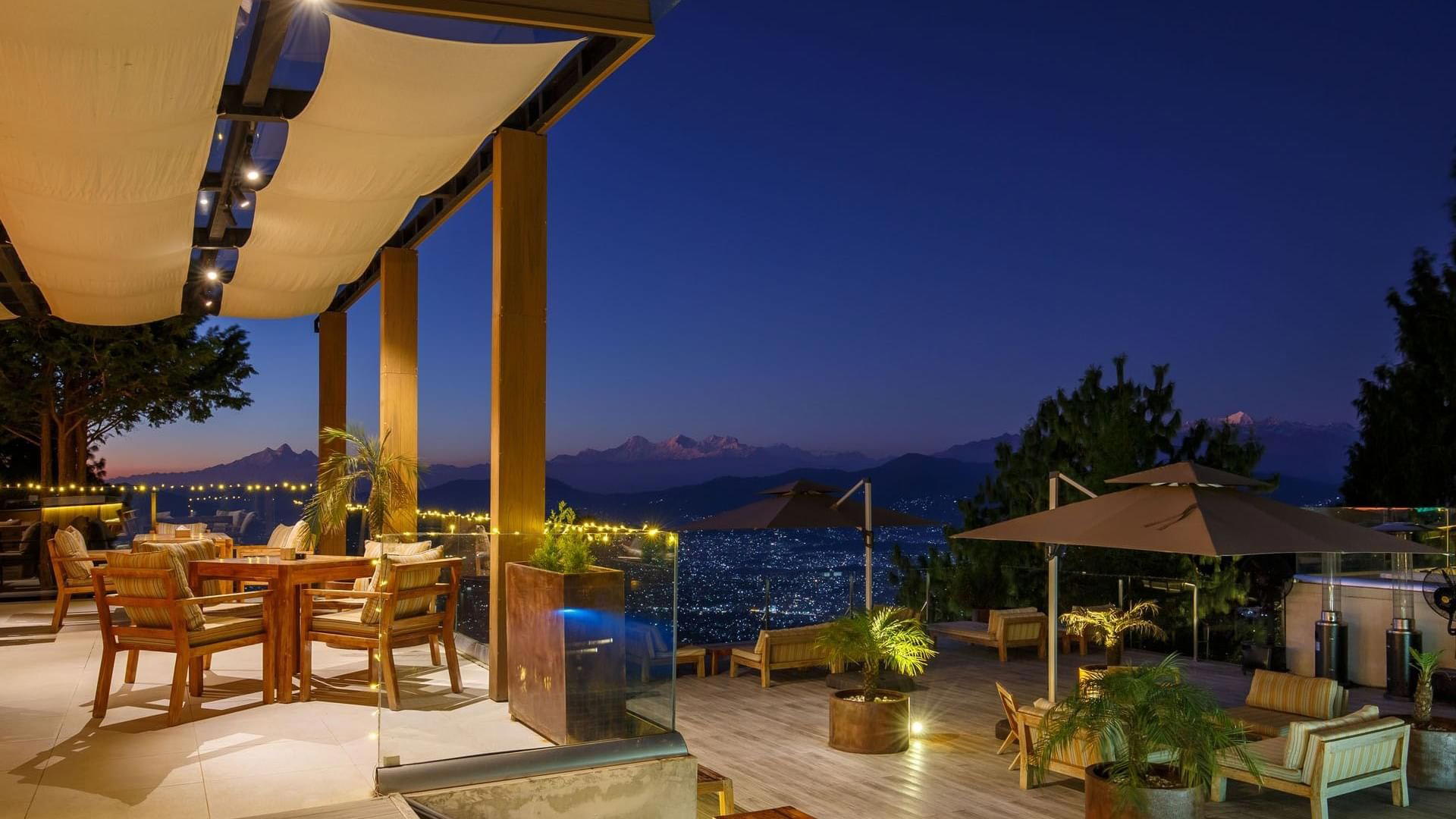
Kathmandu's valley geography makes this particularly legible. On clear mornings, the Himalayan panorama from refined positions around the valley, Langtang, Ganesh Himal, and on notable days the silhouette of peaks reaching toward Manaslu, is a different visual experience than anything the Thamel district or Durbar Square can offer. Properties that can frame this view, particularly from terraced architecture that steps down a slope rather than rising from a flat footprint, gain a structural advantage that no renovation budget can replicate for a city-centre competitor.
The eco-resort designation, for which The Terraces holds the country-level award, points to a second dimension of the address logic. At altitude, water sourcing, waste management, and energy systems all require different thinking than urban hotel infrastructure. Country-level recognition in this category is not decorative; it signals that the property has passed scrutiny on operational standards that are genuinely more demanding at its location than they would be closer to the city's utility grids.
Kathmandu as a Base, Not Just a Transit Point
The dominant pattern for international visitors to Nepal has historically been to treat Kathmandu as a processing stop: arrive, acclimatise briefly, and move toward the trekking circuits. The Khumbu region lodges, places like Hikers Inn in Chaunrikharka, Dingboche Inn, and Thukla Kalapathar Lodge, serve that expedition pipeline. The Terraces belongs to a different use case entirely: it is built for the traveller who intends to stay in the valley, or who wants arrival and departure nights that carry weight of their own.
That is a meaningful distinction. Kathmandu's cultural offer is dense. Boudhanath Stupa, Pashupatinath Temple, Patan Durbar Square, and the museums of the old city are serious reasons to remain rather than transit. A property positioned at the valley's edge, offering views of both the Himalayan skyline and the city below, allows a particular kind of visit: mornings oriented toward the mountains, afternoons accessible to the UNESCO-listed heritage zones. For travellers extending beyond Nepal's capital, connection toward Pokhara is a natural continuation, where properties like Himalayan Hideaway Resort Pokhara offer a comparable mountain-resort register at a different altitude and valley configuration. Further west, Shinta Mani Mustang in Jomsom represents the far end of this Nepal property spectrum, for itineraries that reach into Upper Mustang.
The Eco-Resort Category in Nepal's Context
Nepal's recognition as a country-level Luxury Eco Resort winner requires some unpacking. The eco-resort category globally has acquired a layer of greenwashing that makes awards in the space more meaningful as differentiators, not less. Country-level wins, particularly in a competitive mountain-tourism context where environmental claims are dense and scrutiny from both guests and certification bodies is reasonably rigorous, carry genuine weight. The category comparison set in Nepal includes properties operating across the Annapurna circuit, the Everest region, and the Chitwan lowlands, a geographically and operationally diverse field. Winning at country level in this context is a substantive credential rather than a participation marker.
This matters for the specific traveller profile The Terraces addresses. Within the broader global luxury hotel tier, where properties like Castello di Reschio in Umbria or Cheval Blanc Paris set a global reference, the mountain eco-resort format is a distinct sub-category with its own hierarchy. The Terraces sits at the summit of that hierarchy within Nepal, which is a meaningful position regardless of how it compares against city-centre luxury in Tokyo or New York.
Planning a Stay
Kathmandu sits at approximately 1,400 metres, and the valley's pre-monsoon window (March to May) and post-monsoon period (October to November) deliver the clearest Himalayan sightlines. Those windows also coincide with peak trekking season, so properties offering valley-based luxury with mountain views tend to fill on shorter lead times than travellers accustomed to European or North American booking curves might expect. Pre-monsoon and autumn bookings, particularly for travellers arriving via connecting hubs in Delhi, Doha, or Dubai, reward early planning.
A Minimal comparable set
Comparable venues nearby, for context on price, style, and recognition.
| Venue | Price | Notes |
|---|---|---|
| The Terraces Resort and SpaThis venue — the venue you are viewing | $$$$ | Not listed |
| Aloft Kathmandu Thamel | $$$ | Thamel, Next-generation stylish urban hotel blending modern design with local Nepali culture |
| The Dwarika's | $$$$ | Battisputali, Newari heritage palace with restored ancient artifacts |
| Varnabas Museum Hotel | $$$$ | Kathmandu, Cultural museum-style luxury boutique |
| The Dwarika's Hotel | $$$$ | Kathmandu, Heritage Newari palace-style architecture with modern luxury amenities |
| Shinta Mani Mustang | $$$$ | Jomsom, Eco-friendly luxury resort inspired by traditional Tibetan homes using local stone, slate, and wood. |
Recognition history
Dated appearances from independent guides and award organizations, with the underlying list record or original source where available.
World Luxury Hotel Awards WLHA Country Winner
World Luxury Hotel Awards
World Luxury Hotel Awards WLHA Regional Winner
World Luxury Hotel Awards

At a Glance
- Scenic
- Elegant
- Quiet
- Sophisticated
- Romantic
- Honeymoon
- Romantic Getaway
- Wellness Retreat
- Family Vacation
- Infinity Pool
- Panoramic View
- Terrace
- Destination Spa
- Wi Fi
- Pool
- Spa
- Fitness Center
- Room Service
- Concierge
- Business Center
- Valet Parking
- Mountain
- Skyline
- Wi Fi
- Pool
- Spa
- Fitness Center
- Room Service
- Concierge
- Business Center
- Valet Parking
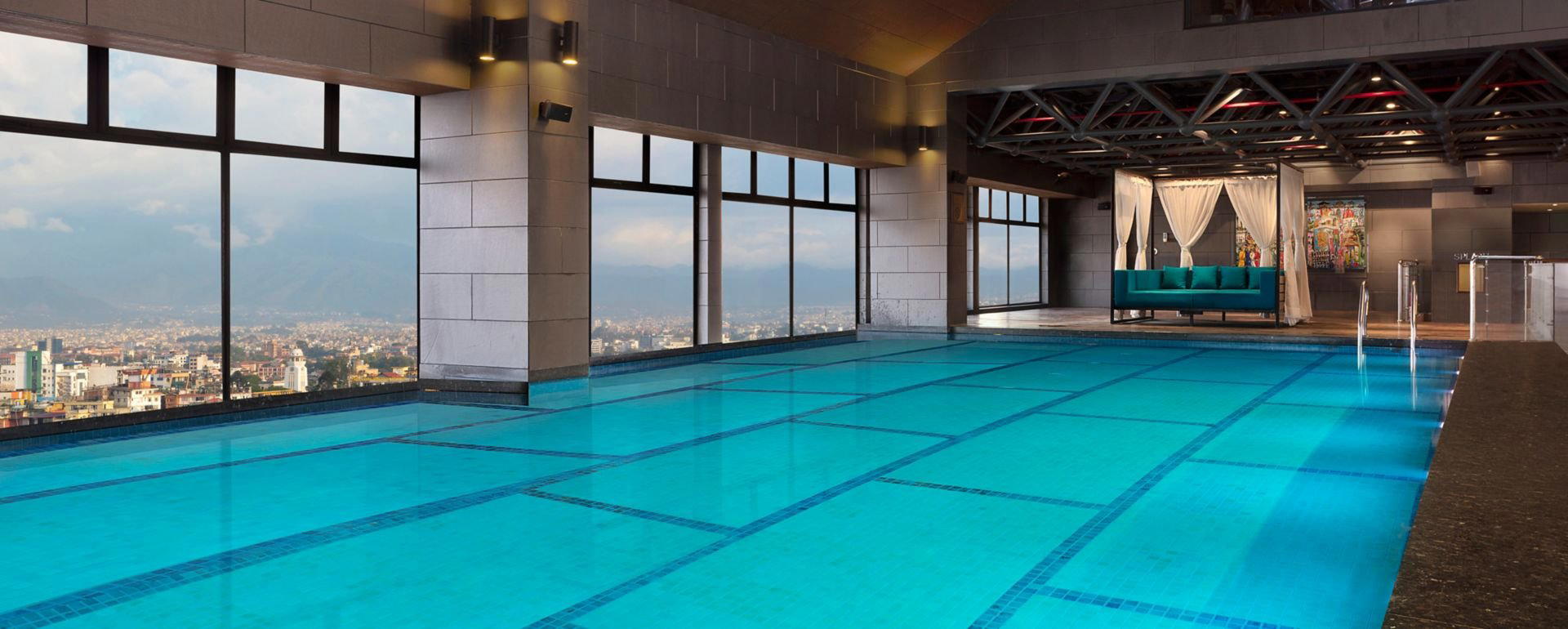
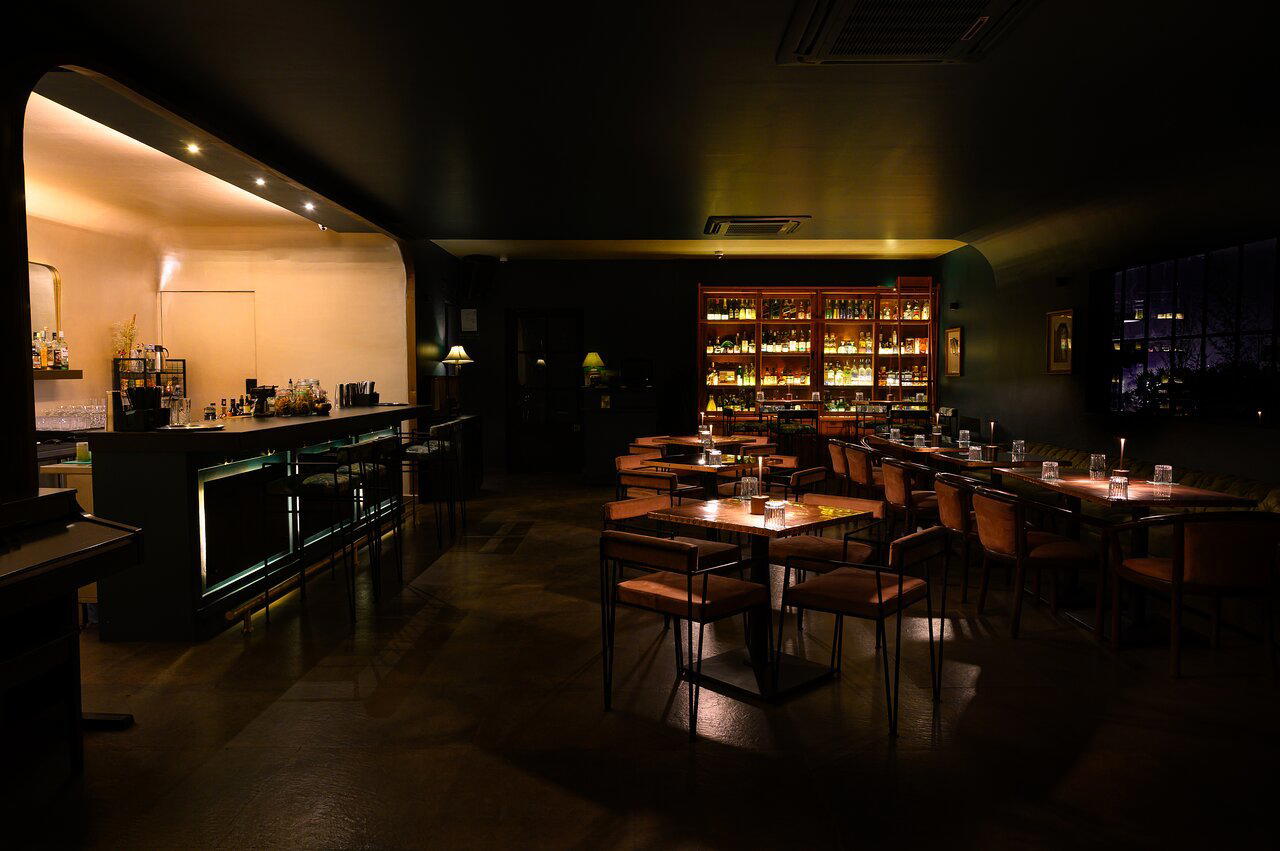
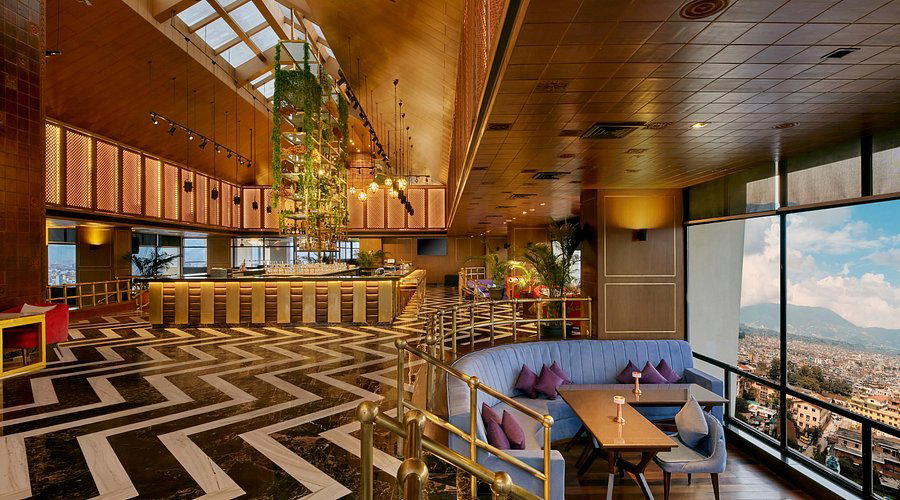
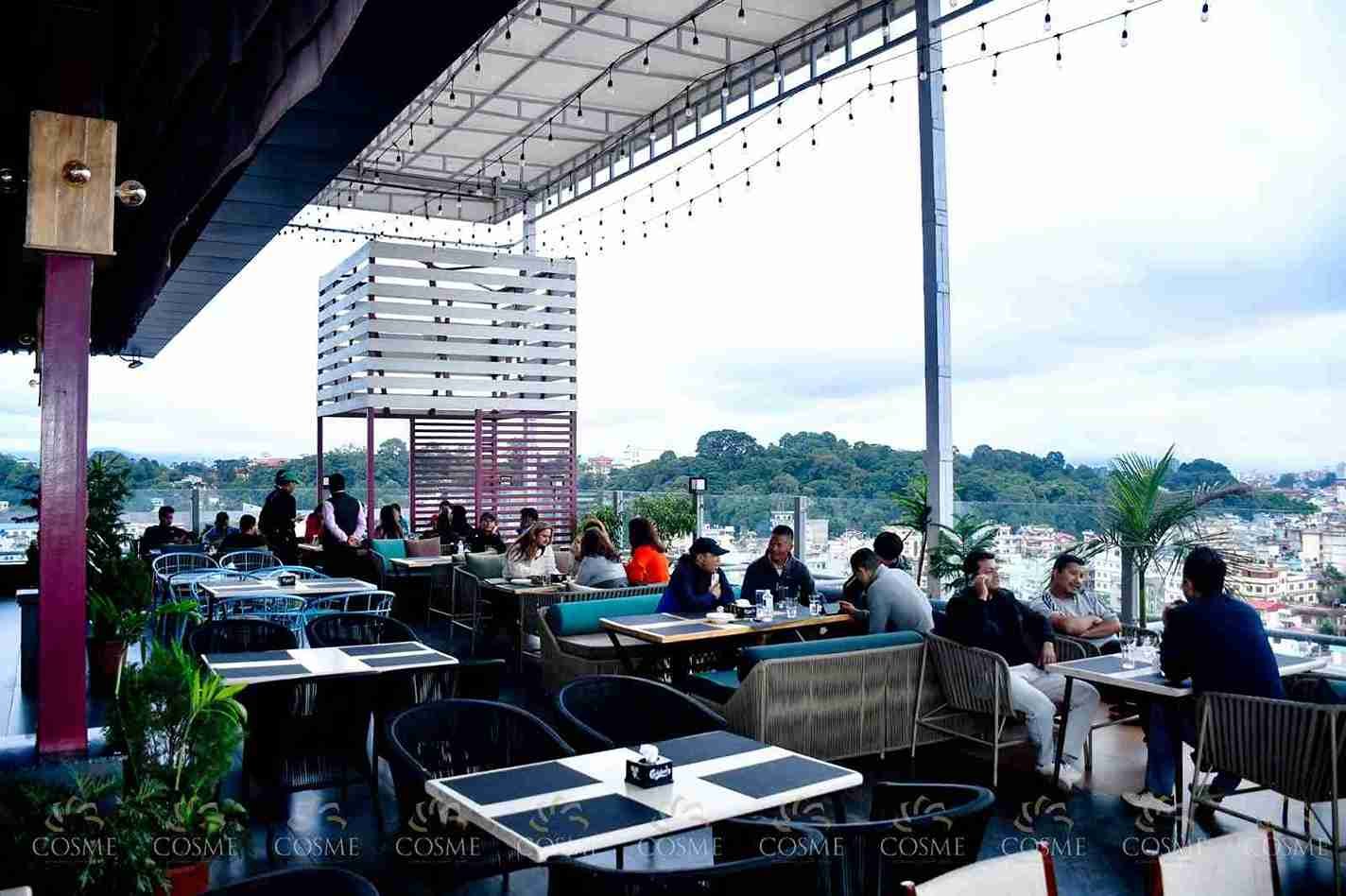
Serene and relaxing atmosphere with natural lighting, stylish harmonious design, and peaceful surroundings enhanced by mountain vistas and thoughtful details.