The Peat Inn Restaurant with Rooms
The Peat Inn has anchored fine dining in rural Fife for decades, earning Michelin recognition that places it among Scotland's most seriously considered restaurant-with-rooms destinations. Set in a converted inn on the Cupar road, its low-ceilinged dining rooms and suite accommodation occupy a category distinct from both city-centre fine dining and country house hotels, closer in spirit to the great European auberge tradition than anything else in the region.
Pearl is the En Primeur Club membership app — saves, bookings, and concierge access live there. Same editors, same standards.
- Address
- Collier Row, Cupar KY15 5LH, United Kingdom
- Phone
- +44 1334 840206
- Website
- thepeatinn.co.uk
- Directions
- Get directions
 Saves & bookings on Pearl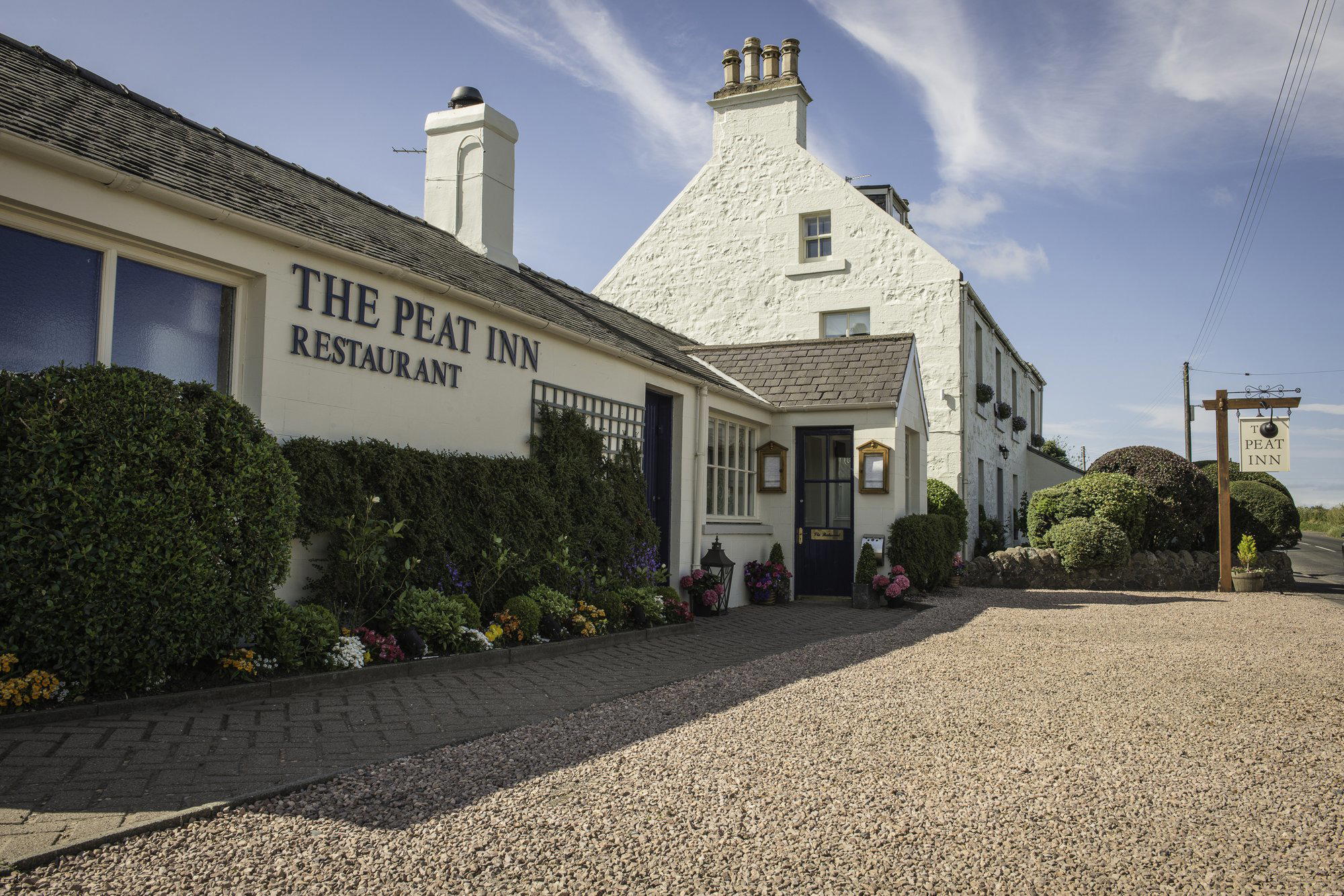
A Stone Building at a Rural Crossroads, and What That Tells You About Scottish Fine Dining
There is a particular category of European dining destination that only makes sense when you drive to it. The road narrows, the landscape opens, and the building that arrives, modest in scale, settled into its surroundings, signals immediately that the experience is organised around the table rather than a wider resort apparatus. The Peat Inn, occupying a converted inn at a crossroads in rural Fife, belongs to that category. It sits in the same tradition as the great French auberges, Troisgros in Roanne, say, or L'Esperance in Vézelay, where the physical remoteness is itself an argument: come here deliberately, stay the night, let the meal be the entire occasion.
That framing matters because it locates the Peat Inn in a distinct competitive set. It is not a country house hotel with a restaurant attached, nor a city-centre destination that happens to offer rooms. It is a restaurant that has accumulated rooms over time, and the architecture, the original stone structure, the low-ceilinged dining spaces, the proportions that refuse to be grand, reflects that ordering of priorities. The building reads as a working inn that has been refined rather than transformed, and in Scotland's fine dining context, that restraint is relatively uncommon. Gleneagles operates at resort scale; most Edinburgh options situate themselves within the city's Georgian fabric. The Peat Inn offers something else: a rural seriousness that has more in common with destination restaurants in Burgundy or the Basque Country than with anything in a Scottish city centre.
The Physical Language of the Space
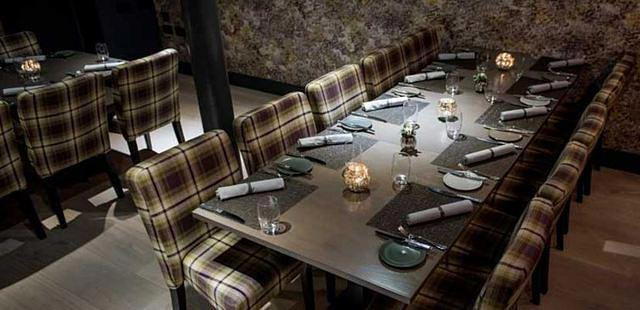
The inn's architecture communicates before the food arrives. Stone walls, a compressed ceiling height, and the material honesty of a building that was originally functional rather than decorative, these are the design conditions inside which the kitchen operates. In an era when many fine dining rooms trend towards sparse Nordic interiors or maximalist hotel grandeur, the Peat Inn's rooms carry a different register: accumulated, settled, earned. The kind of space that has absorbed decades of serious meals rather than been designed to signal seriousness at first glance.
This matters as an editorial point about Scottish rural hospitality more broadly. The country has two dominant modes: the grand Victorian or Edwardian sporting estate (think the inherited scale of properties like Monachyle Mhor in Stirling's landscape, or the wild remoteness of Langass Lodge in the Outer Hebrides), and the smaller, more concentrated restaurant-led destination. The Peat Inn sits firmly in the latter. Its suite accommodation, attached to rather than the primary purpose of the property, keeps the emphasis where the building's history places it: on the act of dining, extended across an overnight stay.
For guests arriving from Edinburgh, the drive through Fife's agricultural flatlands is part of the transition. The county sits between the Forth and the Tay, neither dramatic coastline nor upland wilderness, and that ordinariness is actually part of the appeal: there is nothing to compete with the meal. Compare this with the studied retreat logic of properties like The Newt in Somerset or Estelle Manor in Oxfordshire, where the landscape is itself curated as part of the offer. The Peat Inn's landscape is quieter, less photogenic, and entirely beside the point.
Michelin Recognition and What It Signals in This Context
The Peat Inn has carried Michelin recognition over its history, placing it in a category shared by a relatively small number of Scottish restaurants operating outside Edinburgh and Glasgow. In the context of Fife specifically, that recognition is a significant signal. The county is not a traditional fine dining destination in the way that the central belt cities are, and a Michelin-starred restaurant operating from a converted rural inn, rather than from within an established hospitality ecosystem, represents a different kind of investment in place. The commitment required to sustain that level of recognition in a location this rural is itself a form of editorial argument about where the kitchen's priorities lie.
Compared to city-format fine dining, Edinburgh has a different density of options, rural Fife's serious restaurant offer is concentrated, which makes the Peat Inn's position within it more significant.
Rooms That Support Rather Than Compete
The suite accommodation at the Peat Inn is organised to serve the dining occasion rather than to function as a destination in its own right. This is a meaningful distinction from the integrated resort model, where rooms and restaurant are co-equal attractions. Here, the suites extend the meal: they allow guests to arrive without a train to catch, to order from the wine list without calculating a drive home, to make the evening longer and less managed. In that sense, the accommodation is architectural in its purpose. It removes a constraint rather than adding a feature.
This positions the Peat Inn differently from properties where room design is itself a draw. Claridge's in London or Lime Wood in the New Forest operate on a model where the room product is independently considered at the level of the food and beverage offer. At the Peat Inn, the suites serve the restaurant, and the architecture reflects that logic: comfortable, private, removed from any distraction that would compete with the memory of what was eaten.
Planning a Stay: What to Know Before You Go
The Peat Inn is located at Collier Row, Cupar KY15 5LH, in Fife, roughly six miles from St Andrews and close to Cupar. Arriving by car is the practical choice; there is no meaningful public transport infrastructure serving the location at the level required for an evening visit. Edinburgh is approximately an hour's drive away, making an overnight stay sensible. Advance booking is essential, particularly for weekend dining. Those considering comparable rural Scotland stays with strong food programmes might also look at Burts Hotel in Melrose or Dun Aluinn in Aberfeldy for a sense of what the country's smaller, independently operated hospitality properties offer at their considered end.
At-a-Glance Comparison
Comparable venues nearby, for context on price, style, and recognition.
| Venue | Cuisine | Price | Awards | Notes |
|---|---|---|---|---|
| The Peat Inn Restaurant with RoomsThis venue — the venue you are viewing | Historic coaching inn reimagined as luxury restaurant with rooms, blending period character with contemporary comfort. | $$$$ | 5-Star | Not listed |
| Hotel du Vin at One Devonshire Gardens | Victorian townhouse luxury | $$$$ | 5-Star | West End |
| voco St. David's Cardiff | Upscale waterfront landmark with bold, distinctive design and private balconies. | $$$$ | 5-Star | Cardiff Bay |
| Old Course Hotel Golf Resort and Spa | Luxury golf resort with Edwardian architectural aesthetics complementing St Andrews heritage. | $$$$ | 5-Star | St Andrews |
| The May Fair, A Radisson Collection Hotel | Well-known luxury heritage hotel with contemporary interiors and English elegance | $$$$ | 5-Star | Mayfair |
| The Franklin London - Starhotels Collezione | Victorian townhouses refurbished as luxury boutique with Italian residential feel. | $$$$ | 5-Star | Knightsbridge |
Continue exploring
More in Fife
Hotels in Fife
Browse all →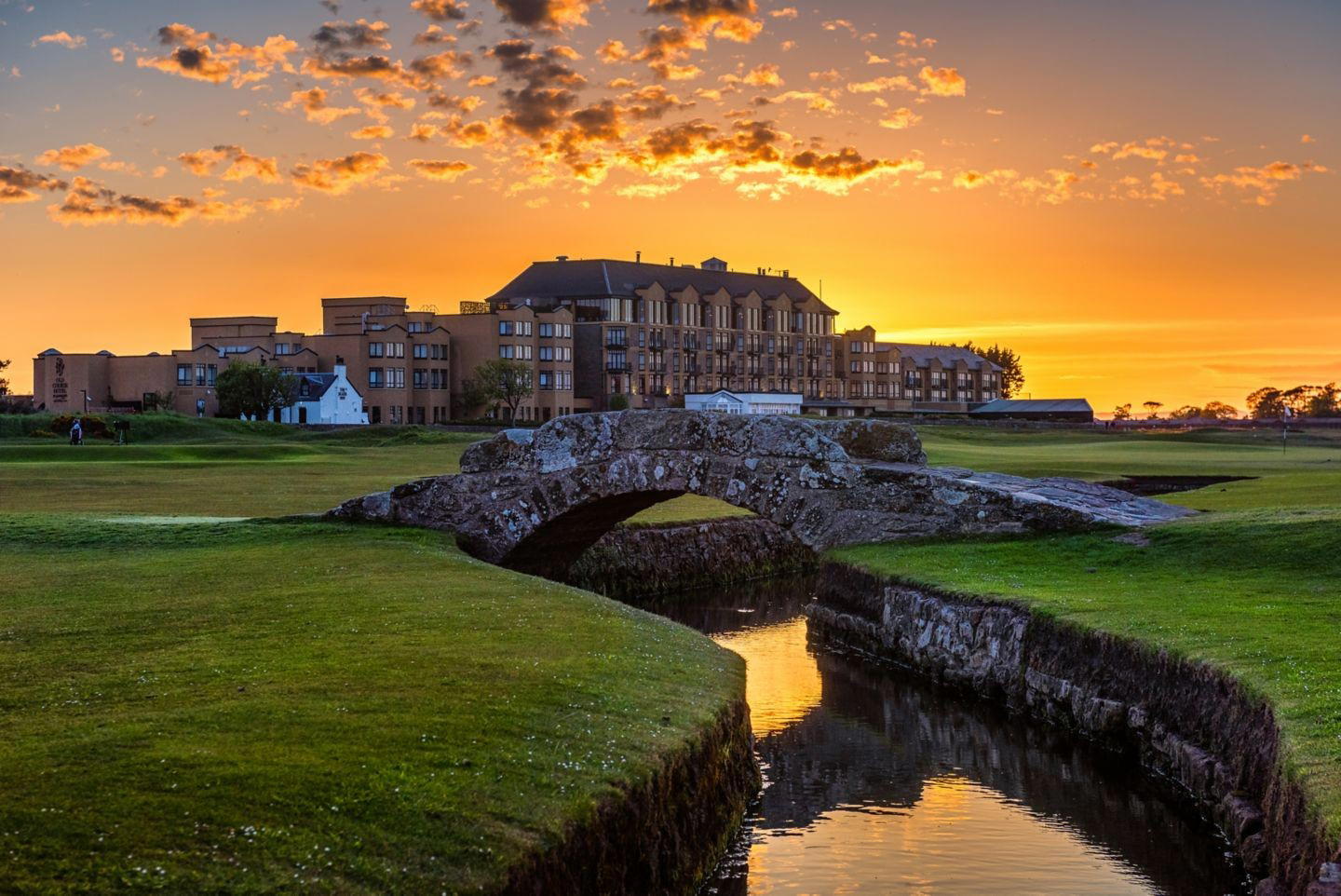
Bars in Fife
Browse all →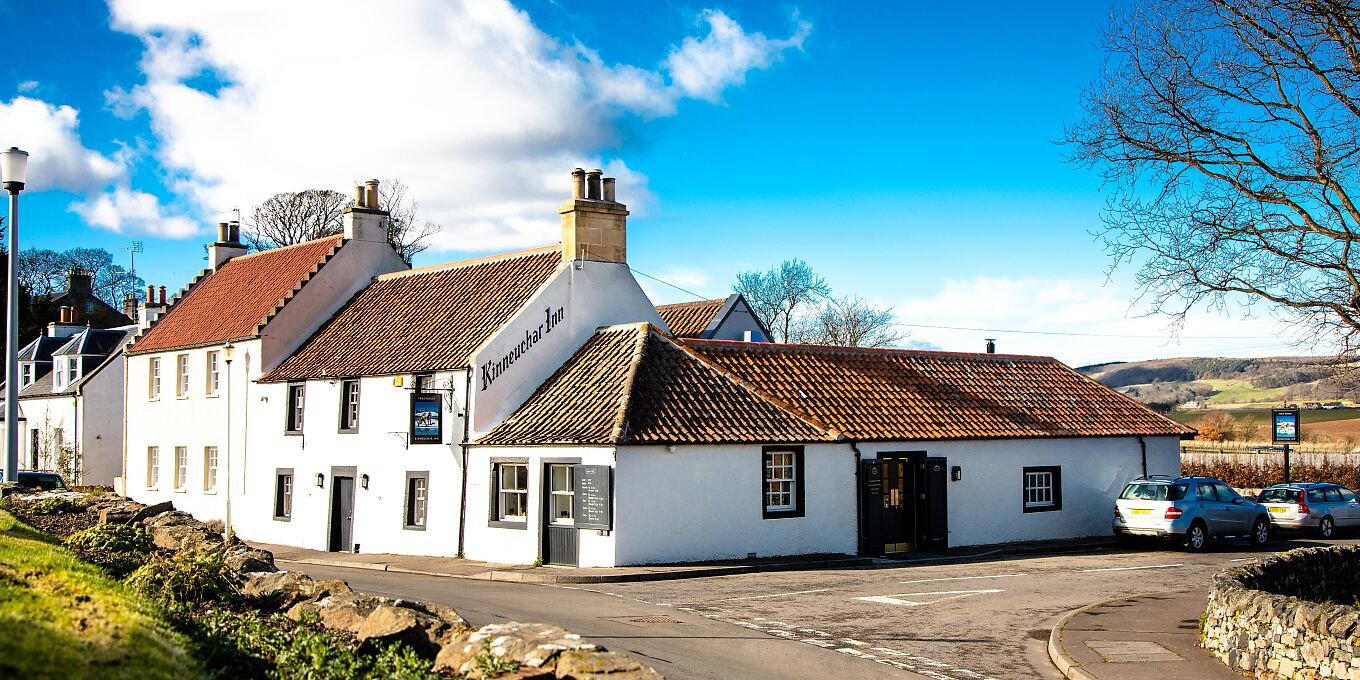
Restaurants in Fife
Browse all →
Wineries in Fife
Browse all →
At a Glance
- Romantic
- Elegant
- Quiet
- Sophisticated
- Intimate
- Romantic Getaway
- Anniversary
- Celebration
- Weekend Escape
- Garden
- Historic Building
- Panoramic View
- Private Dining
- Wi Fi
- Restaurant
- Bar
- Garden
- Golf Course
- Room Service
- Garden
- Wi Fi
- Restaurant
- Bar
- Garden
- Golf Course
- Room Service
Relaxed refinement with original log fireplace in reception lounge, three elegant intimate dining rooms, and peaceful countryside setting with garden views from suites.