Old Course Hotel
The bar at Old Course Hotel sits at the edge of the most scrutinised stretch of turf in golf, where the drink in hand tends to arrive with a view that does most of the talking. The programme leans into Scottish provenance, with whisky and spirit selection shaped by the hotel's position in St Andrews rather than generic luxury convention. It occupies a specific niche: a hotel bar that earns its seriousness through setting and sourcing, not volume or showmanship.

Pearl is the En Primeur Club membership app — saves, bookings, and concierge access live there. Same editors, same standards.
- Address
- Old Course Hotel, Old Station Rd, St Andrews KY16 9SP, United Kingdom
- Phone
- +44 1334 474371
- Website
- oldcoursehotel.co.uk
- Directions
- Get directions
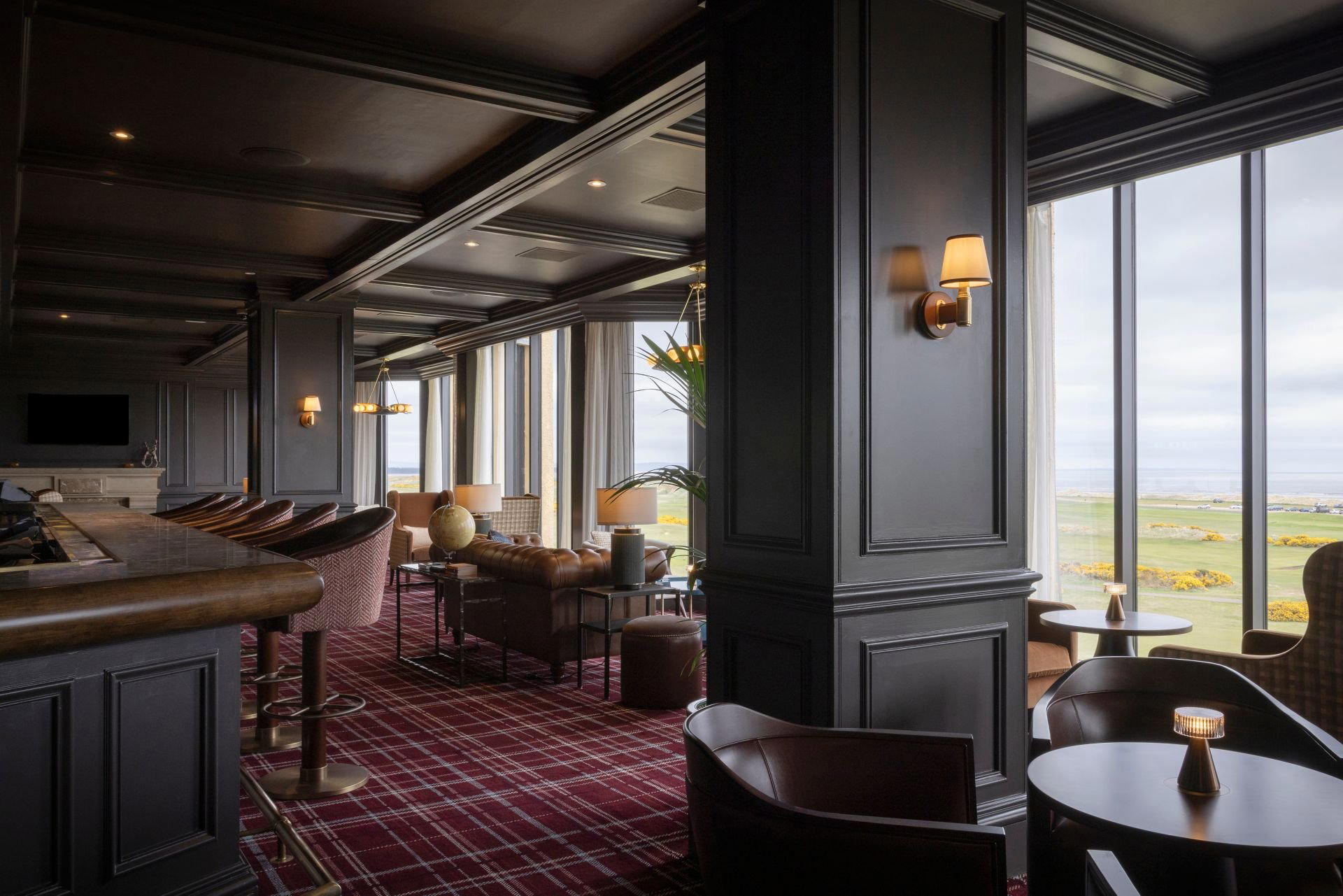
Where the 18th Fairway Meets the Back Bar
Hotel bars in resort settings tend toward one of two modes: the high-energy lobby destination designed to draw non-guests, or the quiet refuge that serves only those staying. The bar at the Old Course Hotel in St Andrews operates closer to a third model, shaped by the specific gravity of its location on Old Station Road, overlooking the Road Hole and the 17th of the Old Course itself. The view from certain positions in the bar is not incidental to the experience. It is, in practical terms, the opening act.
St Andrews draws a particular kind of visitor: someone who has planned their trip in detail, often around a tee time, and who arrives with a working knowledge of both the course and the town's history. That audience tends to inform the register of a hotel bar more than interior design choices do. Both of those operations built their identities around bartender craft as the central proposition. The Old Course Hotel bar builds its identity around place.
The Drink in Context: Scottish Provenance as Programme Logic
Across Scotland's better hotel bars, the whisky list functions less as an amenity and more as a positioning statement. The breadth of single malt selection, the presence or absence of independent bottlings, and whether the list ventures into lesser-known distilleries all signal how seriously the programme takes its geographic context. In a town like St Andrews, situated between the Highlands, Speyside, and the coastal distilleries of the East Neuk, a thoughtfully assembled whisky selection does not require invention so much as editorial confidence.
The broader shift in Scottish hotel bar culture over the past decade has moved away from the generic international spirits menu toward lists that foreground Scotch in its regional variety. Campbeltown malts, island whiskies, and the increasingly recognised output of newer Lowland distilleries have all found their way onto hotel bar menus that previously would have defaulted to the familiar blended brands. Where the Old Course Hotel sits in that continuum is worth considering for any visitor making a deliberate bar stop rather than a casual drink on the way to dinner.
For a direct comparison elsewhere in the UK, the Merchant Hotel in Belfast represents the hotel bar at its most technically ambitious, with a cocktail programme that has attracted international recognition. That model requires year-round investment in staff training and menu development at a level most resort hotels do not sustain. The Old Course Hotel operates in a different register, where the prestige of the address does some of the heavy lifting that bar craft would need to do in a city-centre context.
The Physical Environment and What It Demands of the Drink
The architectural context of the Old Course Hotel is relevant to how the bar reads. The hotel is a substantial property built to accommodate the demands of golf tourism at one of the sport's most referenced addresses. That scale shapes the bar experience in ways that smaller, independent operators in Fife and across Scotland do not face. A hotel bar embedded in a large property tends to function as one of several food and drink spaces rather than as the singular programme of a standalone bar.
Compare this to what happens at smaller coastal properties in Scotland, such as Digby Chick in Na H-Eileanan An Iar or the Harbour View and Fraggle Rock Bar in Bryher, where the bar is the destination rather than a component of a larger hospitality operation. In those settings, every element of the drinks list carries more weight because there is no restaurant or spa to absorb the guest's attention. The Old Course Hotel bar works with a different calculus, where the view, the setting, and the occasion drive footfall rather than the programme alone.
That said, the physical environment here does something few bars in Scotland can claim: it places the drinker in direct sight of one of the most written-about patches of ground in sport. For a visitor arriving after a round on the Old Course itself, or watching another group move through the Road Hole from a window seat, that context charges the atmosphere in ways that no cocktail menu can replicate.
Planning a Visit: Timing, Access, and Expectations
St Andrews is a university town and a golf pilgrimage site in roughly equal measure, and its seasonal rhythm follows both. The golf season pulls peak visitors from late spring through early autumn, and the hotel bar reflects that pattern. Visiting during the shoulder months of March or October brings a quieter version of the same space, often with easier access to the better window seats. The town itself is compact and walkable from the hotel's position on Old Station Road, meaning the bar can serve as a reasonable post-dinner stop for visitors staying elsewhere in St Andrews rather than exclusively for hotel guests.
For those building a broader itinerary around Fife's food and drink scene, our full Fife restaurants guide covers the wider context. The region's drinking culture has developed in interesting ways beyond St Andrews itself, with independent operators increasingly bringing the kind of programme discipline associated with city bars to coastal and rural settings.
Comparison with bars in other UK cities helps calibrate expectations. Schofield's in Manchester and Horseshoe Bar Glasgow both operate with the kind of dedicated bar identity that a large hotel cannot fully replicate. Equally, the high-energy formats of Mojo Leeds represent a different register entirely from what a visitor to St Andrews would expect or want. The Old Course Hotel bar pitches itself at an audience that has already decided the occasion matters, and calibrates its offer accordingly. For those drawn to bars where technical ambition is the primary draw, L'Atelier Du Vin in Brighton or Avon Gorge by Hotel du Vin in Bristol offer a different kind of proposition. For those drawn to bars where setting and provenance form the core of the experience, St Andrews and the Old Course Hotel are a coherent choice. Internationally, bars like Bar Leather Apron in Honolulu show how a hotel-adjacent bar can build a craft identity distinct from its surroundings; the Old Course Hotel takes a more integrated approach to its address.
At-a-Glance Comparison
| Venue | Price | Awards |
|---|---|---|
| Old Course HotelThis venue — the venue you are viewing | Not listed | Not listed |
| Bar Termini | $20–30 | World's 50 Best #6 · Falstaff Bar - 93 Falstaff Points |
| Callooh Callay | Not listed | World's 50 Best |
| Happiness Forgets | $20–30 | World's 50 Best #40 · Top 50 Cocktail Bars UK #44 |
| Mojo Leeds | $20–30 | World's 50 Best #24 |
| Nightjar | $30–50 | World's 50 Best #43 · Falstaff Bar - 91 Falstaff Points |
Continue exploring
More in Fife
Bars in Fife
Browse all →
Restaurants in Fife
Browse all →
Hotels in Fife
Browse all →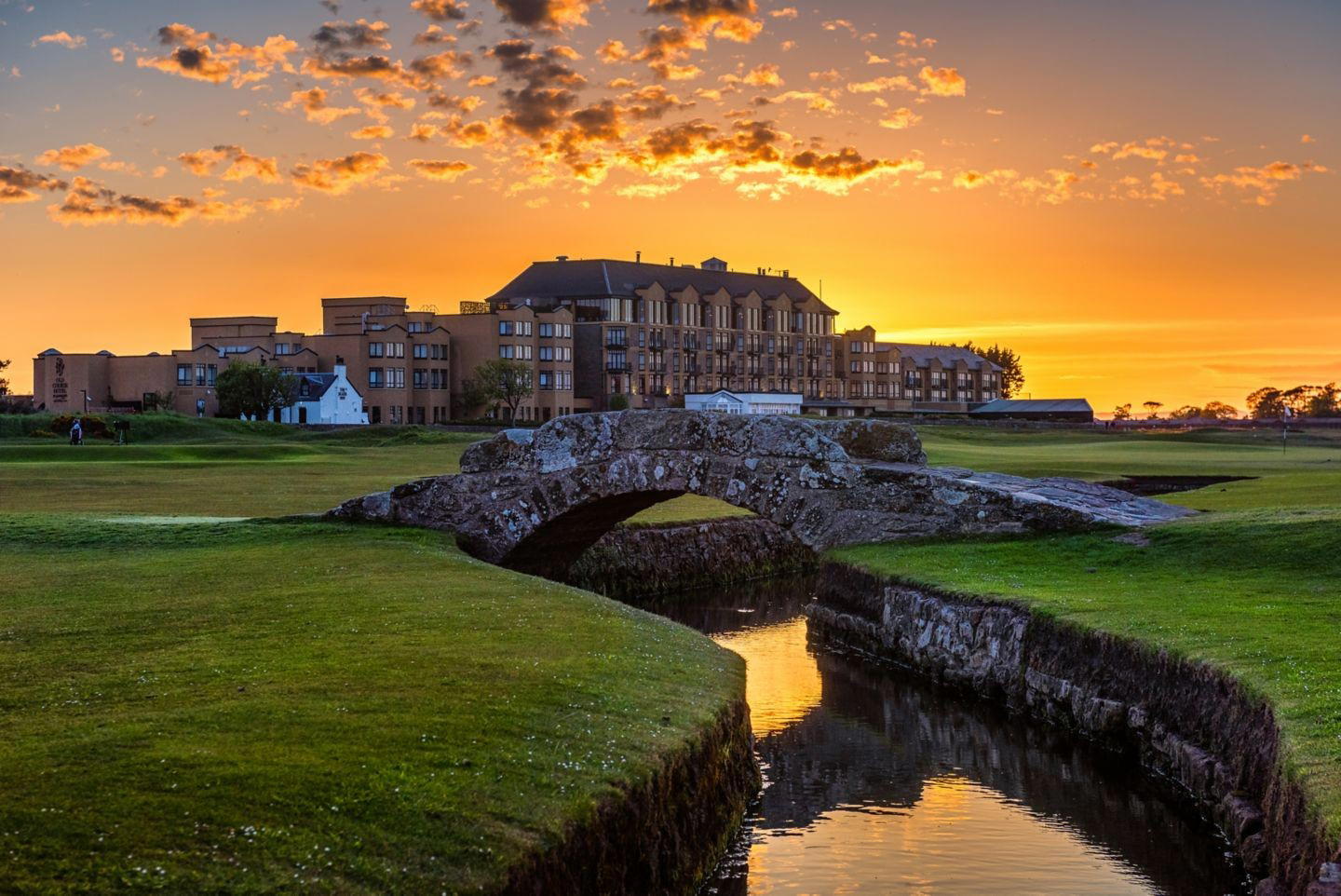
Wineries in Fife
Browse all →
Details
- Elegant
- Sophisticated
- Classic
- Well Known
- Celebration
- Special Occasion
- After Work
- Historic Building
- Panoramic View
- Hotel Bar
- Terrace
- Lounge Seating
- Booth Seating
- Outdoor Terrace
- Whiskey
- Classic Cocktails
- Waterfront
- Street Scene
Sophisticated with dim lighting, leather sofas, wood-panelled walls, and panoramic golf course views.