The Leeds Library
One of England's oldest private subscription libraries, The Leeds Library at 18 Commercial Street has occupied its Georgian premises since 1768. The building's unaltered reading rooms and cast-iron stacks place it in a category apart from the city's newer cultural attractions. For visitors drawn to architectural continuity and literary heritage, it represents a rarely preserved chapter of provincial intellectual life.

Pearl is the En Primeur Club membership app — saves, bookings, and concierge access live there. Same editors, same standards.
- Address
- 18 Commercial St, Leeds LS1 6AL, United Kingdom
- Phone
- +44 113 245 3071
- Website
- theleedslibrary.org.uk
- Directions
- Get directions
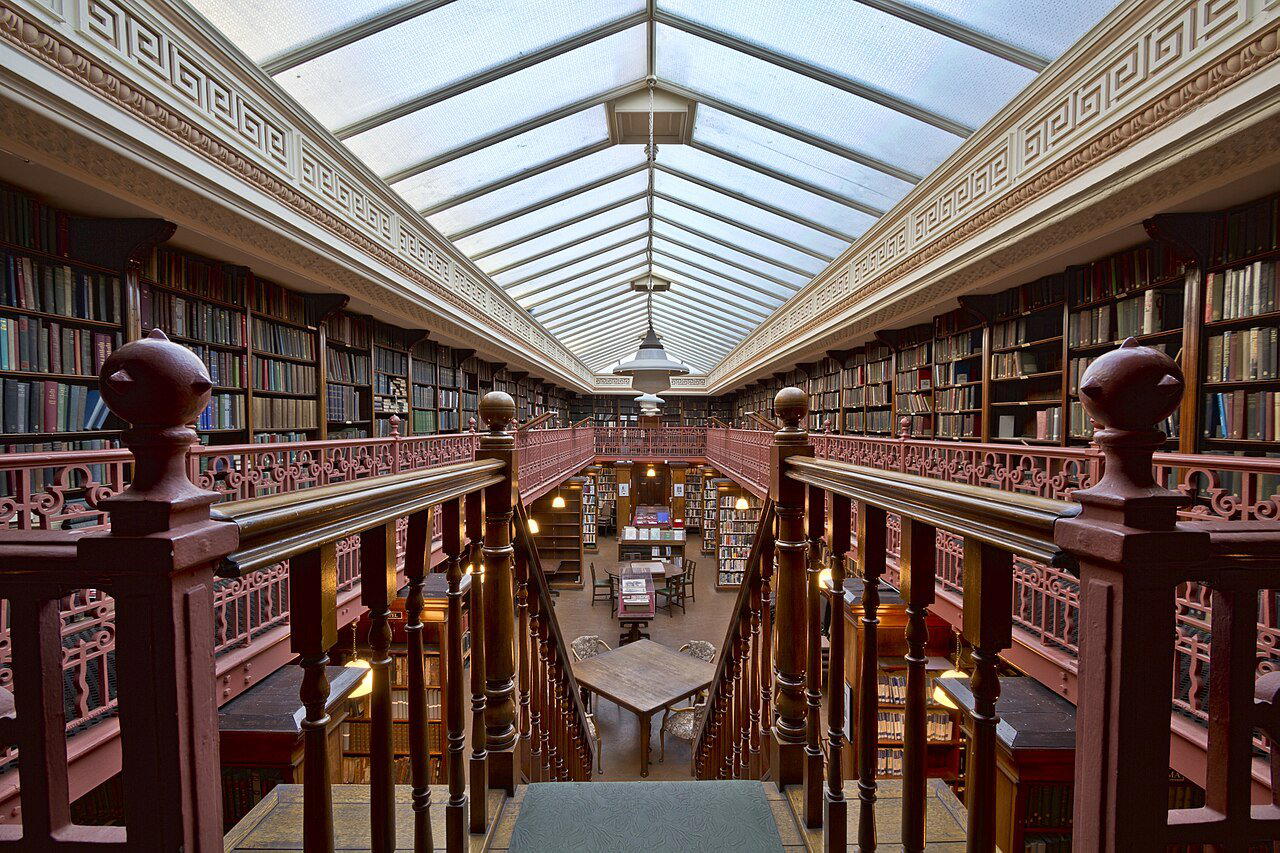
A Commercial Street Address That Has Not Changed in 250 Years
Walking into 18 Commercial Street, Leeds, you cross a threshold that has barely shifted since the library's founding in 1768. The street-level entrance gives little away from the outside, which is precisely the point: The Leeds Library operates as a private subscription library, and its architecture was never designed to advertise itself to passing trade. What greets members and invited visitors inside is a Georgian interior of near-unaltered integrity, a reading room whose proportions and materials reflect eighteenth-century civic confidence rather than any subsequent renovation instinct. In an era when most of Leeds city centre has been rebuilt at least twice over, that continuity is the central fact about this place.
The library sits at the quieter, more restrained end of Commercial Street, away from the retail density of Briggate. Its physical address places it within walking distance of the Victoria Quarter's ornate arcades and the Corn Exchange's cast-iron dome, a cluster of Victorian and Georgian structures that together form the architectural argument for Leeds as a city that built to last. See our full Leeds restaurants guide for a wider map of the city's most characterful addresses.
The Architecture of Accumulated Time
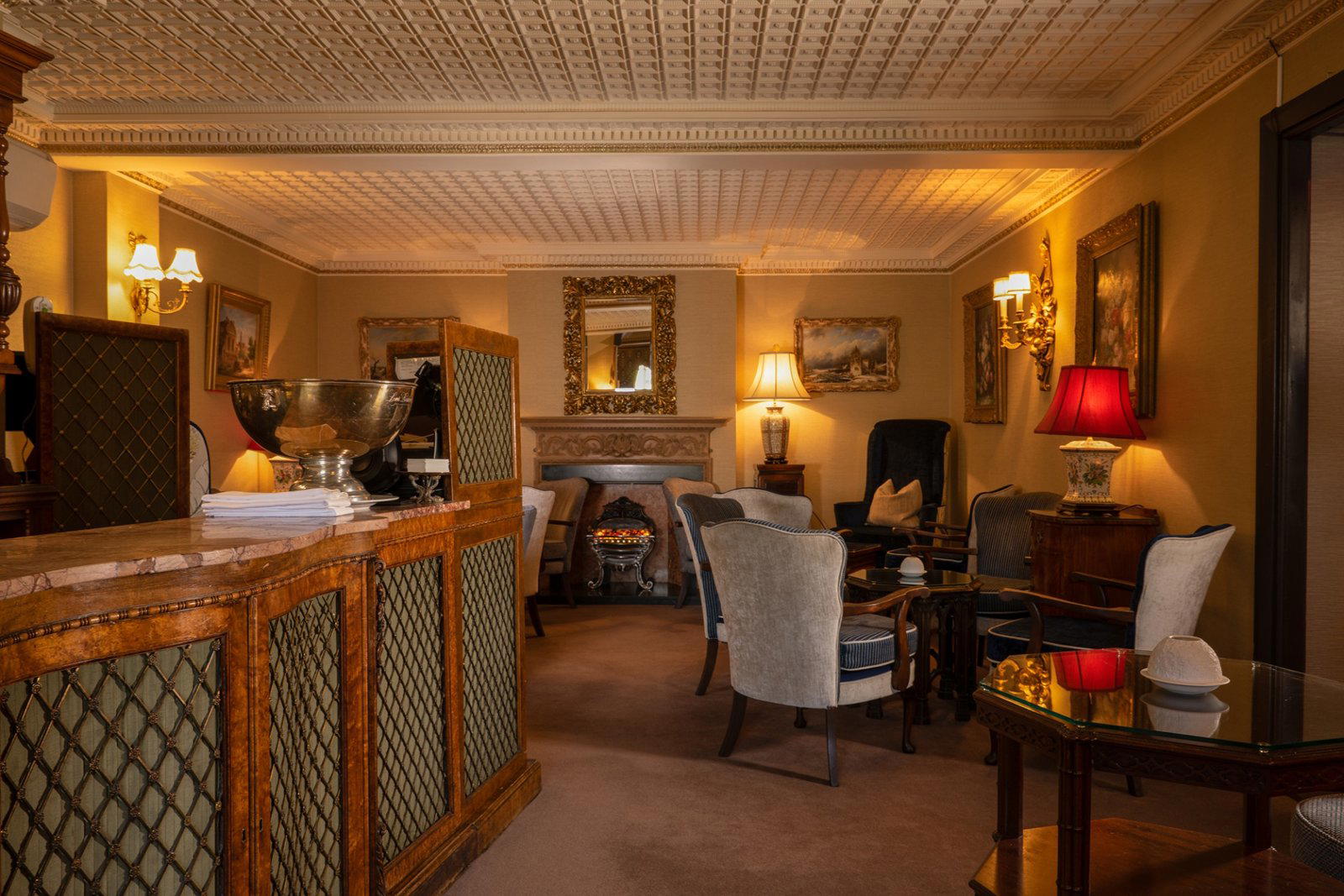
Private subscription libraries of the eighteenth century were essentially clubhouses for the literate merchant class, and their interiors were designed to project that seriousness. The Leeds Library's reading rooms carry the proportional logic of Georgian architecture: high ceilings, tall windows calibrated for natural light, and shelving that was built to be integral to the room rather than added to it. The cast-iron gallery stacks, introduced in later decades, layer a Victorian engineering solution onto the Georgian shell without disturbing the essential character of the space. That layering is what makes the interior interesting: you can read the library's physical history in the materials themselves.
Few interiors in the north of England have accumulated this many uninterrupted decades of the same use in the same building. The comparison set for spaces of this type in the UK is deliberately small. Institutions like Chetham's Library in Manchester or the London Library in St James's Square occupy a similar bracket: private, subscription-based, architecturally preserved, and operating on timescales that make most contemporary cultural venues look provisional. The Leeds Library belongs to that cohort by age and by intention. Among properties that carry comparable weight in terms of architectural preservation and long-run institutional identity, you find parallels in places like Claridge's in London or Gleneagles in Auchterarder, where the building itself functions as a primary credential.
What the Space Communicates Before You Read Anything
The editorial angle on most heritage spaces is that the architecture serves the experience. At The Leeds Library, the architecture is closer to being the experience outright. The reading rooms carry a specific quality of quiet that is architectural in origin: thick walls, shelving that absorbs sound, and an absence of the ambient noise infrastructure that most contemporary spaces treat as neutral background. The effect is registrable in the first few minutes. This is a space designed for sustained attention, and its physical form enforces that function without any signage or instruction.
That quality of enforced quiet is rare in city-centre settings. Leeds's Victorian arcades, however beautiful, funnel pedestrian traffic and produce ambient noise as a byproduct of their own success. The Corn Exchange operates as a market and event venue. The library sits apart from those patterns entirely, functioning on a membership model that keeps daily footfall low and the interior atmosphere stable. For visitors accustomed to the atmospheric logic of places like Estelle Manor in North Leigh or The Newt in Somerset, where designed quietude is understood as a feature rather than an absence, the library's register will be immediately legible.
Scale, Access, and the Membership Model
The subscription library model places The Leeds Library outside the normal parameters of visitor attractions. It is not a museum with open hours, nor a reading room that operates on a drop-in basis. Annual membership provides the primary mode of access, which keeps the institution's character intact but makes it less visible to the city's general cultural programme. That relative invisibility has consequences for how the space is understood: it rarely appears in the same conversation as Leeds's more publicly accessible heritage sites, despite its claim on architectural and historical significance being at least as strong.
For travellers basing themselves in the north of England and building itineraries around architectural and cultural depth rather than throughput tourism, The Leeds Library represents a category of experience that requires some advance planning. The same logic applies to properties like Hope Street Hotel in Liverpool or King Street Townhouse Hotel in Manchester, where the northern England circuit rewards visitors who research ahead rather than arriving and improvising. For Scottish counterparts in this heritage-focused mode, Burts Hotel in Melrose and Malmaison Edinburgh offer comparable depth within their own contexts.
Leeds in the Wider Heritage Circuit
The Leeds Library's position within the city's heritage offering reflects a broader pattern in how provincial English cities carry their eighteenth and nineteenth-century intellectual infrastructure. The institutions that served the merchant and professional class of the Georgian and Victorian periods were built to last, and some have. The Leeds Library is among the more intact examples anywhere in the north of England, which places it on a short list of spaces where you can read the original social logic of the building directly from the fabric of the room.
For visitors extending a heritage-focused trip into the wider UK, the comparison set includes institutions and properties that operate on similar principles of continuity and restraint. Lime Wood in Lyndhurst, Babington House in Kilmersdon, and Avon Gorge by Hotel du Vin in Bristol each engage with historic fabric in ways that parallel the library's approach, even if the programme differs. Further afield, Aman Venice demonstrates how international heritage hospitality handles comparable questions of intervention versus preservation. Muir, A Luxury Collection Hotel, Halifax is worth noting as a West Yorkshire neighbour operating in an adjacent heritage register.
Planning a Visit
Access to The Leeds Library is primarily through annual membership, and prospective visitors should contact the library directly at its Commercial Street address before planning a trip around the interior. The building is located centrally in Leeds city centre, within a short walk of Leeds railway station, which makes it easy to incorporate into a wider day in the city. Given the membership model, timing and eligibility should be confirmed in advance; the library does not operate on the same open-door basis as civic libraries or public museums.
At-a-Glance Comparison
| Venue | Price | Awards |
|---|---|---|
| The Leeds LibraryThis venue — the venue you are viewing | Not listed | Not listed |
| Lime Wood | Not listed | 2 Michelin Keys · La Liste Top Hotels |
| Muir, A Luxury Collection Hotel, Halifax | $300–500 | 1 Michelin Key · Forbes 4-Star |
| Raffles London at The OWO | $1,000–1,500 | 3 Michelin Keys · World's 50 Best #28 |
| The Connaught | $1,000–1,500 | 3 Michelin Keys · World's 50 Best #49 |
| 51 Buckingham Gate, Taj Suites and Residences | Not listed | Michelin Selected · La Liste Top Hotels |
Details
- Historic Building
Current opening hours
- Monday
- 10 AM–6 PM
- Tuesday
- 10 AM–6 PM
- Wednesday
- 10 AM–6 PM
- Thursday
- 10 AM–7 PM
- Friday
- 10 AM–5 PM
- Saturday
- 10 AM–4 PM
- Sunday
- Closed
Hours can change for holidays and private events. Last verified .
Classic and scholarly atmosphere in a preserved historic building.