

Virtuoso Luxury Hotel Partner · Preferred Hotels L.V.X. Collection
A five-star boutique hotel on Via del Corso, The First Roma Dolce occupies a restored 19th-century building by Giuseppe Valadier within easy reach of the Spanish Steps, Trevi Fountain, and Piazza del Popolo. With only 23 rooms, it operates in the intimate end of Rome's luxury hotel market, offering a complimentary shuttle link to its sister property, The First Arte.

Pearl is the En Primeur Club membership app, where members save venues, book tables and use the concierge.
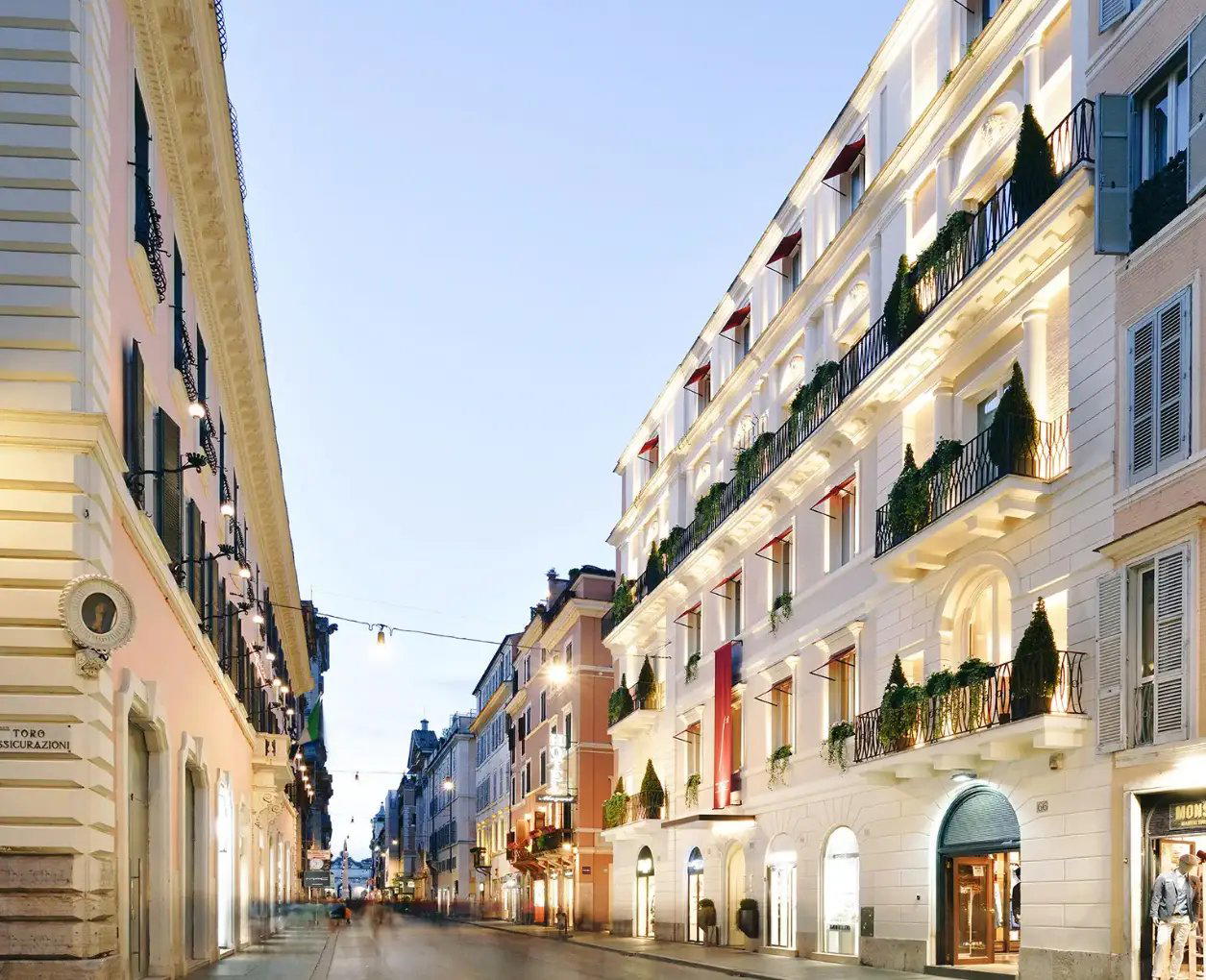
Via del Corso and the Architecture of Roman Luxury
Rome's premium hotel market has been reshaping itself along a clear axis: on one side, large international flagships with extensive amenities and high key counts; on the other, small-format boutique properties where the building itself is the statement. The First Roma Dolce belongs firmly to the second category. Occupying a restored 19th-century palazzo on Via del Corso, the address was designed by Giuseppe Valadier, the architect whose fingerprints are on some of Rome's most considered urban interventions, including the layout of Piazza del Popolo. That lineage is not incidental. It places the building inside a tradition of deliberate, measured classicism, the kind of architecture that ages into the city rather than asserting itself against it.
At 23 rooms, The First Roma Dolce is positioned at the intimate end of the five-star spectrum in a city where comparable boutique properties such as Hotel Vilòn and Maalot Roma have demonstrated that a small key count, when paired with genuine architectural character, commands its own category of loyalty. The contrast with larger-footprint competitors is deliberate and worth understanding before booking: fewer rooms means less ambient hotel activity, more personalised contact with staff, and an experience closer to staying in a private residence than checking into a branded property.
A Central Position That Earns Its Location
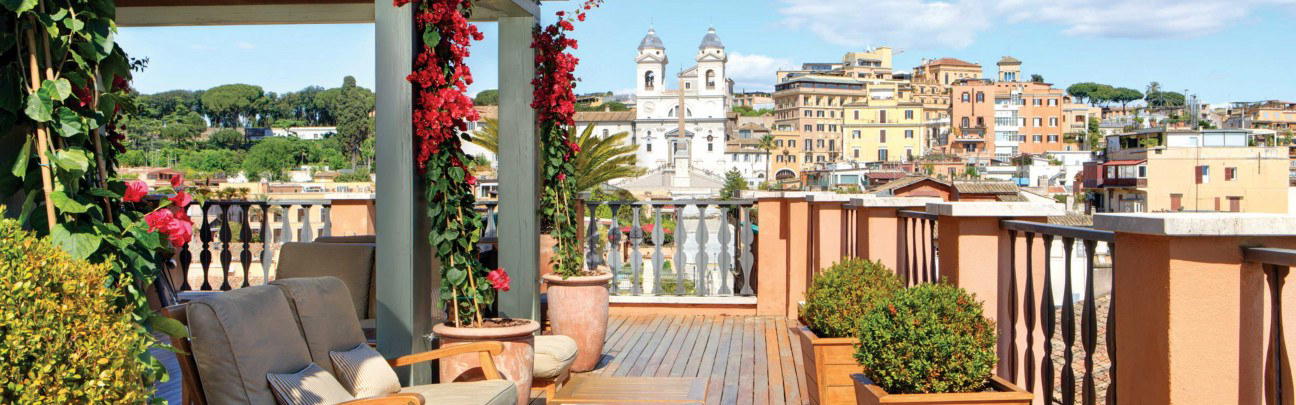
Via del Corso is one of Rome's most direct thoroughfares, running from Piazza del Popolo in the north to Piazza Venezia in the south. For centuries it functioned as the city's main processional route; today it serves as one of its principal shopping streets. At number 63, The First Roma Dolce sits in the northern half of this corridor, which places it within walking distance of landmarks that many guests cite as primary reasons for visiting the city at all. The Spanish Steps sit a short walk to the east, the Trevi Fountain is reachable on foot, and Piazza del Popolo is close enough that the evening light over its twin churches becomes a minor ritual for guests who know to time their walks correctly.
For those staying a few nights, the surrounding neighbourhood functions as a navigable map of Rome's tightly concentrated historic core. The properties guests compare most directly with The First Roma Dolce when booking in this area include JK Place Roma, which operates from a similar boutique format nearby, and Hassler Roma, which anchors the best of the Spanish Steps and carries a longer history in the upper tier of Roman hospitality.
The Sister Property Connection and What It Means in Practice
One of the more practical distinctions of staying at The First Roma Dolce is its relationship with The First Arte, the sister property operating under The Pavilions Rome group and located within easy reach. A complimentary shuttle connects the two, which matters because it expands what any single property can offer without inflating the key count or the footprint. Guests can move between properties to access different amenities, dining options, or simply a change of atmosphere, a model that a handful of small Italian hotel operators have used to compete effectively against much larger international chains.
This kind of network architecture is worth noting for travellers accustomed to evaluating hotels in isolation. A 23-room property with sister-property access effectively functions with a larger menu of options than its room count suggests. Across Italy, similar operational philosophies are visible in properties like Portrait Roma and, in a different register, the Lungarno Collection's broader approach to clustered Roman and Florentine assets.
Where This Property Sits in Italy's Boutique Hotel Field
Italy's luxury small-hotel market runs from converted agricultural estates in the countryside to restored urban palazzi in historic centres. Each sub-category carries different expectations. The countryside properties, among them Castello di Reschio in Lisciano Niccone and Rosewood Castiglion Del Bosco in Montalcino, offer seclusion as the primary product. The coastal properties, such as Il San Pietro di Positano and Borgo Santandrea on the Amalfi Coast, trade on topography and light. Urban boutique hotels in Rome and other historic centres sell something different: proximity to permanent cultural infrastructure, the texture of a specific neighbourhood, and buildings with documented histories.
The First Roma Dolce's Valadier-designed structure places it in that third category with a specific credential. When compared to peers like Bulgari Hotel Roma, which occupies a different price tier and a larger footprint near the Villa Borghese, or Hotel Eden with its long-established position on the Via Ludovisi, The First Roma Dolce's appeal is more intimate and more specifically architectural. It is not competing on scale or brand legacy; it is competing on the quality of the built environment and the logic of its location.
For a broader orientation to what Rome offers across hotels, restaurants, and bars, our full Rome guide maps the city's options by neighbourhood and category. Internationally, the small-format luxury model that The First Roma Dolce represents finds parallels in properties like Aman Venice and, beyond Italy, in The Fifth Avenue Hotel in New York, both of which prioritise architectural distinction and low key counts over brand footprint.
Planning Your Stay
The hotel sits at Via del Corso, 63, in Rome's historic centre, walkable to the city's principal northern monuments. Given the 23-room capacity, availability at this scale of property in a high-demand city like Rome narrows quickly during peak travel months, particularly spring and early autumn when visitor density in the centro storico peaks. Guests should expect boutique-hotel booking conditions: limited last-minute availability and rates that reflect the combination of location, building pedigree, and small-scale personalised service. The complimentary shuttle to The First Arte is an extension of the stay rather than a commute, and the spatial logic of both properties rewards guests who plan to spend serious time in the northern historic core rather than moving across the city daily.
Those comparing options at this level in Rome should also consider Hotel Locarno, which brings a different period sensibility to the same general neighbourhood, and JK Place Capri for those extending a Roman trip toward the southern coast.
Comparable Venues
Comparable venues nearby, for context on price, style, and recognition.
| Venue | Cuisine | Price | Awards | Notes |
|---|---|---|---|---|
| The First Roma DolceThis venue (the venue you are viewing) | 19th-century private home with bespoke 5-star service | $300–500 | Virtuoso Luxury Hotel Partner · Preferred Hotels L.V.X. Collection | Not listed |
| Palazzo Shedir | Ornate private mansion within 17th-century Palazzo Borghese, restored to ancient splendor with exclusive suites and wellness facilities. | Not listed | Leading Hotels of World Member | Campo Marzio |
| Hotel de Russie, a Rocco Forte Hotel | Classical Roman luxury with contemporary comforts in a historic 19th-century palazzo | Not listed | 2 Michelin Keys · La Liste Top Hotels | Campo Marzio |
| The Rome EDITION | Modern luxury boutique in 1930s architecture with lush garden oasis | Not listed | Michelin Selected · Star Wine List | Trevi |
| Hotel Raphaël | Luxury boutique hotel blending classic and modern design. | $300–500 | Relais Chateaux Award | Ponte |
| NH Collection Palazzo Cinquecento | Contemporary luxury hotel in a restored historic palazzo that preserves early 1900s character while incorporating modern design elements and amenities. | $200–300 | Michelin Selected | Esquilino |
Recognition history
Dated appearances from independent guides and award organizations, with the underlying list record or original source where available.
Virtuoso Luxury Hotel Partner
Virtuoso
Preferred Hotels L.V.X. Collection
Preferred Hotels
Continue exploring
More in Rome
Hotels in Rome
All hotels in Rome →
Bars in Rome
All bars in Rome →
Restaurants in Rome
All restaurants in Rome →

Details
- Elegant
- Sophisticated
- Modern
- Intimate
- Romantic Getaway
- Anniversary
- Business Trip
- Historic Building
- Design Destination
- Wi Fi
- Room Service
- Concierge
- Restaurant
- Bar
- Fitness Center
- Street Scene
- Elevator
- Wheelchair Accessible
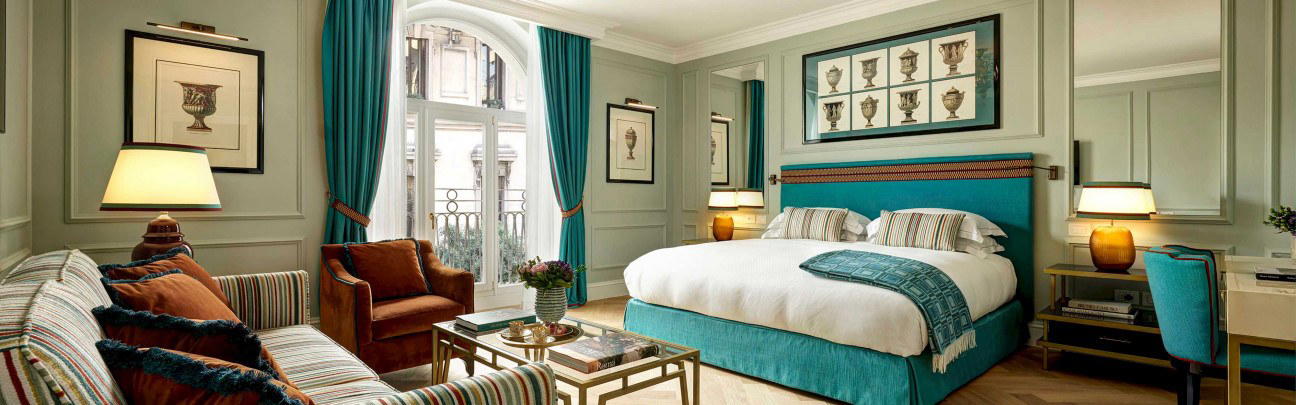
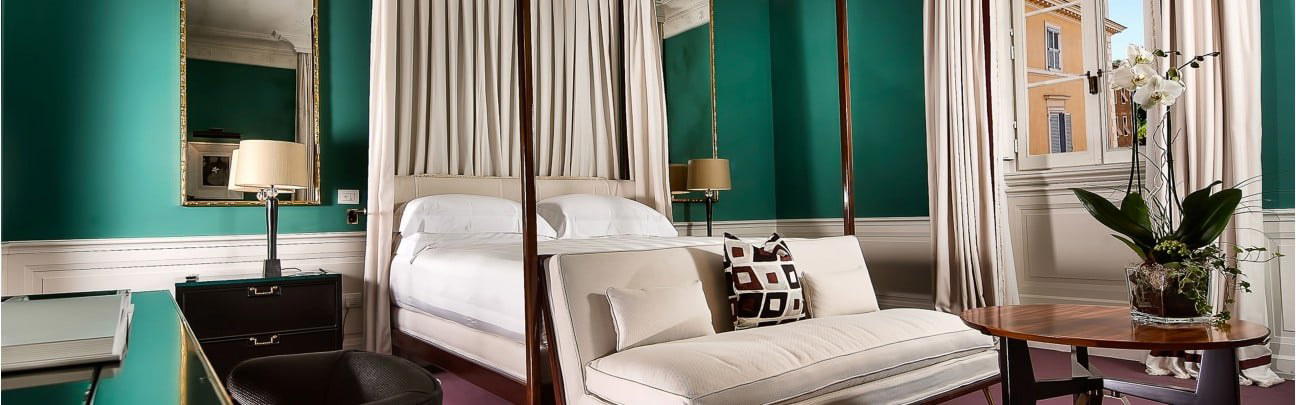
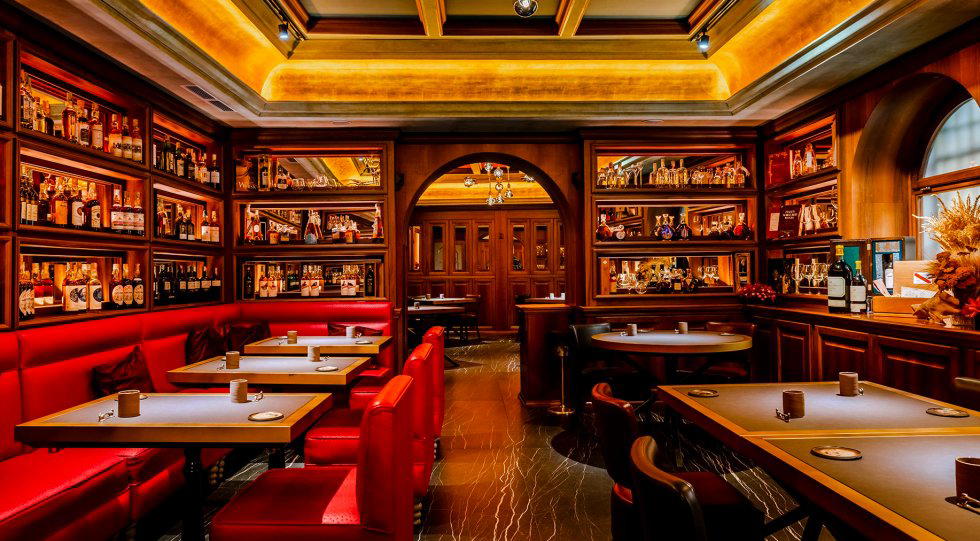
Elegant contemporary decor with refined residential atmosphere, soundproof rooms, and luxurious marble bathrooms.