Steigenberger Icon Parkhotel Düsseldorf

At the head of the Königsallee, the Steigenberger Icon Parkhotel occupies the position most associated with Düsseldorf's grand hotel tradition: formal, well-staffed, and oriented around the city's most recognisable boulevard. Rates from around $592 per night reflect placement in the upper tier of the city's accommodation market, with 130 rooms and Jones Brasserie among its key draws.
 Discover on Pearl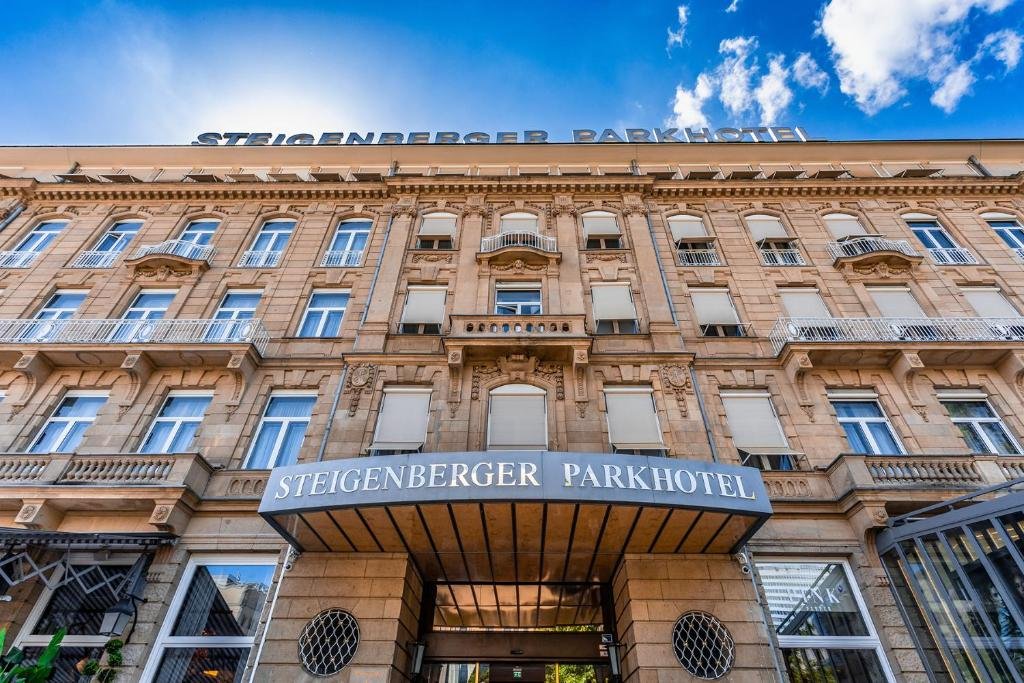
Where the Königsallee Begins
The Königsallee is not a street you drift onto by accident. Düsseldorf's central boulevard, lined with luxury retail and flanked by a canal-fed waterway, functions as the city's principal address for anyone travelling on business or for fashion trade weeks, and the hotels positioned along it occupy a distinct tier above the broader city offer. At Königsallee 1A, the Steigenberger Icon Parkhotel sits at the literal start of that axis, a position that carries both practical and symbolic weight in a city where address still signals intent.
Germany's grand hotel tradition has a particular character that distinguishes it from comparable properties in Paris or London. The emphasis falls less on theatrical grandeur and more on structural reliability: staff who anticipate without performing, lobbies that project confidence without excess, and a standard of comfort that holds across every room category rather than concentrating quality at the leading of the room ladder. The Parkhotel belongs to that lineage. Properties in this register, whether the Fairmont Hotel Vier Jahreszeiten in Hamburg or the Excelsior Hotel Ernst in Cologne, share a common commitment to institutional consistency over seasonal reinvention. The Parkhotel reads the same way: a property that has earned the designation of Grande Dame not through longevity alone but through the discipline of maintaining a standard.
The shortlist, unlocked.
Hard-to-book tables, cellar releases, and concierge-planned trips.
Get Exclusive Access →The Lobby as First Statement
Arrival is where service philosophy becomes visible most quickly, and in classic European hotels of this type, the lobby is a deliberate first declaration. The Parkhotel's entrance signals what the rest of the stay will reinforce: the property has absorbed contemporary design language without abandoning the formality that defines its competitive set. The combination of classic structure and modern finish is not a compromise but a considered position, one that places it between the more overtly heritage-focused Breidenbacher Hof Düsseldorf and the design-led independents like Hotel Kö59 Düsseldorf or The Wellem, both of which trade on a more contemporary sensibility.
The 130 rooms across the property are described as uniformly attractive and comfortable, which in the context of a hotel at this address and price point carries more meaning than it might elsewhere. Rate compression is a persistent problem in the upper-mid tier of European city hotels, where public area investment can outpace room quality. Here, the room standard appears to track the lobby standard rather than lag behind it.
Jones Brasserie and the Kö-Bogen View
The dining position of an address hotel in a city like Düsseldorf matters beyond breakfast. Jones Brasserie functions as the property's principal restaurant, but its specific asset is physical rather than culinary: a terrace with a direct sightline to Daniel Libeskind's Kö-Bogen building, the deconstructivist structure completed in 2013 that became one of the more discussed pieces of contemporary architecture in Germany's western urban corridor. For guests oriented toward architecture or design, this terrace view gives Jones Brasserie a reason to visit that operates independently of the menu.
Düsseldorf's dining scene has matured considerably over the past decade, with the Altstadt and Pempelfort neighbourhoods generating most of the critical attention at the independent restaurant level. Hotel dining in this city has generally trailed those neighbourhoods rather than led them. The Jones Brasserie terrace, however, offers something the independent restaurant scene cannot: that particular relationship between a meal and a landmark. For guests wanting to move beyond the hotel for dinner, the broader scene is covered in detail in our full Düsseldorf restaurants guide.
Service Register and Guest Experience
The Steigenberger Icon brand, which the Parkhotel carries as part of the group's top-tier designation, implies a service commitment that goes beyond the standard Steigenberger offer. In practical terms, this means staffing ratios and training protocols calibrated toward anticipatory rather than reactive service, a distinction that matters most to guests who travel at this frequency and price point and notice its absence immediately when it is missing.
At a nightly rate from $592, the Parkhotel prices at the upper end of Düsseldorf's traditional hotel market. That positioning is competitive rather than isolated: the Breidenbacher Hof and the Wellem occupy the same general bracket, and the choice between them tends to come down to preference for heritage formality versus design-led modernity. The Parkhotel's advantage within this set is the Königsallee 1A address and the consistency of its room standard across all 130 keys, which makes it a lower-variance choice for guests who cannot afford to receive a substandard room after a long travel day.
For comparison within the broader German luxury hotel context, properties such as Bülow Palais in Dresden, Mandarin Oriental Munich, and Hotel de Rome in Berlin each occupy a similar position in their respective cities, offering institutional reliability over boutique experimentation. Further afield, nature-led alternatives such as Schloss Elmau Luxury Spa Retreat & Cultural Hideaway in Elmau, Althoff Seehotel Überfahrt in Rottach-Egern, or Das Kranzbach Hotel & Wellness Retreat in Kranzbach represent a different axis entirely, built around landscape rather than urban infrastructure. The Parkhotel is unambiguously a city hotel, and its strengths are calibrated accordingly.
Planning Your Stay
The hotel is located at Königsallee 1A in Düsseldorf's city centre, with direct access to the boulevard's retail and easy reach of the Altstadt, Medienhafen, and the main trade fair grounds at Messe Düsseldorf. The property is particularly relevant during fashion and trade weeks, when the Kö corridor sees significant demand and address hotels at this standard book quickly. Rates from $592 per night position the Parkhotel in the upper tier of the city market; guests requiring direct booking details should contact the property through the Steigenberger Icon website. Other notable German properties worth considering for different trip types include Hotel Bareiss in Baiersbronn, Der Öschberghof in Donaueschingen, Landhaus Stricker in Sylt, BUDERSAND Hotel in Hörnum, Gut Steinbach Hotel Chalets Spa in Reit im Winkl, Luisenhöhe in Horben, Esplanade Saarbrücken in Saarbrücken, LA MAISON in Saarlouis, Hotel Ketschauer Hof in Deidesheim, and Kempinski Hotel Berchtesgaden in Berchtesgaden. For international reference points in a similar service register, The Fifth Avenue Hotel in New York City, Aman New York, and Aman Venice each illustrate what the upper tier of address-hotel hospitality looks like in their respective markets.
Frequently Asked Questions
- What room should I choose at Steigenberger Icon Parkhotel Düsseldorf?
- The hotel operates 130 rooms, and the consistency of the room standard across categories is one of its noted strengths. For guests prioritising position and views, rooms oriented toward the Königsallee or the adjacent Kö-Bogen building offer the clearest connection to the property's address advantage. At rates from $592 per night, the entry-level rooms already reflect the Icon tier's baseline quality, making an upgrade a matter of preference rather than necessity.
- What makes Steigenberger Icon Parkhotel Düsseldorf worth visiting?
- The property's case rests on three elements: its Königsallee 1A address at the head of Düsseldorf's central boulevard, the consistency of its 130-room standard, and the Jones Brasserie terrace with its direct view of the Libeskind-designed Kö-Bogen building. For business travellers or trade fair guests, the address alone reduces logistical friction. For leisure travellers, the architectural terrace view adds something the city's independent dining scene cannot replicate.
- Do I need a reservation for Steigenberger Icon Parkhotel Düsseldorf?
- During Düsseldorf's trade fair periods and fashion weeks, address hotels along the Königsallee book well in advance and rates firm accordingly. At $592 per night as a starting rate, the property is already operating in the upper tier of city demand. Booking through the Steigenberger Icon website is the direct route; contact details and availability are managed through the group's central reservations system rather than through a public phone listing.
Cuisine Lens
A compact peer snapshot based on similar venues we track.
| Venue | Cuisine | Awards | Notes |
|---|---|---|---|
| Steigenberger Icon Parkhotel Düsseldorf | This venue | ||
| Breidenbacher Hof Düsseldorf | Michelin 2 Key | ||
| Hotel Kö59 Düsseldorf - Member of Hommage | |||
| The Wellem |
Preferential Rates?
Our members enjoy concierge-led booking support and priority upgrades at the world's finest hotels.
Get Exclusive AccessThe shortlist, unlocked.
Hard-to-book tables, cellar releases, and concierge-planned trips.
Get Exclusive Access →