
A Michelin Selected property in the medieval hilltop town of Motovun, Roxanich Winery & Design Hotel combines a working winery with considered design-led accommodation. In Istria's increasingly competitive wine-hotel category, it occupies a specific niche: guests sleep inside the production operation, not adjacent to it. For those whose itinerary is built around Istrian wine and architecture rather than coastal access, it functions as a base of genuine substance.
Pearl is the En Primeur Club membership app — saves, bookings, and concierge access live there. Same editors, same standards.
- Address
- Kanal 30, 52424, Motovun, Croatia
- Phone
- +385 52 205 700
- Website
- roxanich.com
- Directions
- Get directions
 Saves & bookings on Pearl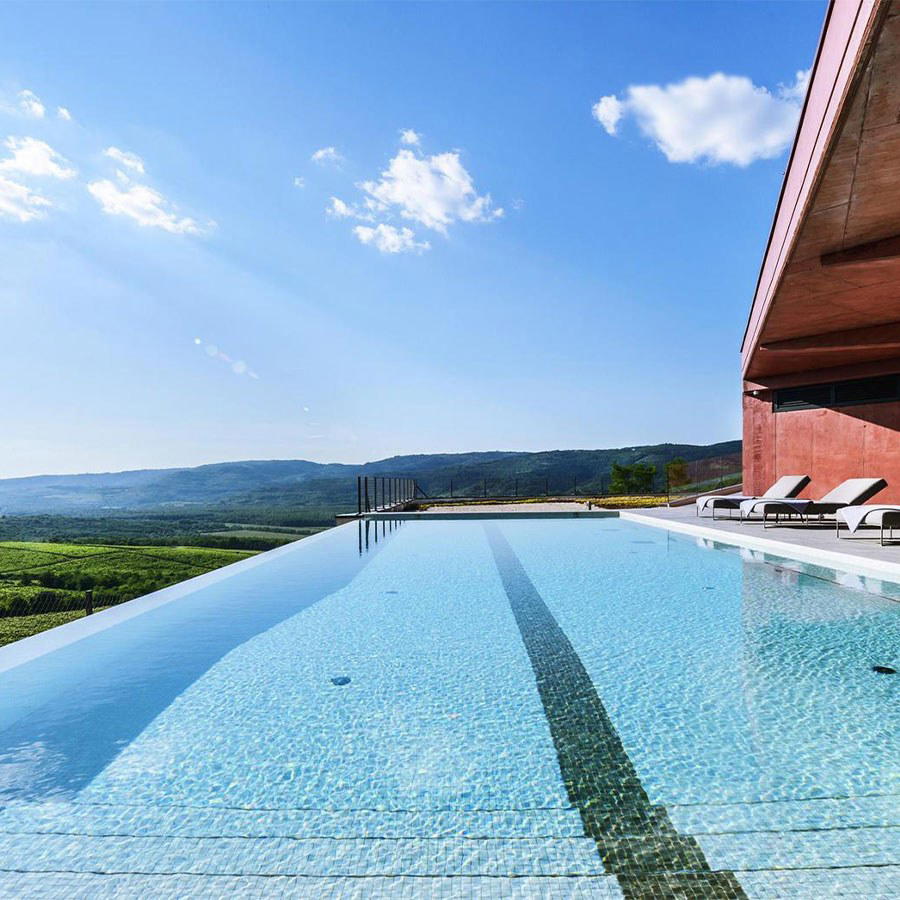
Where Wine Production and Architecture Share the Same Address
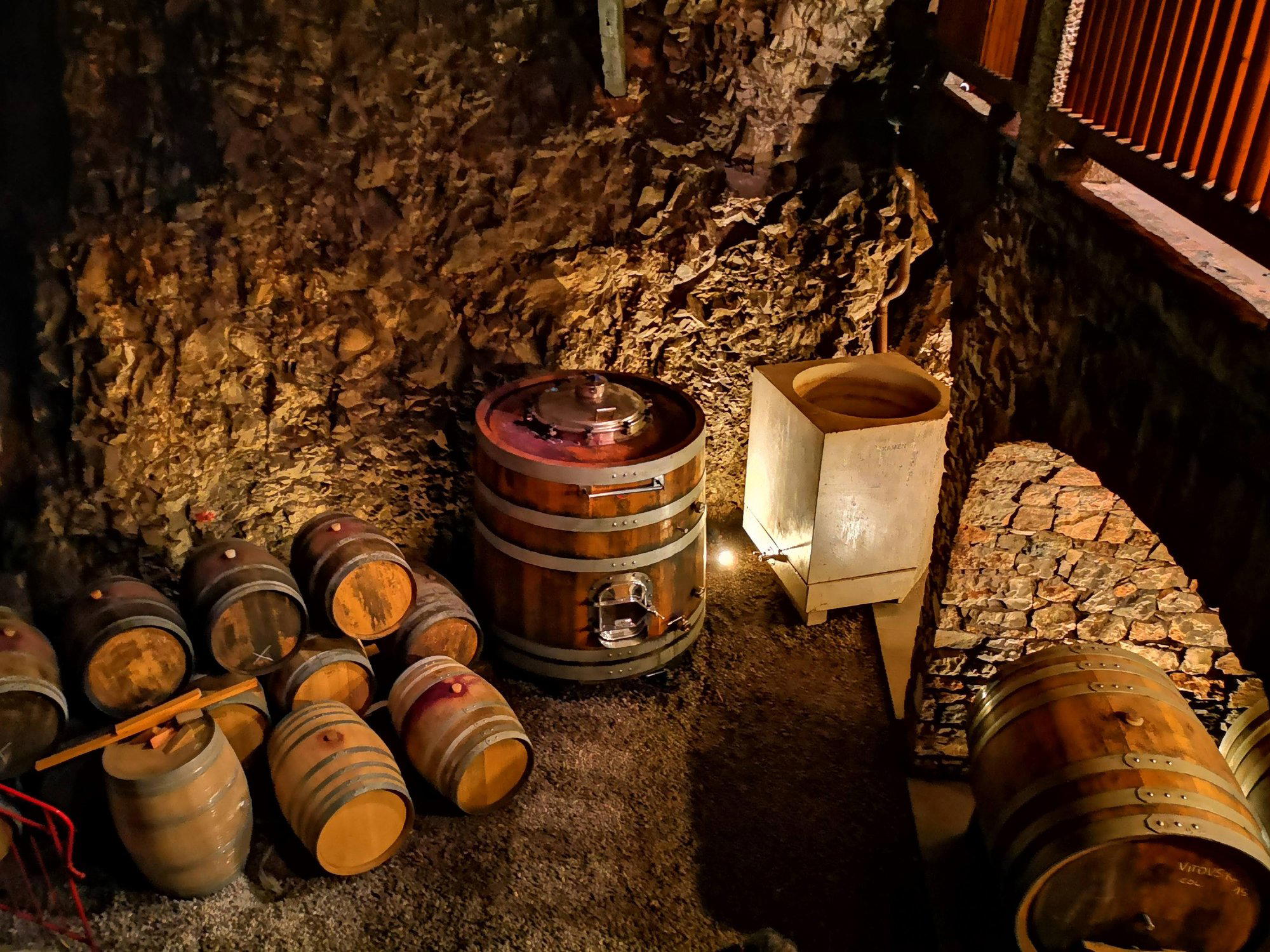
Istria's wine-hotel category has matured considerably in recent years. What began as a modest sub-genre of agritourism has split into two distinct tiers: properties that market wine as an amenity, and those where the winery is the structural and conceptual core of the guest experience. Roxanich Winery & Design Hotel, addressed at Kanal 30 in Motovun, sits firmly in the second group. Here, the physical relationship between barrel room, cellar, and guest quarters is not incidental; it is the architectural premise of the place.
Motovun itself sets the context before you arrive. The town is one of Istria's most recognizable medieval settlements, perched on a hill above the Mirna River valley and surrounded by the truffle-rich Motovun Forest. The approach by road involves a series of switchbacks that deposit visitors at an elevation where the Istrian interior stretches across the horizon. This is not coastal Croatia. The aesthetic is stone walls, narrow lanes, and a quiet that feels earned rather than curated. In that environment, a property defined by wine production and architectural intention reads less like a boutique hotel concept and more like a logical extension of the landscape.
Design as Infrastructure, Not Decoration
In European wine regions, the design-led winery hotel has become a recognizable format. Burgundy and Tuscany established early templates; Istria has been building its own version for roughly two decades. What distinguishes the stronger entries in this category is the degree to which design decisions serve the wine operation rather than merely decorating around it. Temperature-controlled spaces, natural light management, and material choices that reference the production process are the signals that separate integrated design from surface aesthetics.
At Roxanich, the address at Kanal 30 places the property within Motovun's lower production zone rather than at the summit of the old town. The Michelin Hotels selection for 2025 confirms the property’s quality and character.
Across Croatian wine-hotel properties, the design approaches vary considerably. Villa Korta Katarina & Winery in Orebić situates its accommodation within a Dalmatian coastal winery operation, anchored to the Pelješac peninsula's Plavac Mali tradition. Lešić Dimitri Palace in Korčula takes a different route, embedding luxury accommodation within a historic palace with its own wine program. Roxanich's Istrian position places it in a wine region with a stronger Central European agricultural identity, where macerated whites and long-aged reds have drawn international critical attention over the past decade. The design language at a property here is operating in dialogue with that wine identity, not against it.
Istria's Wine-Hotel Tier and Where Roxanich Sits
The Istrian interior has developed a recognizable cluster of wine-hotel properties that compete less with coastal resort offerings and more with each other and with equivalent properties in Slovenia, Friuli-Venezia Giulia, and the Veneto. Meneghetti Wine Hotel & Winery, operating near Bale in southern Istria, holds a Relais & Châteaux designation and anchors the upper end of the regional category. Roxanich's Michelin Selected standing places it in a well-regarded but distinct bracket from that full Relais certification, which implies a pricing and positioning difference that prospective guests should factor into comparison.
For visitors whose primary interest is wine country accommodation rather than coastal proximity, Motovun's inland position is an advantage rather than a compromise. The town sits within reach of several of Istria's most active wine producers, and the Mirna valley below produces the black truffle harvests that have become central to Istrian gastronomy's international profile. Staying at a winery hotel in this location means the itinerary can revolve around production visits, market timing, and the seasonal calendar of Istrian food.
Those planning broader Istrian itineraries will find that Motovun's inland character contrasts sharply with the peninsula's coastal properties. Grand Park Hotel Rovinj by Maistra Collection in Rovinj and Lone Hotel by Maistra Collection in Rovigno d'Istria represent the design-led coastal end of the Istrian hotel market. San Canzian Hotel & Residences in Buje occupies a position closer to Roxanich in terms of inland Istrian character. Each of these operates within a different sub-category of Istrian hospitality, and the right choice depends entirely on whether the itinerary prioritizes wine country immersion or maritime access.
For those extending a Croatian trip to other regions, properties such as D-Resort Šibenik in Sibenik, Boutique Hotel Alhambra in Mali Lošinj, Hotel Osam in Supetar, and STAYEVA11 in Dubrovnik each anchor different points of the Croatian coast.
Planning a Stay: What to Know Before You Book
Motovun operates on a compressed seasonal calendar. The town's truffle festival in late October draws visitors specifically to the Mirna valley, and that window coincides with late harvest activity at Istrian wineries. Spring, particularly April and May, offers a quieter alternative: vine work is active, the landscape reads green rather than the ochre tones of summer, and the town functions at a pace that suits an itinerary built around producer visits rather than events.
Guests arriving by car have greater flexibility, as the winery's location at Kanal 30 sits below the pedestrianised old town summit. For those building a wider Adriatic itinerary, Ikador Luxury Boutique Hotel & Spa in Ika, VERBENICUM in Vrbnik, Pomâlo Inn in Vis, Villa Nai 3.3 in Dugi Otok, LIOQA Resort in Ugljan, Marinus Beach Hotel in Marina, Marea Suites, Valamar Collection in Porec, Girandella Resort, Valamar Collection in Rabac, Falkensteiner Hotel & Spa Iadera in Zadar, and Le Meridien Lav Split in Split collectively cover the main coastal staging points. See our full Motovun restaurants guide for dining context in the town itself.
A Quick Peer Check
Comparable venues nearby, for context on price, style, and recognition.
| Venue | Cuisine | Price | Awards | Notes |
|---|---|---|---|---|
| Roxanich Winery & Design HotelThis venue — the venue you are viewing | Contemporary transformation of a historic wine cellar into an eclectic design hotel. | $$$$ | Not listed | Not listed |
| Hotel Kastel | Historic 17th-century palace in medieval hilltop town | $$$ | 3-Star | Motovun |
| art'otel Zagreb | Art-inspired lifestyle hotel in restored historic Art Deco building | $$$ | Not listed | city centre |
| Hotel Vela Vrata | Hilltop boutique in medieval town | $ | Not listed | Buzet |
| Bastion Heritage | Distinctive city boutique hotel accentuating Zadar's cultural heritage | $$$$ | 4-Star | Zadar Old Town |
| Sun Gardens Dubrovnik | Contemporary luxury resort replicating a traditional Mediterranean village aesthetic with modern amenities and coastal elegance. | $$$$ | 5-Star | Orašac |
Recognition history
Dated appearances from independent guides and award organizations, with the underlying list record or original source where available.
Michelin Selected
Michelin
Continue exploring
More in Motovun
Hotels in Motovun
Browse all →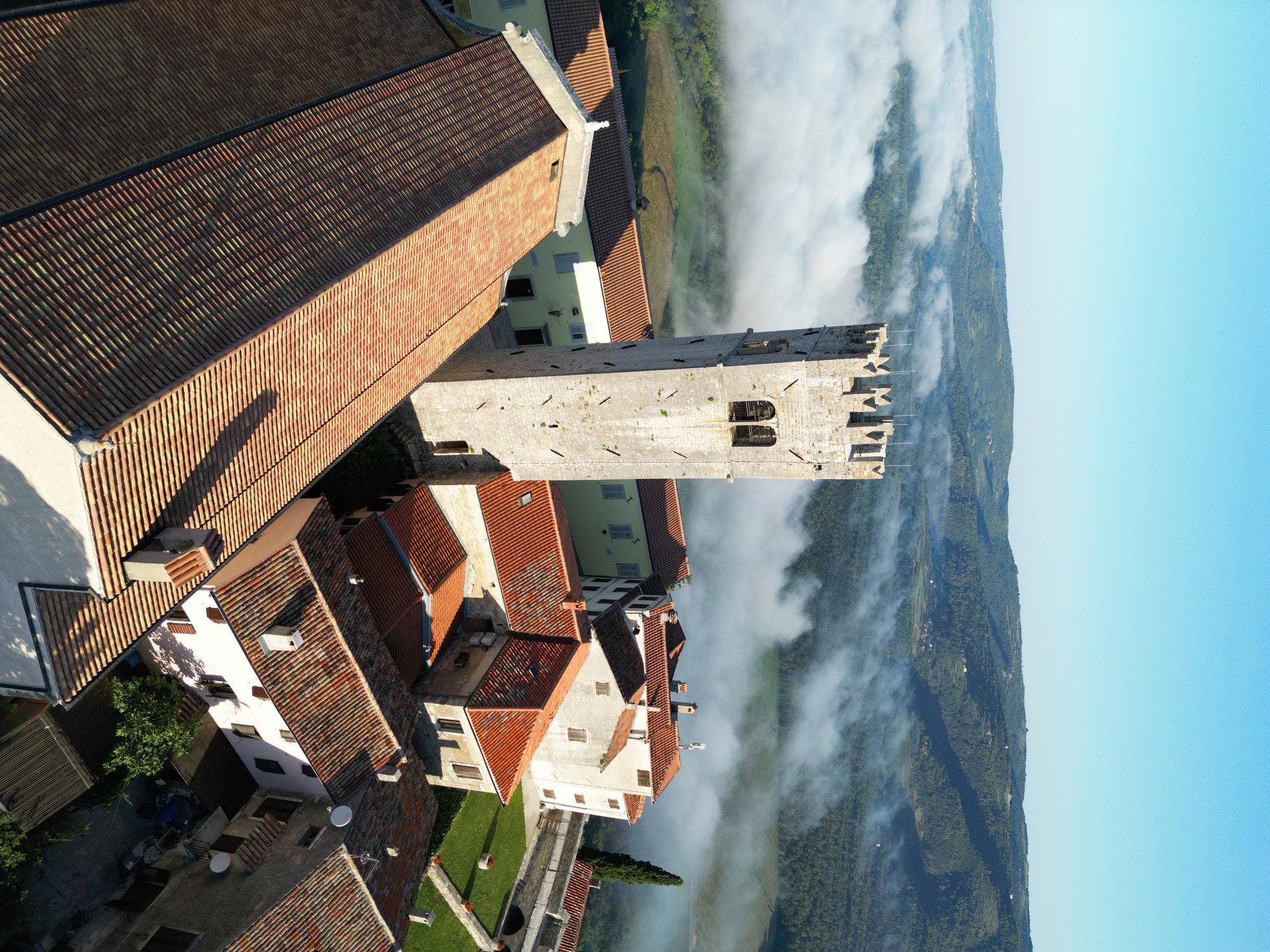
Bars in Motovun
Browse all →

Restaurants in Motovun
Browse all →
At a Glance
- Romantic
- Scenic
- Elegant
- Rustic
- Sophisticated
- Romantic Getaway
- Wellness Retreat
- Weekend Escape
- Panoramic View
- Design Destination
- Terrace
- Wi Fi
- Pool
- Spa
- Parking
- EV Charging
- Vineyard
- Mountain
- Garden
- Wi Fi
- Pool
- Spa
- Parking
- EV Charging
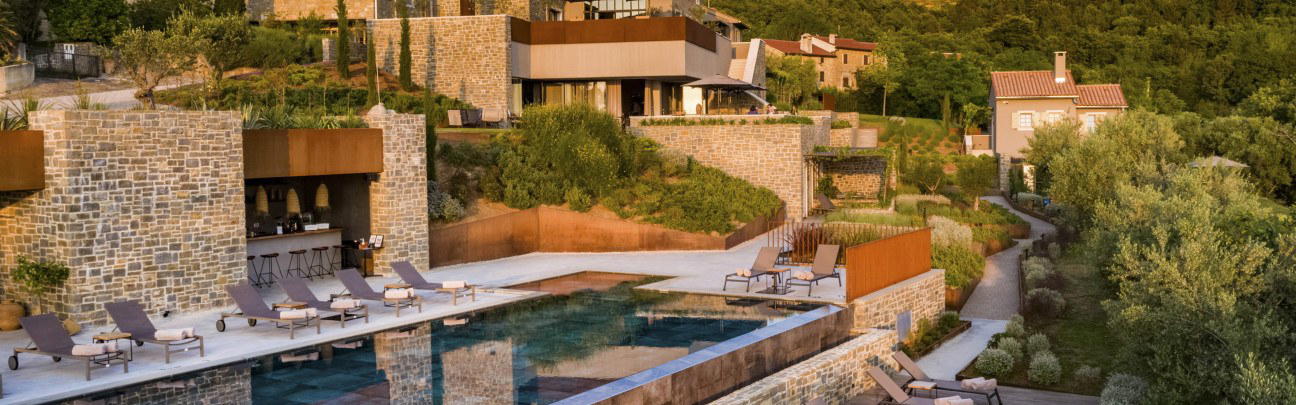
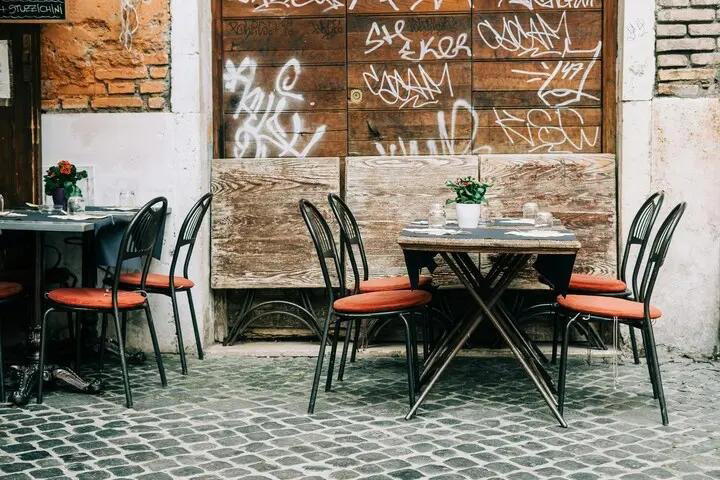
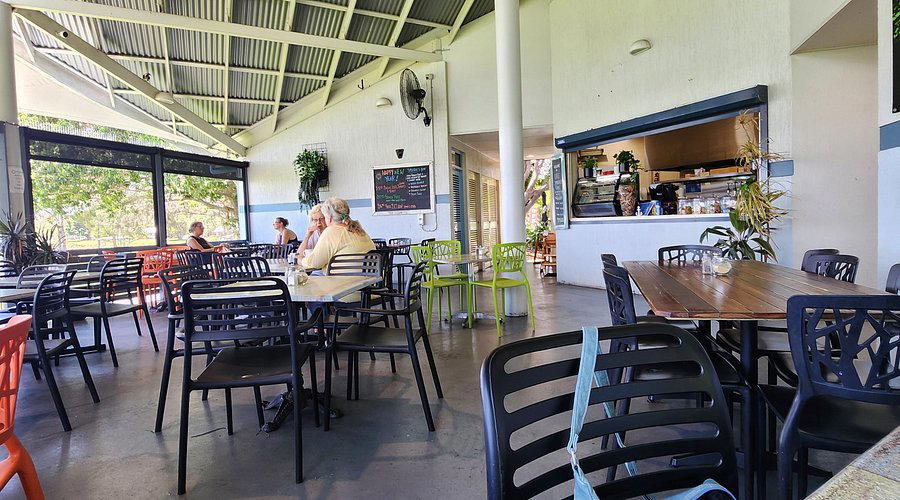
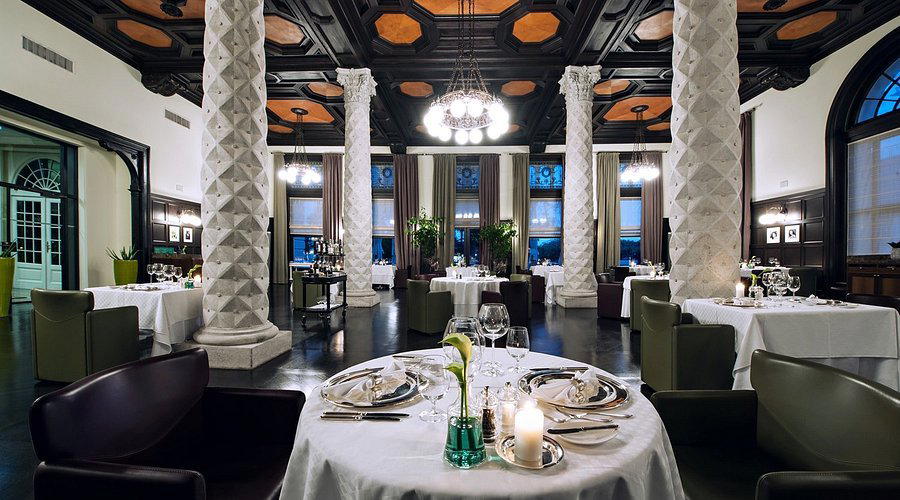
Colorful, lively interiors with panoramic hillside views, peaceful surroundings, and a mix of historic stone and contemporary design creating an eclectic, luxurious atmosphere.