Remota Patagonia Lodge


Remota Patagonia Lodge sits along Ruta 9 Norte just outside Puerto Natales, where the steppe opens toward the Last Hope Sound. A Michelin Selected property for 2025, it occupies the design-led end of Patagonian lodge accommodation, placing it in a comparable set defined by architectural intention and landscape integration rather than scale or amenity count.
Pearl is the En Primeur Club membership app — saves, bookings, and concierge access live there. Same editors, same standards.
- Address
- Ruta 9 Norte km 1, 6160000 5, Natales, Magallanes y la Antártica Chilena, Chile
- Phone
- +56 2 3210 1526
- Website
- remotahotel.com
- Directions
- Get directions
 Saves & bookings on Pearl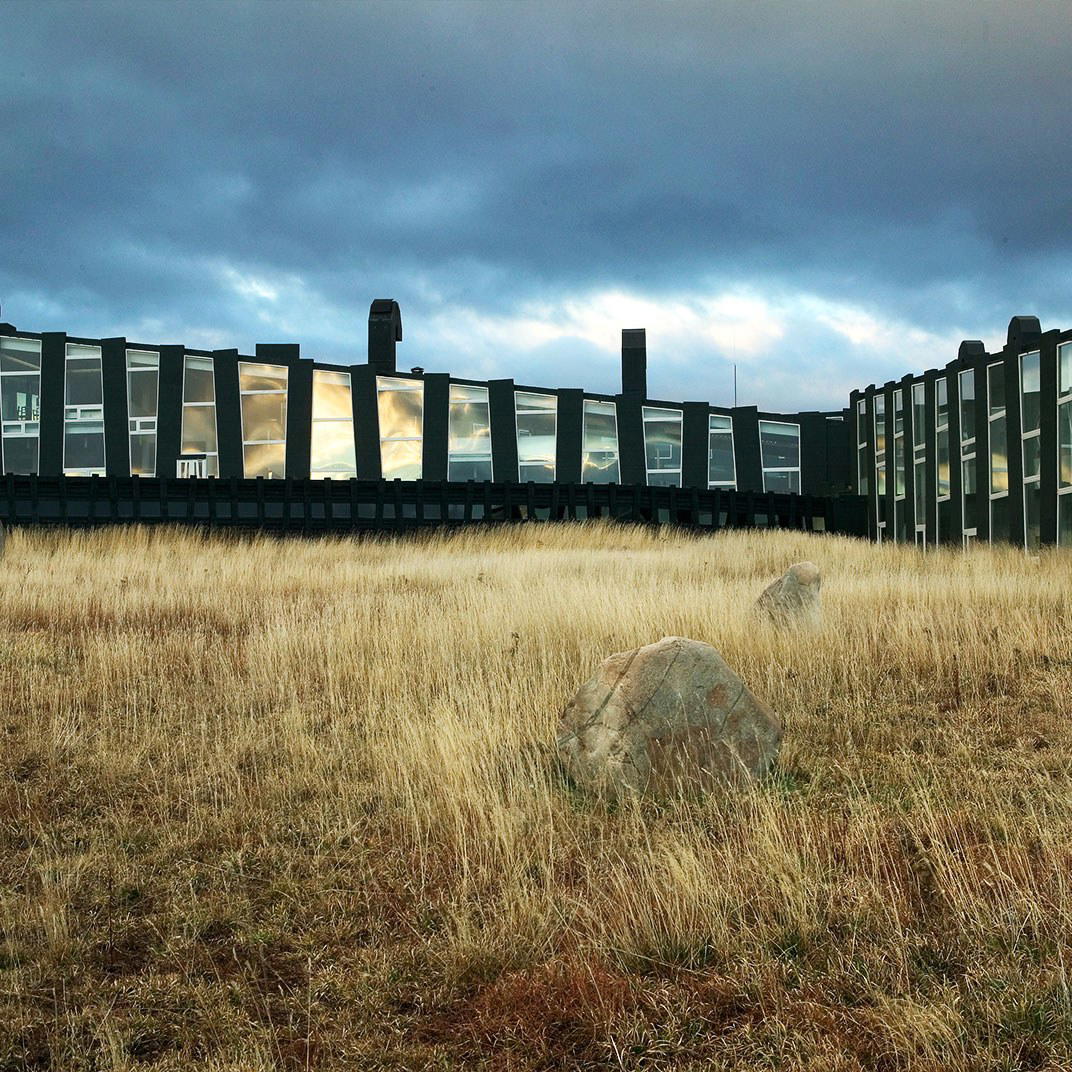
Where the Steppe Ends and the Architecture Begins
The approach to Remota Patagonia Lodge along Ruta 9 Norte sets the terms before you arrive. The road runs flat against the Patagonian steppe, the wind pressing hard off the water, the sky doing more work than any building could. Properties in this part of Chile succeed or fail by how honestly they deal with that confrontation between structure and landscape. The ones that try to compete with it, stacking glass towers or importing materials that belong elsewhere, read as intrusions. The ones that yield, that use the terrain as an organizing principle, earn their position. Remota belongs to the second category.
The building sits low against the land, its roofline and massing drawn from the vernacular geometry of Patagonian wool sheds and farm outbuildings, the utilitarian structures that have existed on this steppe for over a century. That reference is deliberate and structural, not decorative. The curved, grass-covered roof reads as landform from a distance, softening the transition between built and unbuilt. It is one of the more architecturally coherent positions in the premium lodge tier in Chilean Patagonia, and it earns its 2025 Michelin Selected designation partly on that coherence.
The Design Argument in Detail
Patagonian lodge design has split into two recognizable camps over the past decade. One group pursues the dramatic gesture: cantilevered structures, floor-to-ceiling glass, materials imported to signal luxury rather than place. The other group takes its cues from context, the palette of oxidized iron, weathered timber, native grasses, and the particular grey-blue light that comes off the Last Hope Sound. Remota sits firmly in the contextual camp, and the consistency of that position throughout the property is what separates it from lodges that make the contextual gesture in the lobby but abandon it in the rooms.
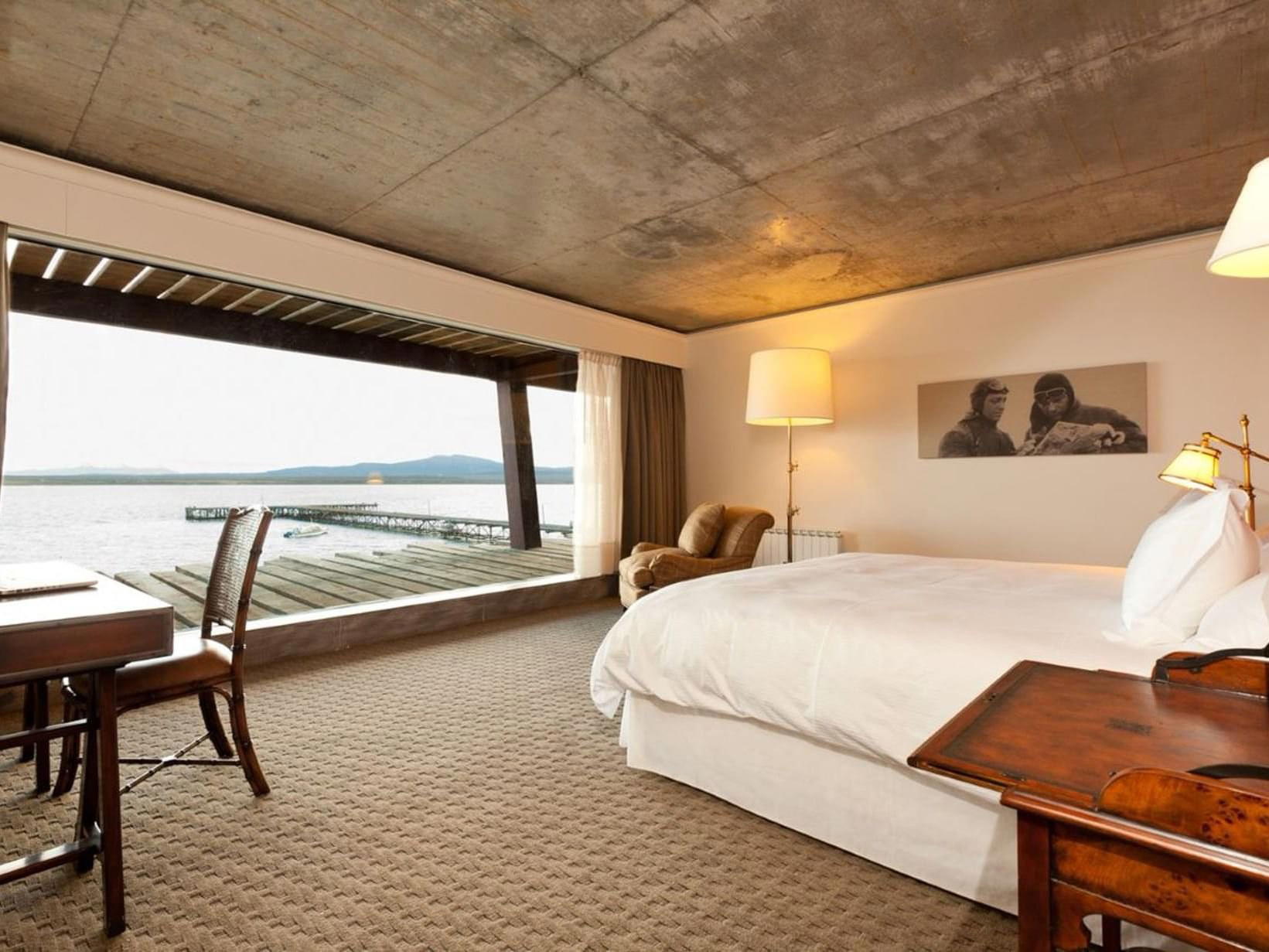
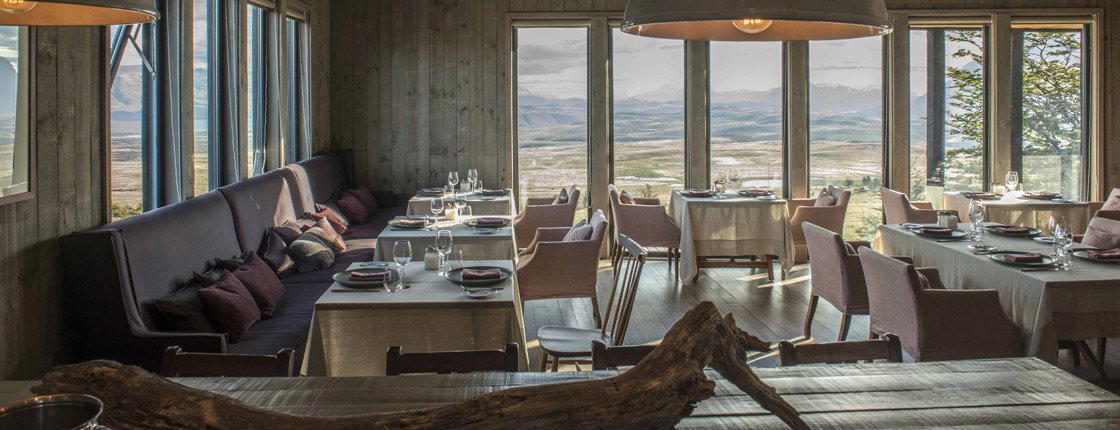
The interior circulation follows the long horizontal axis of the building, with public spaces opening toward water and sky views rather than folding inward. Materials are drawn from local and regional sources, with textures that reference sheep farming, maritime industry, and the particular roughness of Patagonian working life rather than the polished surfaces more common at lodges in the international five-star tier. The effect is warmth without softness, a space that feels inhabited rather than staged. Comparable properties in the region include REMOTA, The Singular Patagonia, and AKA Patagonia, each making different bets on how far to push the design language in this environment.
Puerto Natales as a Staging Point
Puerto Natales operates as the primary gateway to Torres del Paine National Park, and the accommodation market here is structured almost entirely around that relationship. Most guests arrive, rest, equip themselves for multi-day trekking, and depart. The lodge tier serves a narrower cohort: travellers who want the park access but prefer to base at a property with architectural and hospitality investment rather than a functional transit hotel.
The lodge's position on Ruta 9 Norte puts it just outside the town center, close enough for convenient access but far enough to sit in open steppe rather than urban streetscape.
The wider Chilean premium lodge circuit includes properties with different orientations. Explora Torres del Paine operates deeper inside the national park, closer to the trekking routes but further from town infrastructure. Explora Patagonia National Park in Cochrane extends the same circuit further south. Ecocamp Patagonia in Torres del Paine takes the sustainability-first position, with dome structures that make a different architectural argument entirely.
How Remota Positions Against Its comparable set
Within Puerto Natales specifically, the 2025 Michelin Selected designation places Remota alongside a small group of properties that have cleared a threshold of quality that most transit accommodation in the town does not approach. Michelin's hotel selection criteria weight atmosphere, service consistency, and physical quality; the designation functions as a peer-group signal more than a ranking, indicating that the property belongs in a considered shortlist rather than pointing to a hierarchy within it.
The broader Chilean premium property circuit offers useful comparisons for positioning. andBeyond Vira Vira in Pucon operates in a similar lodge format but against the volcanic lake district rather than the steppe. Our Habitas Atacama in San Pedro de Atacama applies comparable design discipline in a desert context. Clos Apalta Residence in Valle de Apalta targets a wine-focused guest rather than an expedition one. Each operates in a distinct natural environment, but shares the underlying premise that the property's design should respond to place rather than override it.
For travellers building a longer Chilean itinerary, Palacio Astoreca Hotel in Valparaiso and W Santiago cover the urban endpoints before and after a Patagonian leg. Debaines Hotel Santiago offers a quieter urban alternative in the capital. Further afield, Explora Rapa Nui on Easter Island applies the same expedition-lodge logic to a radically different cultural and natural context. Puyuhuapi Lodge and Spa in Aisen and Huilo Huilo Montaña Mágica Lodge in Los Lagos extend the southern Chile circuit in different directions. Mari Mari Natural Reserve Experience in Los Muermos and Futangue Hotel and Spa in Riñinahue represent the lake district's premium tier. Wine-focused stays such as Viña Antiyal in Huelquen and rural escapes like Hotel Las Majadas in Pirque, Noi Puma Lodge in Cachapoal, and CasaMolle in El Molle round out what has become a reasonably deep field of design-conscious Chilean lodging. For those comparing at a global level, Badrutt's Palace Hotel in St. Moritz and Hôtel de Paris Monte-Carlo represent the European grand-hotel pole, a useful contrast for understanding how differently Remota defines its hospitality proposition. The Fifth Avenue Hotel in New York City makes the point even sharper: the expedition lodge model and the urban grand hotel operate on almost no shared assumptions.
Planning a Stay
A Quick Peer Check
Comparable venues nearby, for context on price, style, and recognition.
| Venue | Cuisine | Price | Awards | Notes |
|---|---|---|---|---|
| Remota Patagonia LodgeThis venue — the venue you are viewing | Inspired by traditional Patagonian estancias with sustainable, earth-integrated architecture. | $$$$ | 4-Star | Not listed |
| REMOTA | Patagonian-inspired adventure lodge with spacious modern design | $$$$ | 4-Star | Puerto Natales |
| AKA Patagonia | Contemporary low-impact cabins emerging from the earth like Patagonian mountains. | $$$ | 3-Star | rural outskirts |
| The Singular Patagonia | historic industrial heritage luxury | $$$$ | Michelin 2 Key | Puerto Bories |
| Tierra Patagonia Hotel & Spa | Patagonian-designed luxury wilderness lodge | $$$$ | 5-Star | Torres del Paine National Park |
| Las Torres Patagonia Hotel Torres del Paine | Contemporary Patagonian ranch-style with modern renovations | $$$$ | Not listed | Torres del Paine National Park |
Recognition history
Dated appearances from independent guides and award organizations, with the underlying list record or original source where available.
Virtuoso Luxury Hotel Partner
Virtuoso
Michelin Selected
Michelin
Continue exploring
More in Puerto Natales
Hotels in Puerto Natales
Browse all →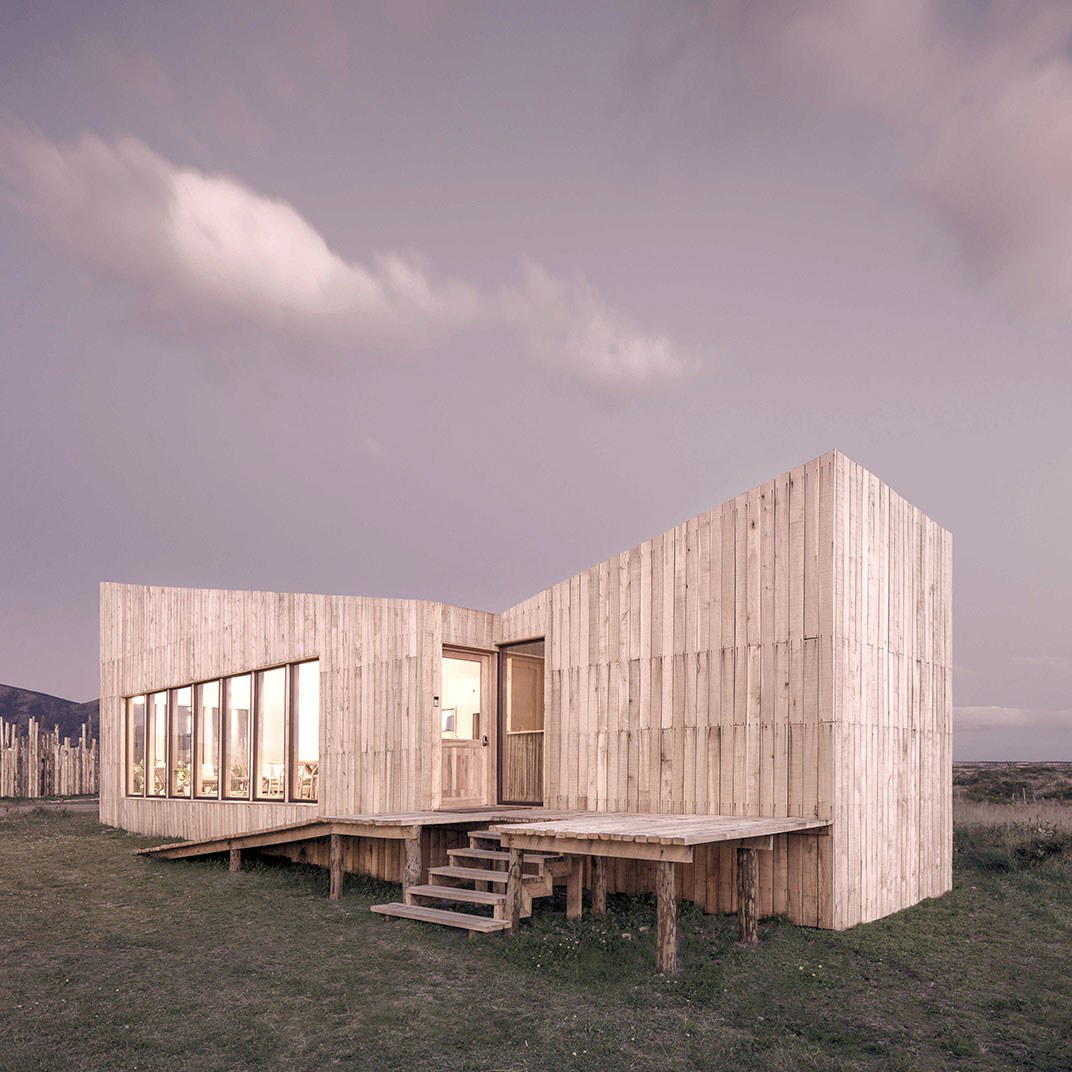
Bars in Puerto Natales
Browse all →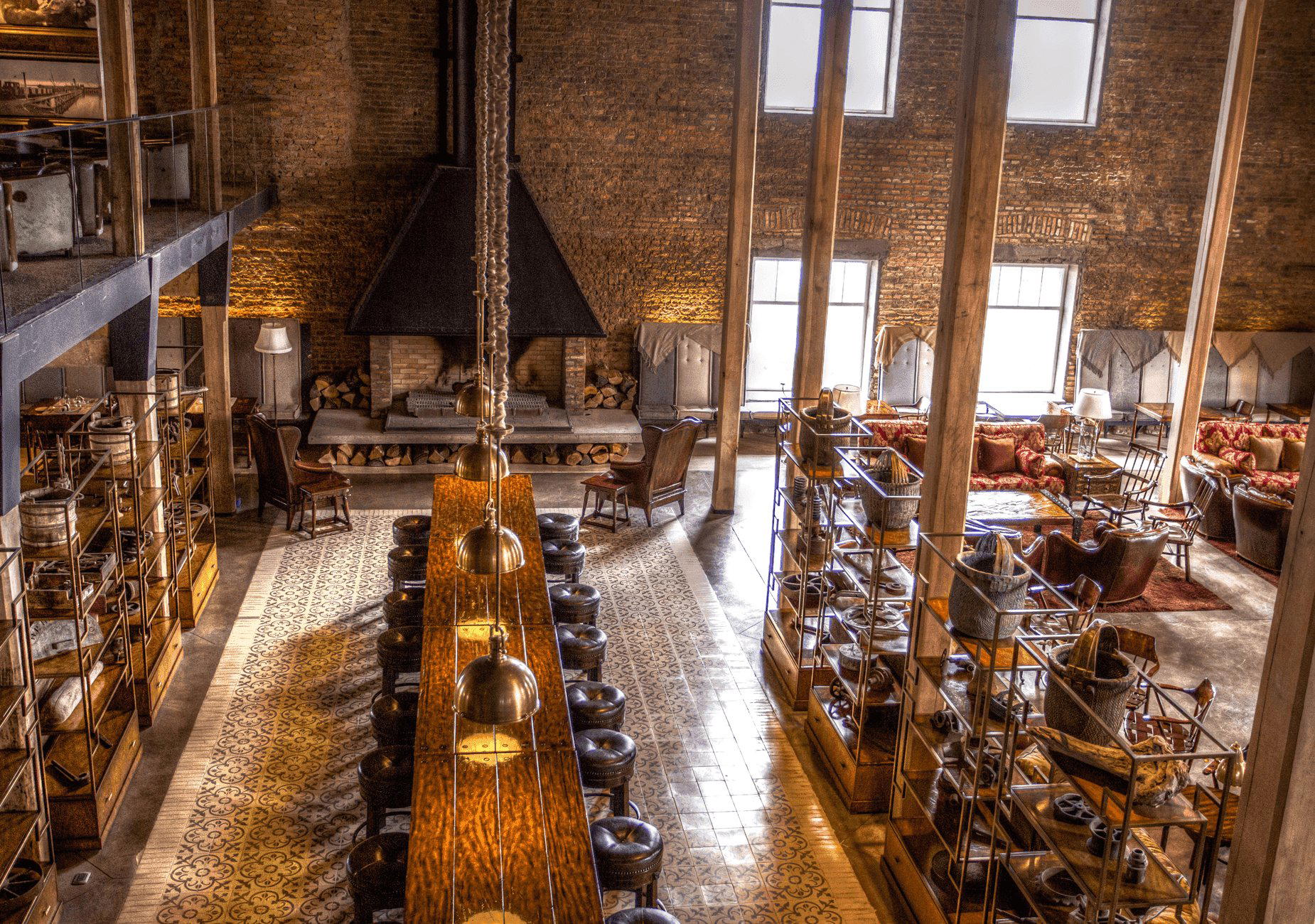
Restaurants in Puerto Natales
Browse all →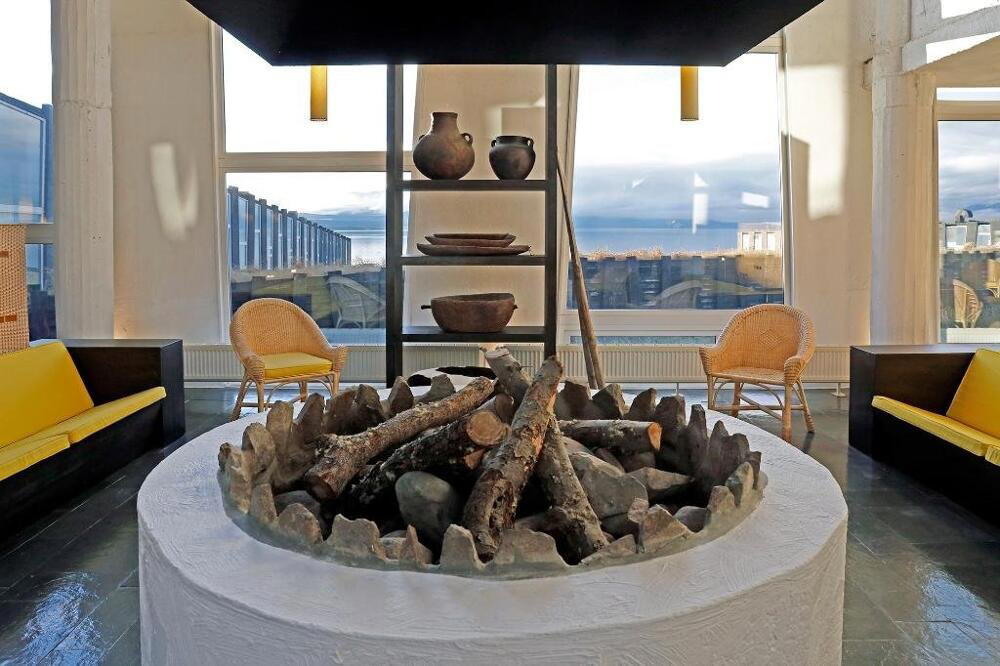
At a Glance
- Scenic
- Rustic
- Quiet
- Elegant
- Cozy
- Romantic Getaway
- Wellness Retreat
- Honeymoon
- Weekend Escape
- Panoramic View
- Infinity Pool
- Pool
- Spa
- Sauna
- Wi Fi
- Restaurant
- Waterfront
- Mountain
- Pool
- Spa
- Sauna
- Wi Fi
- Restaurant
Secluded and serene with large public areas featuring open fires, natural light from expansive windows, and a peaceful retreat atmosphere emphasizing connection to nature.