Precise Tale Poggio Alla Sala


1 Michelin Key · Mr & Mrs Smith Seal of Approval
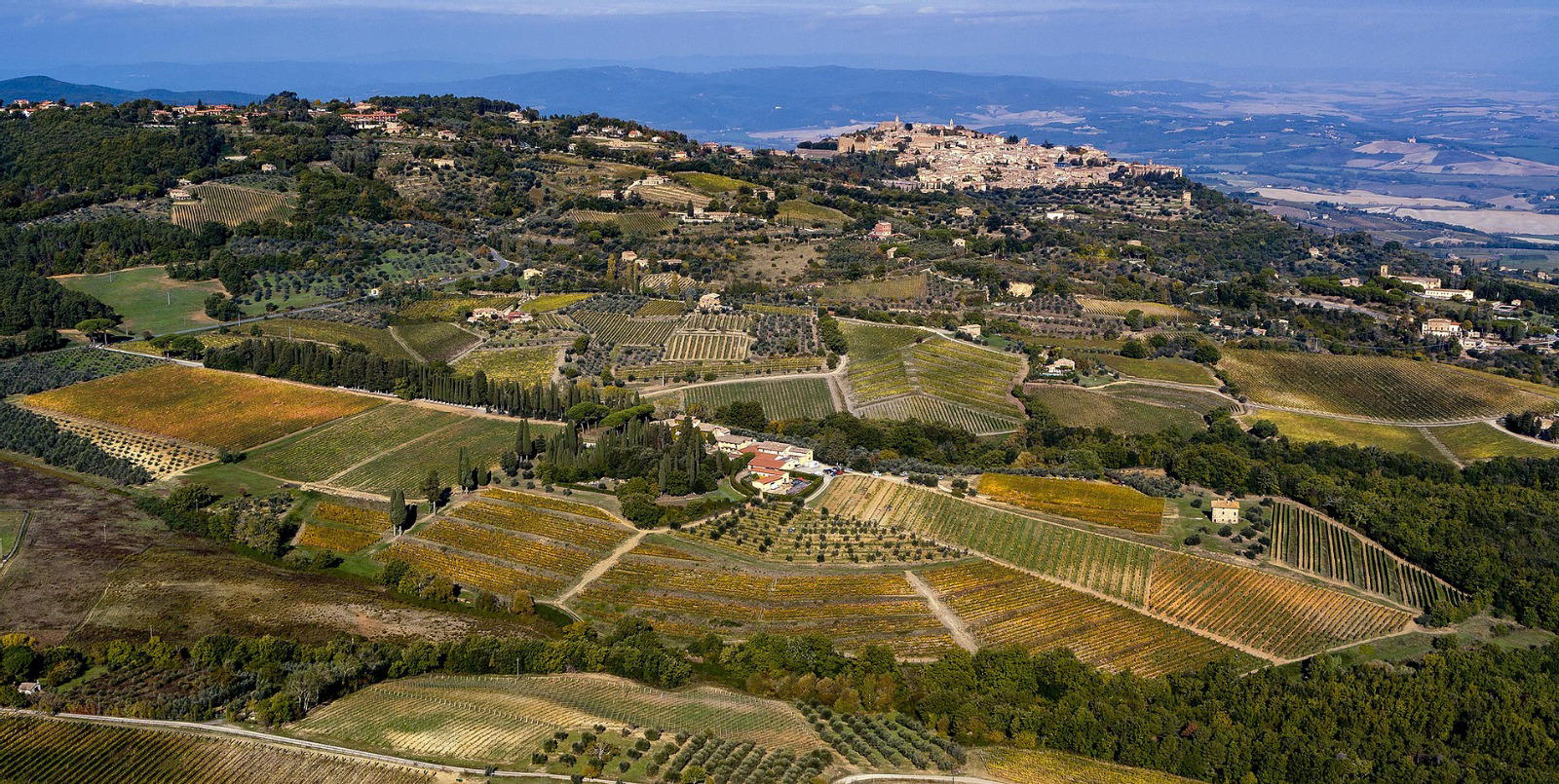
Set among cypress and olive groves minutes from Montepulciano, Precise Tale Poggio Alla Sala is a 71-room property that earned a Michelin Key in 2024. Its design draws on Silk Route references spanning Istanbul to Shanghai, layering Eastern influences over a Tuscan base. The restaurant, La Via Della Seta, applies the same logic to its kitchen, pairing local ingredients with subtle Eastern inflection and fine Italian wines.

Pearl is the En Primeur Club membership app — saves, bookings, and concierge access live there. Same editors, same standards.
- Address
- Via Poggio alla Sala, 10, 53045 Montepulciano SI
- Phone
- +39 0578 820050
- Website
- precisehotels.com
- Directions
- Get directions
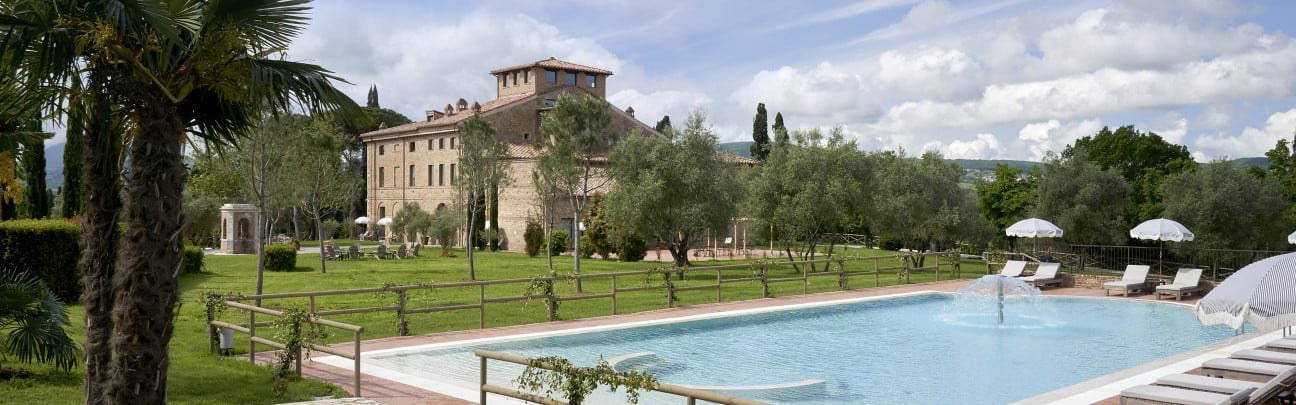
Where Tuscany Meets the Silk Routes
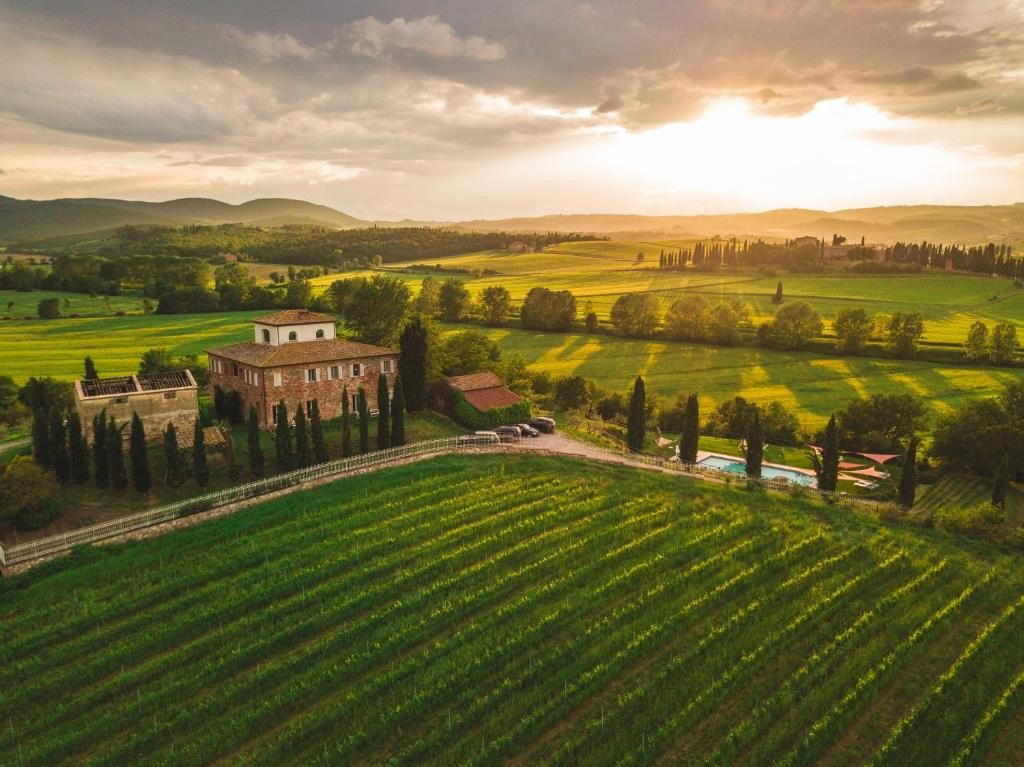
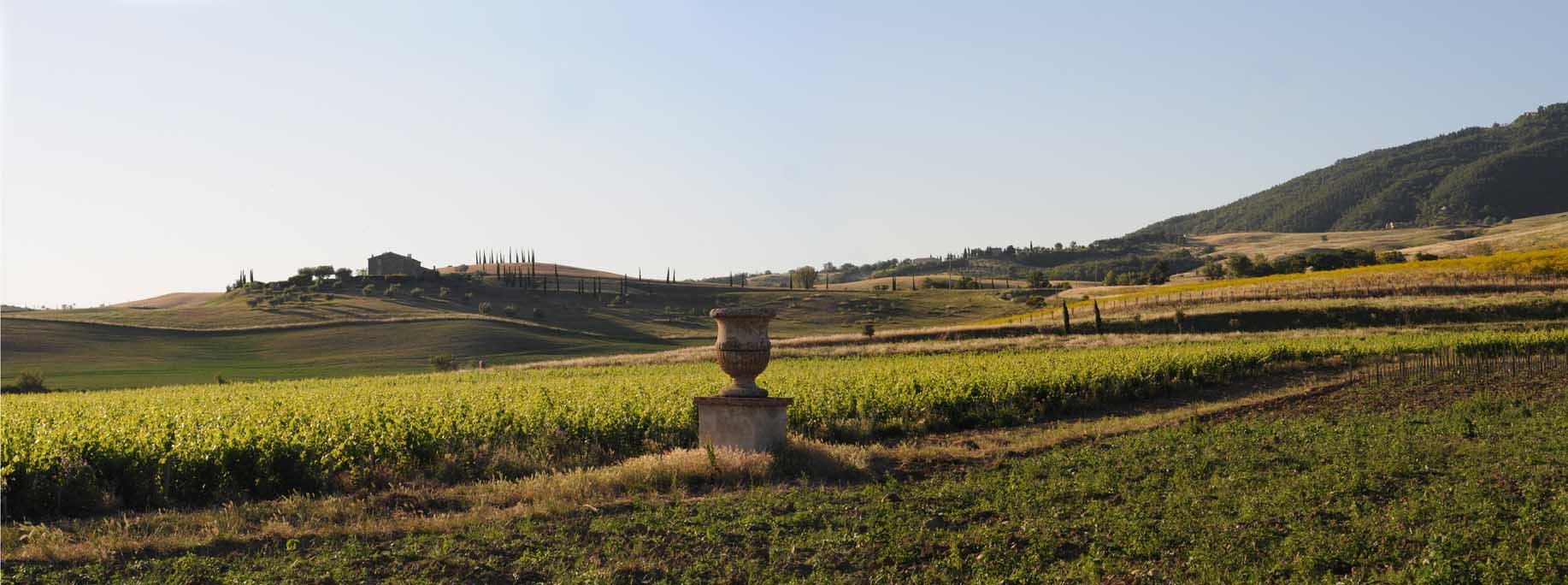
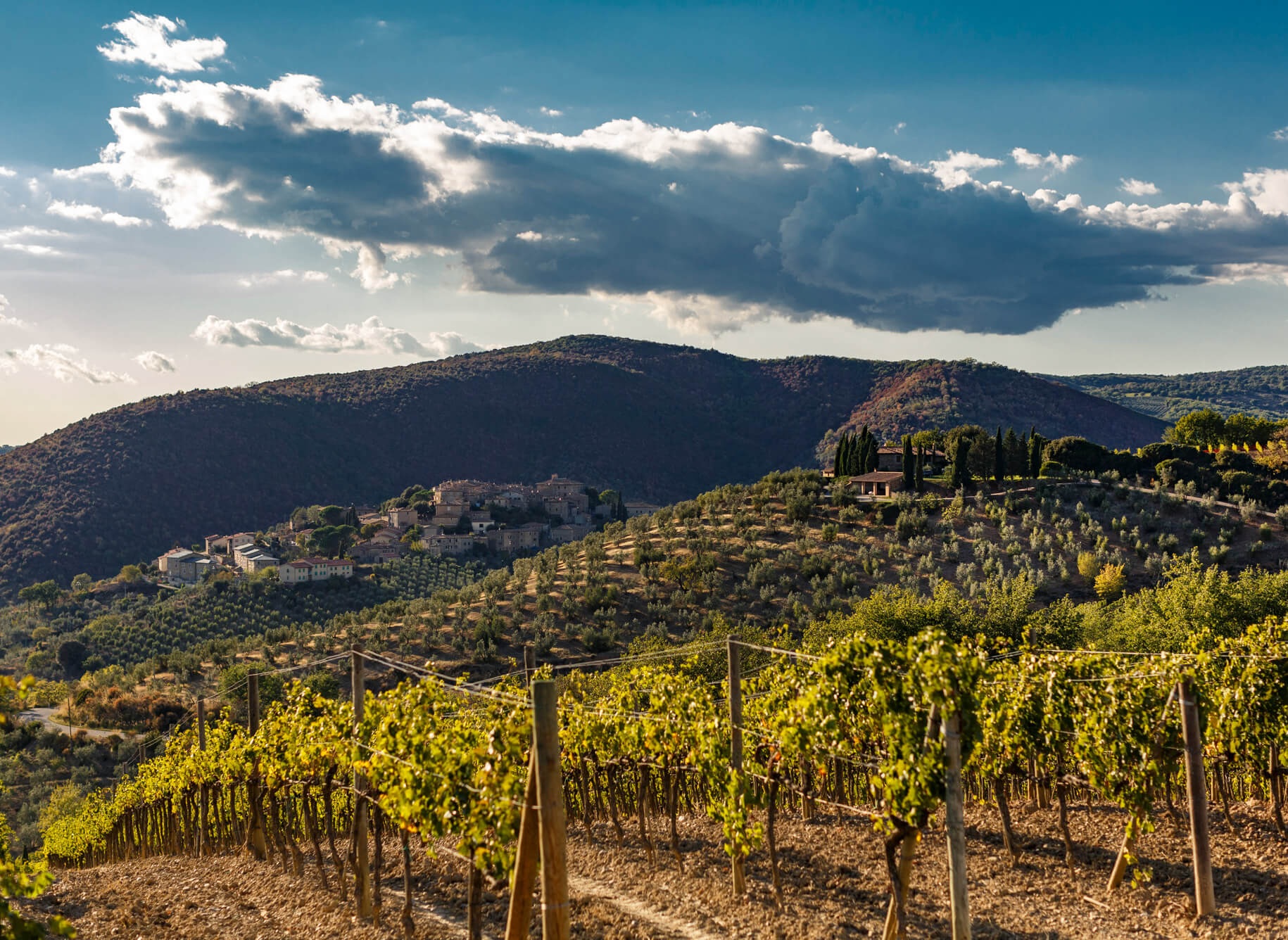
The approach to Precise Tale Poggio Alla Sala sets the tone before you reach the lobby. Cypress trees line the road in the manner typical of Sienese hill country, olive groves fill the slopes, and the rolling terrain delivers the precise visual grammar that has made this corner of Tuscany a sustained draw for European travellers. What changes when you step inside is the interpretive layer: the design team chose not to reproduce a standard Tuscan villa aesthetic, but to place this landscape in conversation with the historic trade routes that once connected the Italian peninsula to Istanbul, Persia, and Shanghai.
The Design Argument: Silk Routes Over Cypress Rows
Tuscan hotel design operates within well-established conventions. Stone walls, terracotta floors, heavy linen, antique furnishings sourced from regional markets: the formula works because it is coherent with the landscape and the history. But it is also, in many properties, a formula applied without much editorial judgment. Precise Tale Poggio Alla Sala takes a different position. The designers drew on the Silk Routes as an organising concept, which in practice means that decorative and material references from the Eastern Mediterranean, the Levant, and East Asia appear alongside Tuscan vernacular elements. Geometric tile patterns that recall Iznik or Persian craft traditions, textile choices with a weight and colour palette closer to the Bosphorus than to Siena, objects and finishes that carry the logic of a well-travelled eye rather than a regional curator: the overall effect is a hotel that reads as Tuscan in its bones but cosmopolitan in its detail.
This kind of layered design approach is more common in city hotels than in rural agriturismo or villa properties. At urban addresses like Aman Venice in Venice or Bulgari Hotel Roma in Rome, international design intelligence is expected by the market. In the Tuscan hills, where guests often arrive specifically for rootedness and rusticity, introducing a global reference frame is a deliberate editorial risk. At Poggio Alla Sala, the Michelin Key recognition suggests the execution landed on the right side of that risk.
Room Categories and the Case for the Villa
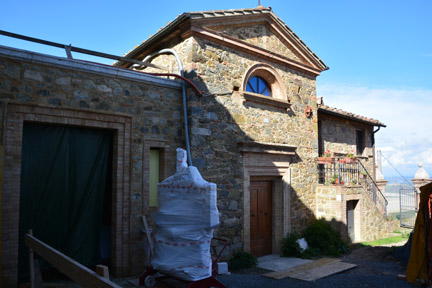
The property holds 71 rooms and suites across its main structure and a separate 18th-century neoclassical villa. The main building delivers the Silk Route design logic in its most complete form: contemporary-classic rooms where the global textile and decorative influences are most pronounced. The Villa operates differently. Its neoclassical architecture, built in the 1700s, carries a more formal historical character, and rooms there sit closer to the Tuscan tradition in feel. For guests whose priority is atmosphere over novelty, the Villa rooms and suites offer a stronger sense of place and period. For guests who came specifically for the cross-cultural design experiment, the main building rooms are the more coherent choice. Properties in the Tuscan premium tier, from Rosewood Castiglion Del Bosco in Montalcino to Borgo San Felice Resort in Castelnuovo Berardenga, typically anchor their room proposition in restored historic fabric. Poggio Alla Sala's main building offers something less common in the region: contemporary interior design that uses historical trade as a conceptual source.
The Pool Configuration and Summer Logic
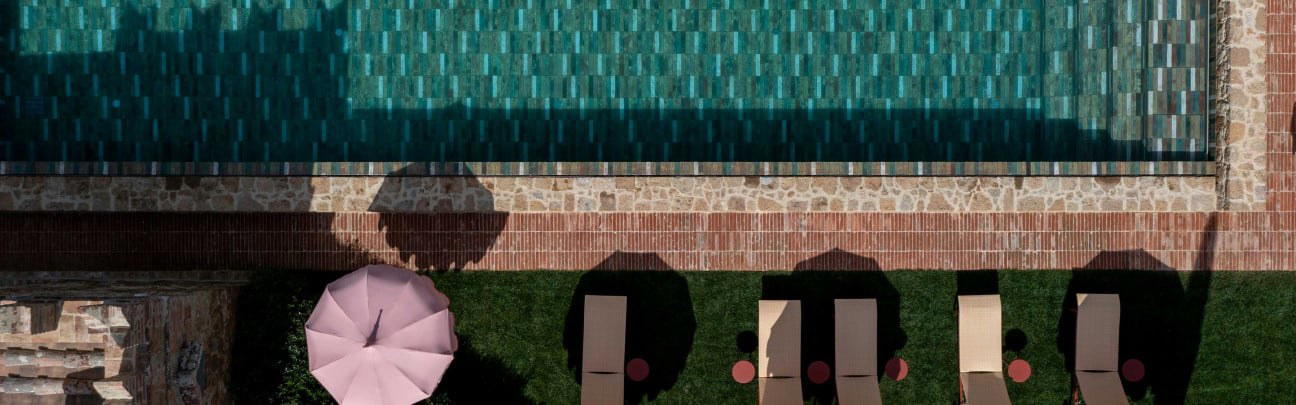
Four pools serve the property, which is a meaningful figure for a 71-room hotel. One operates as adults-only, one is child-friendly, and the configuration gives the property genuine flexibility across guest profiles. Summer in the Val d'Orcia and the hills above Montepulciano runs reliably hot from June through August, with temperatures regularly exceeding 35 degrees Celsius. A multi-pool setup is not just a luxury signal in this context; it is functional architecture for the season. Properties like Castelfalfi in Montaione and Castello di Reschio in Lisciano Niccone operate on similar seasonal logic, where outdoor amenities carry the most weight between late spring and early autumn.
La Via Della Seta: The Kitchen as Parallel Argument
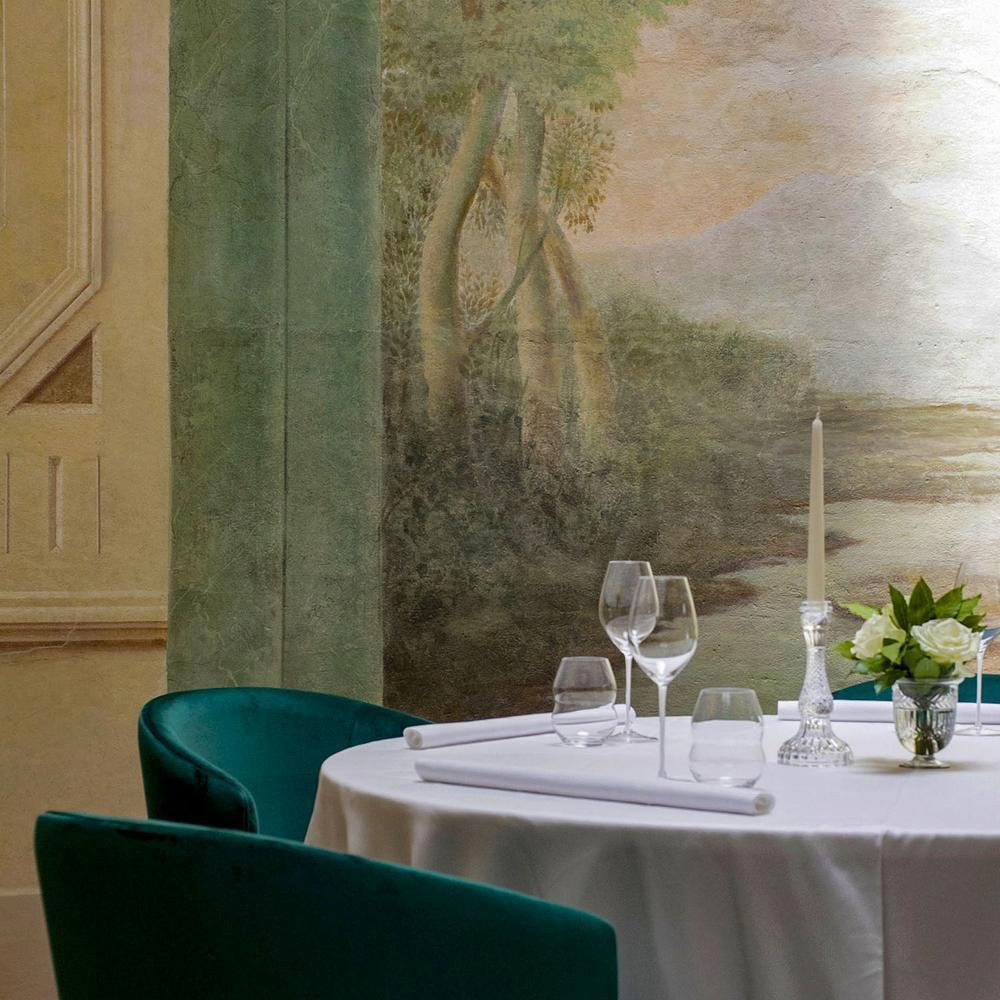
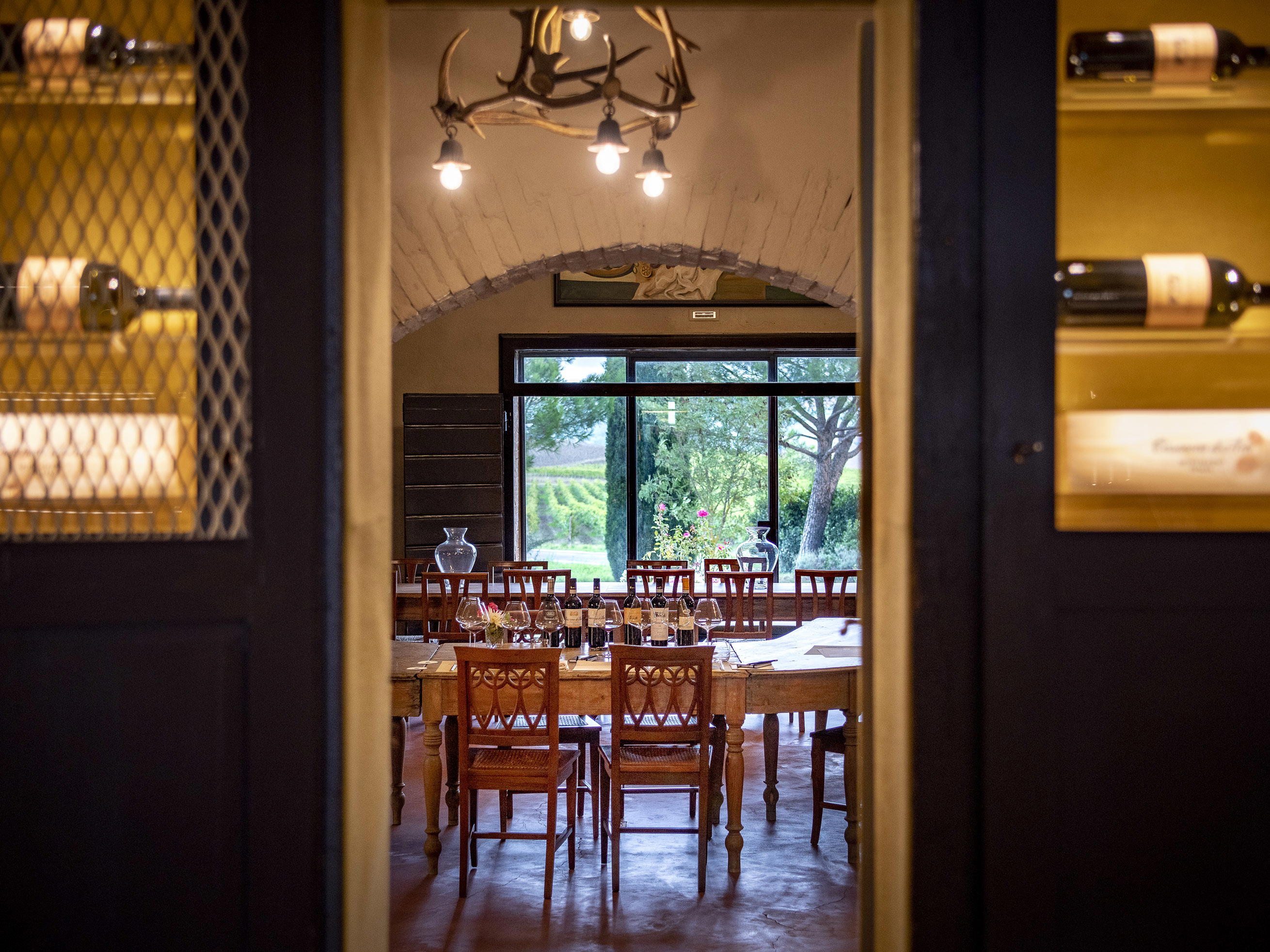
The restaurant, La Via Della Seta, named for the Silk Road itself, applies the same design thesis to the menu. The base is Tuscan: local ingredients, regional wine list weighted toward Italian producers, a kitchen grammar shaped by the traditions of the surrounding countryside. The distinguishing move is the introduction of Eastern inflections, spice references, and flavour logics drawn from the same geographic arc that inspired the interior design. This kind of cross-reference cooking is not new in Italian fine dining, but it is unusual at the agriturismo and villa property tier, where menus more commonly stay close to the regional canon. The coherence between the design concept and the kitchen concept is the editorial argument that holds the property together. Michelin Key recognition, introduced in 2024 as a dedicated hotel hospitality award, considers factors including the quality of the restaurant as part of the overall experience, which positions La Via Della Seta as a meaningful contributor to the property's standing.
For context on how other Italian properties approach the relationship between kitchen concept and hotel identity, the range is wide: Casa Maria Luigia in Modena anchors its identity in Massimo Bottura's culinary philosophy, while Four Seasons Hotel Firenze in Florence operates within the expectations of a major international brand. Poggio Alla Sala sits in a different position: a property of independent character using its restaurant as a thematic extension of a design concept, in a region where wine, land, and table have been the organising logic of hospitality for centuries.
Montepulciano as a Base
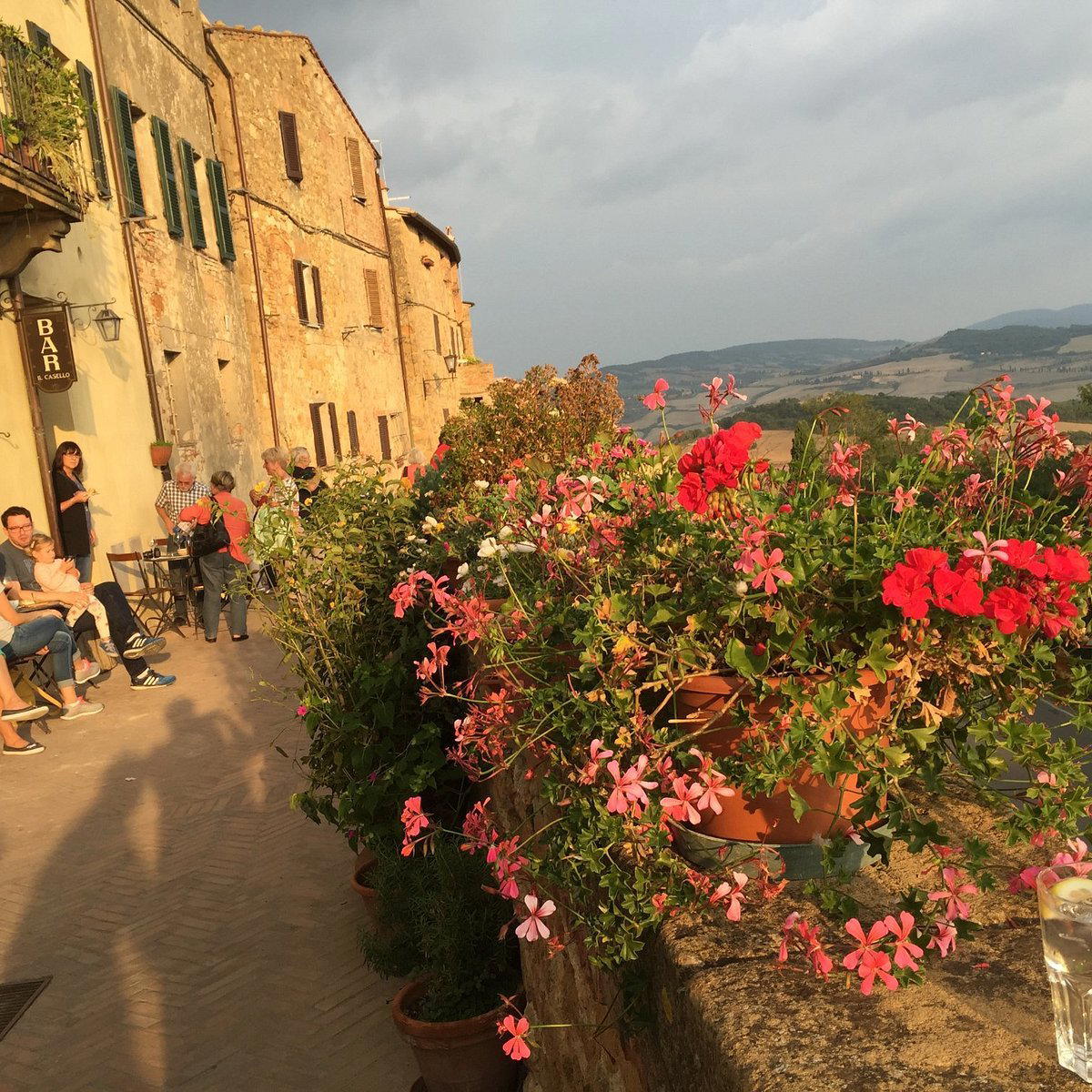
The town of Montepulciano, a few minutes from the property, is one of the better-positioned bases in southern Tuscany. Its hilltop centro storico holds Renaissance architecture of genuine quality, and the surrounding wine zone, the Vino Nobile di Montepulciano appellation, produces Sangiovese-dominant wines that have held DOC status since 1966 and DOCG since 1980. The proximity to Pienza, the Valdorcia UNESCO landscape, and Montalcino (Brunello country) makes the location coherent for guests whose itinerary includes both cultural sites and wine tourism. Our full Montepulciano restaurants guide covers the dining options in the town itself for guests looking to extend beyond the property's kitchen.
Properties elsewhere in the Tuscan premium tier that draw comparable visitor profiles include Il Pellicano in Porto Ercole and Corte della Maestà in Civita di Bagnoregio, both of which operate in historically significant settings. For guests considering Tuscany against other Italian regions, the Amalfi and Campanian tier includes addresses like Borgo Santandrea on the Amalfi Coast, Il San Pietro di Positano, and Bellevue Syrene 1820 in Sorrento. Further afield within Italy, Borgo Egnazia in Savelletri di Fasano and Portrait Milano in Milan represent the northern and southern poles of the Italian premium hotel market, while alpine options like Forestis Dolomites in Plose and Castel Fragsburg in Merano serve a different seasonal logic entirely.
Planning Your Stay
The property operates at Via Poggio alla Sala, 10, outside Montepulciano in the Siena province. With 71 rooms across the main structure and the Villa, availability is not as constrained as at boutique properties in the ten-to-twenty room tier, but summer weeks fill quickly given the property's recognition and position in the Michelin Key list. Guests who prefer the Villa rooms for the neoclassical atmosphere should specify that preference early, as the category is limited within the overall room count. The spa and multi-pool setup make the property most relevant in the May-to-September window, though the surrounding countryside and wine region hold interest year-round. For reference on the kind of cross-cultural design commitment that works at a larger scale in a different Italian setting, Passalacqua in Moltrasio, Grand Hotel Tremezzo in Tremezzo, and EALA My Lakeside Dream in Limone sul Garda provide useful comparative reference points on Lake Como and Garda. Guests looking beyond Italy entirely might consider Aman New York, The Fifth Avenue Hotel in New York City, or Amangiri in Canyon Point as design-led benchmarks in very different environments. JK Place Capri rounds out the Italian coastal comparator set for those weighing a Tuscan hill stay against a Mediterranean island alternative.
Comparable Spots, Quickly
Comparable venues nearby, for context on price, style, and recognition.
| Venue | Cuisine | Price | Awards | Notes |
|---|---|---|---|---|
| Precise Tale Poggio Alla SalaThis venue — the venue you are viewing | Historic residence blending Tuscan heritage with contemporary luxury | Not listed | 1 Michelin Key · Mr & Mrs Smith Seal of Approval | Not listed |
| VILLA POGGIANO | Historic neoclassical villa with family-run hospitality and exclusive boutique positioning | $200–300 | Michelin Selected | Val d'Orcia |
| Villa Svetoni Wine Resort | Historic Tuscan estate reimagined as luxury wine resort; blends 18th-century architectural heritage with contemporary hospitality and wellness focus. | $100–200 | Michelin Selected | Montepulciano |
| Borgo San Vincenzo | Fresh take on traditional Tuscan countryside design with wine-driven core; blends 18th-century historic charm with contemporary luxury in an approachable way. | $300–500 | Michelin Selected · Mr & Mrs Smith Seal of Approval | Vino Nobile di Montepulciano |
| Villa Cicolina | Historic Tuscan relais villa blending noble heritage with modern comforts. | $300–500 | Michelin Selected | Montepulciano |
| Castello di Spaltenna | Historic luxury castle resort blending medieval architecture with contemporary wellness amenities in the heart of Chianti wine country. | $300–500 | Michelin Selected · Small Luxury Hotels of the World Member | Gaiole in Chianti |
Recognition history
Dated appearances from independent guides and award organizations, with the underlying list record or original source where available.
Michelin 1 Key
Michelin
Mr & Mrs Smith Seal of Approval
Mr & Mrs Smith
Full recognition history (4 entries)
Michelin 1 Key
Michelin
Michelin 1 Key
Michelin
Continue exploring
More in Montepulciano
Hotels in Montepulciano
Browse all →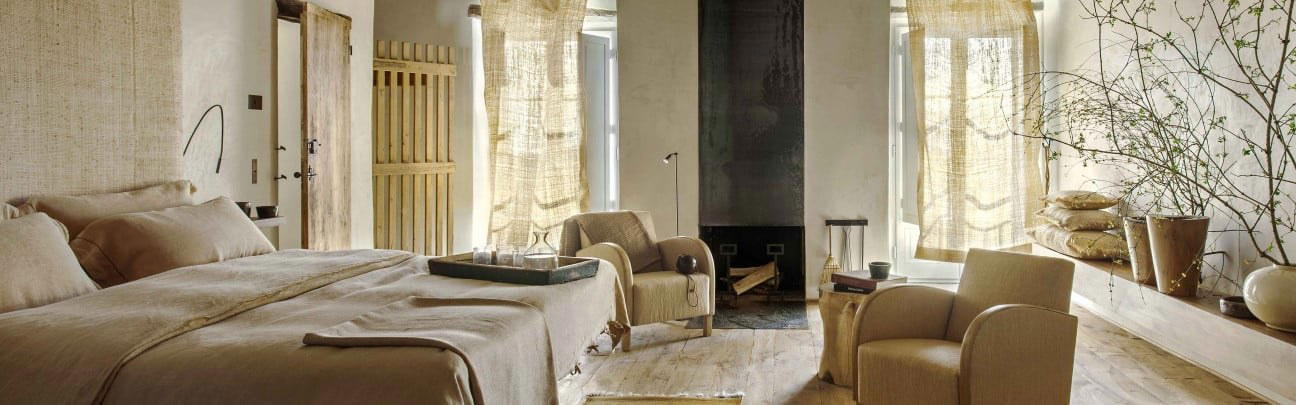
Bars in Montepulciano
Browse all →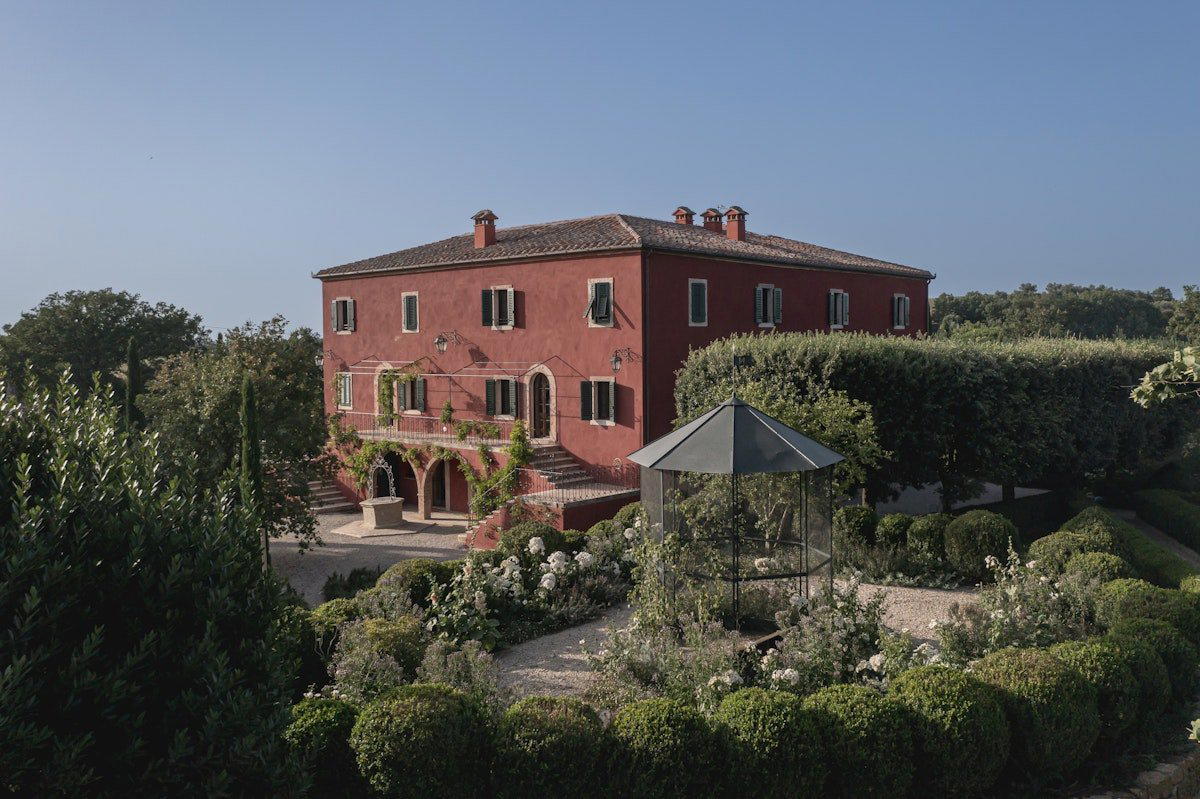
Restaurants in Montepulciano
Browse all →
Details
- Romantic
- Elegant
- Scenic
- Rustic
- Sophisticated
- Cozy
- Honeymoon
- Romantic Getaway
- Anniversary
- Weekend Escape
- Destination Wedding
- Panoramic View
- Garden
- Terrace
- Historic Building
- Wi Fi
- Pool
- Spa
- Fitness Center
- Room Service
- Concierge
- Sauna
- Restaurant
- Vineyard
- Garden
- Mountain
- Elevator
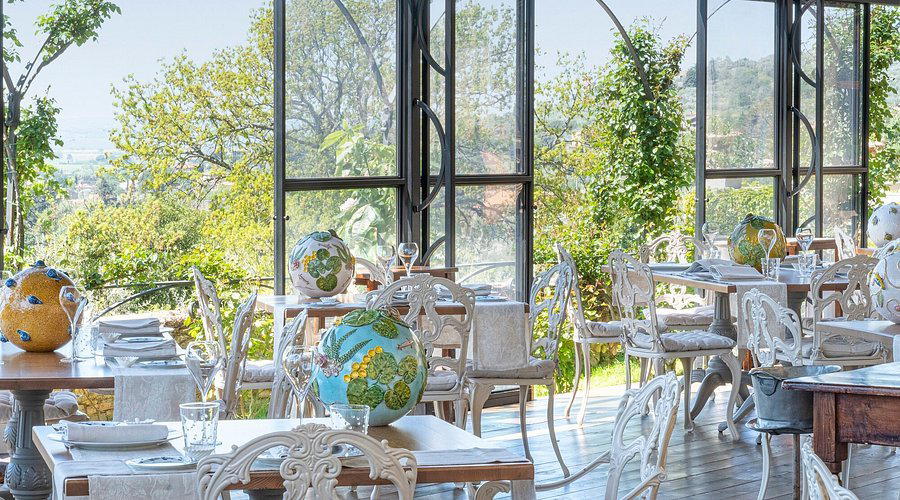
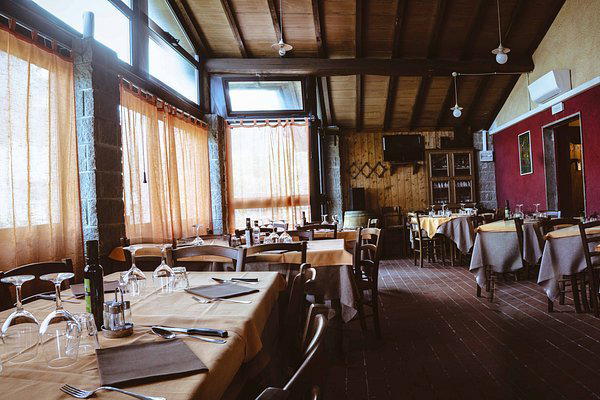
Serene and tranquil atmosphere with elegant lighting, terracotta floors, preserved frescos, and vaulted ceilings blending historic charm with sophisticated modern design.