



Michelin Selected · La Liste Top Hotels · Forbes 4-Star
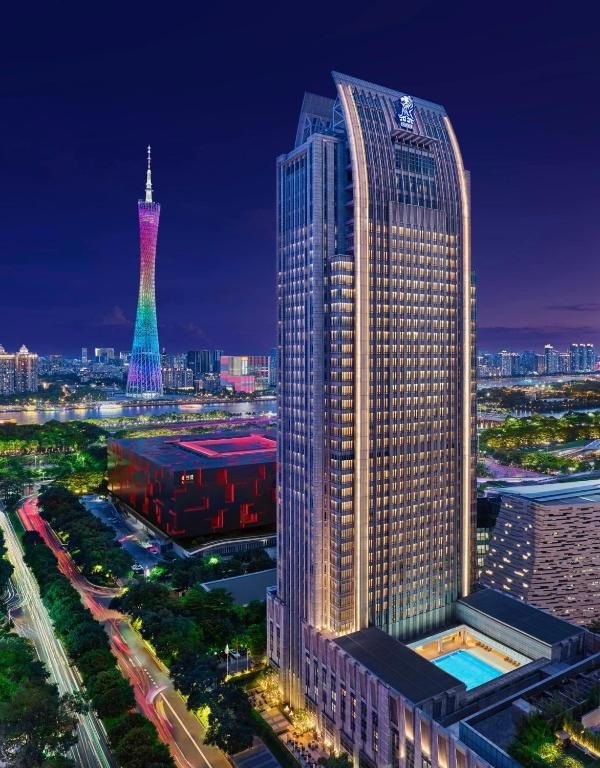
One of only three Mandarin Oriental properties in mainland China, the Guangzhou outpost brings Tony Chi's minimalist design language to the Tianhe business district, where entry-level rooms start at 646 square feet. Recognised by Forbes Travel Guide's Four-Star award and included in Tatler Asia-Pacific's Best Hotels 2025 list, it positions itself at the upper tier of the city's international hotel set alongside the Conrad, Four Seasons, and Rosewood.

Pearl is the En Primeur Club membership app — saves, bookings, and concierge access live there. Same editors, same standards.
- Address
- 389 Tian He Dong Lu, 天河中心 Tian He Qu, Guang Zhou Shi, Guang Dong Sheng, 510620
- Phone
- +86 20 3808 8888
- Directions
- Get directions
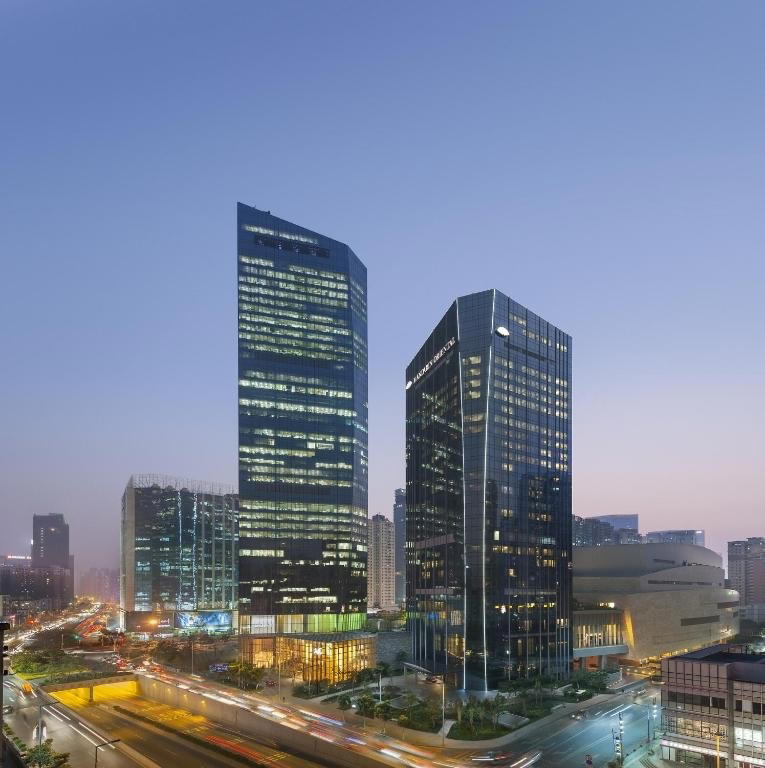
Tianhe's International Hotel Tier and Where the Mandarin Oriental Sits Within It
Guangzhou's Tianhe district has spent the past two decades consolidating its position as the city's primary address for international five-star hotels. In that company, the Mandarin Oriental occupies a specific position: a property defined less by height or spectacle than by material quality and spatial restraint. It is one of just three Mandarin Oriental properties across mainland China, the others being in Shanghai and Sanya, which concentrates the brand's mainland presence in a way that shapes how each property is managed and perceived. For context on how the broader China luxury hotel circuit operates, properties such as the Mandarin Oriental Qianmen in Beijing and the JW Marriott Hotel Shanghai at Tomorrow Square illustrate how international brands calibrate their offer across different city characters.
Design as Argument: Tony Chi's Minimalism in a City That Tends Toward Excess
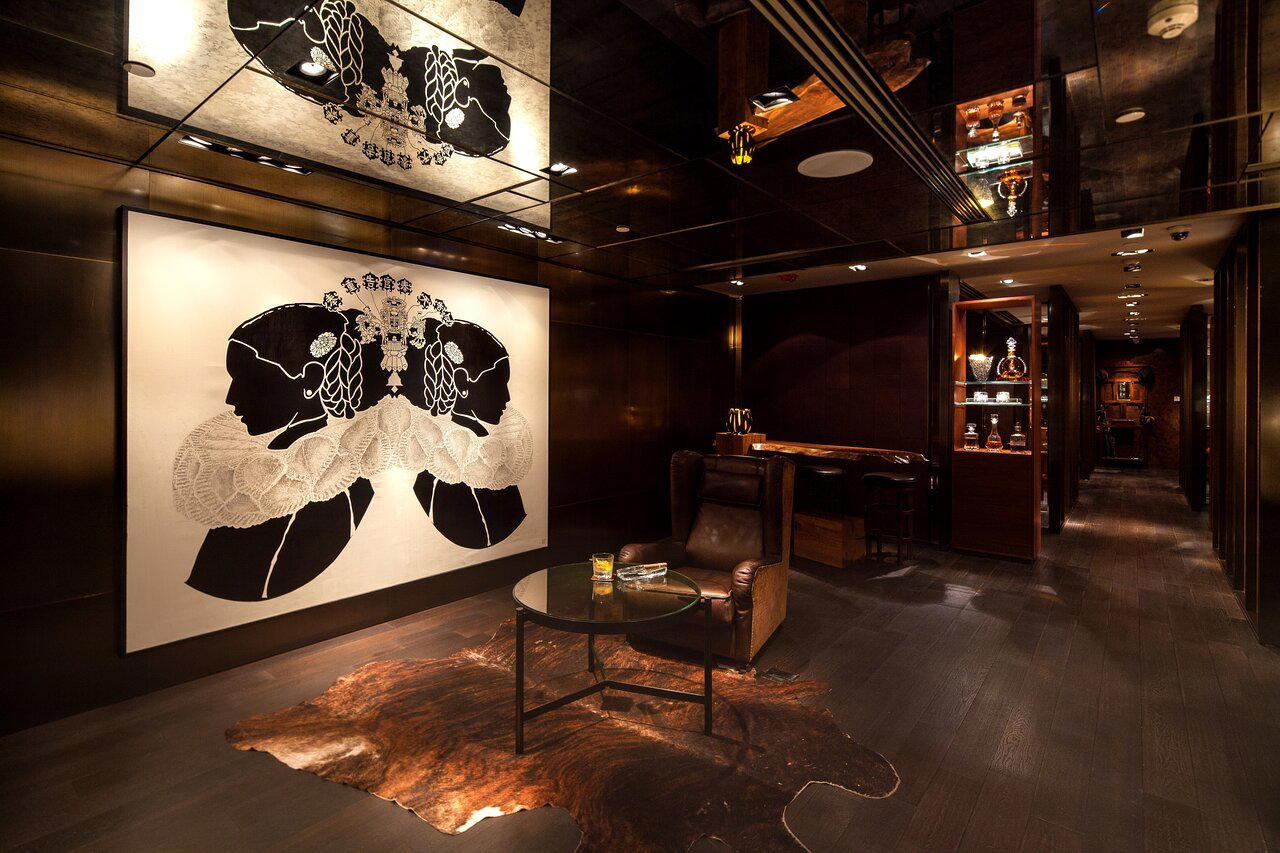
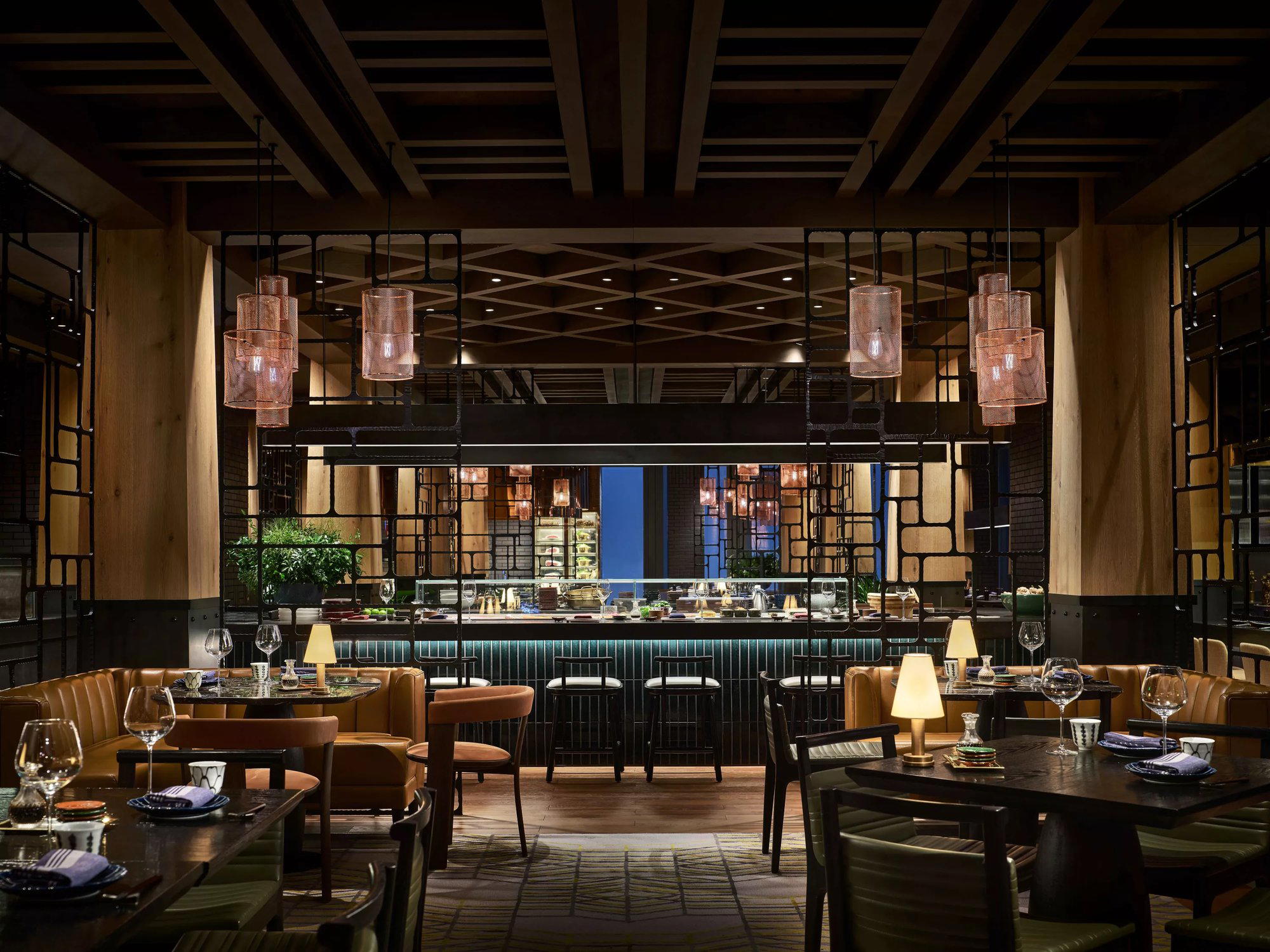
Guangzhou's hotel interiors have a long tradition of leaning into grandeur: mirrored lobbies, cascading chandeliers, and maximalist floral arrangements that announce arrival rather than invite stillness. The Mandarin Oriental, Guangzhou makes a different argument. Tony Chi, the New York-based designer responsible for the property's aesthetic, built the hotel around a language of restraint: a gleaming avant-garde lobby, dark herringbone-patterned hardwood floors, and a palette of deep neutrals that pushes back against the ornamental tendency of the broader Tianhe hotel market. The contrast between the marble-filled bathrooms and the spare, controlled atmosphere of the guest rooms is intentional. It positions the property within a global cohort of design-led luxury hotels rather than within Guangzhou's historically more decorative tradition. Guests arriving from properties like the Amanfayun in Hangzhou or the Amandayan in Lijiang, both of which take a materials-first, restrained approach, will find the design logic here familiar, even if the urban scale is entirely different.
The Rooms: Where the Square Footage Argument Is Made Most Clearly
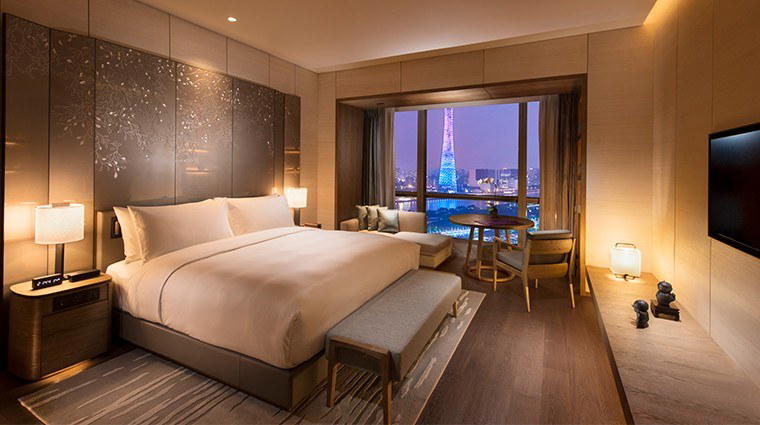
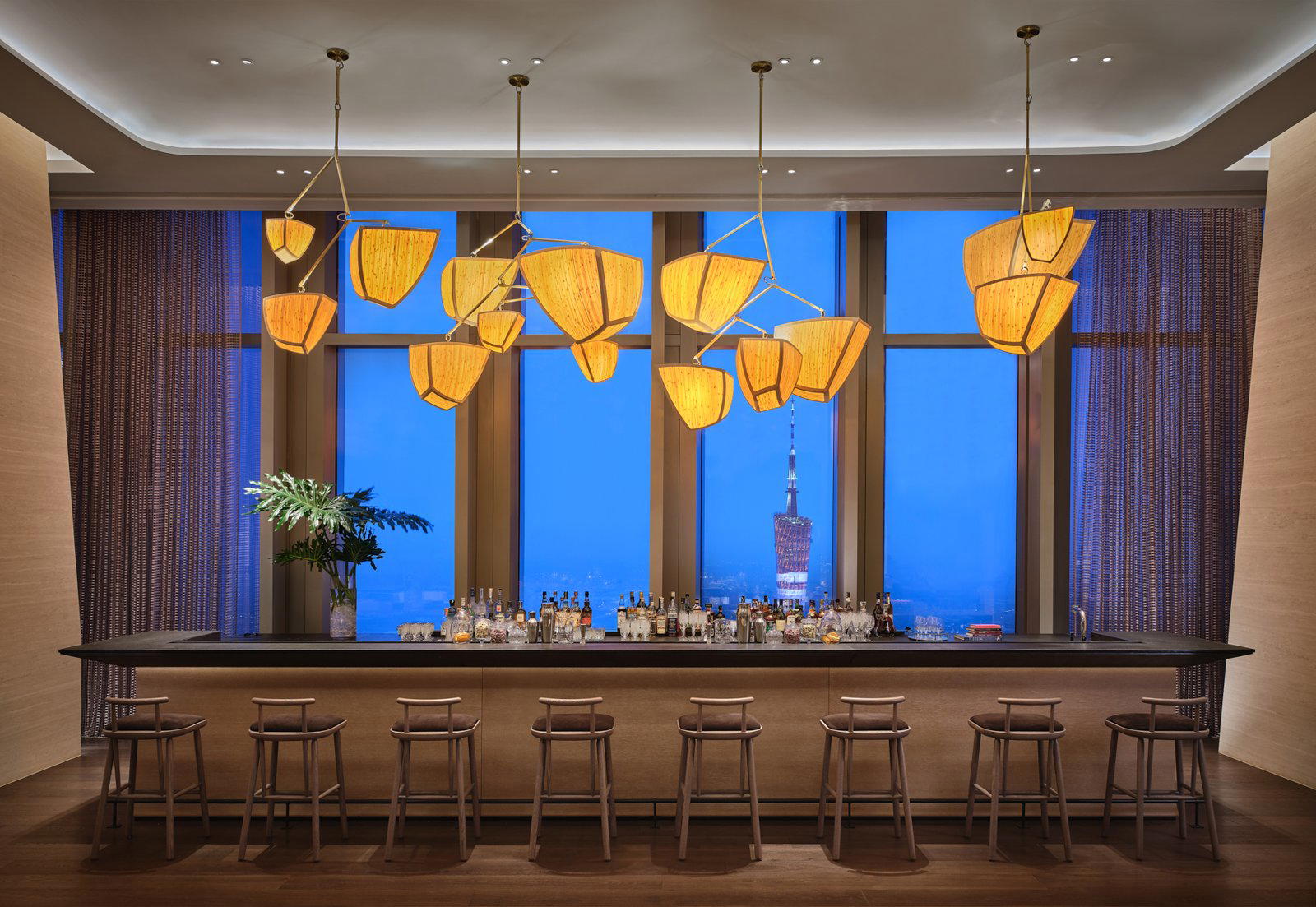
Room size has become a meaningful differentiator in Guangzhou's five-star tier, and the Mandarin Oriental's entry-level accommodations at approximately 646 square feet set a floor that is larger than many competitors' standard category. All rooms feature double sinks, walk-in showers with rainforest fixtures, and deep round tubs. The bathrooms are stocked with Ormonde Jayne products in guest rooms and Acqua di Parma in suites, a distinction that signals product quality rather than just amenity volume. The furniture choices, a leather wingback chair and upholstered bench rather than the generic seating common to business-district hotels, align with the Tony Chi aesthetic that runs through the public spaces. Club Level rooms and suites begin at approximately 753 square feet and include access to the Oriental Club Lounge on the 24th floor, which functions as a semi-private floor with its own check-in process, daily breakfast, continuous beverage service, and canapés served from 5:30 to 7:30 p.m. The views from these higher floors take in the Tianhe cityscape, a skyline that has changed more rapidly than almost anywhere else in China over the past decade.
The Spa, the Pool, and the Fitness Infrastructure
In the broader context of Asian luxury hotel wellness programming, spa facilities have shifted from amenity to differentiator. The Mandarin Oriental, Guangzhou positions its spa at the serious end of that spectrum: treatments draw on Natura Bissé products from Barcelona, the brand's own Quintessence oils, and ESPA formulations from the United Kingdom. The product mix reflects a deliberate international sourcing logic rather than a single-brand partnership. The heated pool runs 82 feet, which is a meaningful length in an urban hotel context where lap pools are frequently decorative rather than functional. Guests who book spa treatments are advised to arrive 45 minutes ahead of their appointment to use the pool, steam room, and sauna as part of a pre-treatment sequence. The fitness centre's InBody 520 machine, a body composition analyser that appears across the Mandarin Oriental network, allows guests who visit multiple properties throughout the year to track progress against a consistent baseline. This kind of cross-property infrastructure consistency is part of how the brand operates as a network rather than a collection of independent hotels. Elsewhere in China's broader hospitality geography, properties like the 1 Hotel Haitang Bay, Sanya or the Xiamen Yunding Resort offer their own wellness approaches, but the Mandarin Oriental's network-wide standards give it a consistency that resort-format independents cannot replicate.
Dining, the Cake Shop, and the Family Infrastructure
The Mandarin Cake Shop is one of those small but legible brand signals that appears across Mandarin Oriental properties globally. At the Guangzhou property, the shop's macaron selection cycles through seasonal flavours, with references to regional ingredients appearing alongside the brand's own interpretations of international confectionery. Thai chai tea milk chocolate is one documented example. The rotating selection gives the shop a reason to visit on return trips rather than a single purchase occasion. The hotel's Ebony restaurant offers a children's menu, and rooms are equipped with mini-me bathrobes and tumblers for younger guests. Baby amenities are available on request. This family-facing infrastructure is worth noting for business travellers who bring family on extended trips, a pattern common in Guangzhou given its role as a trade fair and commercial hub. See our full Guangzhou restaurants guide for context on where the hotel's dining sits within the city's broader food scene, which extends well beyond the Tianhe hotel corridor.
Recognition, Peer Context, and What the Awards Signal
The Mandarin Oriental, Guangzhou holds a Forbes Travel Guide Four-Star rating and appeared on Tatler Asia-Pacific's Leading Hotels 2025 list under the City Hotels category. La Liste's 2026 ranking awarded the property 97 points. The Langham Place, Guangzhou and the LN Hotel Five represent different points on the city's accommodation spectrum, and the Mandarin Oriental's award profile aligns it clearly with the internationally recognised upper bracket rather than the locally positioned mid-tier. For travellers assessing Guangzhou against other Chinese cities, or considering how a Guangzhou stay fits within a broader China itinerary that might include Altira Macau or properties such as the Vanke Lake Songhua Yunlu Hotel in Jilin and the Mohe Youran Mountain Residence, the Mandarin Oriental, Guangzhou functions as a reliable urban anchor with clear quality signals.
Planning Your Stay
Hotel sits at 389 Tianhe Dong Lu in the Tianhe district, Guangzhou's principal commercial and financial zone, which means access to the city's metro network is practical for those who want to reach older neighbourhoods, the Canton Fair complex, or Baiyun International Airport without relying on hotel transfers. The Hilton Guangzhou Baiyun Airport is an alternative for travellers with early departures or tight layovers. Those booking the Oriental Club floor gain access to the 24th-floor lounge, private check-in, and the daily canapé service, details that compress what would otherwise be multiple discrete amenities into a single room-category decision. The spa's pre-treatment protocol, which asks guests to arrive 45 minutes early, is designed around the 82-foot pool, steam room, and sauna sequence rather than as a waiting-room formality. Guests travelling internationally who have experienced the brand's New York presence, whether at The Fifth Avenue Hotel or the broader Aman New York tier, will find the Guangzhou property operating within a recognisable service register, adapted to a city that runs on commercial energy rather than leisure pace. For European reference points, the Aman Venice offers a useful contrast in how a design-led property adapts to a very different urban character. The Mandarin Oriental, Guangzhou's answer to Tianhe is legible from the moment you enter the lobby: controlled, material-forward, and deliberately unhurried in a district that is rarely any of those things.
Same-City Peers
Comparable venues nearby, for context on price, style, and recognition.
| Venue | Cuisine | Price | Awards | Notes |
|---|---|---|---|---|
| Mandarin Oriental, GuangzhouThis venue — the venue you are viewing | Contemporary luxury with spacious accommodations and integrated shopping access | $300–500 | Michelin Selected · La Liste Top Hotels | Not listed |
| Vaperse Hotel | condo design style fashion elegant refined and comfortable | $1–100 | Michelin Selected | Zhujiang New Town |
| The Ritz-Carlton, Guangzhou | Modern luxury high-rise with renovated Club Lounge and suites | $300–500 | Michelin Guide New Hotels New Hotel · Michelin Selected | Guangzhoushi |
| Shangri-La Hotel, Guangzhou | Contemporary luxury with Oriental-inspired decor | $200–300 | Forbes Recommended | Guangzhoushi |
| Conrad Guangzhou | Contemporary luxury urban hotel blending cutting-edge technology with traditional Guangzhou architectural heritage, positioned as a stylish oasis in the CBD. | $100–200 | Michelin Selected · Forbes Recommended | Guangzhoushi |
| Langham Place, Guangzhou | Modern luxury eco-certified hotel with cutting-edge design and contemporary architecture; positioned as a sophisticated business and leisure destination near the Canton Fair Complex. | $200–300 | Michelin Selected · Forbes Recommended | Guangzhoushi |
Recognition history
Dated appearances from independent guides and award organizations, with the underlying list record or original source where available.
Michelin Selected
Michelin
La Liste Top Hotels
La Liste
Forbes 4-Star
Forbes
Tatler Listed in Best Hotels Asia-Pacific
Tatler
Full recognition history (5 entries)
Forbes 4-Star
Forbes
Details
- Elegant
- Sophisticated
- Ornate
- Business Trip
- Romantic Getaway
- Anniversary
- Rooftop Pool
- Panoramic View
- Butler Service
- Pool
- Spa
- Fitness Center
- Room Service
- Concierge
- Business Center
- Valet Parking
- Skyline
- Wheelchair Accessible
- Elevator
- Accessible Parking
Serene and elegant with calming scents, refined decor, soundproofed rooms, and spa-like bathrooms featuring warm tones and rich fabrics.