Maison Kammerzell
Maison Kammerzell occupies one of Strasbourg's most recognisable medieval buildings on Place de la Cathédrale, steps from the Notre-Dame cathedral. The address has drawn visitors to Alsatian cuisine for generations, making it one of the Grande Île's most historically freighted dining rooms. Its position on the cathedral square places it at the centre of the city's architectural and gastronomic identity.
Pearl is the En Primeur Club membership app — saves, bookings, and concierge access live there. Same editors, same standards.
- Address
- 16 Pl. de la Cathédrale, 67000 Strasbourg, France
- Phone
- +33 3 88 32 42 14
- Website
- maison-kammerzell.com
- Directions
- Get directions
 Saves & bookings on Pearl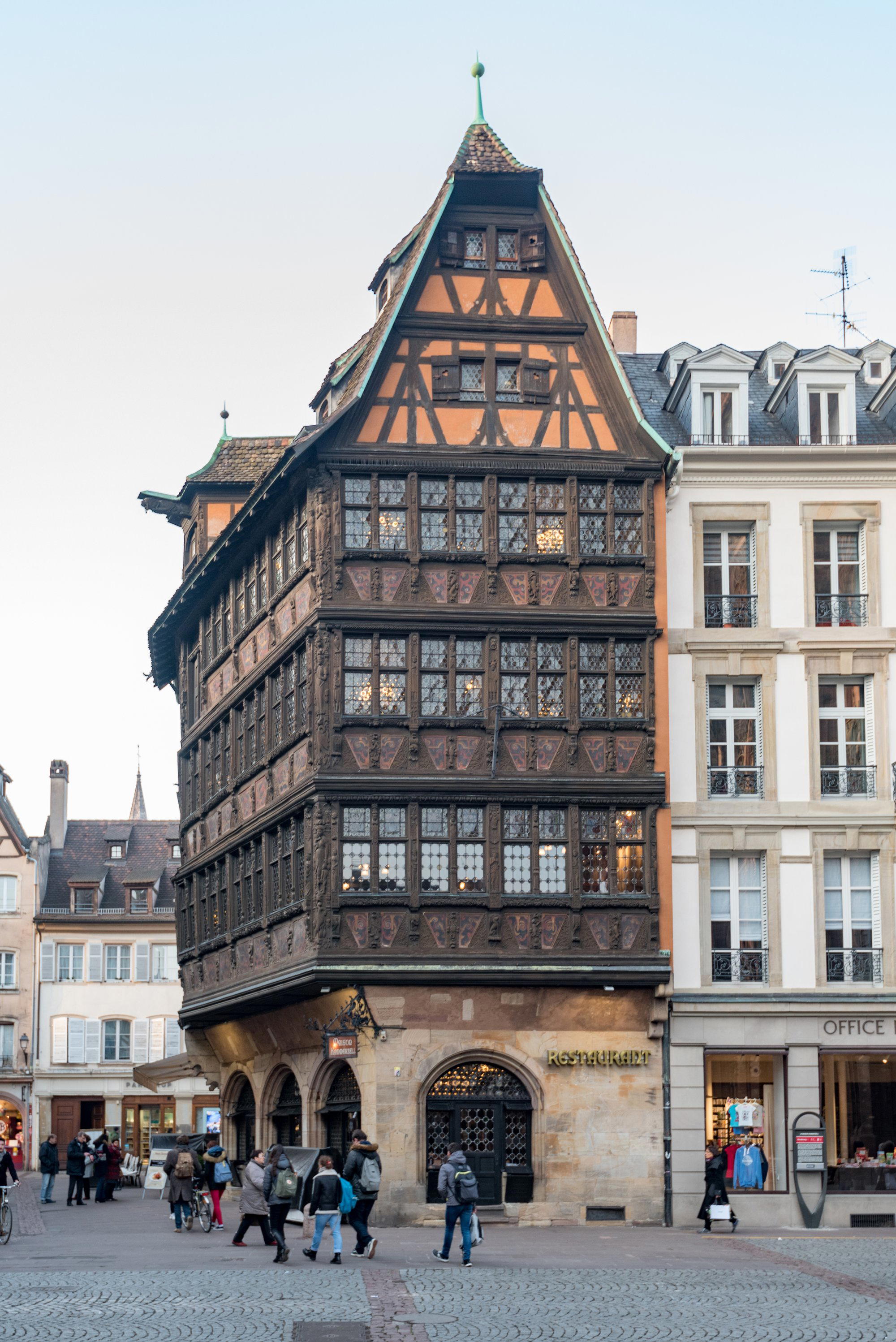
Cathedral Square and the Weight of a Medieval Address
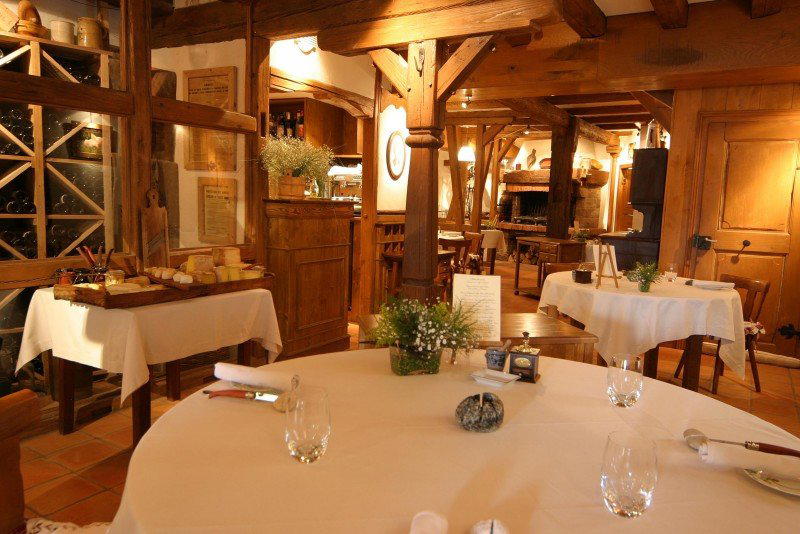
Place de la Cathédrale operates on a different register from the rest of Strasbourg's Grande Île. The square is framed by the rose-sandstone facade of the Notre-Dame cathedral on one side and, directly opposite, a row of half-timbered buildings that rank among the more photographed in Alsace. Of those, the building at number 16, Maison Kammerzell, draws the longest second glance. The structure dates to the fifteenth century, with the elaborately carved wooden facade added in the sixteenth, and the layered oriel windows rising three floors above street level establish a visual density that sets it apart from neighbouring buildings even in a city that takes its medieval architecture seriously.
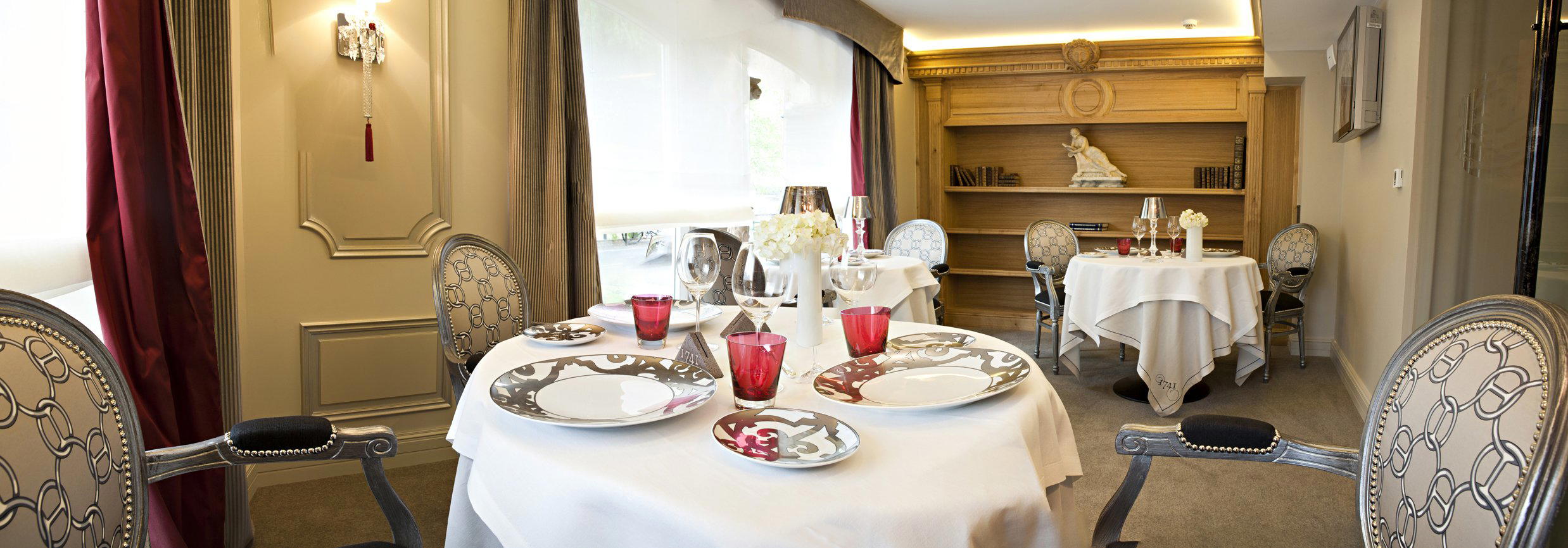
Dining in this kind of space does something specific to the experience: the room is the first course. Alsatian restaurant culture has long understood that the physical envelope of a meal matters, and Maison Kammerzell represents one concentrated version of that instinct in the city. The interior woodwork, painted panels, and stained glass visible from the dining rooms are not a reconstruction, they are the building itself, which has been in near-continuous use as a hospitality venue since the nineteenth century. That continuity is rarer in European dining than it sounds.
Alsatian Cuisine and Its Cathedral-Quarter Expression
Strasbourg's culinary identity sits at a crossroads that is not metaphorical but genuinely geographic. The city spent centuries passing between French and German administration, and the cuisine that emerged from that back-and-forth, choucroute garnie, baeckeoffe, flammekueche, foie gras preparations rooted in local farm traditions, carries that dual inheritance in every dish. The Grande Île's restaurant scene now ranges from modern Franco-Alsatian tasting menus to direct winstubs serving house-made tarte flambée, and the price and format spread is wide.
Maison Kammerzell positions itself within the traditional end of that spectrum, where regional dishes are treated as the point of the meal rather than a starting reference for deconstruction. In a city where a handful of higher-end addresses have moved toward more contemporary plating, there remains a specific appetite, particularly among visitors arriving from outside Alsace, for the kind of cooking that explains the region's flavour logic rather than complicates it. The cathedral-square location reinforces that orientation: this is where people come to understand what Strasbourg is, and the food follows that intent.
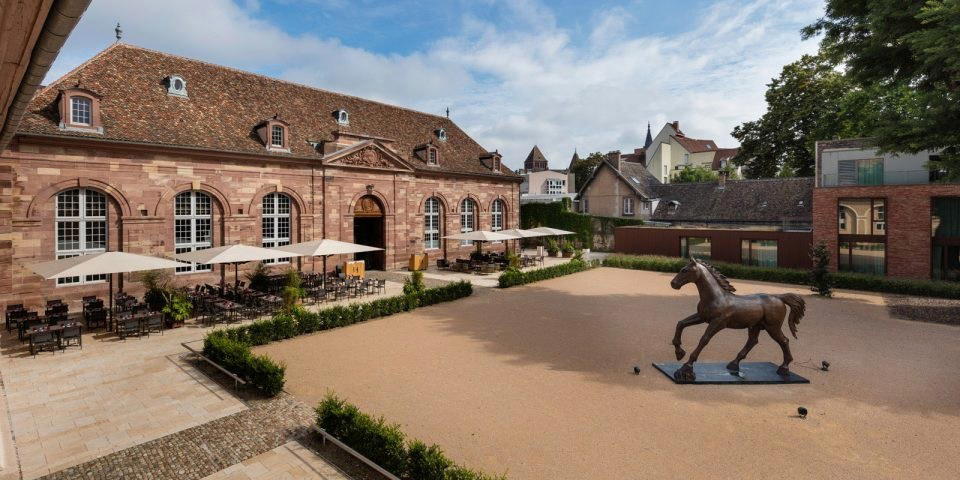
For visitors contextualising the hotel against other Grande Île addresses, the relevant comparison set sits among the established, historically positioned restaurants on and around the cathedral square and the adjacent lanes of the Petite France quarter. At the higher end of the Strasbourg hotel and dining scene, properties like Sofitel Strasbourg - Grande Île and Les Haras offer their own food and beverage programmes; those wanting a more design-led setting with a contemporary culinary approach will find those alternatives worth examining. Régent Petite France and Maison Rouge anchor the mid-tier, while Le Bouclier d'Or Hotel & Spa offers a spa-led alternative. The full range of Strasbourg's dining and hotel options is covered in our full Strasbourg restaurants guide.
The Building as a Dining Programme
In cities with a strong heritage-dining tradition, Lyon's bouchons, Paris's grand brasseries, Vienna's coffee houses, the physical institution does much of the editorial work. The room communicates a set of values before the menu arrives. The hotel belongs to that category of addresses where the built environment and the culinary programme are inseparable, and where the experience of the space is itself an argument for regional specificity over globalised luxury hospitality.
That argument has a particular resonance in Alsace. The region's food traditions are among the more codified in France, and the window of local produce, Munster cheese, Riesling-braised preparations, house-made charcuterie, is defined by both season and geography. A dining room with five centuries of continuous use in this specific city, in this specific region, represents a kind of editorial position: it says that provenance is the point, not the packaging.
For travellers planning a broader sweep through provincial France's premium dining, the hotel pairs logically with addresses like Domaine Les Crayères in Reims, where the food programme is anchored by Champagne-country produce, or Les Sources de Caudalie in Bordeaux, where terroir drives both the wine list and the kitchen's sourcing. Further afield, Baumanière Les Baux-de-Provence in Les Baux and La Bastide de Gordes in Gordes represent the Provençal equivalent of that regionalist commitment. For those drawn to architectural settings with strong culinary identities in European city centres, Aman Venice in Venice and Cheval Blanc Paris in Paris occupy a comparable position at a higher price tier.
Planning a Visit: Practical Orientation
Place de la Cathédrale is pedestrianised and accessible on foot from the central tram network, with the Homme de Fer and Broglie stops both within ten minutes' walk. Strasbourg's Grande Île is compact enough that most visitors base themselves in or close to the historic core; arriving at the hotel from any of the central accommodation options involves no more than a short walk through some of the city's densest medieval streetscape. The building is visible from the cathedral's north transept, which makes it one of the easier landmark addresses to locate without navigation. Given the address's profile among visitors to the city and its prominence on the cathedral square, booking ahead is the sensible approach for dinner, particularly in the late-spring and Christmas-market seasons, when hotel occupancy across Strasbourg runs close to capacity and restaurant demand follows accordingly.
Price and Recognition
Comparable venues nearby, for context on price, style, and recognition.
| Venue | Cuisine | Price | Awards | Notes |
|---|---|---|---|---|
| Maison KammerzellThis venue — the venue you are viewing | Not listed | $$$ | 3-Star | Not listed |
| Léonor | Not listed | $$$ | 4-Star | Centre, Contemporary luxury boutique hotel housed in a restored heritage building that functions as a semi-urban lifestyle hub open to both guests and locals. |
| Le Graffalgar | Not listed | $$$ | 3-Star | Tribunal-Gare-Porte De Schirmeck, innovative urban boutique |
| Cour du Corbeau - MGallery | Not listed | $$$ | 4-Star | Bourse-Esplanade-Krutenau, Historic Renaissance boutique hotel blending 16th-century architecture with contemporary luxury and Alsatian cultural heritage. |
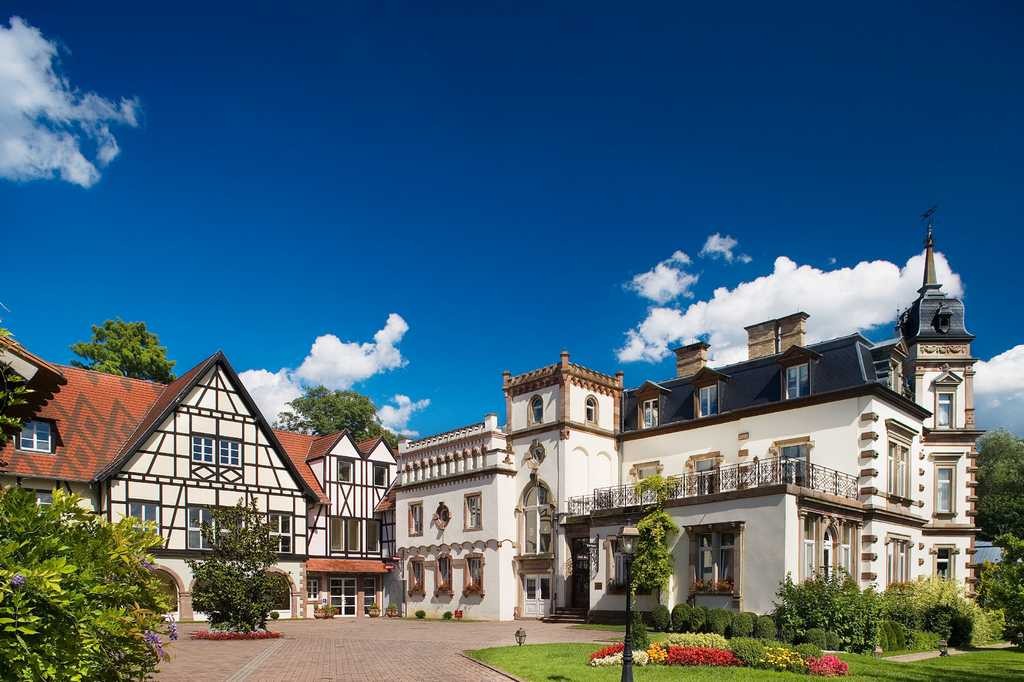
| Le Bouclier d'Or Hotel & Spa | Centre, Hotel | $$$ | Not listed | Not listed |
| 5 Terres - MGallery | Not listed | $$$$ | 5-Star | Barr, Historic 17th-century building with modern luxury comforts on Alsace wine route |
Continue exploring
More in Strasbourg
Hotels in Strasbourg
Browse all →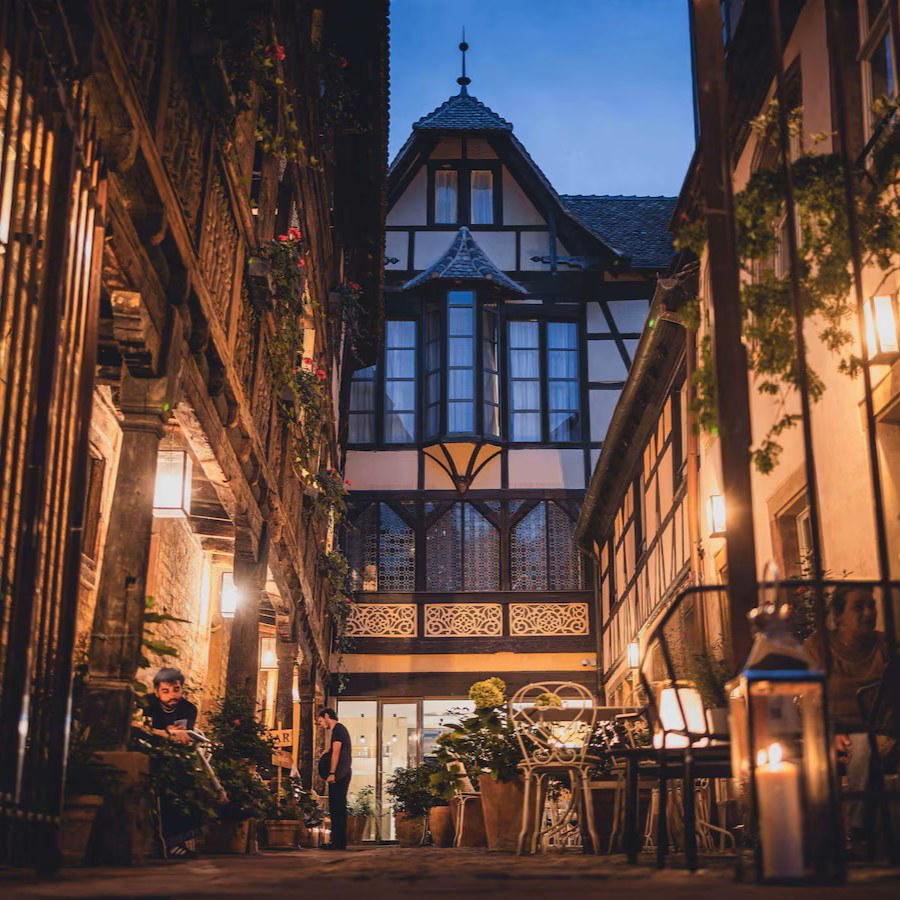
Bars in Strasbourg
Browse all →
Restaurants in Strasbourg
Browse all →

At a Glance
- Classic
- Elegant
- Historic
- Well Known
- Sophisticated
- Romantic Getaway
- Anniversary
- Weekend Escape
- Historic Building
- Terrace
- Wi Fi
- Restaurant
- Air Conditioning
- Elevator
- Street Scene
- Wi Fi
- Restaurant
- Air Conditioning
- Elevator
Flamboyant and ornate historic atmosphere with soundproofed rooms and intimate dining salons.