


Michelin Selected · Travel + Leisure It List Hotels · Conde Nast Hot List Hotels
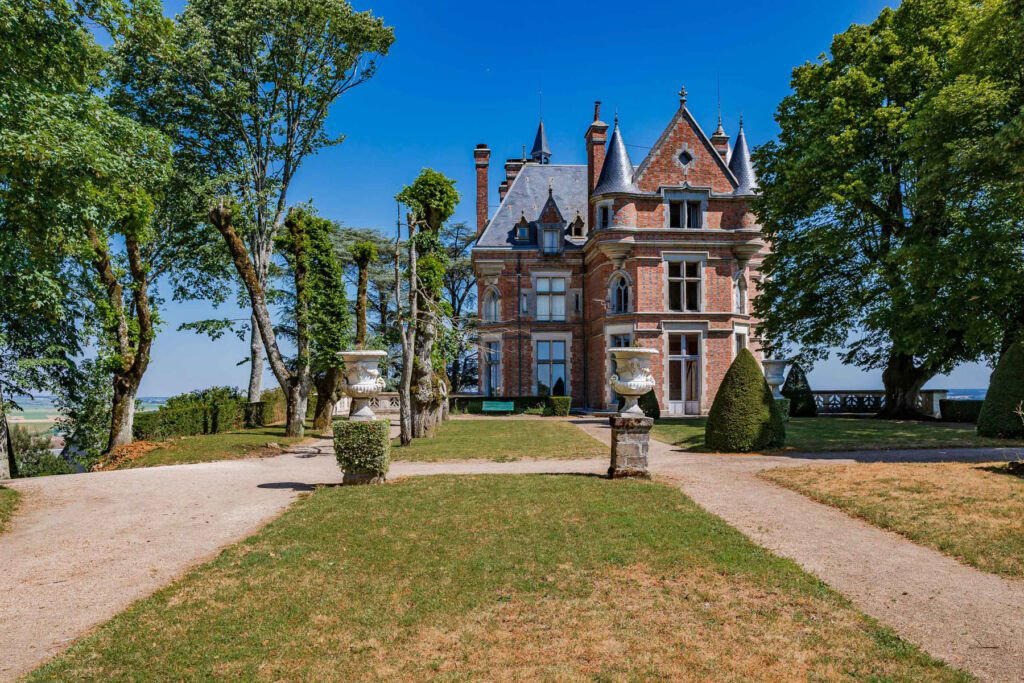
Opened in July 2025 inside a 150-year-old château on the rocky summit of Sancerre, Les Hauts de Sancerre is an eight-suite hotel selected by the Michelin Guide 2025. A contemporary art program curated by the former head of the Brussels Museum of Contemporary Art, a wine library in a 12th-century cellar, and a 16-seat tasting restaurant define its character. Doubles from $294.

Pearl is the En Primeur Club membership app — saves, bookings, and concierge access live there. Same editors, same standards.
- Address
- Esp. Prte César, 18300 Sancerre, France
- Phone
- +33 2 59 57 04 44
- Website
- hautsdesancerre.com
- Directions
- Get directions
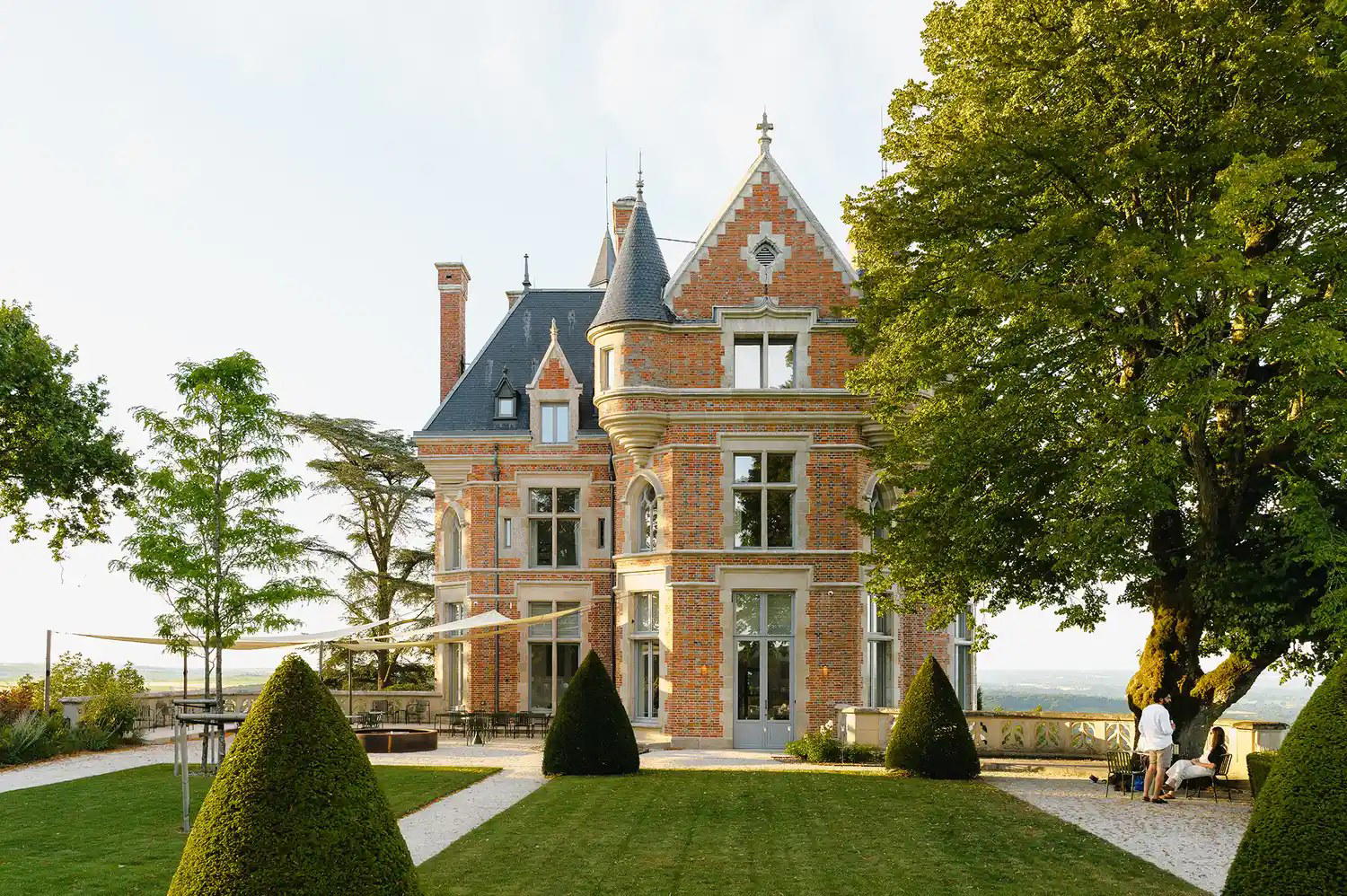
A Medieval Château Reconsidered
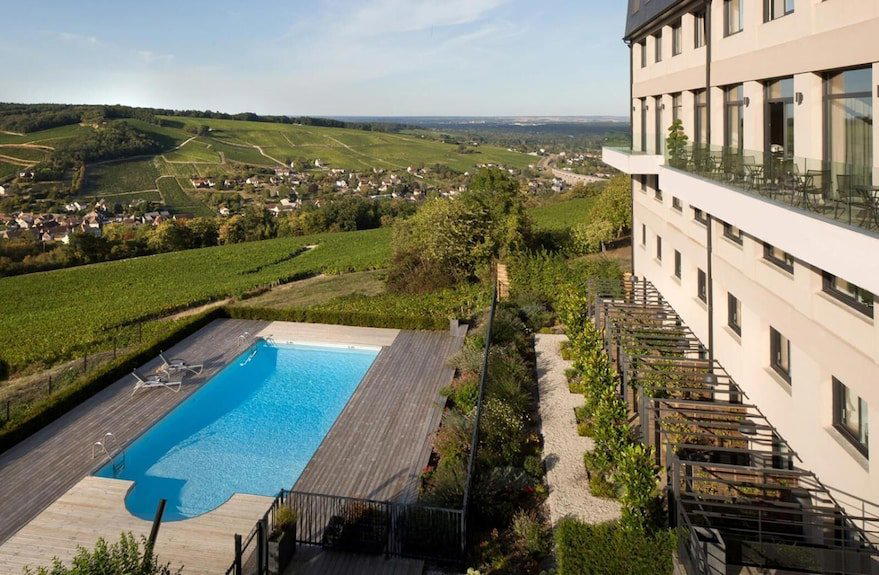
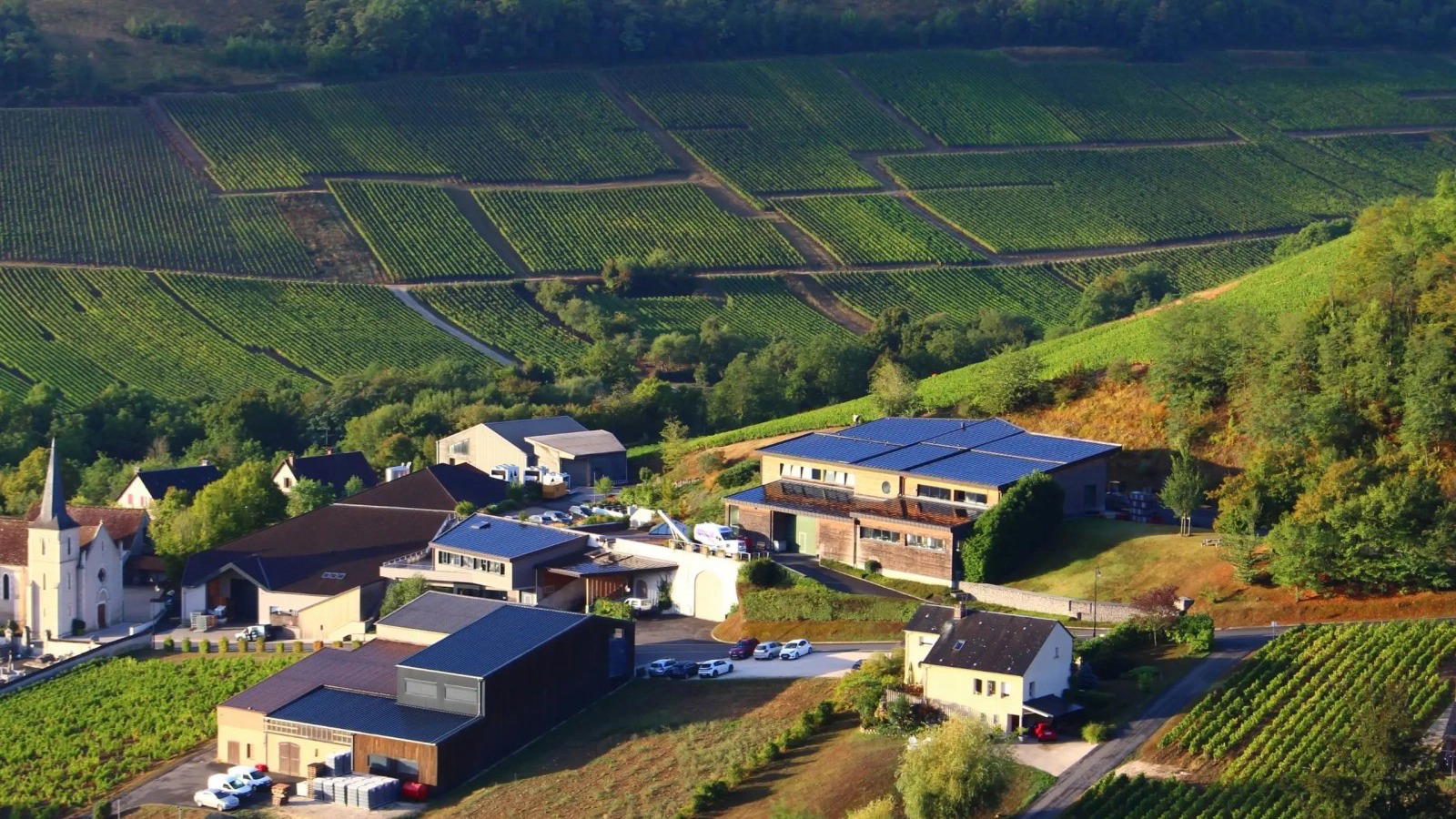
The hilltop towns of the Loire Valley have always carried a particular visual logic: limestone towers, vine-striped slopes, and village architecture that has changed more slowly than anywhere in central France. Sancerre sits at the apex of this tableau, its medieval core perched on a rocky peak above the river plain. What has changed, as of July 2025, is what occupies one of the village's oldest private estates. Les Hauts de Sancerre, a Michelin Selected property holding eight suites inside a château that has stood on this site for 150 years, represents a different kind of intervention: one where contemporary art and terroir-driven cuisine are layered onto historic fabric without softening it.
The design approach, led by interior designer Jérôme Lescrenier, makes a deliberate argument: that natural stone, unfinished wood, and muted textiles belong alongside modern sculpture and contemporary painting rather than in spite of them. The guest rooms are light-filled rather than theatrical, using the château's original proportions as the controlling aesthetic rather than decorating over them. Each room houses a work by Dutch painter Roan van Oort, which means that even the most private parts of the property carry an institutional seriousness about contemporary art. That seriousness has a named source: artistic direction comes from Stanislas de Poucques, former head of the Brussels Museum of Contemporary Art. In a French wine-country hotel category that often defaults to rustic warmth or period revival, this is a more consequential curatorial position.
The Courtyard as Gallery
Most revealing part of Les Hauts de Sancerre is not the dining room or the wine cellar but the courtyard. Seen from above, from the upper levels of the Tour des Fiefs, the hotel's grounds read as a plein-air exhibition, with modern sculptures distributed across the space. That tower, a 14th-century limestone structure rising 100 feet from the property, is accessible to guests and rewards the 16-flight climb with a panorama of provincial towns and the Loire winding in the distance. It is the kind of architectural detail that distinguishes properties owned by people with a genuine connection to a place: the iron key to the tower is in the hands of David Chicard, the hotel's owner and a native Sancerrois, who bought this land from the Marnier-Lapostolle family, the original creators of Grand Marnier.
In its inaugural season, a lawn exhibition at the property drew more than 30,000 visitors, not merely a hotel with some decorative ambition. For those considering the Loire Valley's broader offer of château stays and wine estates, this combination of Michelin recognition, a living exhibition program, and an operational cellar is a different value proposition than the restoration-focused or spa-led properties that dominate the regional category. Comparable wine-country properties elsewhere in France, such as Les Sources de Caudalie in Bordeaux or Villa La Coste in Le Puy-Sainte-Réparade, have built reputations on exactly this fusion of vineyard setting, art programming, and premium hospitality. Les Hauts de Sancerre arrives at that position from its first season.
La Table de Arnaud: Terroir Through a 21-Year-Old's Lens
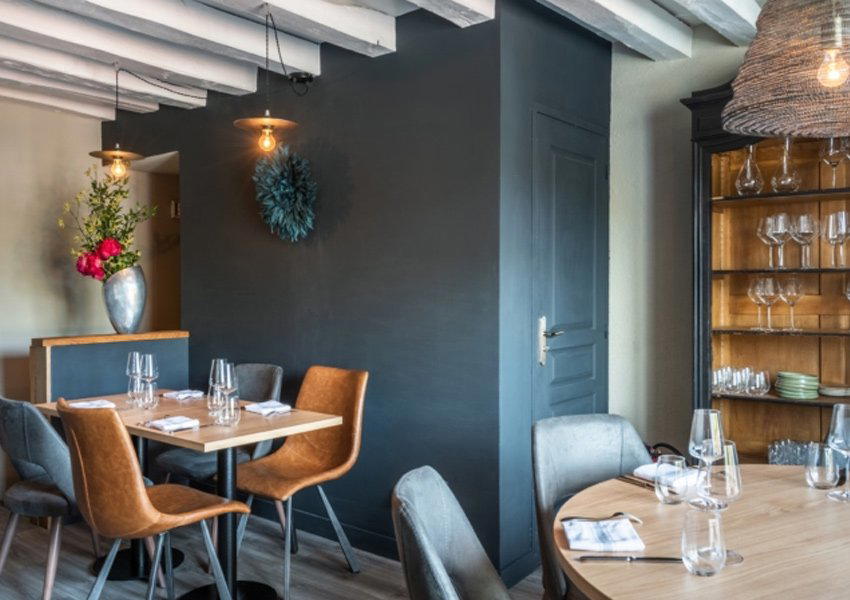
The 16-seat restaurant La Table de Arnaud occupies the château's bright salon, where floor-length windows frame views across the vines. The format is a tasting menu, and the reference point is Sancerre terroir, though what that means in execution here veers away from provincial convention. Chef Arnaud Munster, a Brussels-born 21-year-old who appeared on Leading Chef France, works in a register that guests have described as shockingly modern, the kind of food that would read comfortably on a Paris arrondissement table: poached Normandy oysters in dashi and cucumber juice, mullet in brown butter. The cooking treats Sancerre's ingredients as material for a contemporary kitchen rather than as tradition to reproduce faithfully. In 2026, Munster will introduce a new immersive dining concept on the property, L'Atelier des Cèdres, which suggests the restaurant program will continue to develop beyond its current pop-up structure.
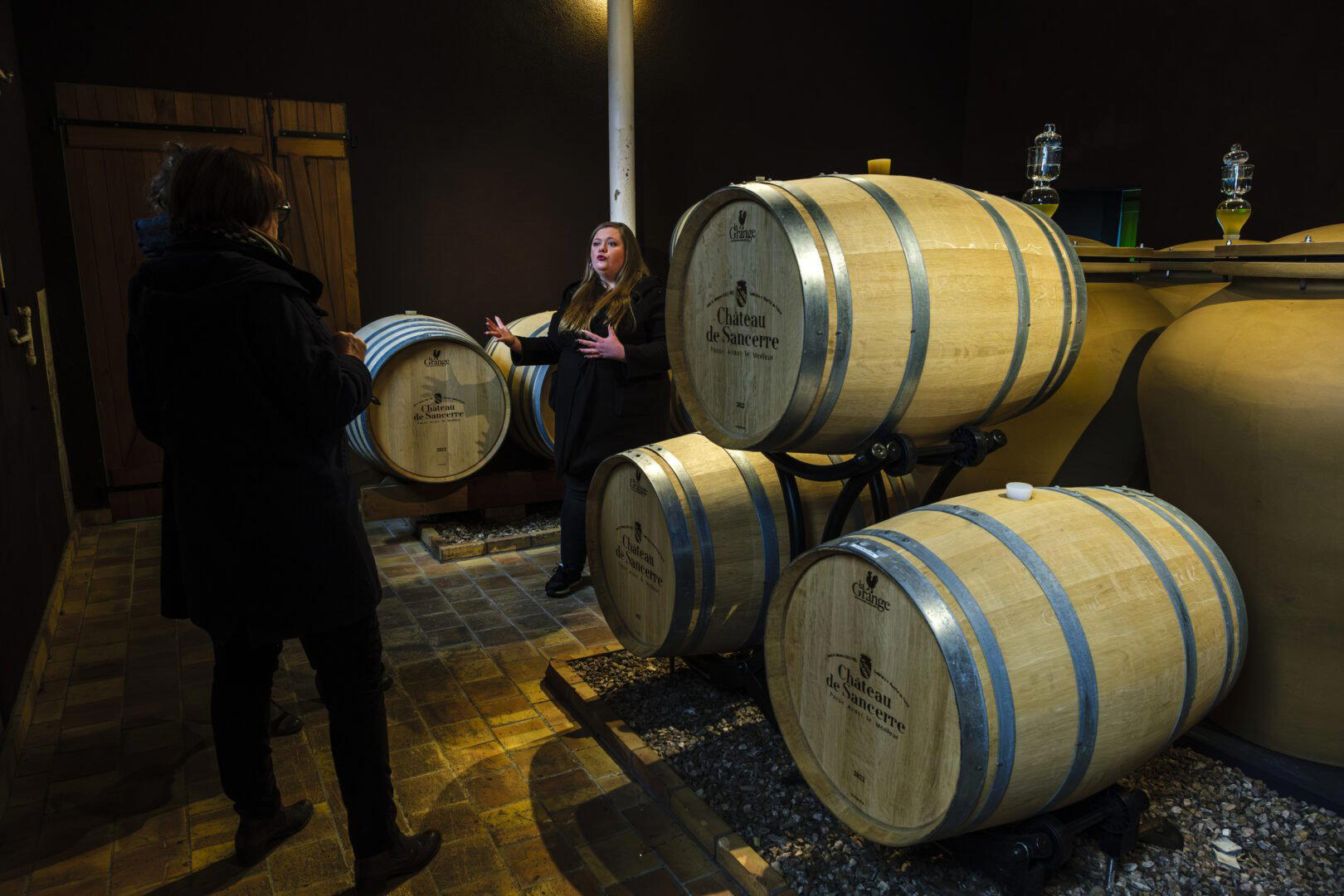
The wine library, housed in the 12th-century cellar beneath La Tour des Fiefs, provides the obvious pairing context. Sancerre's white wines, built on Sauvignon Blanc grown on three distinct soil types, kimmeridgian limestone, silex, and terres blanches, are among the most terroir-specific in France. A cellar with those classifications as its organizing principle makes editorial sense in the same way the sculpture courtyard does: the architecture becomes the argument. Guests with a specific interest in appellation study or barrel craft can extend that through visits to the Charlois Cooperage, wine tastings in the medieval cellar, or encounters with the ceramicists of La Borne village, all experiences offered through the hotel. For the full picture of what to drink and eat around the appellation, see our full Sancerre restaurants guide.
Where It Sits Among French Château Hotels
Small-château, curated-collection category in France has developed its own competitive logic. Properties such as Château du Grand-Lucé in Le Grand-Lucé and La Bastide de Gordes in Gordes occupy a tier where architecture and art credentialing matter as much as service ratios and room specifications. Les Hauts de Sancerre, with eight suites, Michelin selection in its opening year, and a named artistic director with institutional credentials, enters that tier immediately. The comparison with Royal Champagne Hotel & Spa in Champillon is apt: both are small luxury properties where a famous wine region is the primary context and the hotel's identity is inseparable from the surrounding appellation. Other regional peers across France, from Domaine Les Crayères in Reims to Château de la Gaude in Aix-en-Provence, demonstrate how strongly the French château category rewards those who commit fully to a sense of place rather than pursuing a universal luxury template.
Planning a Stay
Les Hauts de Sancerre opened in July 2025, which means booking intelligence for peak periods is still forming. The property holds eight suites, a constraint that typically means high-season availability tightens faster than the property's relative obscurity might suggest. Sancerre's harvest season, running through September and October, draws wine travelers from across Europe; the Loire Valley's broader touring season peaks through the summer months. Doubles begin at $294 per night, a rate that positions the property accessibly within the Michelin Selected tier, well below the entry points of comparable art-and-wine estate hotels in Provence or Champagne. The address is Esplanade Porte César, Sancerre, Centre-Val de Loire 18300, and the property sits on the eastern edge of the hilltop village. Sancerre is approximately 130 miles south of Paris, reachable by train to Cosne-sur-Loire followed by a short transfer, or directly by car via the A77 motorway. Given the eight-suite scale and the property's first-season Michelin recognition, planning two to three months ahead for summer and harvest dates is advisable.
How It Stacks Up
Comparable venues nearby, for context on price, style, and recognition.
| Venue | Cuisine | Price | Awards | Notes |
|---|---|---|---|---|
| Les Hauts de SancerreThis venue — the venue you are viewing | Contemporary château hotel harmonizing historic heritage with modern luxury | $300–500 | Michelin Selected · Travel + Leisure It List Hotels | Not listed |
| La Maison de Rhodes | Historic timber-framed medieval residence blended with modern luxury comforts | $300–500 | Michelin Selected | Old Town Troyes |
| Experimental Marais | Neo-Gothic inspired luxury boutique reimagining a historic Marais property. | $500–750 | Michelin Selected · Vogue 2026 Vogue Best Hotels in Paris | Haut Marais |
| Elysia | Romantic Art de Vivre: a contemporary interpretation of 18th-century French Romanticism within a restored early 1900s Haussmannian mansion, blending historical architecture with refined modern luxury. | $300–500 | Michelin Selected | 8th Arrondissement, Champs-Élysées district |
| Villa du Moulleau | Charming family-owned boutique hotel rooted in local Arcachon heritage. | $100–200 | Michelin Selected | Le Moulleau |
| Le Kaila | Contemporary Alpine chalet with modern luxury. | $1,000–1,500 | 1 Michelin Key · Gault & Millau Exceptional Hotel | Méribel center |
Recognition history
Dated appearances from independent guides and award organizations, with the underlying list record or original source where available.
Michelin Selected
Michelin
Conde Nast Hot List Hotels
Conde Nast
Travel + Leisure It List Hotels
Travel + Leisure
Continue exploring
More in Sancerre
Restaurants in Sancerre
Browse all →

Details
- Elegant
- Quiet
- Scenic
- Sophisticated
- Classic
- Romantic Getaway
- Honeymoon
- Weekend Escape
- Panoramic View
- Historic Building
- Garden
- Terrace
- Wi Fi
- Pool
- Spa
- Fitness Center
- Garden
- Vineyard
- Garden
Refined contemporary palette of bright white walls and light wood furnishings, with natural light flooding spaces that harmonize original sculpted ceilings and moldings with minimalist modern lines.