Château du Grand-Lucé


A classified 18th-century neoclassical château in the Loire Valley, Château du Grand-Lucé operates 19 rooms across one of France's most carefully preserved historic properties. Awarded Michelin 2 Keys in 2024 and 92.5 points by La Liste Top Hotels in 2026, it sits less than an hour from Paris by train, with Versailles-inspired gardens, a contemporary spa, and fine-dining restaurant Le Lucé helmed by chef Maxime Thomas.
 Discover on Pearl
Pearl is the En Primeur Club membership app — saves, bookings, and concierge access live there. Same editors, same standards.
- Address
- 7 Pl. du Château, 72150 Le Grand-Lucé
- Phone
- +33 2 55 48 40 40
- Website
- chateaugrandluce.com
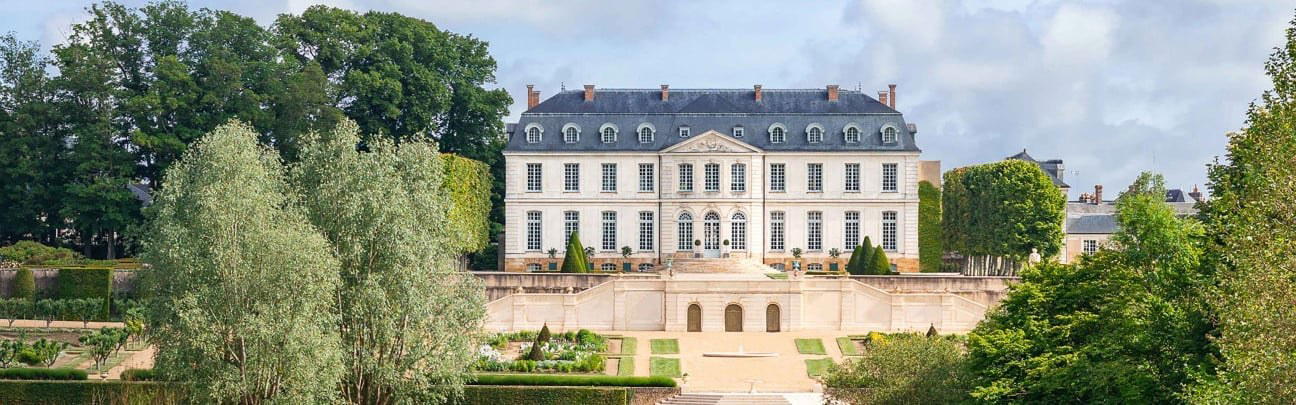
A Neoclassical Address in the Loire That French Authorities Wanted Preserved
Approaching Château du Grand-Lucé along the Pl. du Château in the small Sarthe commune of Le Grand-Lucé, the geometry announces itself before the details do: a symmetrical 18th-century neoclassical façade, the kind of proportioned stonework that French heritage bodies do not take lightly. Those bodies, in fact, placed legal obligations on any future owner to preserve the château's historical fabric when an American designer acquired and modernised it, treating the building not as a canvas but as a document. That constraint produced something rarer than a stylish hotel: a restoration with genuine accountability. The result now operates as a 17-room luxury hotel, and it carries a La Liste Leading Hotels score of 92.5 points for 2026 and a Michelin 2 Keys designation for 2024.
What the Architecture Actually Delivers
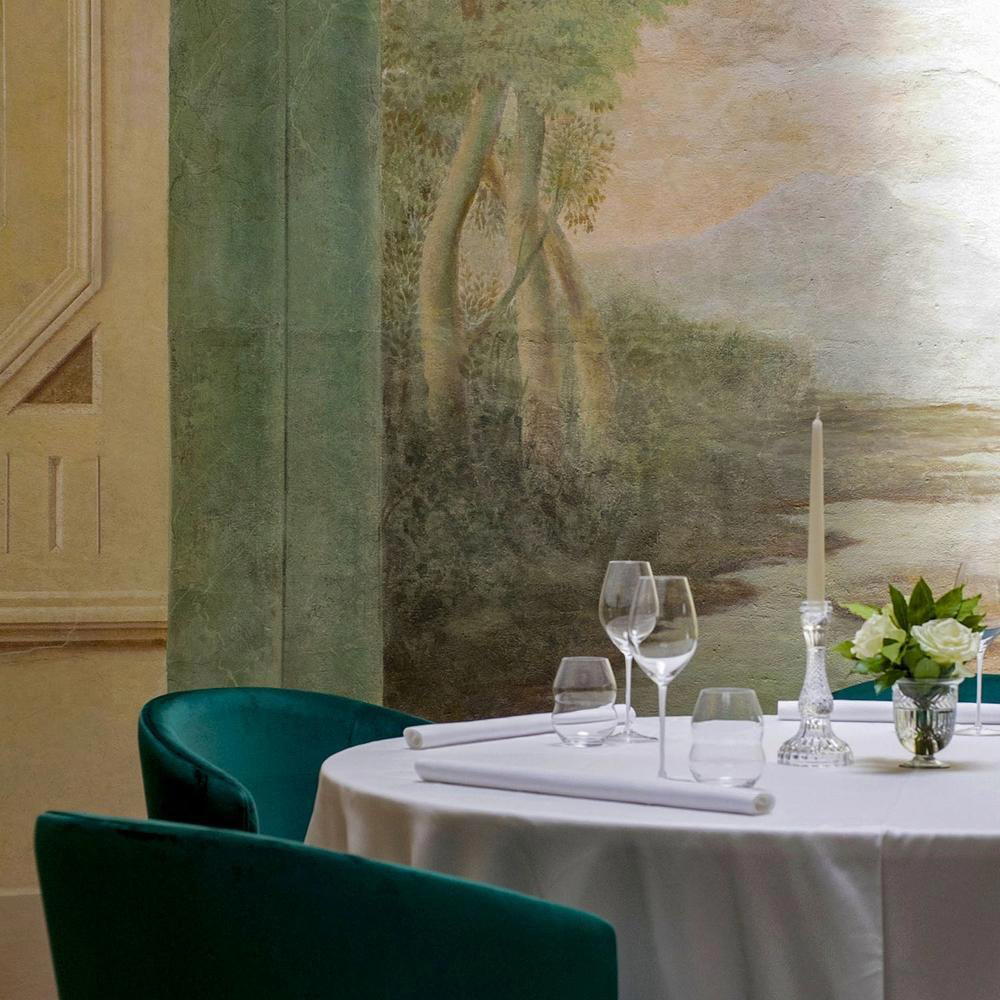
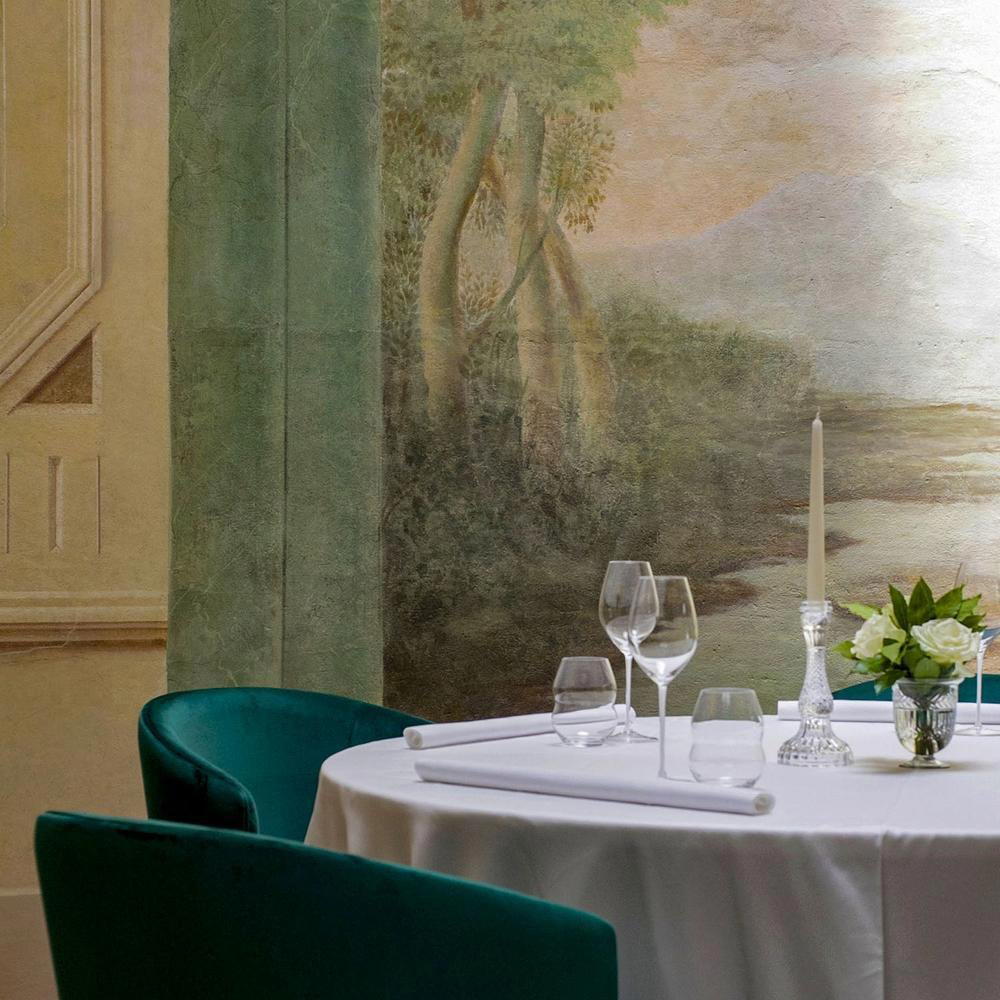
The interior retains the 1760s decorative painting cycle by Jean-Baptiste Pillement, a Lyonnais artist whose work in this building constitutes one of the more significant applications of his chinoiserie and landscape idiom in a private French interior. Pillement's commissions appear in royal collections across Europe, so their survival here, within a functioning hotel, is an architectural rarity rather than a marketing point. The American designer's intervention sat alongside this existing work rather than subordinating it: 21st-century elaborations were added, but the sequencing of the original rooms and the decorative programme were maintained to the standard demanded by the relevant French authorities.
French neoclassical châteaux of the 1760s generation typically occupy a precise architectural tier: they postdate the Baroque heaviness of the previous century but arrive before the Directoire austerity that followed the Revolution. The Grand-Lucé belongs to that confident middle period, when Loire valley landowners were building with confident classical references, generous fenestration, and formal garden geometries that looked to Versailles as a cultural model. The gardens here follow that precedent directly: the grounds are designed in the Versailles-inspired formal tradition, with the structural discipline that tradition requires. One of the outbuildings has been converted into a modern spa and fitness centre, which sits at a deliberate remove from the main château volumes.
Scale and Category: Where This Property Sits
Seventeen rooms is a number that determines everything about the experience. It rules out conference groups, limits corridor-level noise, and makes the ratio of staff to guests broadly favorable by design. At a room rate of $1,037, the property prices in the lower tier of French château hotels that carry serious architectural credentials, sitting well below Parisian palace-category rates at properties like Cheval Blanc Paris while offering something that urban palaces structurally cannot: grounds, formal gardens, and genuine spatial separation from other guests.
Among French regional château conversions, the comparator set is instructive. Properties like Domaine Les Crayères in Reims or Château de Montcaud in Sabran occupy a similar model: heritage buildings of documented significance, converted with enough rooms to be commercially viable but not so many that the proportional experience of the architecture is diluted. The Grand-Lucé runs 19 rooms against a building whose scale could notionally support more, which is an editorial choice as much as a practical one. For the full Le Grand-Lucé context and surrounding area, the broader picture is worth consulting before booking.
Other French properties operating in the heritage château conversion niche include Château Lafaurie-Peyraguey in Lieu-dit Peyraguey, which pairs historic wine estate architecture with a restaurant in partnership with Lalique, and Castelbrac in Dinard, another smaller-key property where building character is the primary argument. The Grand-Lucé's position on La Liste at 92.5 points gives it a verifiable marker against this field.
The Dining Programme: Le Lucé
The fine-dining restaurant within the property, named Le Lucé, operates under chef Maxime Thomas. Details on format, menu structure, and pricing are not yet consolidated in public sources, which is itself a signal: the restaurant is in an early phase, and the property has flagged that great things are anticipated from it. In the context of Loire valley gastronomy, a château restaurant at this level of architectural pedigree enters a scene where the competition includes serious kitchens with long track records. What the Michelin 2 Keys designation for the hotel does confirm is that the broader guest experience, of which the restaurant is a component, already meets a threshold that Michelin's hotel inspection programme considers substantive.
For guests whose primary frame is dining rather than architecture, the Loire valley's broader table offers context: the region's kitchen culture runs from bistrots in Tours to destination restaurants in the vineyard communes south of the river. The Grand-Lucé sits in the Sarthe, slightly north of the canonical Loire wine country, which positions Le Lucé as a destination in itself rather than a complement to wine-tourism infrastructure. Comparable pairings of heritage property and serious kitchen can be found at Baumanière Les Baux-de-Provence or Les Sources de Caudalie in Bordeaux, both of which demonstrate how long it takes for a property-restaurant combination to build critical mass.
Getting There and Practical Orientation
The property's location in Le Grand-Lucé, roughly 40 kilometres south-east of Le Mans, places it within reach of the TGV network that connects Paris Montparnasse to Le Mans in under an hour. From Le Mans, Le Grand-Lucé is a short drive. The train proximity matters at this price level: guests arriving without a car are not penalised by geography the way more remote Provence or Alpine properties can be. For those travelling between Paris and the Atlantic coast, the Grand-Lucé represents a viable overnight break rather than a dedicated journey to a remote address, which changes the booking logic considerably.
Room rates at $1,037 place the property in a bracket that rewards advance planning. A 19-room property with two recognised award markers and limited inventory will not hold availability at short notice through peak Loire season, which runs from late spring through early autumn. For international travellers building a broader French itinerary, the Grand-Lucé pairs logically with properties on the Normandy or Brittany coast or with urban nights in Paris before or after. Properties like Hotel Du Cap-Eden-Roc in Cap d'Antibes, La Réserve Ramatuelle, or Royal Champagne Hotel and Spa in Champillon belong to a different geography but share the model of heritage-inflected properties where the physical setting is the core argument. Further afield, Aman Venice, Aman New York, and The Fifth Avenue Hotel in New York City offer useful reference points for how the small-scale, architecturally significant property model translates across different contexts.
In Context: Similar Options
Comparable venues nearby, for context on price, style, and recognition.
| Venue | Cuisine | Price | Awards | Notes |
|---|---|---|---|---|
| Château du Grand-Lucé | Neoclassical French château built in 1760, meticulously restored to honor its noble heritage while accommodating modern luxury travelers. | $$$$ | Michelin 2 Key | Le Grand-Lucé |
| Domaine des Étangs | Restored 13th-century château estate blending heritage luxury with modern comforts | $$$$ | Michelin 2 Key | Massignac |
| Castelbrac | Historic Art Deco boutique hotel with contemporary refinements | $$$$ | Michelin 2 Key | Dinard |
| Mandarin Oriental, Paris | Contemporary palace blending Parisian sophistication with Asian heritage in a 1930s Art Deco building. | $$$$ | Michelin 2 Key | Place Vendôme |
| Lutetia | Timeless luxury heritage palace with contemporary sophistication | $$$$ | Michelin 2 Key | Saint-Germain-des-Prés |
| Les Sources de Cheverny | Historic château and farmhouse estate reimagined as a luxury wine-country retreat with contemporary comfort and rustic charm. | $$$$ | Michelin 2 Key | Cheverny |
Continue exploring
More in Le Grand-Lucé
Hotels in Le Grand-Lucé
Browse all →
Restaurants in Le Grand-Lucé
Browse all →
Wineries in Le Grand-Lucé
Browse all →
At a Glance
- Romantic
- Elegant
- Opulent
- Sophisticated
- Iconic
- Honeymoon
- Romantic Getaway
- Destination Wedding
- Anniversary
- Celebration
- Garden
- Historic Building
- Private Dining
- Destination Spa
- Butler Service
- Panoramic View
- Wifi
- Pool
- Spa
- Fitness Center
- Room Service
- Concierge
- Valet Parking
- Ev Charging
- Restaurant
- Bar
- Garden
- Vineyard
Opulent and refined with crystal chandeliers, restored antiques, white-oak parquet flooring, and an atmosphere of understated luxury befitting a nobleman's summer palace.