
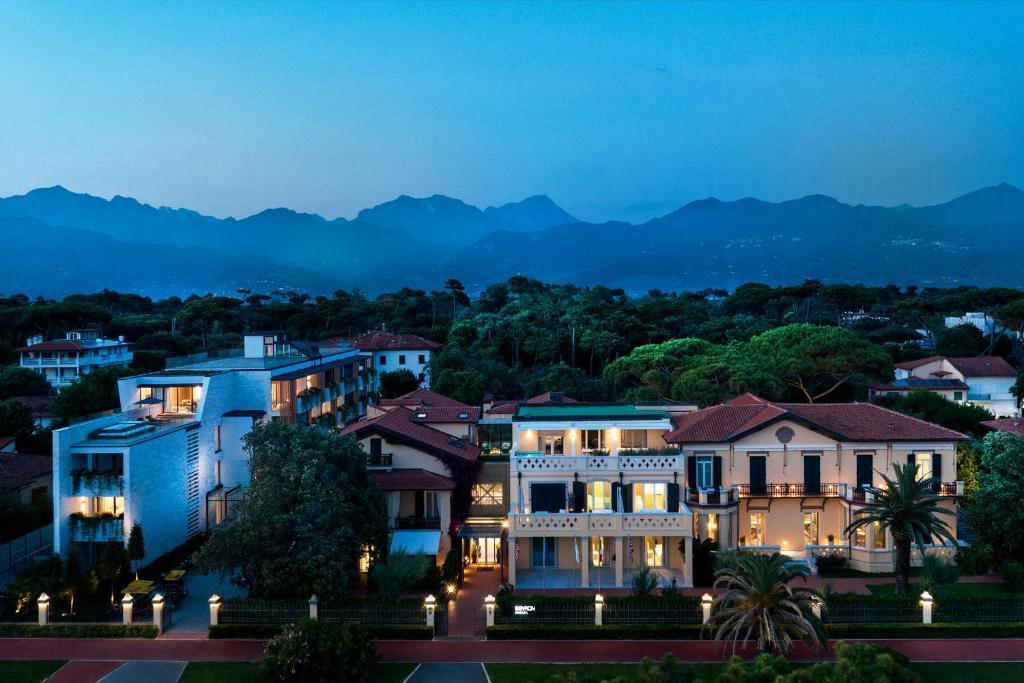
La Serena Hotel Forte Dei Marmi breaks from the Tuscan countryside playbook entirely. Positioned on the Versilian coast in one of Italy's most discreet resort towns, the boutique hotel leads with contemporary interiors, saturated colour palettes, and modern art throughout its public spaces and guest rooms. A 2026 Star Wine List recognition signals a wine program taken seriously alongside the design ambition.
Pearl is the En Primeur Club membership app — saves, bookings, and concierge access live there. Same editors, same standards.
- Address
- Via Matteo Civitali
- Phone
- 39-0584-881-188
- Website
- laserenahotel.it
- Directions
- Get directions
 Saves & bookings on Pearl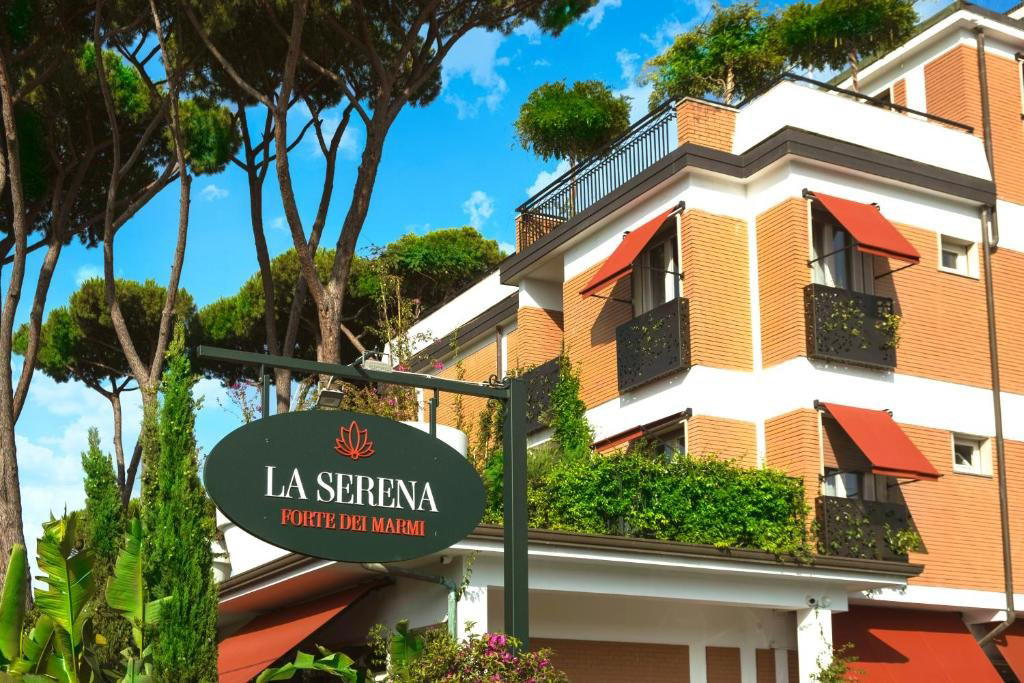
A Different Register for the Versilian Coast
Forte dei Marmi has always occupied a peculiar position in the Italian resort hierarchy. Unlike the Chianti hill towns or the cypress-lined agriturismo belt further inland, this narrow strip of coast between the Apuan Alps and the Tyrrhenian Sea has attracted a quieter, more private crowd since the nineteenth century: old Milanese money, German industrialists, and the kind of Italian families who return to the same stretch of beach for three generations without announcing it. The town is not a destination for the casually curious. It rewards those who already know what they are looking for.
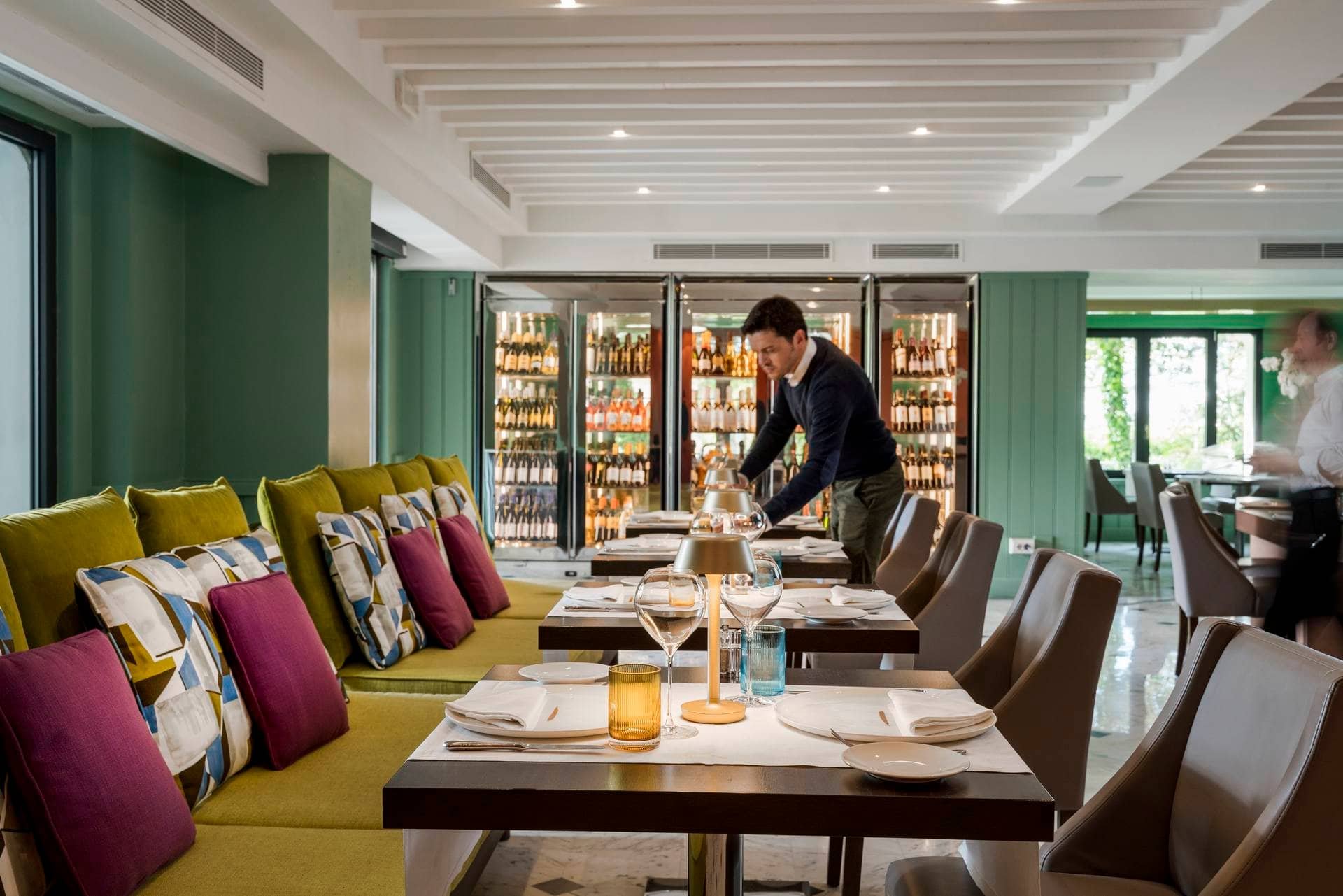
Within that context, La Serena Hotel Forte Dei Marmi makes a pointed choice. The dominant design language on the Versilian coast, as in much of Tuscany more broadly, runs toward the historical and the rusticated: terracotta, exposed stone, linens in the palette of aged parchment. La Serena steps entirely outside that register. Rich colour defines the interiors, modern artworks occupy lobby walls, guest rooms, and public spaces, and the overall sensibility reads as contemporary rather than archival. For a region where the default luxury signal is patina and provenance, this is a deliberate pivot.
That pivot places La Serena in a small but growing tier of Italian boutique properties that have chosen design-led differentiation over heritage positioning. Compare the approach to properties like Borgo San Felice Resort in Castelnuovo Berardenga or Castelfalfi in Montaione, both of which anchor identity in restored medieval or Renaissance fabric, and the contrast sharpens. La Serena is not competing on age or historical narrative. It is competing on curation, colour, and a specific visual confidence that reads more aligned with northern Italian urbanism than with the rural Tuscan ideal.
The Design Argument
The decision to lean into contemporary aesthetics on the Versilian coast carries real risk. Forte dei Marmi's appeal is partly constructed from an absence of ostentation: the villas are discreet, the beach clubs understated, the dress code informally strict. A hotel that announces itself through bold interiors has to execute with enough conviction that it reads as a position rather than an error of judgement.
From the available record, La Serena makes that argument through saturation and curation rather than scale. The colour palettes described in the property's own characterisation are rich rather than muted, and the art program extends across the lobby, guest rooms, and communal areas, creating consistency rather than a single statement moment in a reception room. This is the kind of approach that requires editorial discipline in the selection of works and a willingness to commit to an aesthetic throughout, not just at the entrance.
Within Italy, this positions La Serena closer in spirit to properties like Portrait Milano, which operates in the design-led urban boutique space, than to the converted-estate model common across Tuscany. It also separates from the international luxury template visible at something like the Four Seasons Hotel Firenze in Florence, where the historic convent fabric is the product. The question La Serena implicitly answers differently is: what counts as luxury on the Italian coast in the current moment? Its answer is contemporary confidence over inherited grandeur.
The Wine Program as Signal
The Star Wine List recognition for 2026 is a meaningful data point for anyone reading the property's overall ambitions. Star Wine List selects based on range, depth, and the quality of curation, not on volume or marquee label presence alone. A boutique hotel earning that recognition is making a statement about the seriousness of its food and beverage program in proportion to its size.
For properties of La Serena's apparent scale and positioning, wine list depth often functions as an extension of the broader design and curation argument: the same editorial sensibility that selects artworks for guest rooms applies to the construction of a cellar. Italy provides notable raw material for this, with Tuscany alone offering Brunello, Supertuscans, Vernaccia, and the coastal Bolgheri corridor, each with its own narrative and price architecture. A well-built list in this context can span the full range from accessible regional bottles to allocation-level Sassicaia or Ornellaia without any of it feeling arbitrary.
For context on how serious Italian hotel wine programs can get, Rosewood Castiglion Del Bosco in Montalcino operates its own Brunello estate, integrating wine production into the hotel identity at the deepest level. La Serena's Star Wine List recognition does not imply that level of vertical integration, but it does suggest a program taken seriously enough to merit third-party recognition in a competitive category.
Forte Dei Marmi in the Italian Resort Tier
Understanding where La Serena sits requires some clarity on what Forte dei Marmi actually is. It is not a mass-market beach destination. The town's peak season runs July through August, when Italian and international families occupy the gated villas and the private beach clubs operate on a system of seasonal memberships rather than drop-in access. Outside peak season, the town quiets considerably, and the rhythm shifts toward something that suits off-season European travel well: emptier roads, available tables, and the same physical backdrop without the August density.
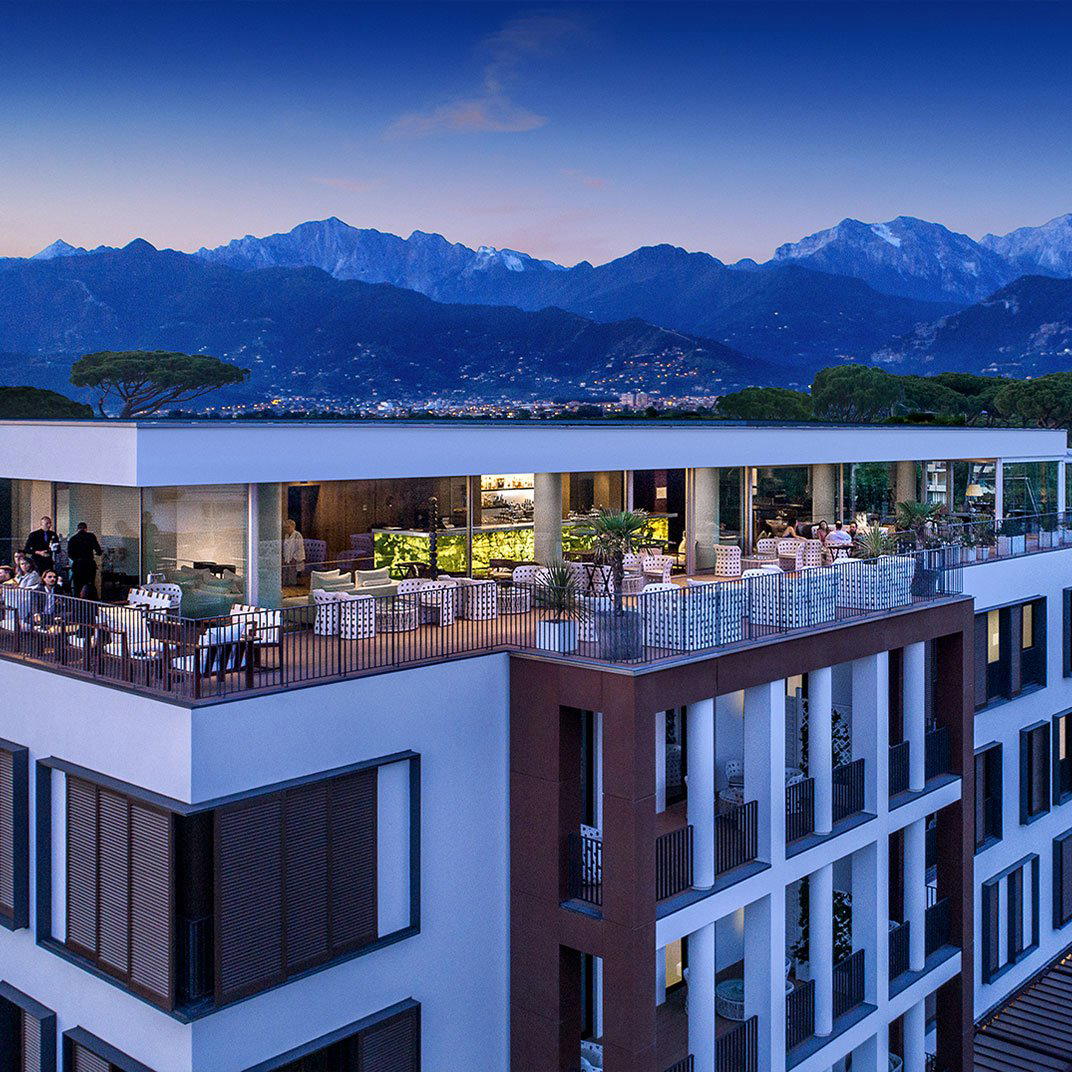
Properties that perform well in Forte dei Marmi tend to understand that the town's appeal is not spectacle but discretion. The Apuan Alps provide an unusually dramatic inland backdrop for a beach town, and the light on the Versilian coast in early June or September rewards the kind of slow-paced stay that contemporary boutique hotels are increasingly structured to support.
For travellers plotting a broader Italian itinerary, La Serena connects naturally to properties further up the coast or inland. Il Pellicano in Porto Ercole operates further south along the Tuscan coast with a longer-established reputation in the Italian luxury market. Castello di Reschio in Lisciano Niccone represents the opposite aesthetic direction, deep in Umbria and built entirely on restored architectural patrimony. Both illustrate how wide the Italian premium hospitality range has become, and how deliberately La Serena's contemporary positioning reads against that spectrum.
Travellers looking further afield across Italy will find differently calibrated versions of the design-led boutique model at Aman Venice, Passalacqua in Moltrasio, and Casa Maria Luigia in Modena. Each makes a different wager on what the premium traveller wants from an Italian property right now. La Serena's wager, at Forte dei Marmi, is that contemporary design in a traditionally discreet resort town is a gap worth occupying.
For planning purposes, Forte dei Marmi is accessible from Pisa International Airport, typically around 40 minutes by road. The town itself is compact enough to manage on foot or by bicycle during a stay. Booking directly through the hotel is the standard approach for boutique properties of this type, particularly during peak summer months when availability in Forte dei Marmi tightens across all accommodation categories. See our full Tuscany restaurants guide for further context on dining options in the region.
Recognition history
Dated appearances from independent guides and award organizations, with the underlying list record or original source where available.
Star Wine List
Star Wine List
Continue exploring
More in Tuscany
Hotels in Tuscany
Browse all →
Bars in Tuscany
Browse all →
Restaurants in Tuscany
Browse all →

At a Glance
- Elegant
- Sophisticated
- Serene
- Modern
- Romantic Getaway
- Wellness Retreat
- Weekend Escape
- Garden
- Terrace
- Panoramic View
- Wi Fi
- Pool
- Fitness Center
- Room Service
- Concierge
- Restaurant
- Bar
- Bicycle Rental
- Garden
- Mountain
- Wi Fi
- Pool
- Fitness Center
- Room Service
- Concierge
- Restaurant
- Bar
- Bicycle Rental
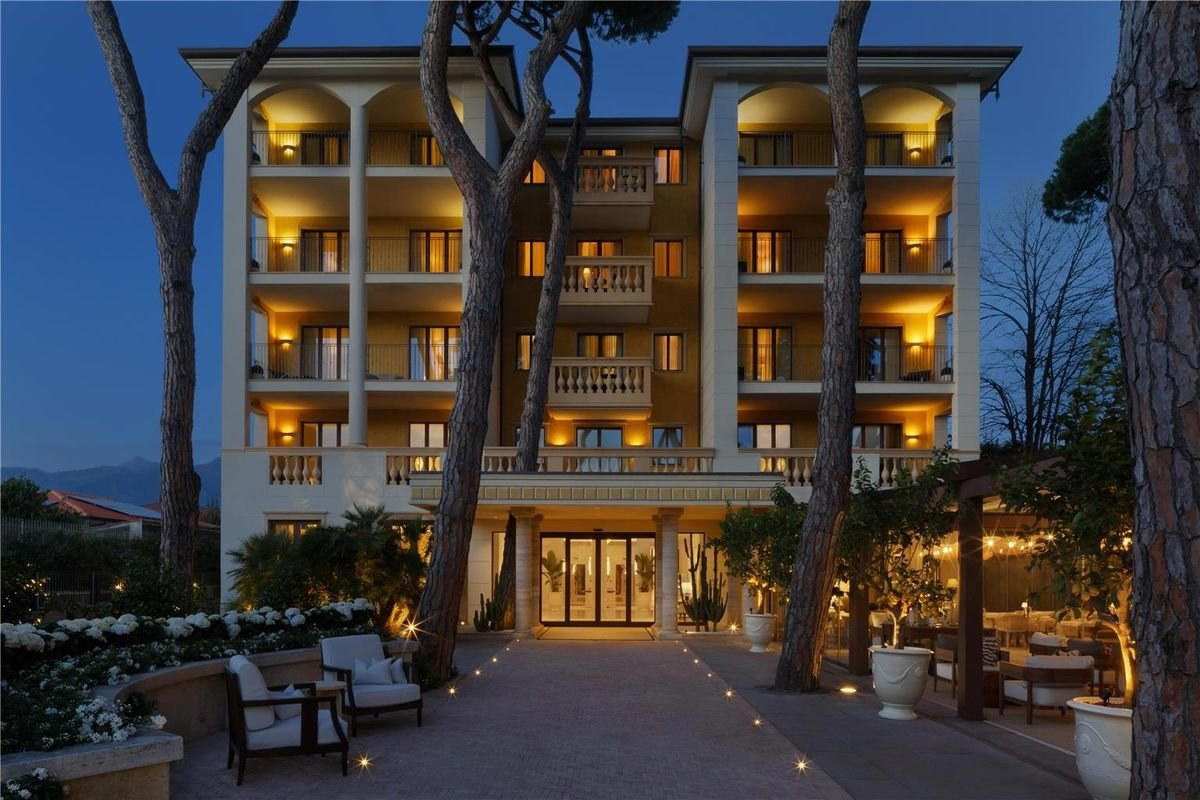
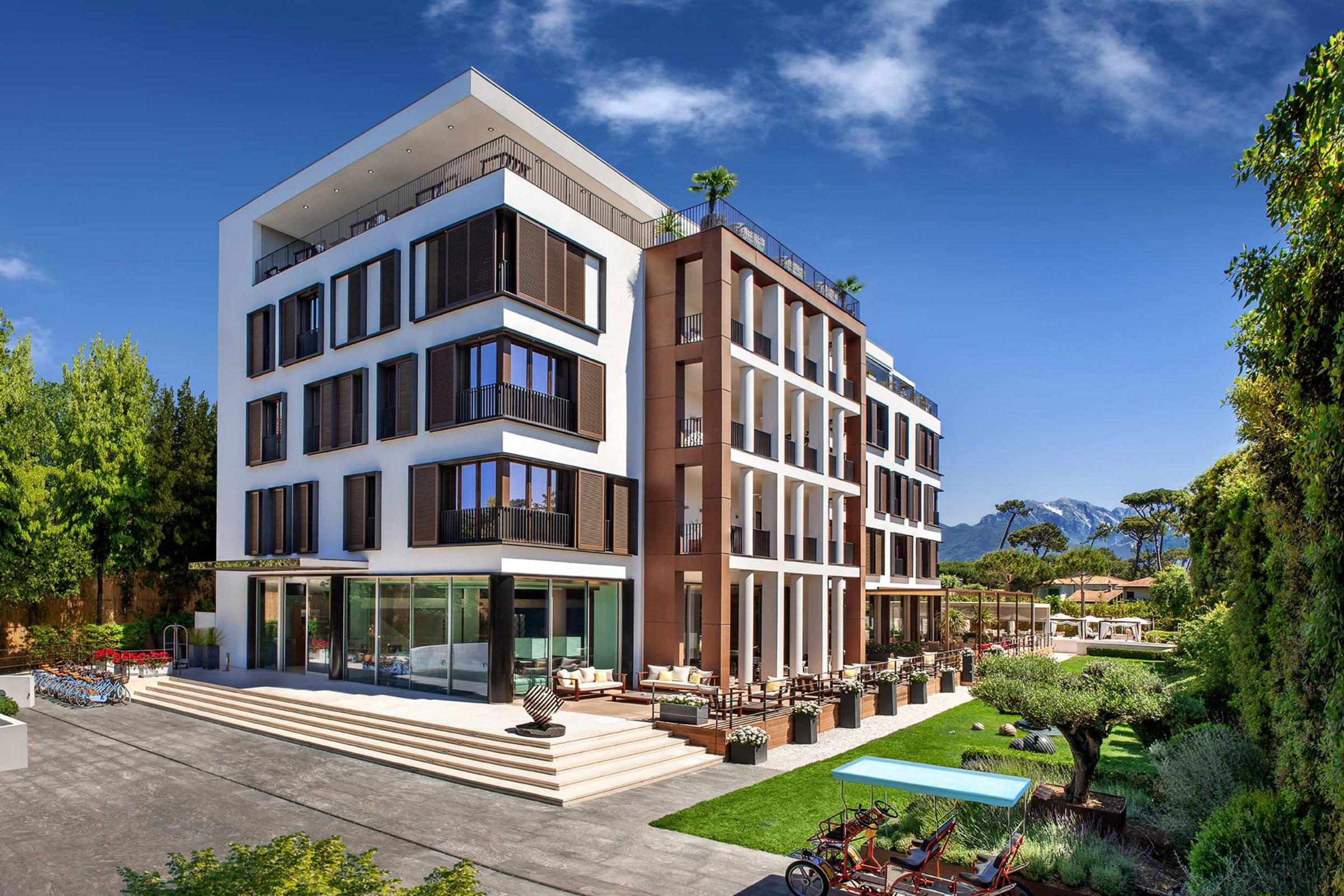
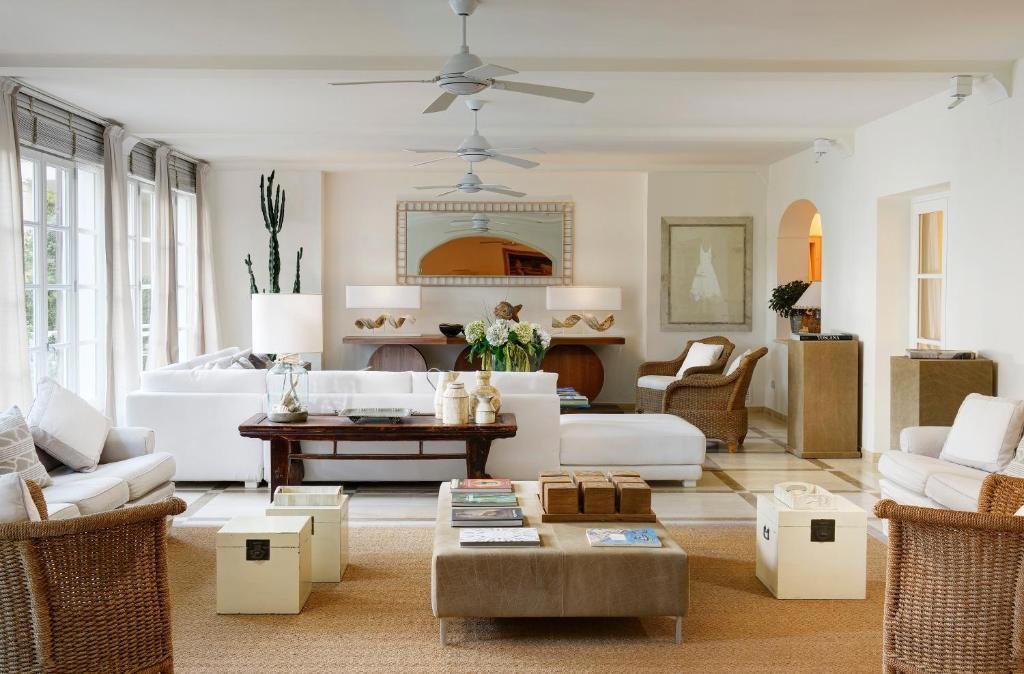
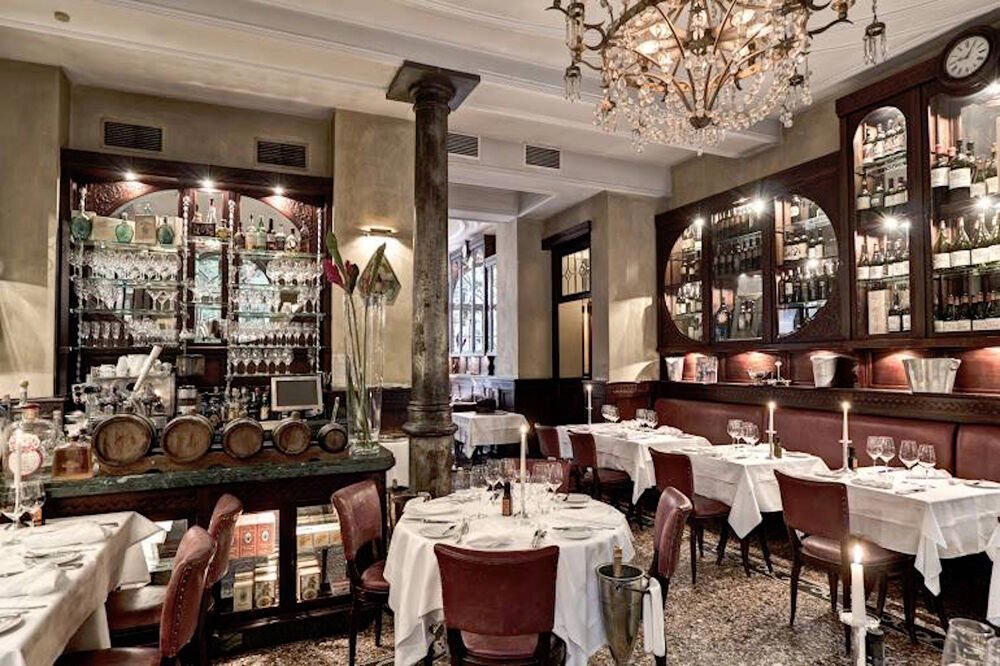
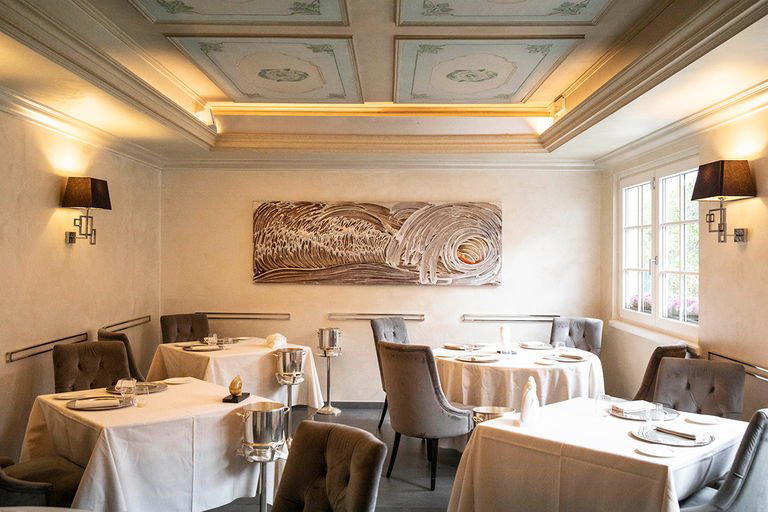
Soft natural light, warm woods, lively artworks, and manicured gardens create a refined, artistic, and relaxed atmosphere.