Hotel Indigo Diqing Moonlight City

Michelin Selected for 2025, Hotel Indigo Diqing Moonlight City sits in Shangrila's Jinlong Community, where Tibetan architectural language meets the IHG brand's neighborhood-story design approach. For travellers crossing into Yunnan's high plateau from Lijiang or Lhasa, it occupies a specific tier: internationally recognized, locally rooted, and positioned above the area's standard transit hotels without reaching the full-service lodge prices of remote Songtsam properties.
Pearl is the En Primeur Club membership app — saves, bookings, and concierge access live there. Same editors, same standards.
- Address
- NO 1000 EAST CORRIDOR JINLONG COMMUNITY, Diqing Tibetan Autonomous Prefecture, China, 674400
- Phone
- +86 887 308 6666
- Directions
- Get directions
 Saves & bookings on Pearl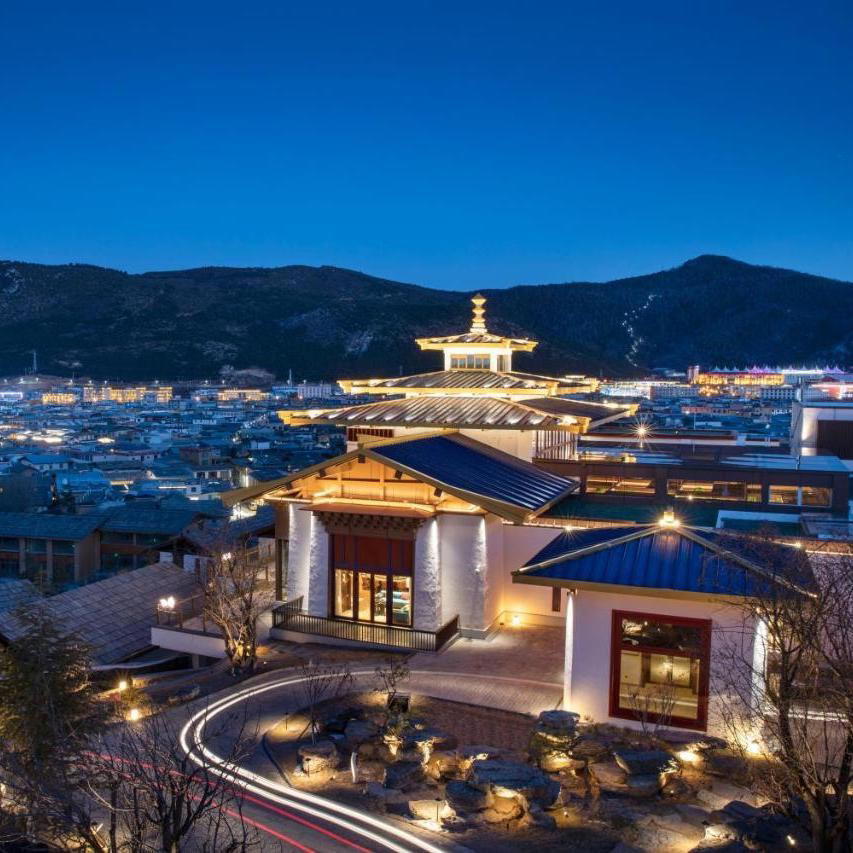
Where Tibetan Design Meets the Plateau Sky
Arriving in Shangrila from the south, the city's skyline is still dominated by prayer flags, whitewashed chortens, and the broad silhouettes of traditional Khampa architecture. At an elevation above 3,200 metres, the air is thinner, the light sharper, and the built environment carries a visual logic rooted in centuries of Tibetan building tradition: thick earthen walls, timber lattice windows, and flat rooftop terraces designed to catch the high-altitude sun. The Hotel Indigo Diqing Moonlight City, addressed at No. 1000 East Corridor, Jinlong Community, places itself inside that tradition rather than against it. The IHG-owned Indigo brand operates globally on a single design brief: each property must tell the story of its neighbourhood, which in Shangrila means engaging seriously with the Tibetan vernacular rather than importing a generic luxury aesthetic from another Chinese city.
This is where Hotel Indigo properties in culturally dense locations earn their distinction. The brand's peers in China include properties in Shanghai, Chengdu, and coastal cities where neighbourhood storytelling is an exercise in urban cool. In Diqing Prefecture, it is something closer to an architectural obligation. The landscape around Shangrila, from the Meili Snow Mountains to the north to the Tiger Leaping Gorge road heading south toward Lijiang, is too specific and too visually powerful to treat as backdrop. A hotel that reads as anonymous at this altitude signals a failure of editorial intent. The Michelin Hotels selection for 2025 reflects deliberate, coherent execution.
The Design Logic of Diqing Prefecture
The Indigo brand sits in the upper-midscale to upscale range within IHG's portfolio, positioned below InterContinental but above standard transit accommodation. Within Shangrila specifically, the competitive set divides along a clear axis. At one end sit the high-investment lodge retreats, properties like the Songtsam Meili Lodge or the Songtsam Linka Retreat Lhasa, which use local materials and remote settings as their primary selling proposition, often at significant room rates. At the other end sit the functional city hotels that serve the volume of pilgrims, trekkers, and domestic tourists moving through on the Yunnan-Tibet circuit. Hotel Indigo Diqing sits in the middle of that range: offering internationally standardized comfort, a Michelin-recognized level of curation, and design vocabulary drawn from Khampa and Tibetan sources, without requiring the isolation premium of a full wilderness lodge.
For comparison, the Hylla Vintage Hotel in Lijiang operates with a similar cultural design mandate in the Naxi architectural tradition, while properties like the Ritz-Carlton in Xi'an or the Mandarin Oriental Qianmen in Beijing apply comparable locally-rooted design thinking in different urban contexts. The Indigo Diqing model is closest in spirit to the Lijiang example: a branded hotel deploying genuine regional design in a city that functions as the primary gateway to a UNESCO-adjacent cultural zone.
Atmosphere and Arrival
The Tibetan design tradition at this altitude is not decorative. Thick walls are functional, built to manage dramatic temperature swings between day and night. The timber details in Khampa buildings carry religious iconography that has specific meaning in context. A hotel operating within this vocabulary takes on a responsibility to its source material. The Indigo brand's neighbourhood-story framework, at its leading, produces spaces where these elements are treated as primary rather than as surface decoration applied over a generic floor plan.
Guests arriving from Lijiang by road, a journey that typically takes three to four hours and crosses the Tianshengqiao Pass, land in Shangrila's Jinlong Community with an immediate need for altitude acclimatization. The city sits high enough that the first twenty-four hours matter physically, and a hotel's spatial layout, including room design, lighting levels, and access to outdoor space, makes a meaningful difference during that window. Properties on the Tibetan plateau that understand this prioritize restful room configurations and access to natural light over maximizing floor density, a design logic with direct comfort implications for travellers arriving from sea level.
Shangrila in Context: The High-Altitude Hotel Market
Yunnan's northwest corner, officially renamed Shangrila (Xianggelila) in 2001 from its former name Zhongdian, has developed a distinct hospitality tier over the past two decades as domestic and international interest in Tibetan cultural tourism has grown. The city functions as the southernmost entry point into what becomes, further north, increasingly restricted Tibetan territory. This position gives Shangrila a specific role in the regional travel circuit: accessible enough for independent travellers departing from Lijiang or Kunming, culturally dense enough to warrant a multi-night stay rather than a transit stop.
The broader Diqing Prefecture context places this hotel inside a regional offer that includes some of China's most architecturally serious small properties. The ArcadiaPlace at Lugu Lake to the southeast and the Songtsam lodge network to the north define the upper end of culturally-rooted design accommodation in this part of Yunnan. Hotel Indigo Diqing operates at a different scale, one appropriate for travellers who want Michelin-recognized hotel standards with urban access rather than isolation, while the full-lodge circuit requires more days and a different budget structure.
For travellers building a longer Yunnan itinerary from a city base in Chengdu or Shanghai, Shangrila typically sits at the far northwest end of a route that might include Kunming, Dali, and Lijiang before crossing into Diqing. The broader logistics of that circuit include what to prioritize in the Jinlong Community area and how to plan around seasonal road and flight access.
Planning Your Stay
Shangrila Diqing Airport (DIG) connects to Kunming, Chengdu, and Chongqing with reasonable frequency in peak season, though winter weather and high-altitude conditions can affect schedules. The overland route from Lijiang via the Tianshengqiao Pass is one scenically significant approach and takes approximately three to four hours in standard conditions. The Jinlong Community address places the hotel in a section of the city with relatively easy access to both the old town and the transport links heading toward Ganden Sumtseling Monastery, the largest Tibetan Buddhist monastery in Yunnan.
Advance booking is advisable for peak travel periods, which in Shangrila fall in July and August for summer trekking visitors, and again during the Tibetan New Year period in February and March when cultural programming and pilgrimage traffic increase significantly. For comparison across China's Michelin-recognized hotel tier, properties such as the Hanyu Garden Reserve in Suzhou, the Yihe Mansions in Nanjing, and the Hangzhou Muh Shoou Xixi Hotel offer a sense of what the Michelin Selected standard implies across different regional contexts in China: consistent emphasis on design intentionality, local material sourcing, and a level of service calibration above the standard branded hotel baseline.
Quick Comparison
Comparable venues nearby, for context on price, style, and recognition.
| Venue | Cuisine | Price | Awards | Notes |
|---|---|---|---|---|
| Hotel Indigo Diqing Moonlight CityThis venue — the venue you are viewing | Boutique hotel inspired by Shangri-La's well-known paradise and Tibetan heritage atop ancient town. | $$$$ | 5-Star | Not listed |
| Banyan Tree Ringha | Traditional Tibetan farmhouse resort blending rustic authenticity with luxury comforts | $$$$ | Michelin 1 Key | Ringha Valley |
| ME Guangzhou | Lifestyle luxury hotel positioned as a cultural hub within Guangzhou’s emerging second CBD. | $$$$ | 5-Star | Guangzhou International Financial City–Huangpu Bay Business Circle |
| Hebei Grand Hotel | Modern interpretation of classic Chinese courtyards | $$$$ | 5-Star | Zhengding |
| Waldorf Astoria Shanghai Qiantan | Modern urban riverside retreat inspired by cruise ship elegance and Art Deco motifs of sail and peacock. | $$$$ | 5-Star | Qiantan |
| Park Hyatt Shenzhen | Luxury contemporary design hotel positioned as a sophisticated urban sanctuary blending Asian heritage with modern technology. | $$$$ | 5-Star | Futian |
Recognition history
Dated appearances from independent guides and award organizations, with the underlying list record or original source where available.
Michelin Selected
Michelin
Continue exploring
More in Shangri-La
Hotels in Shangri-La
Browse all →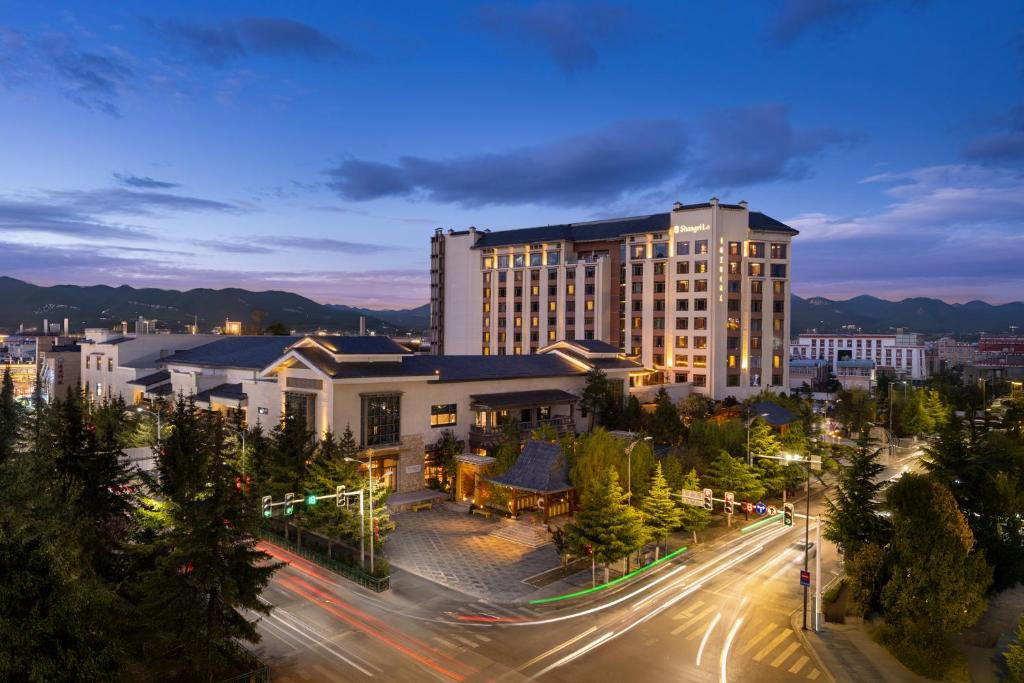
Bars in Shangri-La
Browse all →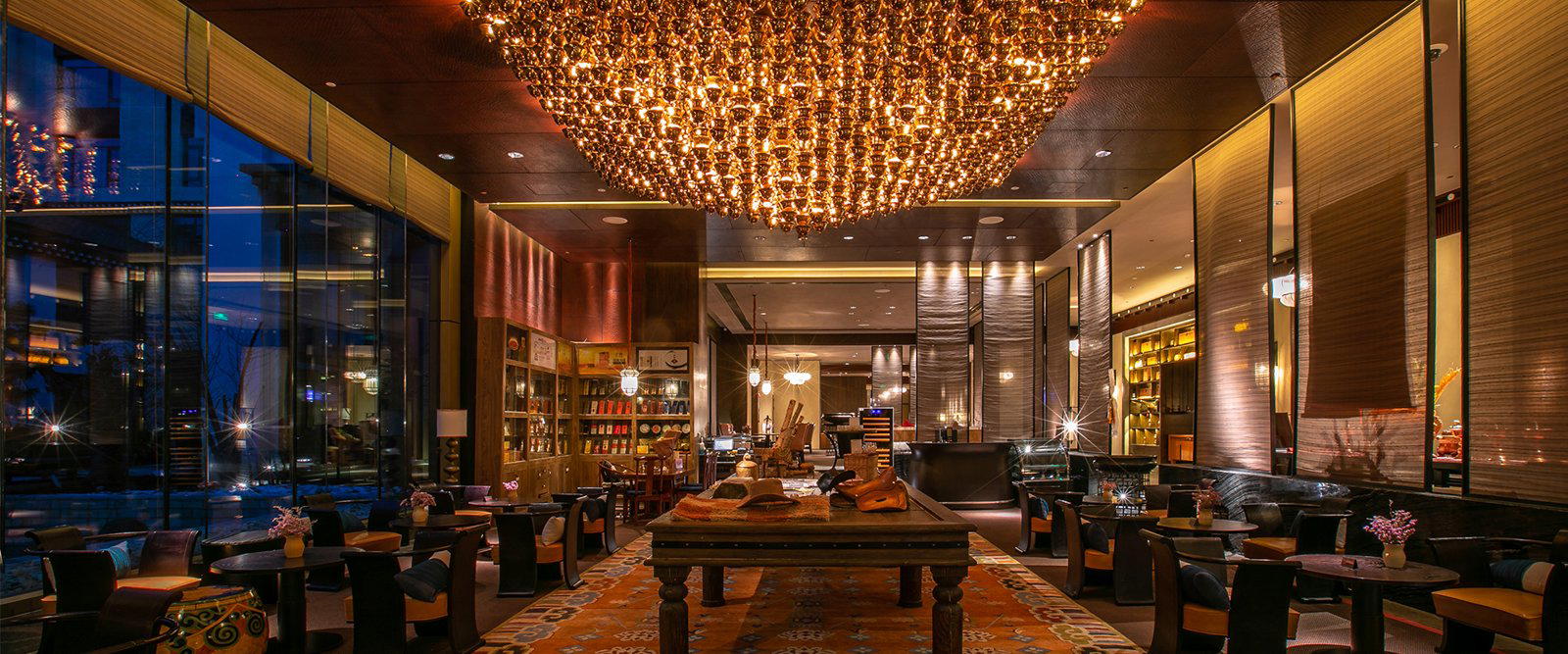
Restaurants in Shangri-La
Browse all →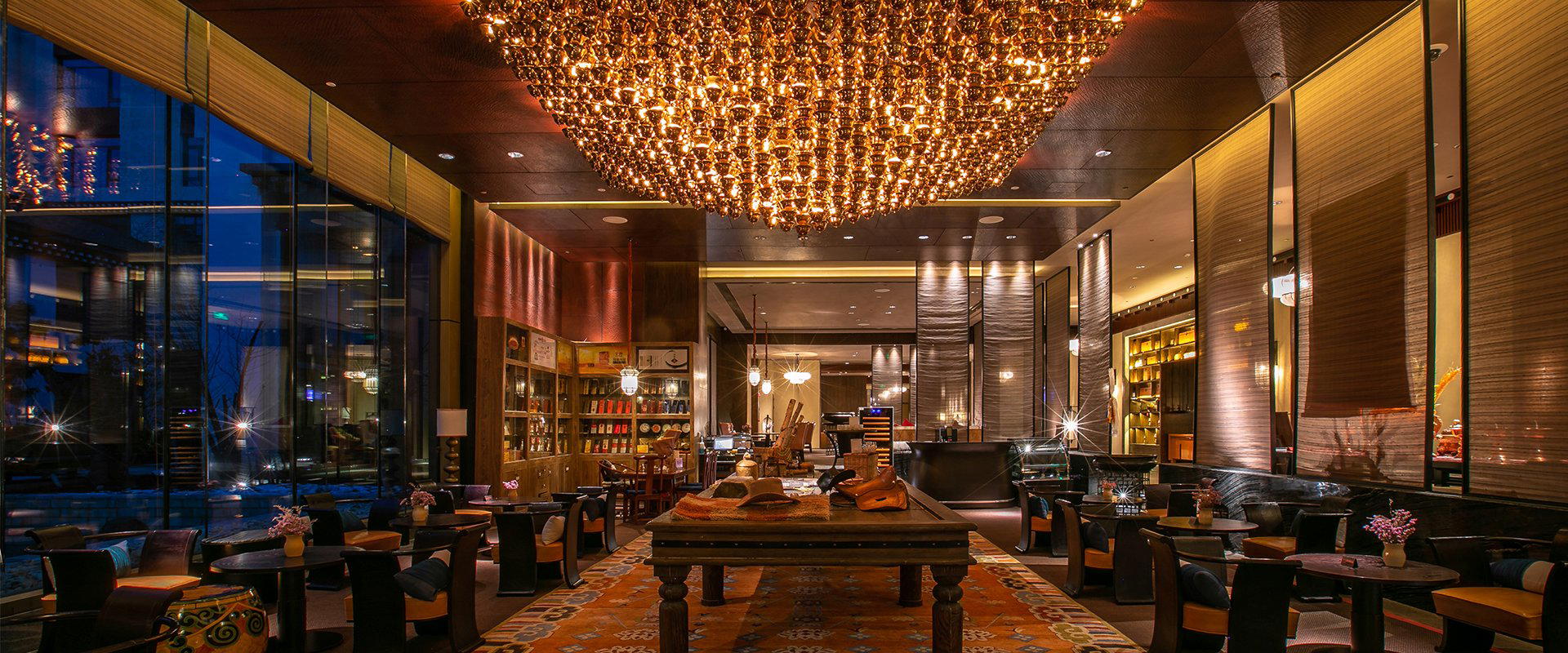
At a Glance
- Scenic
- Elegant
- Cozy
- Sophisticated
- Romantic Getaway
- Wellness Retreat
- Weekend Escape
- Panoramic View
- Terrace
- Wi Fi
- Room Service
- Concierge
- EV Charging
- Mountain
- Street Scene
- Wi Fi
- Room Service
- Concierge
- EV Charging
Tranquil and idyllic with natural light illuminating the lobby, modern comforts, and mesmerizing panoramic views through floor-to-ceiling windows.