

Design Hotels Member · Prix Versailles World Selection
The ArcadiaPlace sits at the edge of Lugu Lake in Mukua Village, Yanyuan County, one of the few properties in southwestern China positioned directly within the territory of the Mosuo people, a matrilineal society whose customs and architecture have remained largely intact. The setting, an alpine lake at altitude with traditional village structures nearby, places it in a narrow category of culturally grounded accommodation that most of China's interior provinces cannot match.

Pearl is the En Primeur Club membership app, where members save venues, book tables and use the concierge.
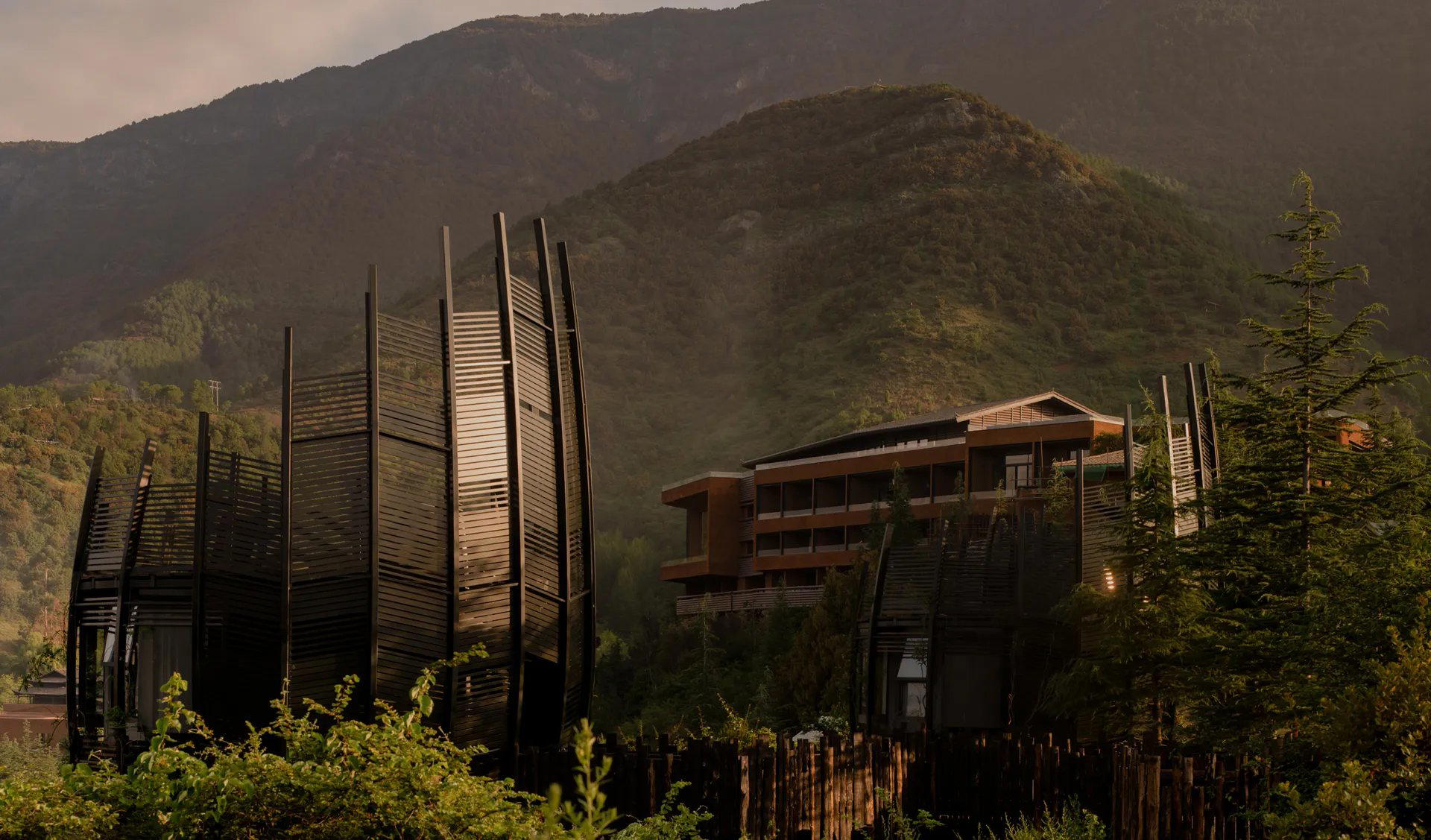
Where Alpine Altitude Meets Mosuo Architecture
Lugu Lake sits at roughly 2,685 metres above sea level on the border between Sichuan and Yunnan provinces, and the first thing the elevation imposes on any visitor is a certain stillness. The air is thinner, the light sharper, and the water of the lake holds a colour, a deep, almost improbable blue-green, that photographic reproductions routinely fail to capture accurately. Properties at this altitude in southwestern China operate under different physical conditions than their lowland counterparts: construction materials travel difficult roads, maintenance is seasonal, and the surrounding culture is not a decorative backdrop but an active, living presence. The ArcadiaPlace, located in Mukua Village within Yanyuan County, Sichuan, sits inside that context rather than at a comfortable remove from it.
The broader category of culturally embedded alpine accommodation has expanded across southwest China over the past decade, with properties in, Jiuzhaigou, and Lijiang each staking a position between international luxury standards and local architectural vernacular. Banyan Tree Ringha in and Amandayan in Lijiang represent one end of that spectrum, properties with international brand backing and the design budgets that come with it. Conrad Jiuzhaigou sits in a similar tier, deploying recognisable luxury-chain infrastructure against a UNESCO-listed natural backdrop. Lugu Lake, by contrast, has seen far less of that brand activity. The lake's relative remoteness, road access from Lijiang takes three to four hours on mountain roads, has kept the property count low and the visitor profile more deliberate. The ArcadiaPlace occupies that less-trafficked tier, where the setting itself does the majority of the editorial work.
The Physical Language of Mukua Village
Mosuo architecture follows a logic developed over centuries for high-altitude lakeside living. Structures are typically timber-framed, with heavy log walls that provide insulation against sharp temperature swings between day and night. Rooflines are pitched for snowload, and interiors are organised around central hearth spaces, a practical response to cold that also functions as the social centre of family life. The village of Mukua, where The ArcadiaPlace is situated, retains this architectural grammar in its older structures, giving the property a built context that is legible and coherent rather than assembled from imported aesthetic references.
For a property choosing to build or operate within a Mosuo village setting, this creates a specific design challenge that defines how the space reads. The most successful alpine properties in this part of China, Amanfayun in Hangzhou offers a comparable case study in integrating accommodation within a pre-existing cultural structure, tend to prioritise material continuity over visual novelty. What that means in practice: local stone and timber rather than imported finishes, roof forms that echo rather than contrast with neighbouring structures, and a building footprint that defers to the village's existing spatial logic rather than asserting a new geometry against it.
The lake views that Mukua Village affords are not incidental to this architectural discussion. Lugu Lake's shoreline is not uniformly accessible; the topography and village layout determine which positions offer unobstructed water sightlines and which do not. Properties positioned on or near the waterfront with northern exposures toward the main lake body hold a material advantage in both light quality and visual reach. This is the kind of site-specific intelligence that a brief description of the property as a village gem in a picture-postcard setting gestures at without fully articulating.
The Mosuo Cultural Framework
The Mosuo are among the most studied matrilineal societies in contemporary ethnography, and Lugu Lake functions as their cultural and geographic centre. Unlike many of China's recognised minority cultures, which have been substantially reshaped by tourism infrastructure, the Mosuo have maintained a degree of social continuity that gives Lugu Lake a different quality of cultural encounter than destinations such as Lijiang's old town, which now operates primarily as a commercial district styled in Naxi architectural forms.
For travellers who have moved through southwestern China's established luxury circuit, Amanfayun, Banyan Tree Ringha, or the Amandayan properties, Lugu Lake represents a less mediated version of the same southwest China landscape tradition. That lack of mediation cuts both ways: fewer of the comforts that international brand infrastructure provides, but also less of the aesthetic distance from actual local life that those brands often impose. The ArcadiaPlace's position within Mukua Village rather than at a curated remove from it reflects the particular opportunity and constraint that Lugu Lake presents.
Seasonal timing matters considerably at this altitude. The lake is most accessible and most photographically spectacular from April through October; winter months bring road closures and significantly reduced temperatures, though the lake itself rarely freezes. The peak summer period from July through August brings the highest visitor volumes to the region, which affects both accommodation availability and the character of the lake's shoreline. Travellers prioritising quieter conditions and more direct engagement with village life tend to find the shoulder months of May, June, and September more productive.
Getting There and Planning the Visit
Lugu Lake is reached most commonly from Lijiang, with road transfers of approximately three to four hours depending on road conditions. Flights serve Lijiang Sanyi International Airport from Kunming, Chengdu, and several major Chinese cities; Green Lake Hotel Kunming is a practical overnight base before the southbound leg if routing through Yunnan's capital. The lake also sits within reasonable distance of Xichang, which has its own airport with connections to Chengdu, and which shortens the overland transfer to roughly two hours through Yanyuan County.
For travellers building a longer southwestern China itinerary, Lugu Lake connects logically to both the Yunnan highlands circuit and the Sichuan mountain routes that include properties like Conrad Jiuzhaigou. Properties in the Chongqing or Guizhou corridor, including Banyan Tree Chongqing Beibei, can anchor the eastern end of a multiweek loop that uses Lugu Lake as its high-altitude centrepiece. Our full Lugu Lake restaurants guide covers the local dining situation across all price points in the surrounding villages.
Booking conditions, current pricing, and specific room availability for The ArcadiaPlace are not listed in published databases at the time of writing; direct contact with the property via Mukua Village address in Yanyuan County is the standard approach. Given the limited supply of quality accommodation at the lake and the concentrated nature of peak-season demand, early planning is advisable for July and August dates.
| Venue | Cuisine | Price | Awards |
|---|---|---|---|
| The ArcadiaPlace, Lugu LakeThis venue (the venue you are viewing) | This venue | $300–500 | Design Hotels Member · Prix Versailles World Selection |
| Aman Summer Palace | Not listed | $1,000–1,500 | Forbes 4-Star |
| Amanfayun | Not listed | Not listed | Michelin Selected · La Liste Top Hotels |
| Amanyangyun | Not listed | Not listed | 2 Michelin Keys · Vogue 2026 Vogue Best Hotels in Shanghai |
| Andaz Xintiandi, Shanghai | Not listed | $100–200 | Michelin Selected · Forbes Recommended |
| Banyan Tree Hangzhou | Not listed | $300–500 | Michelin Selected · Forbes 4-Star |
Recognition history
Dated appearances from independent guides and award organizations, with the underlying list record or original source where available.
Design Hotels Member
Design Hotels
Prix Versailles World Selection
Prix Versailles
Continue exploring
More in Lugu Lake
Bars in Lugu Lake
All bars in Lugu Lake →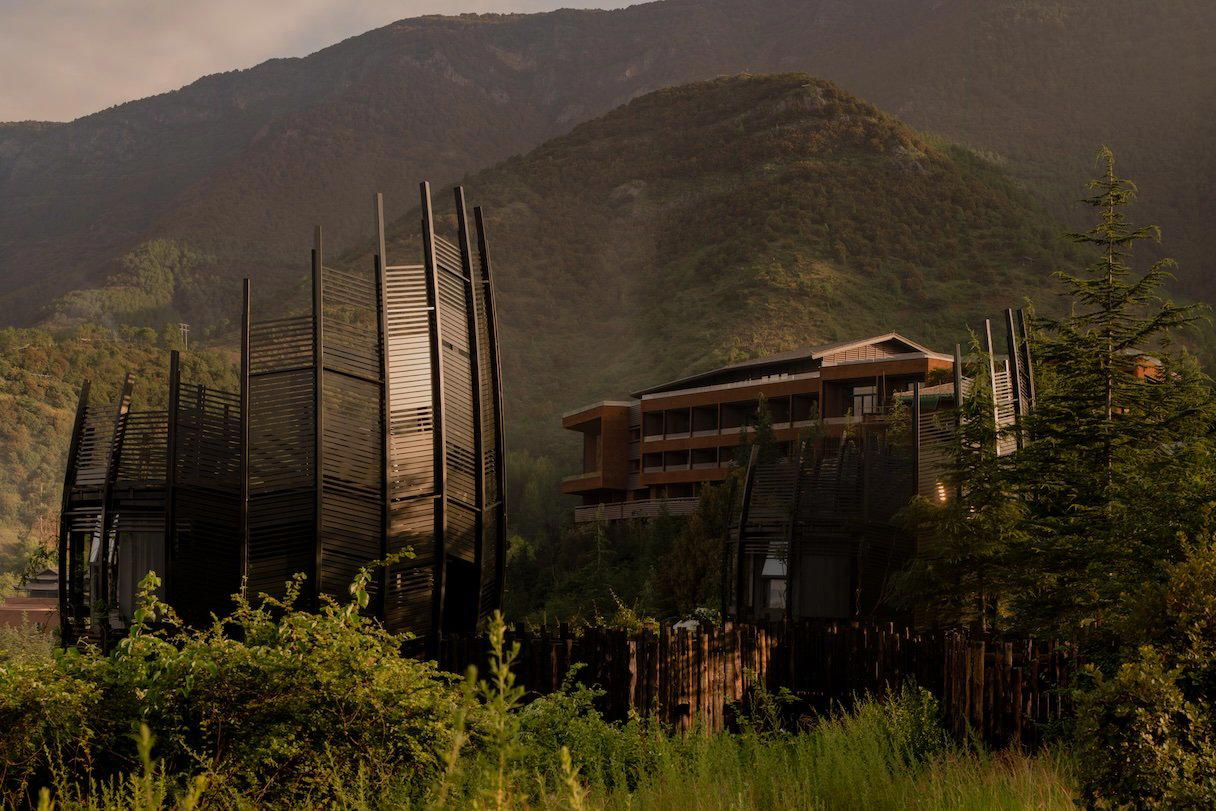
Details
- Romantic
- Scenic
- Elegant
- Quiet
- Intimate
- Sophisticated
- Honeymoon
- Romantic Getaway
- Wellness Retreat
- Anniversary
- Weekend Escape
- Infinity Pool
- Panoramic View
- Waterfront
- Wi Fi
- Pool
- Spa
- Room Service
- Concierge
- Restaurant
- Bar
- EV Charging
- Waterfront
- Mountain
- Wheelchair Accessible
- Elevator
Tranquil and serene with warm stone, dark wood, red hues symbolizing maternal imagery, and natural light flooding spaces via floor-to-ceiling glass.