Songtsam Meili Lodge sits in China's Diqing Tibetan Autonomous Prefecture, where the Meili Snow Mountains form one of Asia's most dramatic high-altitude backdrops. The property belongs to the Songtsam collection, a network of lodges built on the design principle of rooting architecture in Tibetan material culture. For travellers approaching the Yunnan-Tibet corridor, it represents one of the more considered entry points into this terrain.

Pearl is the En Primeur Club membership app — saves, bookings, and concierge access live there. Same editors, same standards.
- Address
- 迪庆藏族自治州, 云南
- Directions
- Get directions
Where the Mountains Set the Terms
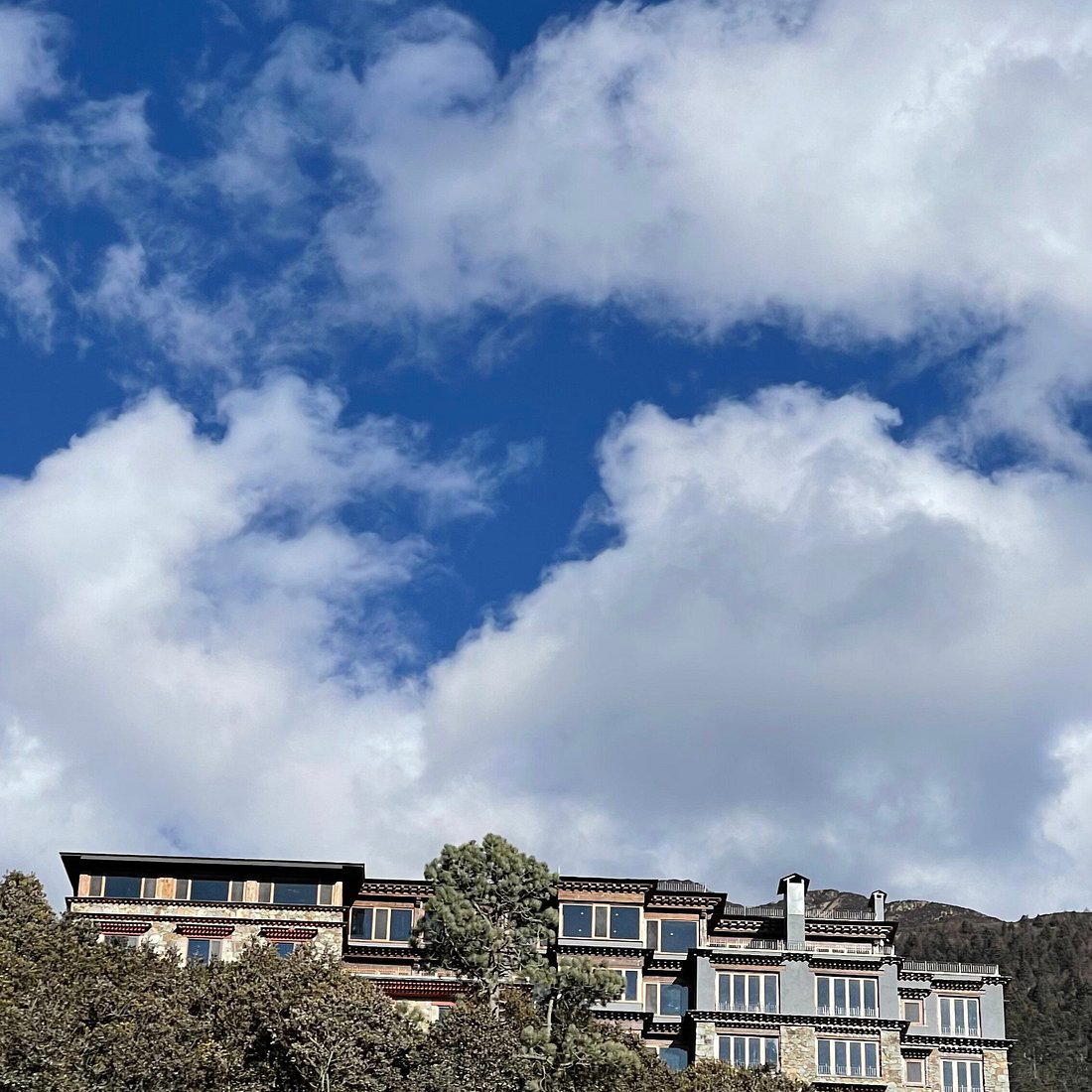
At elevations where the air thins and the light changes colour by the hour, architecture either fights the landscape or submits to it. In China's Diqing Tibetan Autonomous Prefecture, the lodges that earn sustained attention are invariably those that chose submission. Songtsam Meili Lodge, positioned within the orbit of the Meili Snow Mountains in northwestern Yunnan, belongs to that second category. The Songtsam collection, which operates a network of properties along what it describes as a Tibetan cultural corridor, has built its identity on a specific design premise: that high-altitude hospitality should read as an extension of its physical and cultural context, not an insertion into it. For our full 迪庆藏族自治州 guide, Meili is the property most directly shaped by the mountain it faces.
The Architecture of Rooted Design
The dominant model in Chinese luxury lodging has long favoured imported aesthetic languages: international-brand minimalism, pan-Asian resort tropes, or the grand-corridor scale associated with properties like Mandarin Oriental Qianmen in Beijing or JW Marriott Hotel Shanghai at Tomorrow Square. The Songtsam collection operates from a different premise entirely. Its lodges are built using local stone, timber, and construction methods drawn from Tibetan vernacular architecture, and Meili is the property where that philosophy meets its most demanding physical test. The Meili Snow Mountains, known in Tibetan as Kawagebo, are among the most sacred in Tibetan Buddhism and remain unclimbed. The lodge is positioned to face this range directly, which means every design decision, from the angle of windows to the placement of outdoor terraces, is subordinate to that sightline. In a category of Chinese mountain retreats that increasingly includes properties like Xiamen Yunding Resort or the dramatically sited Mohe Youran Mountain Residence in Da Hinggan Ling, Meili's distinction is the specificity of its cultural grounding rather than the drama of its elevation alone.
Tibetan lodge construction at this altitude typically uses rammed earth or stone walls of considerable thickness, which serve thermal as well as aesthetic functions. The result is a building that breathes differently from a conventional hotel: interiors feel buffered from the cold in ways that glass-and-steel construction cannot replicate at 3,000-plus metres. Prayer flags, butter lamps, and hand-carved wooden details are not decorative additions in this context; they are the primary visual language of the built environment across the Diqing region, and the Songtsam properties treat them accordingly.
The Diqing Context: A Region Built for Slow Travel
Diqing Tibetan Autonomous Prefecture covers a broad swath of northwestern Yunnan and shares borders with Tibet and Sichuan. Its main hub, city (formerly Zhongdian), has seen significant hospitality investment since the early 2000s, and the region now supports a tiered accommodation market that runs from budget guesthouses to properties like Banyan Tree Ringha in , which operates in a similar premium-boutique register. The Meili Snow Mountains area, centred on Deqin county further north toward the Yunnan-Tibet border, represents a more remote and less developed tier of that market. Access typically involves a drive of several hours from, and the region's appeal rests heavily on what it does not yet have: the infrastructure density that tends to dilute the quality of remoteness.
For travellers routing through Yunnan's mountain corridor, the logical point of comparison is the Aman network in the region. Amandayan in Lijiang and Amanfayun in Hangzhou both demonstrate the design-led, low-key-volume approach that defines premium boutique hospitality in culturally sensitive Chinese settings. The Songtsam model is comparable in spirit, though it operates at a more modest price point and with a more explicit commitment to Tibetan cultural specificity rather than pan-Asian aesthetic polish.
Within the Songtsam network itself, Meili occupies a particular position. The collection includes properties in, Benzilan, Tacheng, and other points along the Yunnan-Tibet highway, each designed to function as a staging post for travellers moving through the region rather than a standalone resort destination. Meili, positioned closest to the sacred mountain, functions as something closer to a terminus: a place where the journey slows to the pace of the landscape. That framing places it in a different competitive tier from, say, Conrad Jiuzhaigou in Sichuan, which offers comparable mountain scenery but within a UNESCO site infrastructure that brings both access and volume. The Meili area's relative inaccessibility remains part of its value proposition for the traveller who wants mountain immersion without the managed-experience feel of a more developed destination.
Properties in China's more extreme geographic settings, from the Vanke Lake Songhua Yunlu Hotel in Jilin to the Beidahu Asian Games Village, tend to organise around a specific seasonal activity. Meili's appeal is less sport-dependent and more tied to pilgrimage culture: the Kora route around Kawagebo attracts Tibetan Buddhist pilgrims year-round, and the lodge sits within that circuit in a way that gives even non-religious guests a framework for understanding the region's rhythms.
Planning a Stay: Practical Orientation
Diqing is accessed most conveniently via Diqing Airport, which receives flights from Kunming and Chengdu. For travellers arriving from Kunming, Green Lake Hotel Kunming is a reasonable overnight before the onward connection. From, the drive north to Deqin and the Meili area covers roughly 180 kilometres along mountain roads that require several hours, with the journey itself functioning as an introduction to the high-plateau terrain. The optimal travel window runs from late spring through early autumn, when mountain passes are reliably open and the probability of clear views of Kawagebo, which is famously cloud-wrapped for much of the year, is highest. Winter visits carry the reward of snow-season quiet and occasionally sharper mountain visibility, though access can be complicated by road conditions. Travellers planning an extended Yunnan circuit might also consider the broader regional context: the province's lodge and resort market extends well beyond Diqing, with properties like Elite Spring Villas in Anxi and the design-led properties of southern Yunnan representing a very different expression of the same province.
A Quick Peer Check
| Venue | Price | Awards |
|---|---|---|
| Songtsam Meili Lodge (松赞梅里山居)This venue — the venue you are viewing | $300–500 | Not listed |
| Aman Summer Palace | $1,000–1,500 | Forbes 4-Star |
| Amanfayun | Not listed | Michelin Selected · La Liste Top Hotels |
| Amanyangyun | Not listed | 2 Michelin Keys · Vogue 2026 Vogue Best Hotels in Shanghai |
| Andaz Xintiandi, Shanghai | $100–200 | Michelin Selected · Forbes Recommended |
| Banyan Tree Hangzhou | $300–500 | Michelin Selected · Forbes 4-Star |
Continue exploring
More in 迪庆藏族自治州
Hotels in 迪庆藏族自治州
Browse all →
Details
- Scenic
- Rustic
- Cozy
- Intimate
- Quiet
- Romantic Getaway
- Family Vacation
- Wellness Retreat
- Weekend Escape
- Panoramic View
- Terrace
- Historic Building
- Garden
- Wi Fi
- Restaurant
- Bar
- Parking
- Mountain
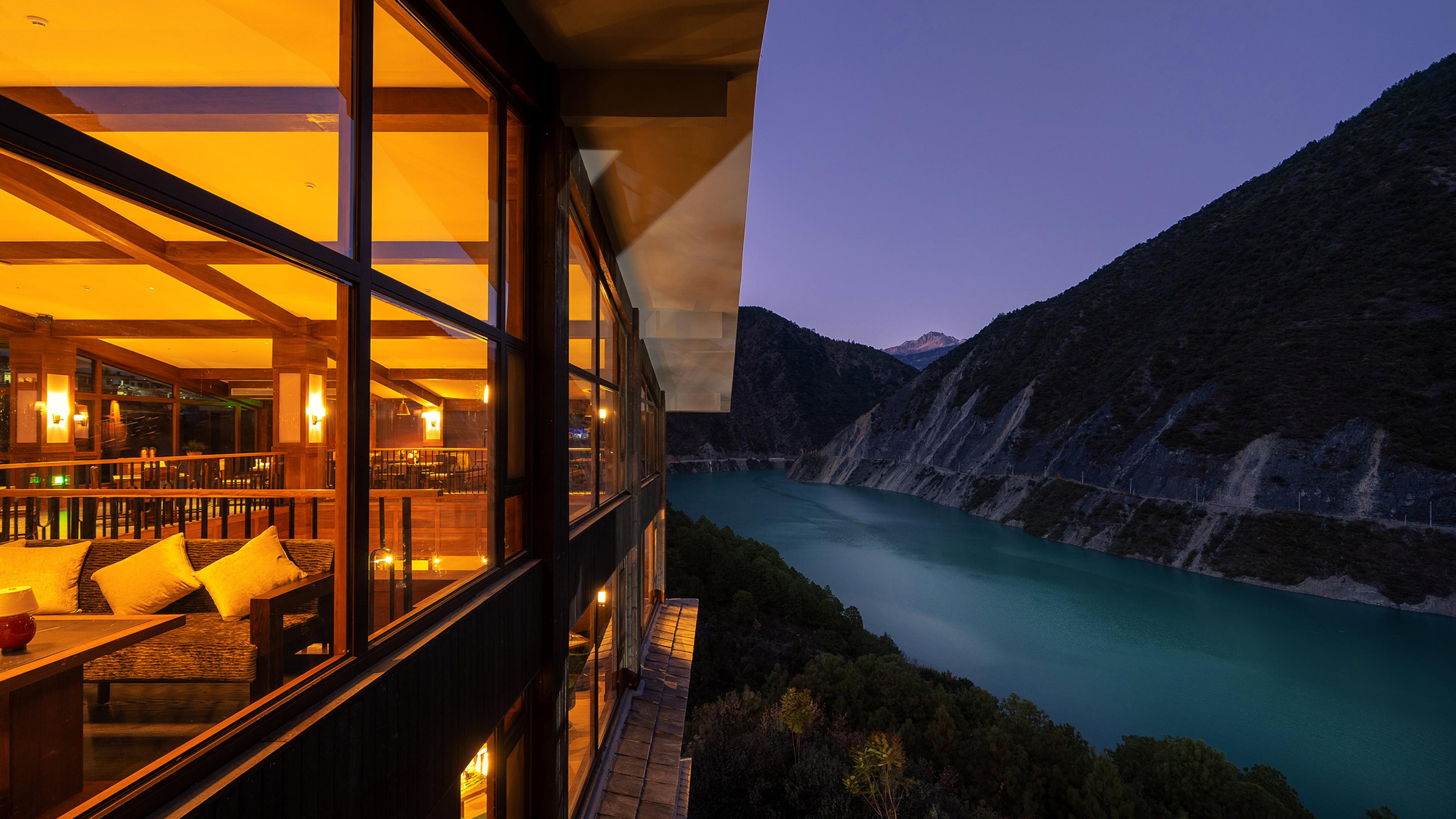
Warm and intimate atmosphere created by log-style design, timber flooring, hand-picked antique furniture, traditional woven carpets, and cozy fireplaces in most rooms; richly appointed reception with elaborate Sino-Tibetan woodwork and wall tapestries.