
Virtuoso Luxury Hotel Partner
Positioned on a hillside in Lhasa's Chengguan District with direct sightlines to the Potala Palace, Songtsam Linka Retreat translates centuries of Tibetan noble household design into a contemporary retreat format. Slaked lime walls, indigo-carved windows, and Thangka paintings throughout the interior place it firmly within the cultural preservation tier of Tibetan hospitality, while the kitchen draws highland ingredients from Dangxiong County pastures to anchor its dining program in regional tradition.

Pearl is the En Primeur Club membership app — saves, bookings, and concierge access live there. Same editors, same standards.
- Address
- No.1 Zongzan Road, Wencheng Avenue, Chengguan District
- Website
- songtsam.com
- Directions
- Get directions
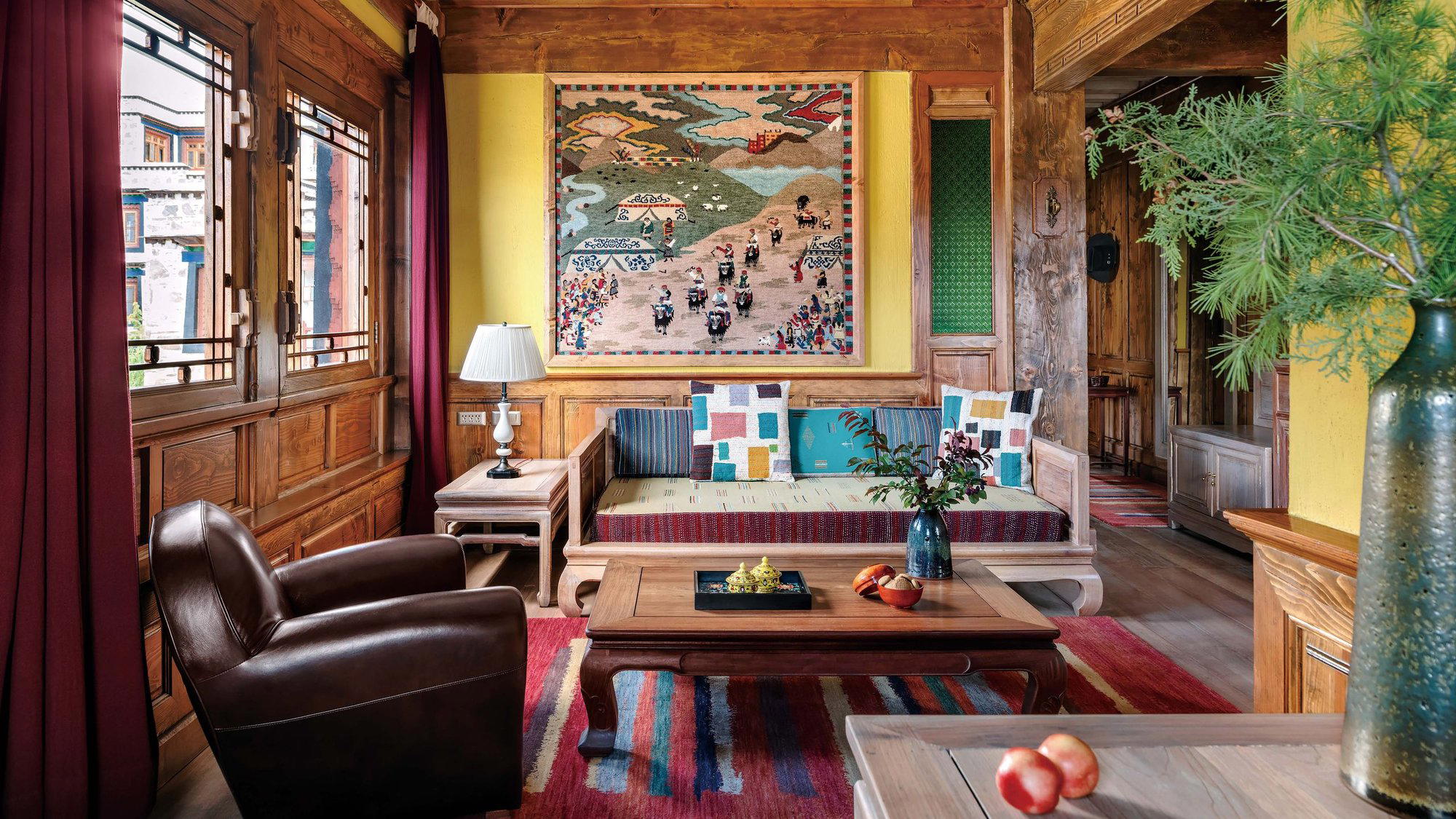
A Hillside Address Shaped by Centuries of Tibetan Craft
Lhasa sits at 3,650 metres above sea level, and altitude alone shapes every decision a traveller makes here, from pace of movement to the hour you first step outside. But the city's hospitality offer has developed a distinct character beyond the physiological adjustment: properties in the premium tier increasingly compete on architectural authenticity rather than international brand consistency. Songtsam Linka Retreat, positioned on a hillside in the Chengguan District along Zongzan Road on Wencheng Avenue, belongs to the more demanding end of that approach, where design is treated as cultural documentation rather than atmosphere.
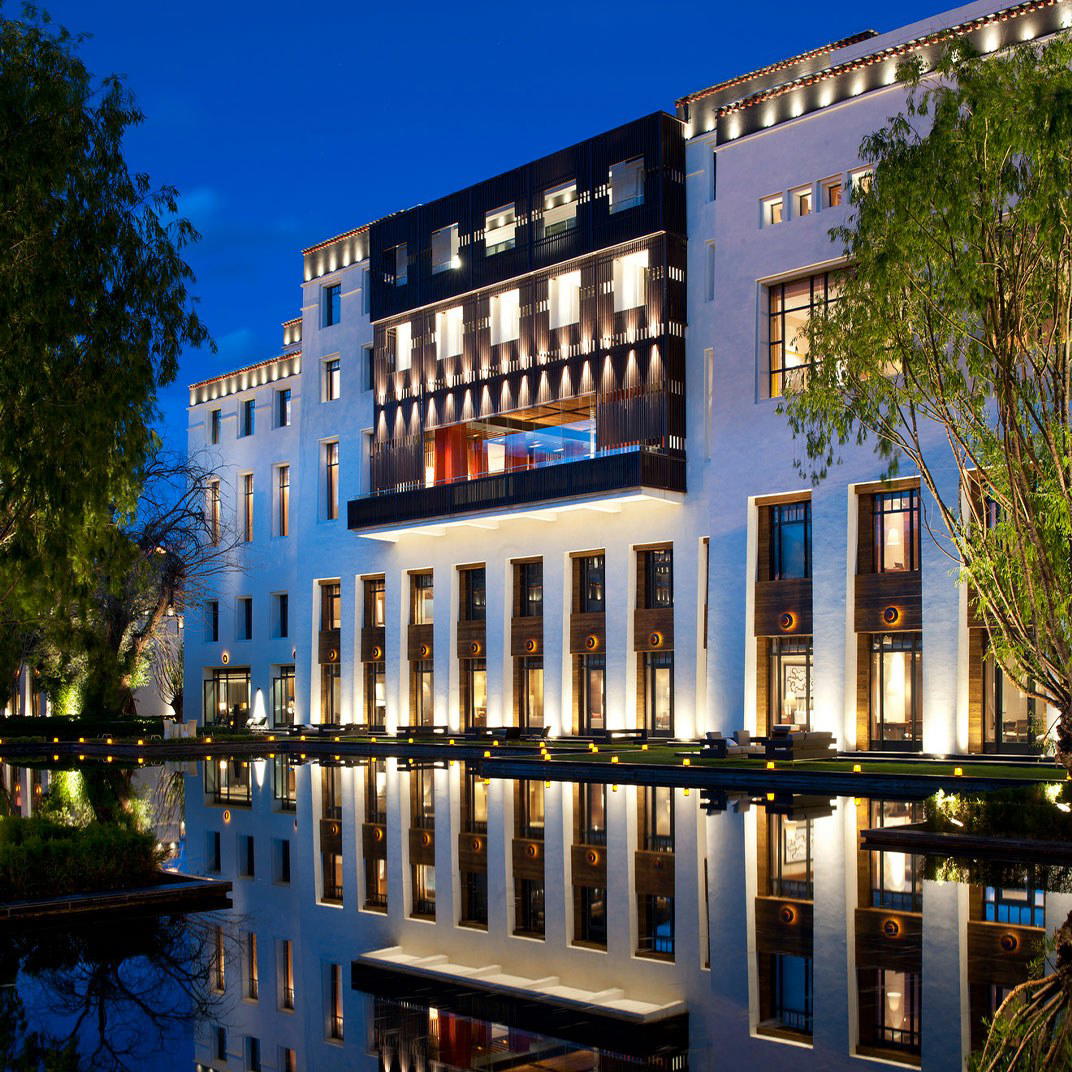
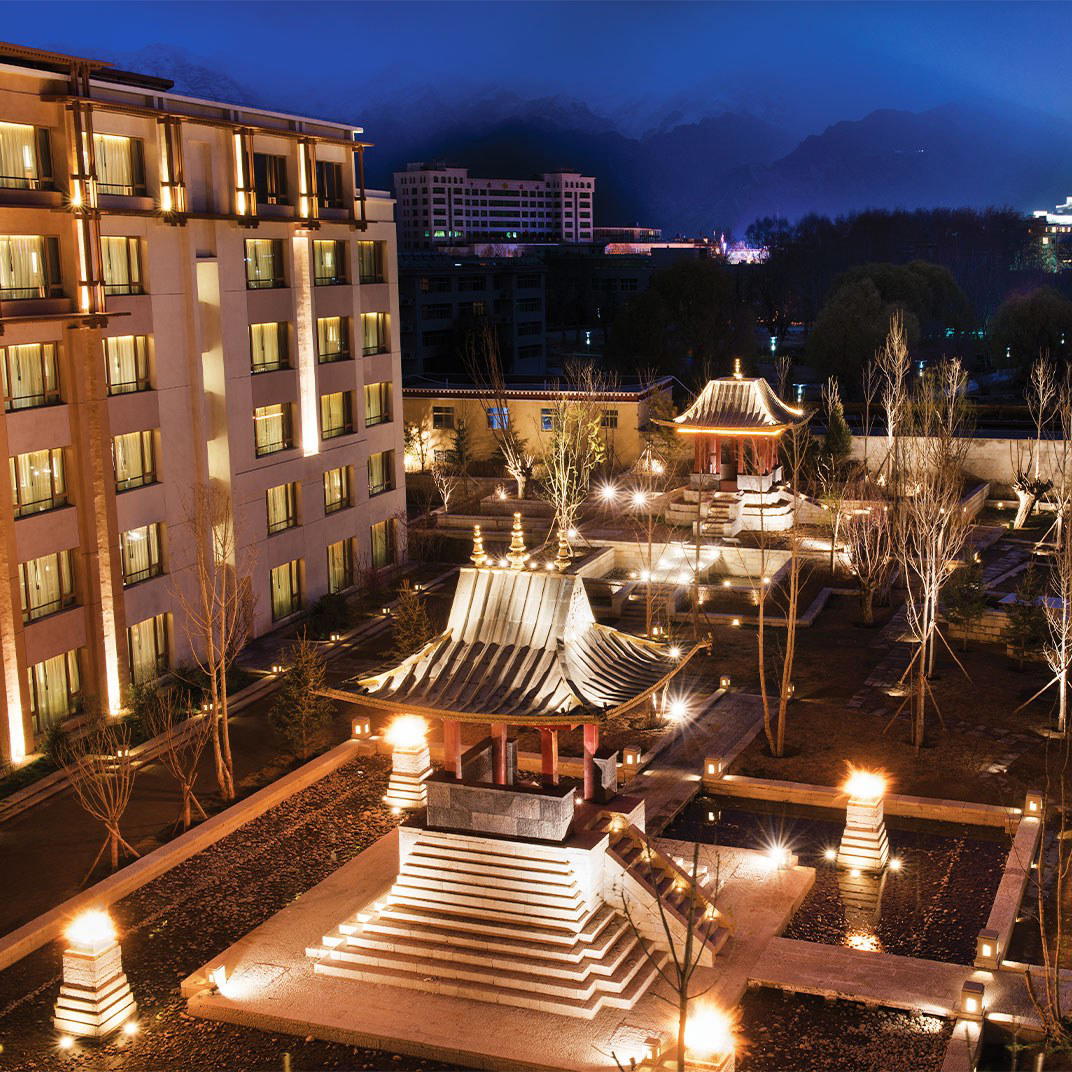
The exterior announces this immediately. Slaked lime-coloured walls, indigo-carved windows, and a fish-fin shaped facade are details drawn from a specific vernacular, one associated with the construction traditions of Tibetan noble households rather than contemporary hotel convention. These elements are not decorative approximations. They represent a deliberate engagement with the craftspeople and material logic of a building tradition that predates mass tourism to the plateau by several centuries. For guests arriving from Chinese metropolitan centres, including properties like the Mandarin Oriental Qianmen in Beijing or the JW Marriott Hotel Shanghai at Tomorrow Square, the contrast in architectural philosophy is immediate and intentional.
The Interior as Cultural Archive
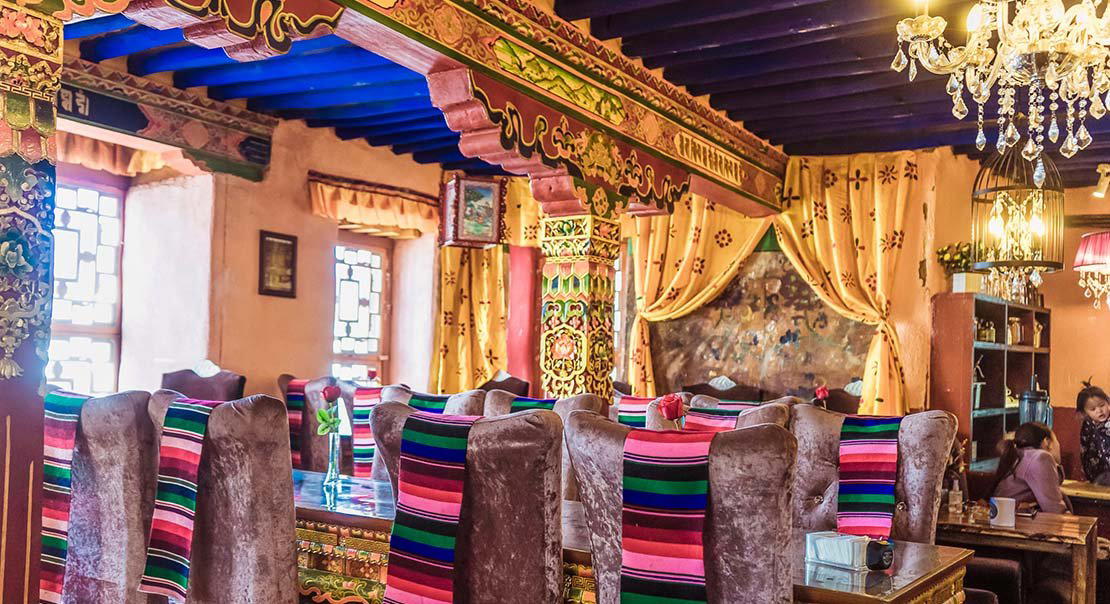
Inside, the design logic continues without interruption. The interiors take their reference point from the lifestyle of Lhasa's historic native households, a domestic register rather than a monastic or ceremonial one. Thangka paintings and wall tapestries appear throughout, not as collected objects displayed behind glass, but as elements that pattern and define the space in the way they would have in the residences of noble Lhasa families from earlier centuries. The goal, as the retreat frames it, is the revival of an environment typical of that domestic context, which places Songtsam Linka in a different competitive conversation from resort properties that use Tibetan motifs loosely.
This approach to interior design as lived cultural reference, rather than curated exhibition, is increasingly the benchmark in premium Himalayan and plateau hospitality. Properties like Amandayan in Lijiang and Amanfayun in Hangzhou operate within similar frameworks, where the building and its materials carry as much editorial weight as the service program. The Songtsam Linka model applies the same logic to the Tibetan plateau context, where the source tradition is architecturally and historically distinct from anything found in Yunnan or Zhejiang.
The Potala Palace Sightline as Orientation Device
The hillside positioning produces one practical and one symbolic result. Practically, it separates the retreat from the street-level density of central Lhasa. Symbolically, the sightlines to the Potala Palace provide a spatial orientation that no interior design element could replicate. The Potala, which has defined Lhasa's visual identity since the 17th century and operates today as a UNESCO World Heritage Site, functions from this vantage point as a constant reference, reinforcing the retreat's positioning within Tibetan history rather than adjacent to it. This is not a view as amenity. It is a view as argument about where the property stands in relation to the city it inhabits.
For travellers assessing properties across China's culturally specific destinations, this kind of sightline and its implications matter. The Banyan Tree Ringha in achieves something comparable in the Yunnan highlands, and the Conrad Jiuzhaigou places guests within a UNESCO-listed valley. In each case, the address does interpretive work that the interior alone cannot accomplish.
A Kitchen Built Around the Plateau's Ingredient Geography
Lhasa's food identity is the product of a layered settlement history. Tibetans, Han Chinese, Muslim communities, and Nepalese populations have shared the Lhasa Valley across generations, producing a culinary culture that absorbs multiple traditions without collapsing into fusion for its own sake. The valley's fertile soil along the Quji River, combined with the high-altitude pastures of the surrounding mountains, creates an ingredient supply unusual in its quality at elevation.
The retreat's kitchen sources yak meat, yak butter, and dairy products from the pastures of Dangxiong County, north of Lhasa, a growing area known among Tibetan culinary specialists for the quality of its highland cattle products. Highland barley and locally grown potatoes from the Lhasa basin complete the core larder. The kitchen program retains traditional Lhasa dish formats while extending into improved and fusion preparations designed for a broader guest range. This positions the dining offer within a specific strand of contemporary Tibetan restaurant practice, one that treats ingredient provenance as non-negotiable while accepting that not every guest arrives with deep familiarity with the regional canon.
For context on how plateau and highland kitchens across China are developing their ingredient-led programs, the pattern at Songtsam Linka has parallels in properties like the Xiamen Yunding Resort and the Mohe Youran Mountain Residence in Da Hinggan Ling, both of which anchor their kitchen programs in the specific agricultural and pastoral character of their regions. See our full Lhasa restaurants guide for broader context on where regional Tibetan dining is moving.
Planning Your Visit
Lhasa requires advance preparation that most Chinese domestic or international destinations do not. Foreign nationals require a Tibet Travel Permit in addition to a standard Chinese visa, and the permit must be arranged through an authorised travel agency before arrival. The permit process typically takes one to two weeks, which means booking the retreat well ahead of travel dates is a practical requirement, not a preference. The dry season, broadly October through November and March through May, offers the clearest conditions for views of the Potala from the hillside position. The summer monsoon months bring cloud cover that can limit sightlines, though temperatures remain more moderate than the deep winter months. Altitude acclimatisation is standard practice: most medical guidance suggests spending the first day or two with limited exertion, which aligns naturally with the retreat format. Properties like this one, positioned away from street-level activity, suit that adjustment period better than centrally located options.
Travellers building a broader China itinerary around culturally specific properties might also consider the Green Lake Hotel Kunming as a staging point before reaching the plateau, or combine the Lhasa visit with a stay at Elite Spring Villas in Anxi for a contrast in landscape and architectural register. For properties operating in similarly remote or high-altitude Chinese contexts, the Vanke Lake Songhua Yunlu Hotel in Jilin and the Beidahu Asian Games Village offer points of comparison in the northeast, while the Huyi District property in Xi'an represents a different mode of historically grounded accommodation within reach of a major transport hub.
A Quick Peer Check
| Venue | Price | Awards |
|---|---|---|
| Songtsam Linka Retreat LhasaThis venue — the venue you are viewing | Not listed | Virtuoso Luxury Hotel Partner |
| Aman Summer Palace | $1,000–1,500 | Forbes 4-Star |
| Amanfayun | Not listed | Michelin Selected · La Liste Top Hotels |
| Amanyangyun | Not listed | 2 Michelin Keys · Vogue 2026 Vogue Best Hotels in Shanghai |
| Andaz Xintiandi, Shanghai | $100–200 | Michelin Selected · Forbes Recommended |
| Banyan Tree Hangzhou | $300–500 | Michelin Selected · Forbes 4-Star |
Recognition history
Dated appearances from independent guides and award organizations, with the underlying list record or original source where available.
Virtuoso Luxury Hotel Partner
Virtuoso
Continue exploring
More in Lhasa
Details
- Scenic
- Elegant
- Quiet
- Sophisticated
- Well Known
- Romantic Getaway
- Weekend Escape
- Group Retreat
- Panoramic View
- Garden
- Historic Building
- Wi Fi
- Concierge
- Room Service
- Business Center
- Mountain
- Garden
- Skyline
- Wheelchair Accessible
- Accessible Restroom
- Elevator
- Step Free Entrance
A tranquil, culturally immersive atmosphere with Tibetan artisanal decor, Thangka tapestries, wooden floors, handcrafted copperware, and sweeping Potala Palace views.