Hebei Grand Hotel
Hebei Grand Hotel occupies a prominent position in Shijiazhuang, the provincial capital of Hebei, serving travelers who require a full-service hotel in a city that functions primarily as a transit and commercial hub between Beijing and the country's interior. The property represents the established grand-hotel tier that provincial capitals across northern China have developed to meet domestic business and government travel demand.

Pearl is the En Primeur Club membership app — saves, bookings, and concierge access live there. Same editors, same standards.
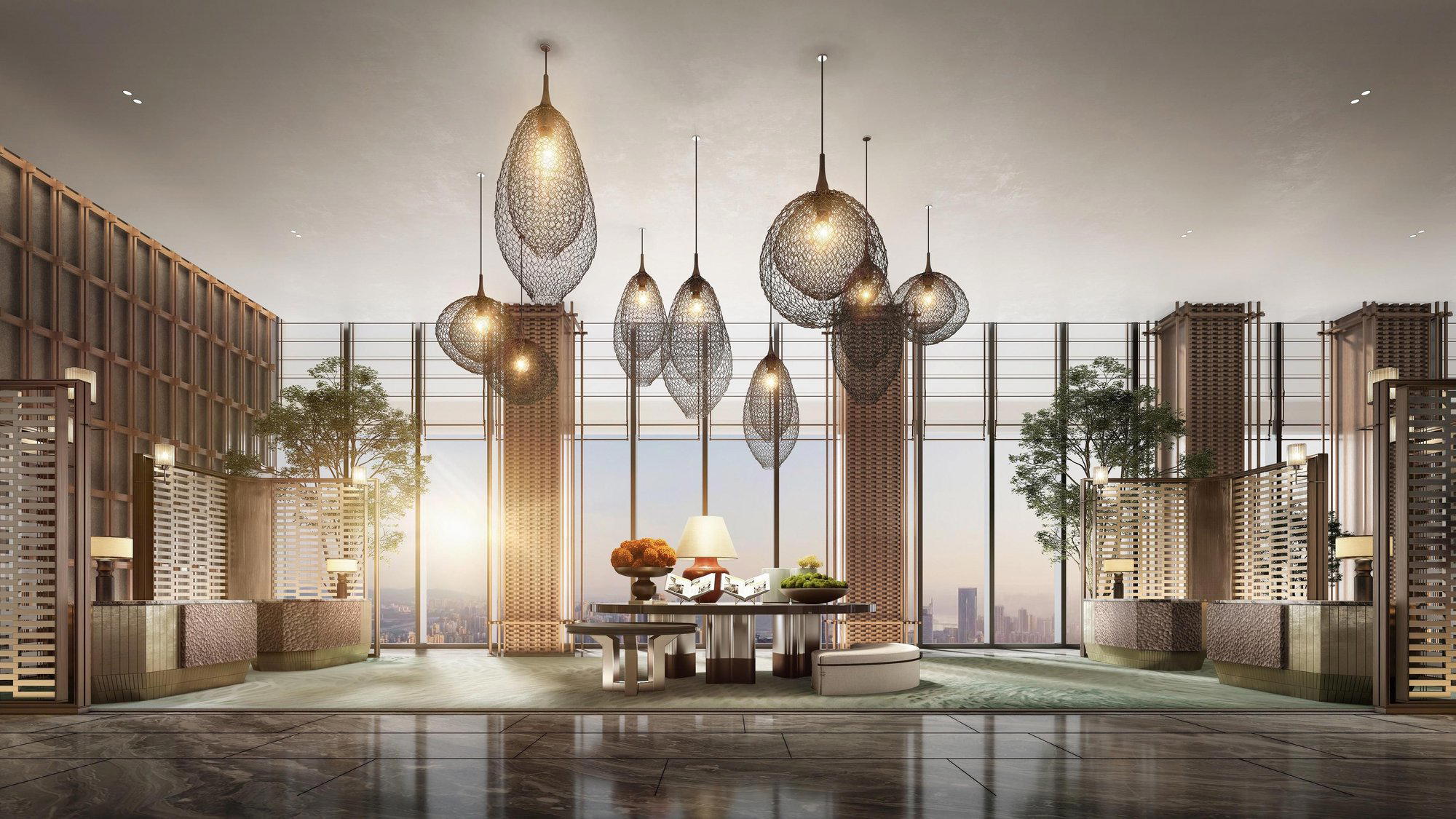
A Provincial Capital's Grand Hotel Tradition
Shijiazhuang sits at an intersection that has defined its character for over a century: a railway junction city that grew into Hebei Province's administrative capital, drawing government delegations, industrial conferences, and interprovincial business travel in volumes that smaller, boutique formats cannot absorb. The hotel tier that emerged to serve this demand is distinct from the design-led independents proliferating in cities like Hangzhou or Lijiang. Here, scale and ceremony carry their own logic. Hebei Grand Hotel operates within that tradition, positioning itself alongside the full-service properties that provincial capitals across northern China have built to host state-adjacent functions, large banquet events, and the particular formality that Hebei's government and business culture tends to require. For context on how this compares to properties in other Chinese provincial capitals, the Le Meridien Zhengzhou in Zhengzhou and the InterContinental Chengdu Global Center in Chengdu represent the international-brand end of this same provincial grand-hotel category.
The Architecture of Authority
Grand hotels in Chinese provincial capitals tend to follow a legible visual grammar: facades that read as institutional rather than residential, lobbies scaled to receive delegations rather than individual travelers, and public spaces designed to communicate civic weight. This architectural approach is not incidental. It reflects the function these properties serve in cities where government ministries, provincial bureaux, and state-affiliated enterprises are primary clients. The design prioritizes ceremony over intimacy, formal reception over atmospheric lounge culture. Columns, double-height ceilings, and symmetrical layouts signal that the building is meant to be taken seriously, in the same way that comparable properties like the Ritz-Carlton in Xi'an or the Yihe Mansions in Nanjing communicate authority through physical presence. Hebei Grand Hotel fits this pattern, serving a city where the built environment is still largely organized around function and administrative identity rather than tourism spectacle.
This stands in deliberate contrast to the resort-led design philosophy you find at properties like the Banyan Tree Sanya or the atmosphere-forward approach of Hylla Vintage Hotel in Lijiang. Those properties are built around leisure and sensory experience as ends in themselves. A provincial grand hotel answers to different criteria: reliability, capacity, and a physical presence that communicates stability to guests whose travel is driven by obligation rather than aspiration.
Where Shijiazhuang Sits in China's Hotel Map
Shijiazhuang is not a city that appears frequently on international travel itineraries, which means its hotel market operates almost entirely on domestic demand. That demand is substantial, shaped by the city's role as the administrative center of a province of more than 74 million people and its position on rail lines connecting Beijing to central and southern China. Travelers passing through on the high-speed rail network often use Shijiazhuang as an overnight stop, and the city's ongoing industrial and pharmaceutical sector activity sustains year-round corporate travel. The full-service hotel in this environment needs to function well across banqueting, business facilities, and standard accommodation without the specialization that distinguishes destination properties. For travelers approaching China from a high-design angle, properties like The Hanyu Garden Reserve Suzhou or Hangzhou Muh Shoou Xixi Hotel represent a different tier of intent. But for Shijiazhuang specifically, a property like Hebei Grand Hotel addresses the functional reality of what the city requires from its accommodation stock.
The Banquet Tradition in Northern Chinese Hotels
One feature that distinguishes grand hotels in northern China from their coastal or resort counterparts is the weight placed on banquet infrastructure. Wedding banquets, government dinners, corporate anniversary events, and provincial conferences all flow through properties of this type at a volume that shapes everything from kitchen capacity to corridor widths. The banquet hall is not a secondary amenity here; it is often the primary revenue engine and the space around which the rest of the property is organized. This is a regional hospitality tradition with deep roots: in Hebei and neighboring provinces, formal meals mark status transitions, business agreements, and civic occasions with a seriousness that casual dining formats cannot accommodate. Properties that serve this function are evaluated on their ability to seat large parties, manage multi-course service at scale, and maintain a visual formality appropriate to the occasion. The InterContinental Chongqing Raffles City and the InterContinental Quanzhou occupy adjacent positions in their respective cities, balancing international brand standards with similar local-function demands.
Planning a Stay
Shijiazhuang is well connected by high-speed rail to Beijing, with journey times well under two hours, making it feasible as an overnight base for travelers with business in the provincial administration or in the city's pharmaceutical and textile sectors. The city's Zhengding International Airport handles domestic routes and limited international connections. For travelers whose China itinerary involves Xi'an, Chengdu, or the northwest, Shijiazhuang sits on rail routes that allow it to serve as a logical midpoint. In terms of regional comparison, those seeking a similar functional-grand-hotel experience in China's northeast might also look at LN Hotel Five in Guangzhou or, for a markedly different register of luxury, the Mandarin Oriental Qianmen in Beijing, which sits roughly ninety minutes north by high-speed rail. Travelers exploring western China may also find relevant comparisons at Conrad Urumqi. For reference points outside China, the ceremonial-grand-hotel tradition has European parallels in properties like Hôtel de Paris Monte-Carlo and Badrutt's Palace Hotel in St. Moritz, though the cultural function they serve differs considerably.
A Quick Peer Check
Comparable venues nearby, for context on price, style, and recognition.
| Venue | Cuisine | Price | Awards | Notes |
|---|---|---|---|---|
| Hebei Grand HotelThis venue — the venue you are viewing | Modern interpretation of classic Chinese courtyards | $$$$ | 5-Star | Not listed |
| Intercontinental Shenzhen Dameisha Resort | Luxury beachfront resort with European-style buildings forming a Mediterranean street. | $$$$ | 5-Star | Dameisha |
| W Shanghai | Futuristic luxury towers fusing Shanghai's past, present, and future. | $$$$ | 5-Star | North Bund |
| Sofitel Beijing Central | Contemporary luxury hotel with French brand heritage positioned for culture industry professionals and younger affluent travelers seeking modern design and lively nightlife. | $$$$ | 5-Star | Balizhuang |
| Xitan Hotel Beijing | Oriental aesthetic resort with single-story buildings and private courtyards | $$$$ | 5-Star | Mentougou District |
| W Xiamen | Trendy luxury hotel fusing local Fujian culture with high-energy W Hotels design. | $$$$ | 5-Star | East Business District |
Continue exploring
More in Shijiazhuang
Restaurants in Shijiazhuang
Browse all →
At a Glance
- Quiet
- Modern
- Elegant
- Sophisticated
- Scenic
- Business Trip
- Group Retreat
- Weekend Escape
- Destination Spa
- Garden
- Historic Building
- Design Destination
- Panoramic View
- Wi Fi
- Pool
- Spa
- Fitness Center
- Room Service
- Restaurant
- Parking
- EV Charging
- Business Center
- Garden
- Wi Fi
- Pool
- Spa
- Fitness Center
- Room Service
- Restaurant
- Parking
- EV Charging
- Business Center
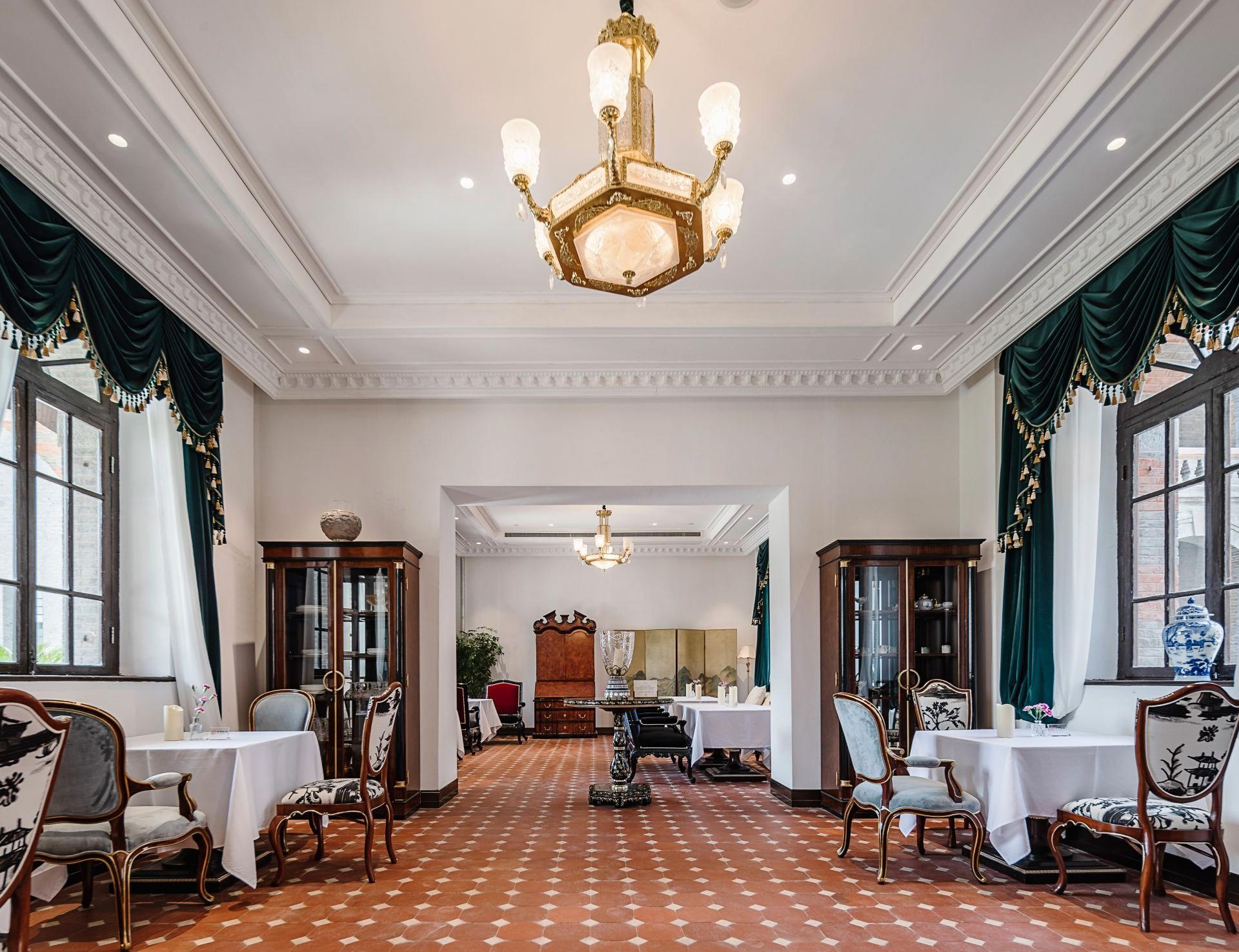
Spacious, clean, and beautifully designed, with a quiet upscale atmosphere and courtyard-inspired resort feel; guests also describe it as comfortable and tranquil.