Banyan Tree Ringha

1 Michelin Key
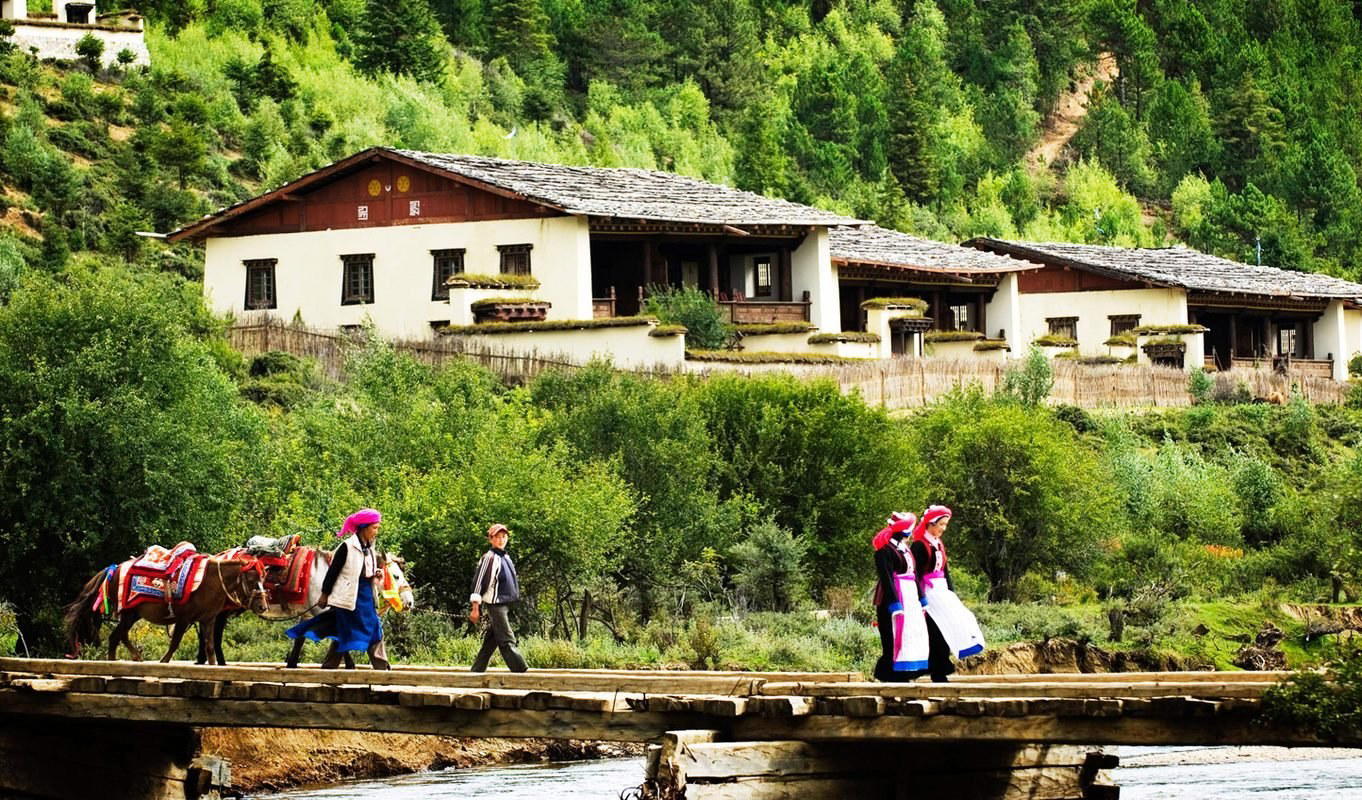
At 10,000 feet in Yunnan's Tibetan highlands, Banyan Tree Ringha trades the brand's coastal Balinese template for 32 two-level suites built around salvaged timber from authentic Tibetan farmhouses. The property sits in 's Jiantang township, where the architecture, food, and excursion program all reflect the region's Tibetan cultural majority rather than a generic luxury resort formula.

Pearl is the En Primeur Club membership app, where members save venues, book tables and use the concierge.
Altitude, Timber, and the Architecture of Place
High-altitude luxury properties in China's southwest occupy a distinct category from their coastal or urban counterparts. The design constraints are different, the cultural context is Tibetan rather than Han Chinese, and the elevation, sits above 3,200 metres, shapes every decision from building materials to heating systems. Banyan Tree Ringha operates squarely within this niche, and its most consequential design choice is also its most visible: the load-bearing timbers throughout the property are sourced from genuine Tibetan farmhouses, giving the spaces a material authenticity that purpose-built resort architecture rarely achieves.
The Singapore-based Banyan Tree group has built its wider portfolio around a recognisable Balinese aesthetic, deployed across coastal Southeast Asian properties and beyond. Ringha represents a deliberate break from that template. This corner of Yunnan province is ethnically and culturally Tibetan, and the property reflects that by adopting the language of a Tibetan lodge rather than importing the group's signature tropical idiom. The result places Ringha in a different competitive conversation from the brand's other China properties, including Banyan Tree Chongqing Beibei, and aligns it instead with a cohort of design-led highland retreats whose value proposition rests on contextual specificity.
Across China's premium hotel sector, the tension between international brand consistency and local material identity has sharpened over the past decade. Properties like Amanfayun in Hangzhou and Amandayan in Lijiang have built their reputations on precisely this kind of site-specific design discipline. Ringha belongs to that broader movement, where the architecture is read as evidence of a genuine engagement with place rather than a backdrop assembled for atmosphere.
Thirty-Two Suites, Three Configurations
The property runs 32 two-level suites across three formats: Spa Suites, Tibetan Suites, and Tibetan Lodges. The scale is intentional. At 32 keys, Ringha operates at a guest density where privacy is structural rather than promised, a meaningful distinction at a property that draws visitors partly for the silence of the surrounding landscape.
The Spa Suites carry their own private treatment rooms on the lower floor, integrating the wellness component directly into the accommodation rather than routing guests to a shared facility. The Tibetan Suites and Tibetan Lodges sprawl under high ceilings where the salvaged farmhouse timbers are most legible, framing spaces that read as genuinely volumetric rather than merely tall. Bathrooms across all categories are configured to contemporary standards despite the rustic architectural envelope, and each suite comes with a terrace positioned to face the surrounding mountain terrain.
For context on how Ringha's approach compares to other high-end Chinese properties at a different scale and urban orientation, see Mandarin Oriental Qianmen in Dongcheng or Aman Summer Palace in Beijing. The contrast illustrates how dramatically the category diverges once you move from metropolitan heritage districts to high-altitude Tibetan terrain.
The Spa as Cold-Weather Infrastructure
In warmer-climate properties, the spa tends to be a leisure amenity. At Ringha's elevation and in its winter conditions, it functions closer to necessary infrastructure. 's winters are harsh enough that a well-programmed thermal facility shifts from optional to central to the stay experience. The property's spa is built around that reality, and the Spa Suite configuration extends the logic by making treatment access a feature of the room itself rather than a separate booking exercise.
Treatments draw on Tibetan wellness traditions, which places Ringha in line with a broader pattern across premium highland properties in the region, where local therapeutic practice has become a differentiating programme element rather than a cultural add-on.
Food, Terrain, and the Excursion Structure
The restaurants at Ringha operate across three registers: local Tibetan specialties, broader Chinese cooking, and international options. In a region where the local food tradition is genuinely distinct from the Yunnan Han Chinese cooking more commonly encountered further south, the inclusion of Tibetan specialties represents the catering programme aligning with the same design logic as the architecture. The local menu is grounded in the food cultures of the surrounding communities rather than a generalised regional proposition.
The excursion programme covers the surrounding terrain at three levels of physical commitment: on foot, on horseback, and by four-wheel drive. That tiered structure makes the property accessible to guests across a wide fitness range, and the area's topography at 10,000 feet means that even vehicle-based routes cover genuinely dramatic ground. For guests interested in broader Yunnan context, Honor Resort Yun Shu Dali in Dali offers a point of comparison further south in the province, where the landscape and cultural character shift considerably.
For further reading on what the Shangrila area offers beyond the property itself, see our full Shangrila experiences guide, our full Shangrila restaurants guide, and our full Shangrila bars guide.
Getting There and Planning the Stay
Access follows a two-stage route from mainland China's major hubs. From Kunming Changshui International Airport, a 40-minute flight connects to Diqing Airport, followed by a 30-minute drive to the property. The domestic leg is short but not always reliable: Diqing Airport sits at high elevation and is subject to weather-related disruptions, particularly in winter. Building flexibility into arrival and departure days is a practical consideration rather than an abundance of caution.
Visitors arriving from or passing through Beijing may find Aman Summer Palace or Amanyangyun in Shanghai useful as bookending properties for a broader China itinerary. Those routing through Yunnan should note that Amandayan in Lijiang sits roughly between Kunming and and represents a logical stop on the same southwest arc. For the full picture of accommodation options in the area, consult our full Shangrila hotels guide.
Passport and visa requirements for China vary by nationality. Visitors should confirm entry documentation with their relevant consulate or national authority before booking, as requirements have shifted in recent years. The property's address, Jianthang Township, Hongpo Village, City, Diqing Tibetan Autonomous Prefecture, Yunnan, is useful for coordinating airport transfers and any independent ground logistics.
Where Ringha Sits in the Broader Category
Premium lodges in China's highland Tibetan zones occupy a small but growing niche in the country's luxury hospitality market. The architecture-led approach, the low key count, and the site-specific cultural programming that Ringha deploys are characteristics shared by properties like Conrad Jiuzhaigou, which operates in a similarly dramatic natural setting further north in Sichuan. Both sit in a tier defined less by the familiar metrics of urban luxury and more by access, landscape, and the quality of the physical proposition itself.
For guests orienting between international reference points, the design sensibility and remote positioning place Ringha closer to properties like Aman Venice in its emphasis on contextual authenticity than to the large-format resort model represented by, say, 1 Hotel Haitang Bay in Sanya. The 32-suite scale, the salvaged-materials design, and the elevation all reinforce a proposition built around specificity of place.
Comparable Spots, Quickly
| Venue | Price | Awards |
|---|---|---|
| Banyan Tree RinghaThis venue (the venue you are viewing) | $200–300 | 1 Michelin Key |
| Aman Summer Palace | $1,000–1,500 | Forbes 4-Star |
| Amanfayun | Not listed | Michelin Selected · La Liste Top Hotels |
| Amanyangyun | Not listed | 2 Michelin Keys · Vogue 2026 Vogue Best Hotels in Shanghai |
| Andaz Xintiandi, Shanghai | $100–200 | Michelin Selected · Forbes Recommended |
| Banyan Tree Hangzhou | $300–500 | Michelin Selected · Forbes 4-Star |
Recognition history
Dated appearances from independent guides and award organizations, with the underlying list record or original source where available.
Michelin 1 Key
Michelin
Full recognition history (2 entries)
Michelin 1 Key
Michelin
Continue exploring
More in Shangri-La
Details
- Rustic
- Elegant
- Scenic
- Quiet
- Ornate
- Honeymoon
- Romantic Getaway
- Wellness Retreat
- Group Retreat
- Panoramic View
- Private Villa
- Destination Spa
- Spa
- Wi Fi
- Room Service
- Concierge
- Restaurant
- Mountain
- Garden
- Wheelchair Accessible
Cozy and rustic Tibetan interiors with wooden beams, fireplaces, and warm lighting creating an intimate, secluded mountain retreat atmosphere.