
Michelin Selected
Hotel 1898 occupies a converted colonial-era building on La Rambla 109, placing guests at the geographic and cultural centre of Barcelona's Ciutat Vella. The property sits within a category of mid-sized heritage hotels that trade on architectural character and central position rather than scale. For travellers prioritising neighbourhood access and historic fabric over resort amenities, it represents a considered alternative to the larger luxury addresses further up the Eixample.

Pearl is the En Primeur Club membership app — saves, bookings, and concierge access live there. Same editors, same standards.
- Address
- La Rambla, 109, Ciutat Vella, 08002 Barcelona
- Phone
- +34 935 52 95 52
- Website
- hotel1898.com
- Directions
- Get directions
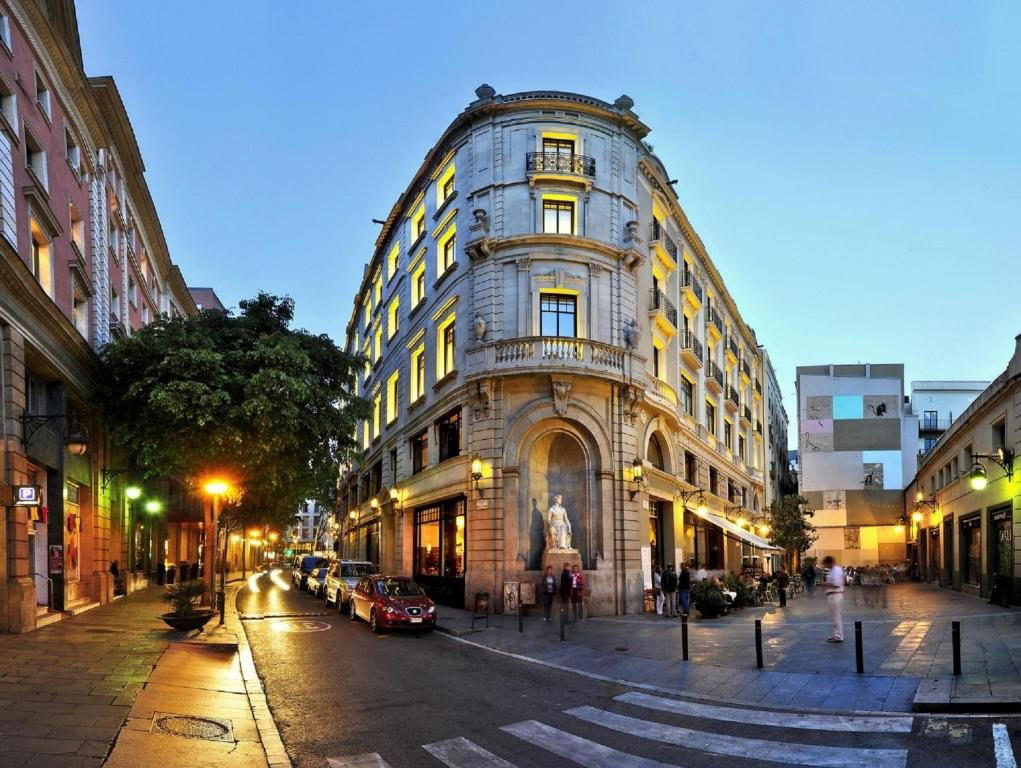
La Rambla as a Starting Point, Not a Liability
There is a persistent instinct among experienced Barcelona travellers to avoid La Rambla entirely — to retreat to Eixample apartments or design hotels in the Gràcia foothills and treat the boulevard as something to cross, not linger on. That instinct is understandable. La Rambla absorbs the city's tourist pressure into a single kilometre-long corridor, which makes it loud, dense, and commercially relentless at street level. But the buildings that line it tell a different story. Several of the structures along this stretch date to the 18th and 19th centuries, when La Rambla was the address of choice for Barcelona's merchant and colonial-era institutions. Hotel 1898, at number 109, occupies one of those buildings — a former headquarters of the Philippines Tobacco Company, built during the period when Spain still administered its remaining colonial territories. The name references 1898 specifically: the year Spain lost Cuba, Puerto Rico, and the Philippines in the Spanish-American War, and the year that marks, symbolically, the end of that colonial chapter.
That historical specificity gives the property an editorial character that separates it from the more neutral luxury hotels further along the Passeig de Gràcia. The building's bones, its ceiling heights, its facade proportions, its internal courtyard logic, predate the Eixample grid entirely, and staying here means occupying a structure with a different spatial grammar than the modernista blocks that dominate Barcelona's premium hotel sector. For guests interested in the city's layered history, that distinction matters. It is also, practically, one of the most walkable positions in the entire city: the Boqueria market is adjacent, the Gothic Quarter begins immediately to the east, and the waterfront is a ten-minute walk south through the Barri Gòtic.
Where the Property Sits in Barcelona's Hotel Tier
Barcelona's upper-mid and luxury hotel market has consolidated around two geographic poles: La Rambla and the lower Eixample on one side, and the Passeig de Gràcia corridor on the other. The Passeig de Gràcia tier is anchored by properties like the Mandarin Oriental Barcelona and the Alma Barcelona, which offer full-service luxury in modernista-adjacent buildings with the retail and restaurant infrastructure of the Eixample immediately outside. The Almanac Barcelona and ABaC Restaurant & Hotel occupy different registers again, the former a contemporary address near the university, the latter a gastronomic hotel in the residential upper city.
Hotel 1898 occupies a distinct position in this spread. It is a heritage-conversion property on the most central boulevard in the city, which gives it a different guest logic than the Passeig de Gràcia hotels. The Eixample properties tend to attract guests who want the upscale shopping-and-dining district as a base; Hotel 1898 attracts guests who want the historic core, the Gothic Quarter, the Boqueria, the waterfront, within immediate reach. Those are meaningfully different priorities, and they produce different experiences of the city. Comparable in this framing are smaller heritage-conversion addresses like the Mercer Hotel Barcelona, which operates within Roman walls in the Gothic Quarter, and the Antiga Casa Buenavista. The Hotel Boutique Mirlo sits in a smaller, more intimate format still.
The Guest Experience and Service Register
Heritage hotels in the Spanish urban context tend to operate within a service philosophy shaped by the building itself: the spatial arrangement of a 19th-century commercial structure does not naturally produce the seamless-flow service architecture of a purpose-built luxury hotel. Corridors are narrower, public spaces are defined by historical function rather than hospitality logic, and the guest journey from arrival to room involves engaging with a building that was not originally designed for that purpose. The better properties in this category treat those constraints as features, staff who understand the building's history, who can orient guests within the neighbourhood with genuine local knowledge, and who handle the inevitable spatial idiosyncrasies with fluency rather than apology.
In a city as navigationally complex as Barcelona's Ciutat Vella, the value of that orientation function is considerable. The Gothic Quarter's street grid predates the Roman occupation in parts and becomes genuinely disorienting after dark; the Boqueria has internal logic that takes several visits to understand; and the waterfront transition from the old city to the Barceloneta neighbourhood involves crossing several distinct urban layers. A hotel that positions its staff as knowledgeable city interlocutors rather than transaction processors adds real value for guests who want to read the city rather than simply move through its tourist surface.
For guests planning time in other parts of Spain, Barcelona's connectivity is a structural advantage. The AVE high-speed rail network connects the city to Madrid in under three hours, where the Mandarin Oriental Ritz, Madrid anchors the capital's grand hotel tier. Further afield, properties like Akelarre in San Sebastián, Atrio Restaurante Hotel in Cáceres, and Abadía Retuerta LeDomaine represent the gastronomic and rural luxury poles of the Spanish travel circuit. Island extensions to Hotel Can Cera in Palma, La Residencia in Mallorca, or Cap Rocat in Cala Blava are accessible from Barcelona's El Prat airport within an hour. Wine-focused detours to Terra Dominicata in Escaladei or Torre del Marqués Hotel Spa & Winery sit within a day's drive of the city.
Galician properties like Pepe Vieira Restaurant & Hotel in Poio and Casa Beatnik Hotel in A Coruña represent longer itineraries, as does the Costa Brava's Mas de Torrent Hotel & Spa. Guests who use Barcelona as an international gateway before heading to southern Europe or the Mediterranean might also connect to Marbella Club Hotel or, for further afield, to Aman Venice. Those arriving from North America through New York might cross-reference the The Fifth Avenue Hotel or Aman New York as the departure-point benchmark.
Planning a Stay
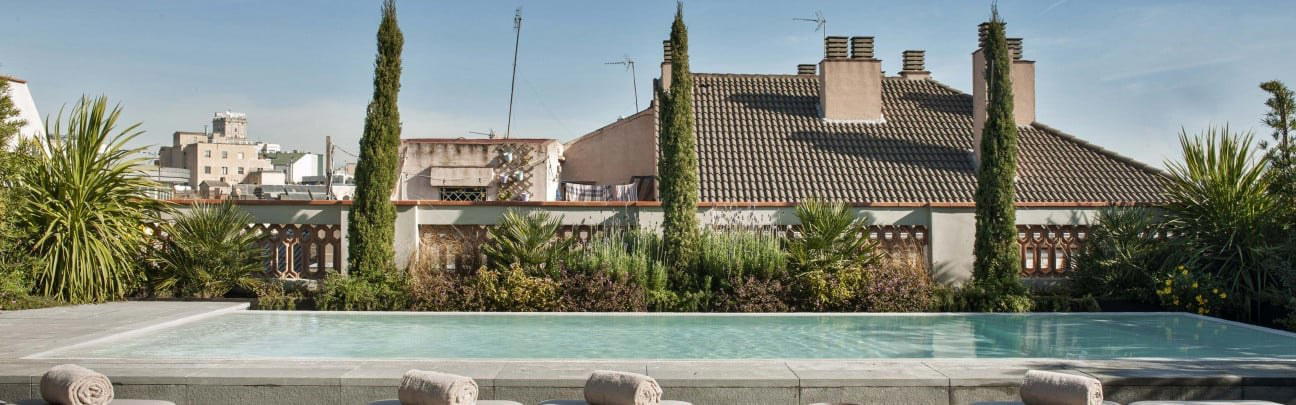
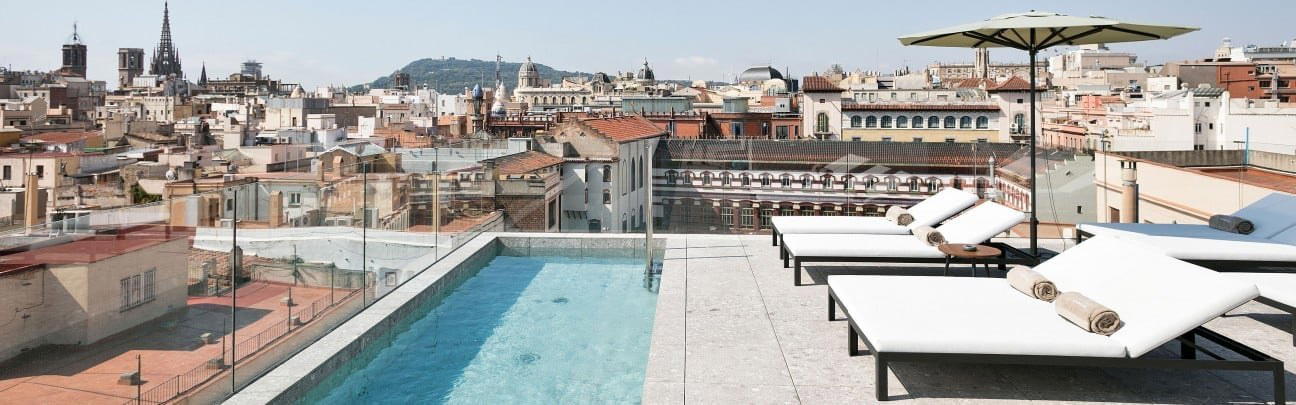
Hotel 1898 is located at La Rambla 109 in the Ciutat Vella district, placing it at one of the most central addresses in Barcelona. The property is within walking distance of the city's primary historic and market infrastructure. For broader Barcelona restaurant and neighbourhood context, see our full Barcelona guide. Booking through the hotel's direct channel is advisable for heritage properties in this category, where room-specific requests (courtyard facing versus street facing, upper-floor ceiling height) are best confirmed directly rather than through third-party platforms. La Rambla noise levels vary substantially by floor and room orientation, so specifying a preference at the time of booking is worth the extra step. Peak season in Barcelona runs from late April through early October, with the highest pressure in July and August; the shoulder months of April, May, September, and October offer meaningfully better street-level conditions around the Gothic Quarter and Boqueria.
Cuisine and Recognition
Comparable venues nearby, for context on price, style, and recognition.
| Venue | Cuisine | Price | Awards | Notes |
|---|---|---|---|---|
| Hotel 1898This venue — the venue you are viewing | Historic colonial elegance in the heart of La Rambla | $100–200 | Michelin Selected | Not listed |
| Ohla Barcelona | Boutique hotel in historic neoclassical building with contemporary renovation | Not listed | Michelin Selected · Mr & Mrs Smith Seal of Approval | Barri Gotic |
| H10 Casa Mimosa | 19th-century Modernist building with contemporary updates | Not listed | Michelin Selected | la Dreta de l'Eixample |
| Hotel Brummell | Wellness-oriented boutique in rehabilitated historic building | Not listed | Michelin Selected · La Liste Top Hotels | el Poble Sec |
| H10 Madison | Restored early 20th-century building blending historic architecture with contemporary design | $100–200 | Michelin Selected | Barri Gotic |
| W Barcelona | Sailboat-shaped well-known beachfront landmark with upscale contemporary luxury. | Not listed | Michelin Selected · Virtuoso Luxury Hotel Partner | Port Vell |
Recognition history
Dated appearances from independent guides and award organizations, with the underlying list record or original source where available.
Michelin Selected
Michelin
Continue exploring
More in Barcelona
Hotels in Barcelona
Browse all →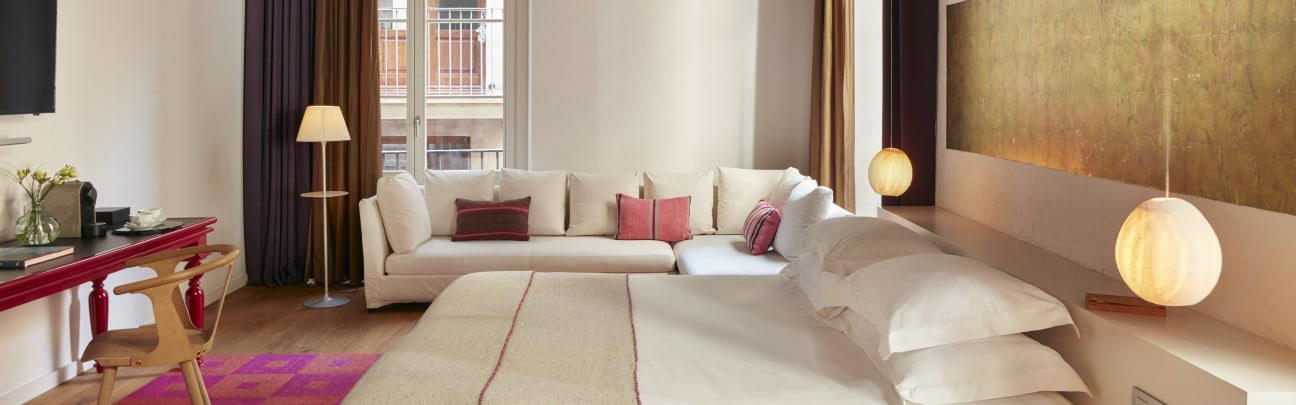
Bars in Barcelona
Browse all →
Restaurants in Barcelona
Browse all →
Details
- Elegant
- Sophisticated
- Classic
- Well Known
- Romantic Getaway
- Business Trip
- Anniversary
- Rooftop Pool
- Historic Building
- Panoramic View
- Terrace
- Wi Fi
- Pool
- Spa
- Fitness Center
- Room Service
- Concierge
- Business Center
- Restaurant
- Skyline
- Street Scene
- Wheelchair Accessible
- Elevator
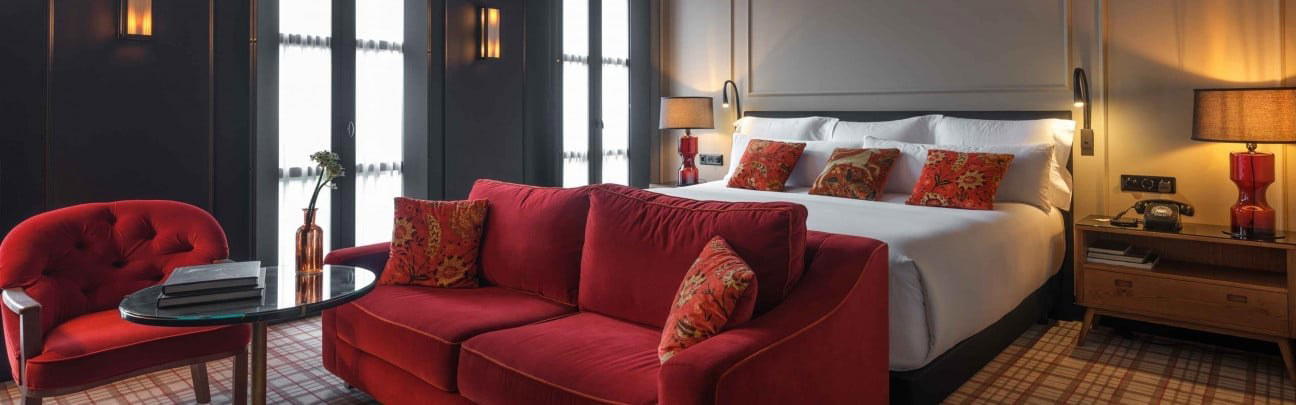
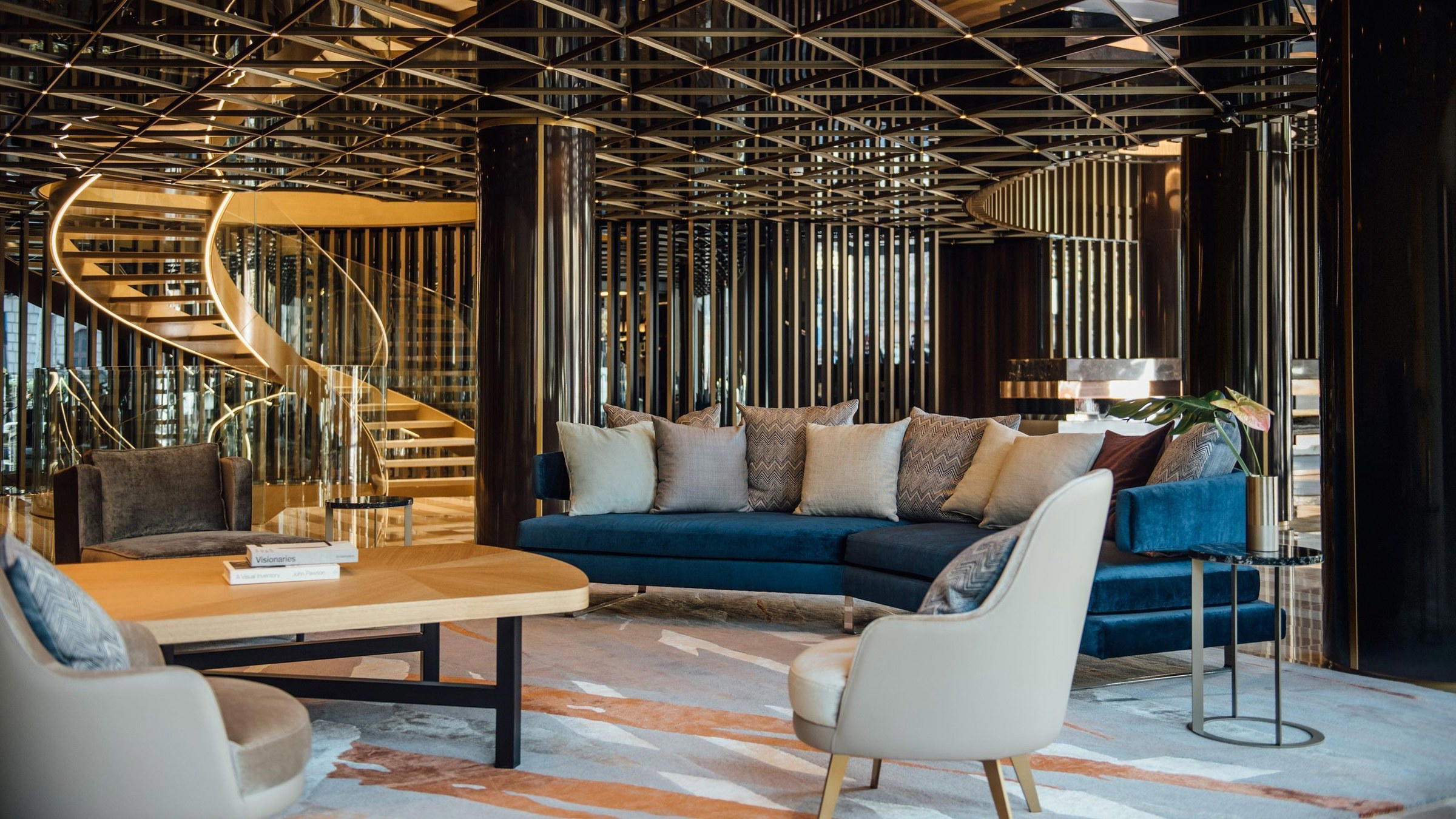
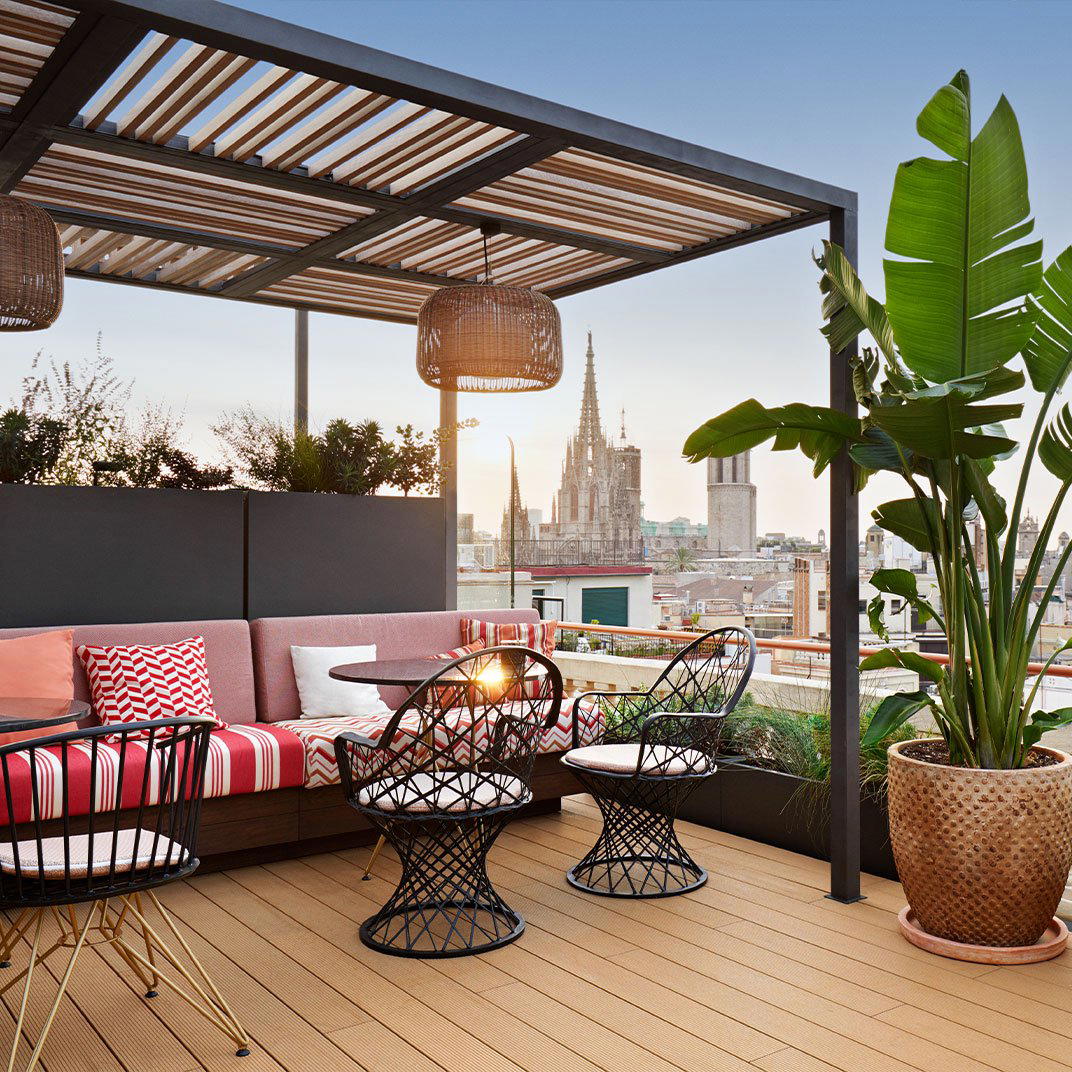
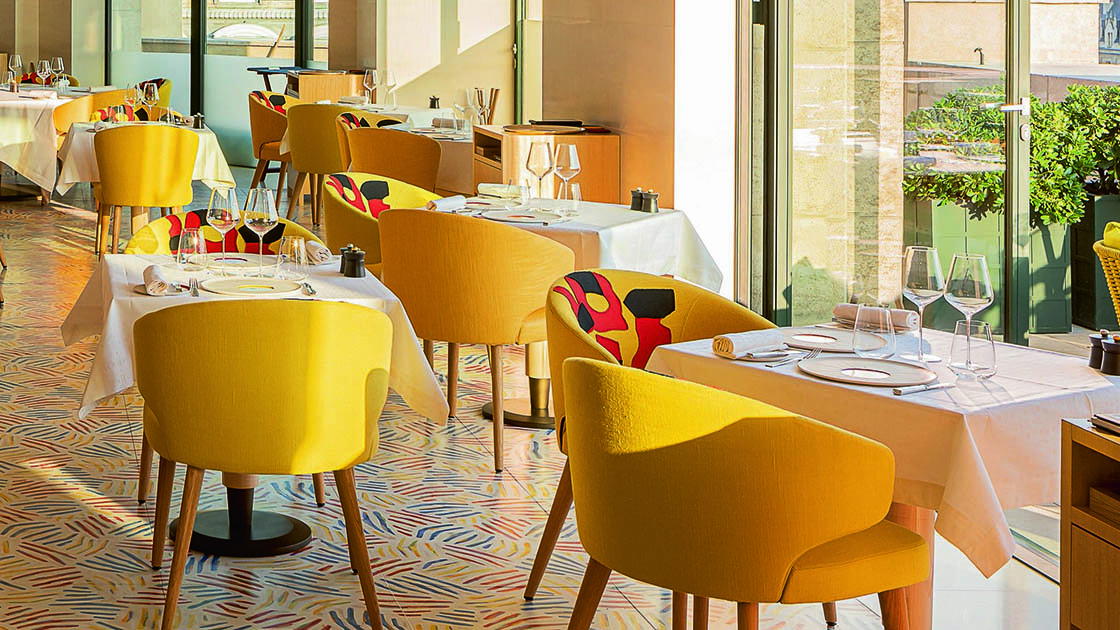
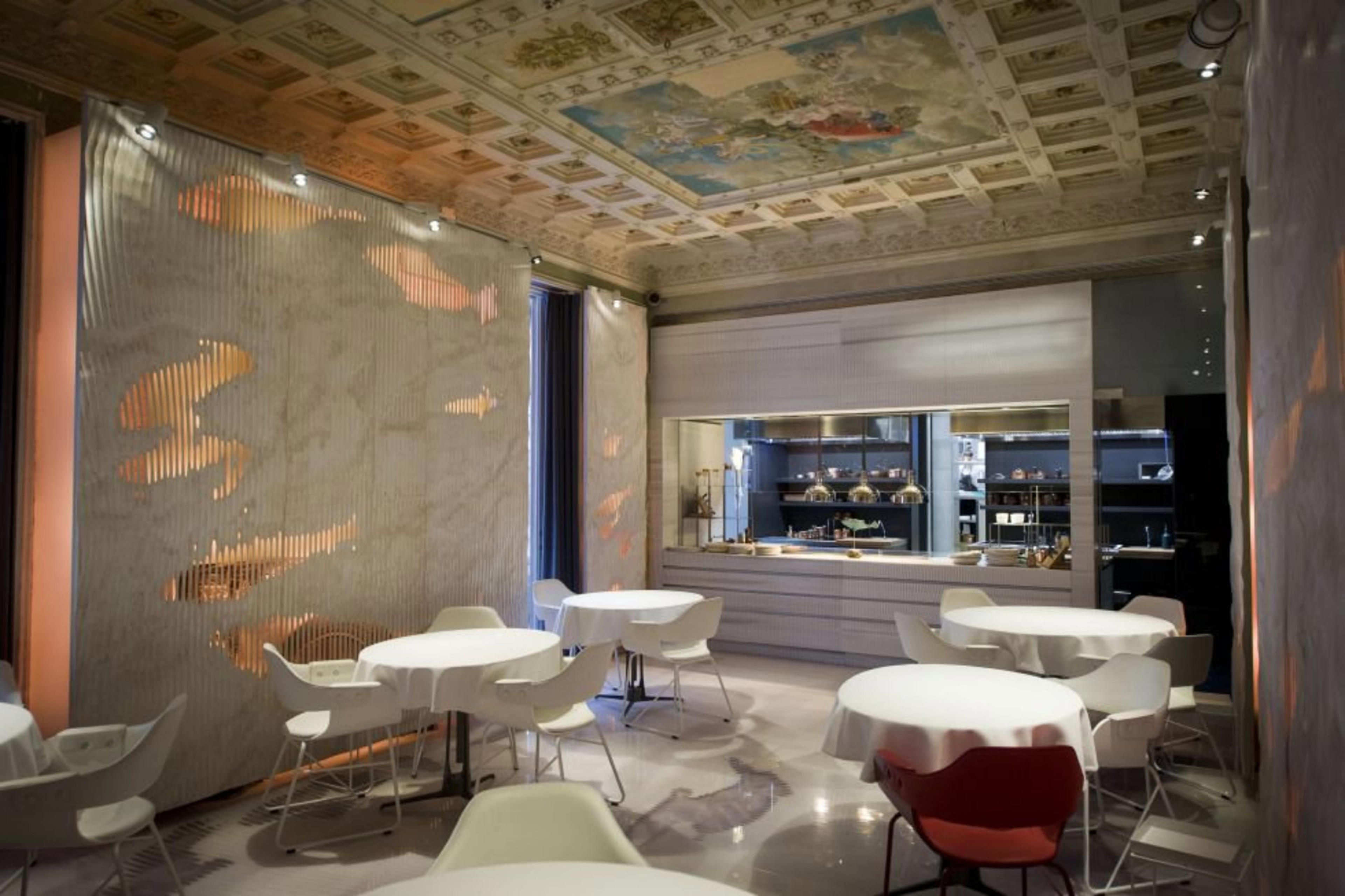
Elegant colonial-style interiors with dark woods, rich walls, sophisticated lighting, and a tranquil yet lively atmosphere enhanced by live music in the lobby.