Hazlitt's
A Georgian townhouse hotel on Frith Street in the heart of Soho, Hazlitt's occupies three 1718 terraced houses that once belonged to the essayist William Hazlitt. The rooms are furnished with period antiques, canopied beds, and open fireplaces, a deliberate counterweight to Soho's contemporary noise. For travellers who find grand hotel lobbies impersonal, this is a different kind of London address.
Pearl is the En Primeur Club membership app — saves, bookings, and concierge access live there. Same editors, same standards.
- Address
- 6 Frith St, London W1D 3JA, United Kingdom
- Phone
- +44 20 7434 1771
- Website
- hazlittshotel.com
- Directions
- Get directions
 Saves & bookings on Pearl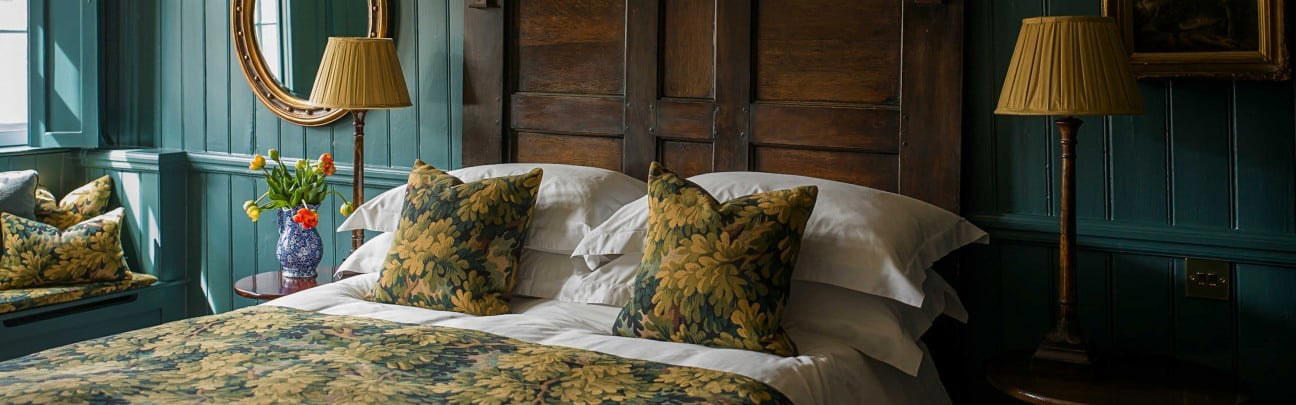
Six Frith Street: A Soho Address with Three Centuries of Occupation
Frith Street in Soho has changed hands many times over: coffee houses, jazz clubs, media offices, restaurants. Number six has changed rather less. The three Georgian terraced houses that form Hazlitt's were built in 1718, and the hotel that now occupies them has made a point of treating the building's age as its primary asset rather than a liability to be decorated around. In a Soho that has spent the last two decades cycling through hospitality formats at speed, that position has become more distinctive with time, not less.
The literary connection is not incidental. The essayist William Hazlitt died at this address in 1830, and the hotel's identity is threaded through with that association, the rooms are named after figures from his circle, the bookshelves are stocked rather than staged, and the general atmosphere suggests a house that has been lived in rather than designed for effect. That reading of the property places Hazlitt's in a specific niche within London's independent hotel sector: small, historically grounded, and temperamentally opposed to the kind of amenity arms race that defines larger properties.
What the Rooms Tell You About the Hotel's Priorities
London's luxury hotel market has split, broadly, between two poles. On one side sit the grand establishments, Claridge's, The Connaught, The Savoy, where the architecture is the spectacle and the service ratio is engineered accordingly. On the other, a tier of design-led independents and boutique properties where intimacy and specificity do the work that scale cannot. Hazlitt's belongs firmly to the second group, and the rooms make the logic clear.
Period antiques, four-poster and canopied beds, open fireplaces, and Victorian claw-foot baths are not here as props. They are the accommodation offer. There is no gym, no pool, no spa, and no restaurant attached to the property. The hotel is essentially a well-appointed house in which guests sleep surrounded by eighteenth and nineteenth-century furniture. For a segment of London visitors, that is precisely the point. For others, those travelling on corporate accounts, or who want the full-service infrastructure of a Raffles London at The OWO or The Emory, it requires a recalibration of expectations before arrival.
The suite tier at the hotel follows the same logic. The Dryden Suite, named after the poet John Dryden, is the property's most substantial room, with a sitting room, generous ceiling height, and period detail throughout. It functions less as a luxury product in the conventional sense and more as a good set of Georgian rooms in which to spend a few nights in central London.
Soho as Context: Why Location Matters More Than Amenities Here
The hotel's position on Frith Street is, practically speaking, its most powerful feature after the building itself. Soho's density of restaurants, bars, and cultural institutions means that the hotel guests are never more than a short walk from whatever they came to London for. The neighbourhood has accumulated serious dining infrastructure over the past decade, and the absence of a hotel restaurant is far less significant here than it would be in a more remote London postcode.
Frith Street specifically has historical weight: Bar Italia occupies a corner site that has been trading since 1949, and the street's general character, narrow, active, lined with small businesses, has survived Soho's various regenerations in reasonable shape. The immediate area around the hotel puts guests within walking distance of the better parts of Covent Garden, the eastern edge of Mayfair, and the transit connections at Tottenham Court Road and Leicester Square. For a London stay built around cultural activity, theatre, or independent restaurant exploration, the location removes most logistical friction.
Guests who want to extend their stay into broader British territory have strong options within reach: Lime Wood in Lyndhurst, The Newt in Somerset, and Estelle Manor in North Leigh all sit within two hours of London and represent different registers of English country hospitality. For Scotland, Gleneagles in Auchterarder and Burts Hotel in Melrose offer further contrasts. Further afield, Langass Lodge in the Outer Hebrides and Dun Aluinn in Aberfeldy represent Scotland's quieter, remoter end of the spectrum.
Planning a Stay: What to Know Before You Go
The hotel operates without a dedicated concierge infrastructure in the conventional grand hotel sense. Guests should arrive with a degree of self-sufficiency, particularly around restaurant bookings and evening planning. That said, the Soho location places most needs within easy reach. Give thought to room selection: the older parts of the building have architectural character, but Georgian staircases and no lifts mean accessibility matters for some guests.
Seasonally, Soho in late autumn and winter carries a specific atmosphere, the streets are busier with theatre-goers from November onward, and the neighbourhood's bar culture accelerates. Guests sensitive to street noise should factor in the Frith Street position. Summer, by contrast, brings longer evenings and the option to treat the immediate neighbourhood as an outdoor extension of the stay.
The hotel has three Georgian houses and a library.
Those looking at independent townhouse hotels elsewhere in Britain can also consider King Street Townhouse Hotel in Manchester, Hope Street Hotel in Liverpool, and 11 Cadogan Gardens in Chelsea, each of which occupies a similar format niche within its own city context. International parallels include The Fifth Avenue Hotel in New York City and Aman Venice, both of which place architectural heritage at the centre of their accommodation offer, though at considerably different price points and scale.
Same-City Peers
Comparable venues nearby, for context on price, style, and recognition.
| Venue | Cuisine | Price | Notes |
|---|---|---|---|
| Hazlitt'sThis venue — the venue you are viewing | Georgian townhouse with authentic period restoration | $$$$ | Not listed |
| Miiro Templeton Garden | Victorian terrace with contemporary garden extension | $$$$ | Earl's Court |
| Kettner's | Historic Georgian townhouses with 1920s Art Deco revival | $$$$ | Soho |
| The Standard London | Contemporary luxury boutique hotel housed in a restored brutalist landmark with playful, graphic design principles and a social-first approach to hospitality. | $$$$ | Whitehall |
| onefifty fenchurch | Modern apart hotel in converted office building | $$$ | Fenchurch |
| The Hoxton, Holborn | Boutique hotel in restored mid-century office building serving as a neighborhood living room. | $$$ | Holborn |
Recognition history
Dated appearances from independent guides and award organizations, with the underlying list record or original source where available.
Mr & Mrs Smith Smith Seal of Approval
Mr & Mrs Smith
Continue exploring
More in London
Hotels in London
Browse all →
Bars in London
Browse all →
Restaurants in London
Browse all →



At a Glance
- Romantic
- Cozy
- Elegant
- Classic
- Intimate
- Sophisticated
- Romantic Getaway
- Anniversary
- Weekend Escape
- Historic Building
- Terrace
- Wi Fi
- Room Service
- Concierge
- Wi Fi
- Room Service
- Concierge
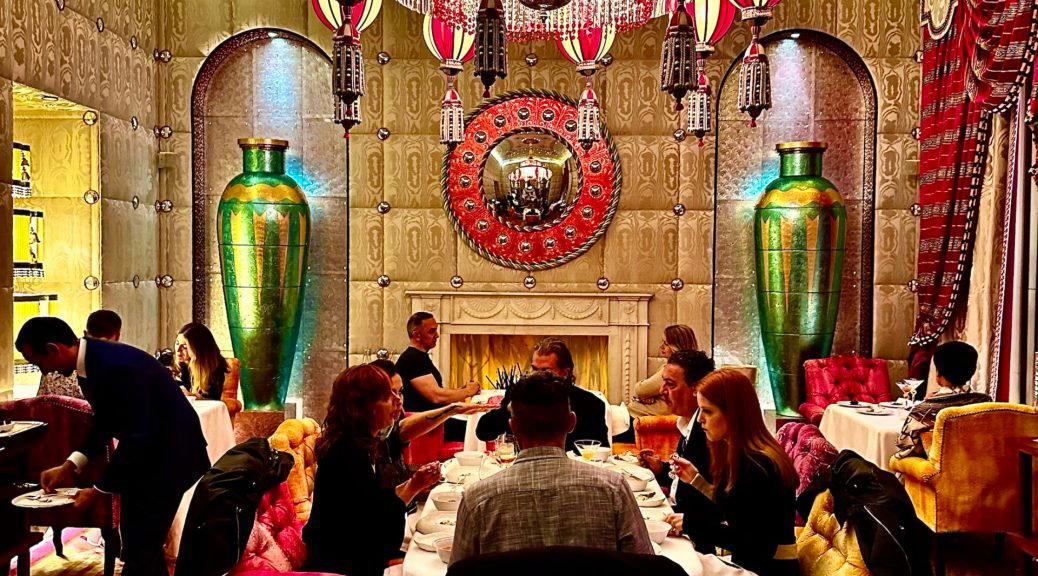
Intimate and atmospheric with antique furnishings, rich fabrics, wood panelling, fireplaces, and a sense of historic Georgian elegance.