Grúas Bahías de Huatulco occupies an address in Crucecita, Oaxaca's planned resort town on Mexico's Pacific coast, where the built environment itself tells a story about late-twentieth-century coastal development. The setting places visitors inside one of southern Mexico's more deliberate urban experiments, a useful lens for understanding how Huatulco's nine bays became a federal tourism project unlike anything else on the Oaxacan coastline.

Pearl is the En Primeur Club membership app, where members save venues, book tables and use the concierge.
Crucecita and the Architecture of Intention
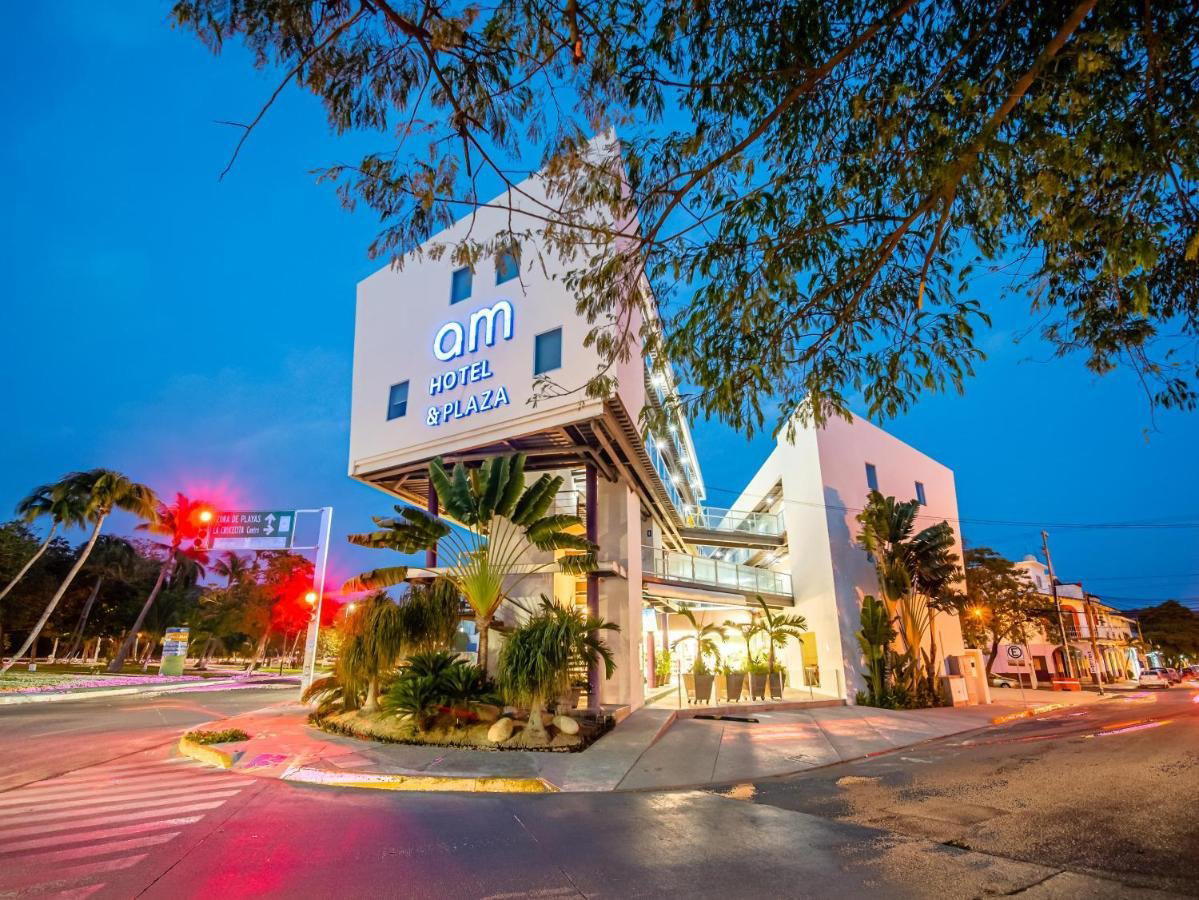
Most Mexican beach towns arrived through accretion: fishing villages that acquired hotels, restaurants, and roads as visitors came. Crucecita followed a different logic. Developed from the late 1980s onward under FONATUR, Mexico's federal tourism development agency, the town was conceived as a service hub for the Bahías de Huatulco resort zone, a grid of streets and plazas engineered to support nine bays spread across thirty-five kilometres of Oaxacan coastline. The result is a planned settlement with an unusually coherent spatial identity, one where the street pattern, the central zócalo, and the commercial addresses like Bahías 207 all reflect a master plan rather than organic growth. For visitors interested in how Mexico has approached large-scale coastal development, Crucecita functions as a case study in federal urbanism. See our full Crucecita restaurants guide for a broader account of what the town offers beyond its resort perimeter.
The Physical Address as Context
Grúas Bahías de Huatulco sits at Bahías 207 in Crucecita's Sector district, an address that places it within the town's commercial fabric rather than on the waterfront bays themselves. This distinction matters. The Bahías de Huatulco resort zone runs along the coast, with FONATUR-designated hotel corridors at Tangolunda, Santa Cruz, and Chahué. Crucecita, by contrast, was built as the workers' and merchants' town, the place where the region's day-to-day commercial and social life would be concentrated away from the resort beaches. The street grid here is denser and more pedestrian in scale, with a central plaza anchored by a parish church whose interior murals depicting the Virgin of Guadalupe draw visitors from the resort hotels. The Bahías street itself runs through this commercial core, a context that shapes what any business at that address is serving and how it is reached.
In Mexico's planned resort zones, this kind of inland commercial address often serves a dual function: local residents and workers on one hand, and resort visitors seeking a less managed environment on the other. Cancún's downtown, Ixtapa's Zihuatanejo neighbour, and Crucecita all follow variants of this pattern, where the planned resort and its service town develop distinct but interdependent characters over time. Visitors staying at the larger resort properties in Tangolunda, including properties comparable to One&Only; Mandarina in Riviera Nayarit or Las Ventanas al Paraíso, A Rosewood Resort in San José del Cabo in terms of their relationship to a planned coastal zone, often make the twenty-minute trip into Crucecita precisely because the town offers something the hotel corridor does not: a street life that predates the resort and a commercial density that feels less curated.
Oaxaca's Coastal Position Within Mexico's Pacific Arc
The Bahías de Huatulco zone occupies a specific and undervisited stretch of Mexico's Pacific coast. Unlike the well-documented resort infrastructure of Los Cabos, where properties like Montage Los Cabos and Zadun, A Ritz-Carlton Reserve anchor a competitive luxury tier, or the established positioning of Riviera Maya properties such as Hotel Esencia in Tulum, Maroma in Riviera Maya, and Etéreo, Auberge Resorts Collection in Punta Maroma, Huatulco receives significantly lower international visitor volumes. FONATUR's original projection that the zone would become a major international resort destination on par with Cancún has not materialised at that scale, which has preserved a quieter character that some travellers specifically seek.
The Oaxacan state context adds a layer that coastal Oaxaca shares with few other Mexican beach regions. The state capital, Oaxaca City, with accommodation like Casa Antonieta, sits roughly 250 kilometres north, connected by a winding mountain road or a short domestic flight. The culinary and cultural weight that Oaxaca City carries, particularly its profile in international food coverage, does not automatically transfer to the coast, but it does create a regional identity that distinguishes Huatulco from other Mexican Pacific destinations. Visitors arriving via Oaxaca City are often comparing the two environments explicitly, treating the coast as a counterpoint to the sierra rather than as a destination in isolation. Properties like Casa Silencio in San Pablo Villa de Mitla serve the high-valley Oaxacan traveller who has already oriented their Mexico trip around the state's interior, and the contrast between that environment and the Crucecita street grid is marked.
Planning a Visit to This Part of Crucecita
Bahías 207 address in Crucecita's Sector district is accessible on foot from the central plaza, which serves as the town's practical orientation point. The plaza's covered walkways, market stalls, and the surrounding commercial streets operate at a different pace from the resort corridor. Domestic flights connect Huatulco's airport, roughly forty minutes from Crucecita by road, to Mexico City, Oaxaca City, and Guadalajara; flight frequencies increase during the November-to-April dry season, when the Pacific coast's conditions are at their most reliably clear. The rainy season, May through October, brings lower visitor numbers, reduced room rates at resort hotels, and a greener version of the surrounding sierra landscape. Visitors comparing Huatulco's scale and pace to other Mexican Pacific properties such as Four Seasons Resort Punta Mita, Xinalani in Quimixto, or Playa Viva in Juluchuca will find Huatulco occupying a middle ground: more infrastructure than the boutique eco-properties further north, less international polish than the established Los Cabos corridor.
For those routing through Mexico City or considering a broader Mexico itinerary, the country's range of coastal and inland design-led accommodation is now broad enough to support genuine comparison shopping. Properties from Casa Polanco in Mexico City to Hotel Demetria in Guadalajara and Casa de Sierra Nevada, A Belmond Hotel, in San Miguel de Allende offer urban counterpoints to the coastal experience. Las Alamandas in Costalegre, Cuixmala in La Huerta, and Palmaïa in Playa del Carmen each represent a different take on what a Mexican coastal property can be. Huatulco, and Crucecita specifically, sits outside this more publicised circuit, which is both its limitation and, for certain travellers, its argument.
How It Stacks Up
| Venue | Price | Awards |
|---|---|---|
| Grúas Bahías de HuatulcoThis venue (the venue you are viewing) | Not listed | Not listed |
| One&Only Mandarina | Not listed | 3 Michelin Keys · World's 50 Best #23 |
| Las Ventanas al Paraíso, A Rosewood Resort | $750–1,000 | 2 Michelin Keys · World's 50 Best #25 |
| Montage Los Cabos | $1,000–1,500 | 2 Michelin Keys · World's 50 Best #67 |
| Rosewood Mayakoba | $1,000–1,500 | 2 Michelin Keys · World's 50 Best #95 |
| Zadun, A Ritz-Carlton Reserve | Not listed | 2 Michelin Keys · La Liste Top Hotels |
Continue exploring
More in Crucecita
Hotels in Crucecita
All hotels in Crucecita →
Restaurants in Crucecita
Browse all →
Details
Current opening hours
- Monday
- 8 AM–6 PM
- Tuesday
- 8 AM–6 PM
- Wednesday
- 8 AM–6 PM
- Thursday
- 8 AM–6 PM
- Friday
- 8 AM–6 PM
- Saturday
- 8 AM–6 PM
- Sunday
- Closed
Hours can change for holidays and private events. Last verified .
Functional service-oriented atmosphere for vehicle recovery.