


Travel + Leisure It List Hotels · Mr & Mrs Smith Seal of Approval · Small Luxury Hotels of the World Member
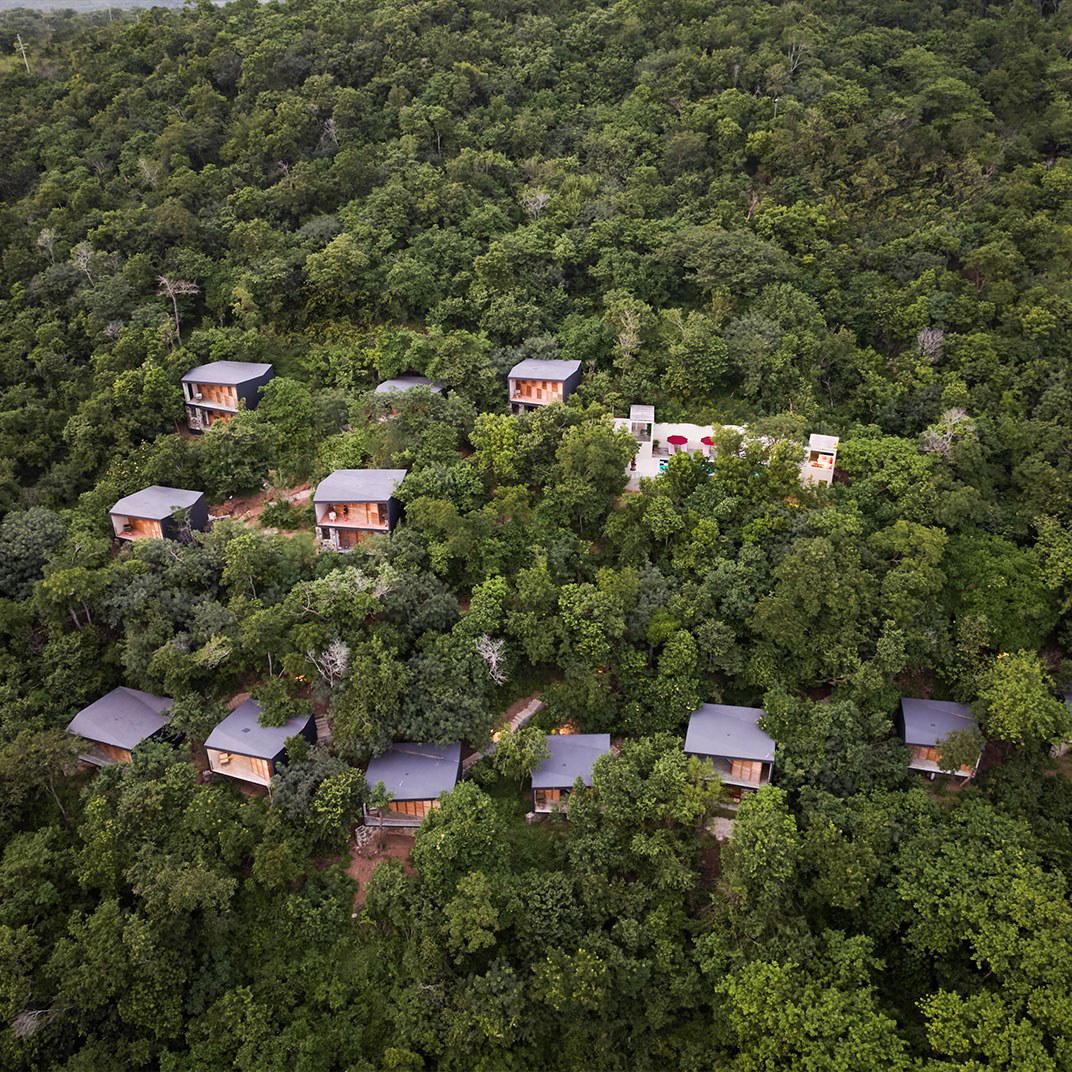
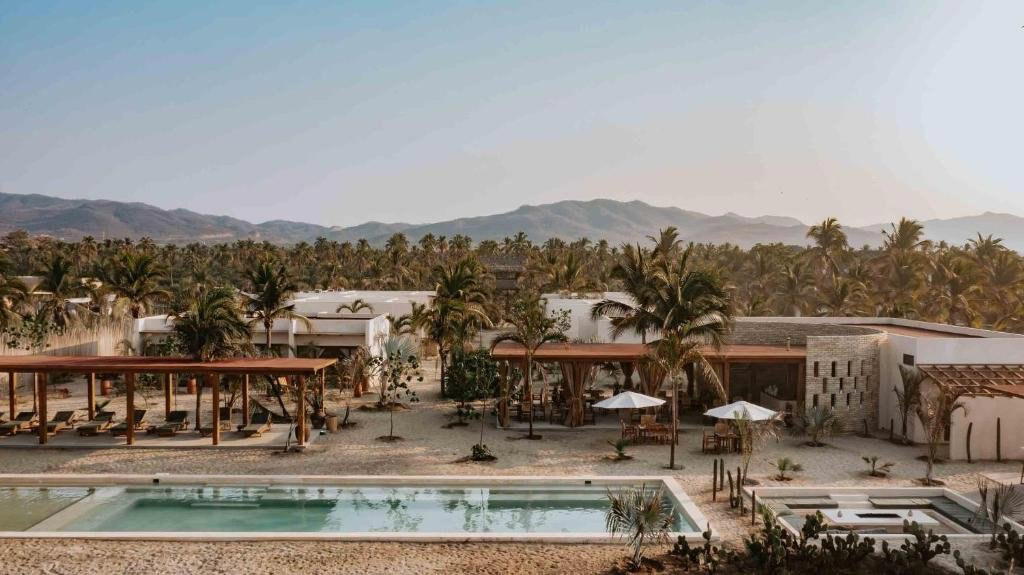
Perched on a ridgeline above a small Pacific bay just outside Mazunte, La Valise is a design property conceived by architects Alberto Kalach and Ignacio Urquiza, two of Mexico's most consequential architectural voices. The structure works with the coastal topography rather than against it, positioning itself within a broader shift toward architecture-led small properties on Oaxaca's Surf Coast. For those tracking where serious design intersects with genuine remoteness, this is the reference point on this stretch of coastline.

Pearl is the En Primeur Club membership app, where members save venues, book tables and use the concierge.
Where the Ridgeline Becomes the Architecture
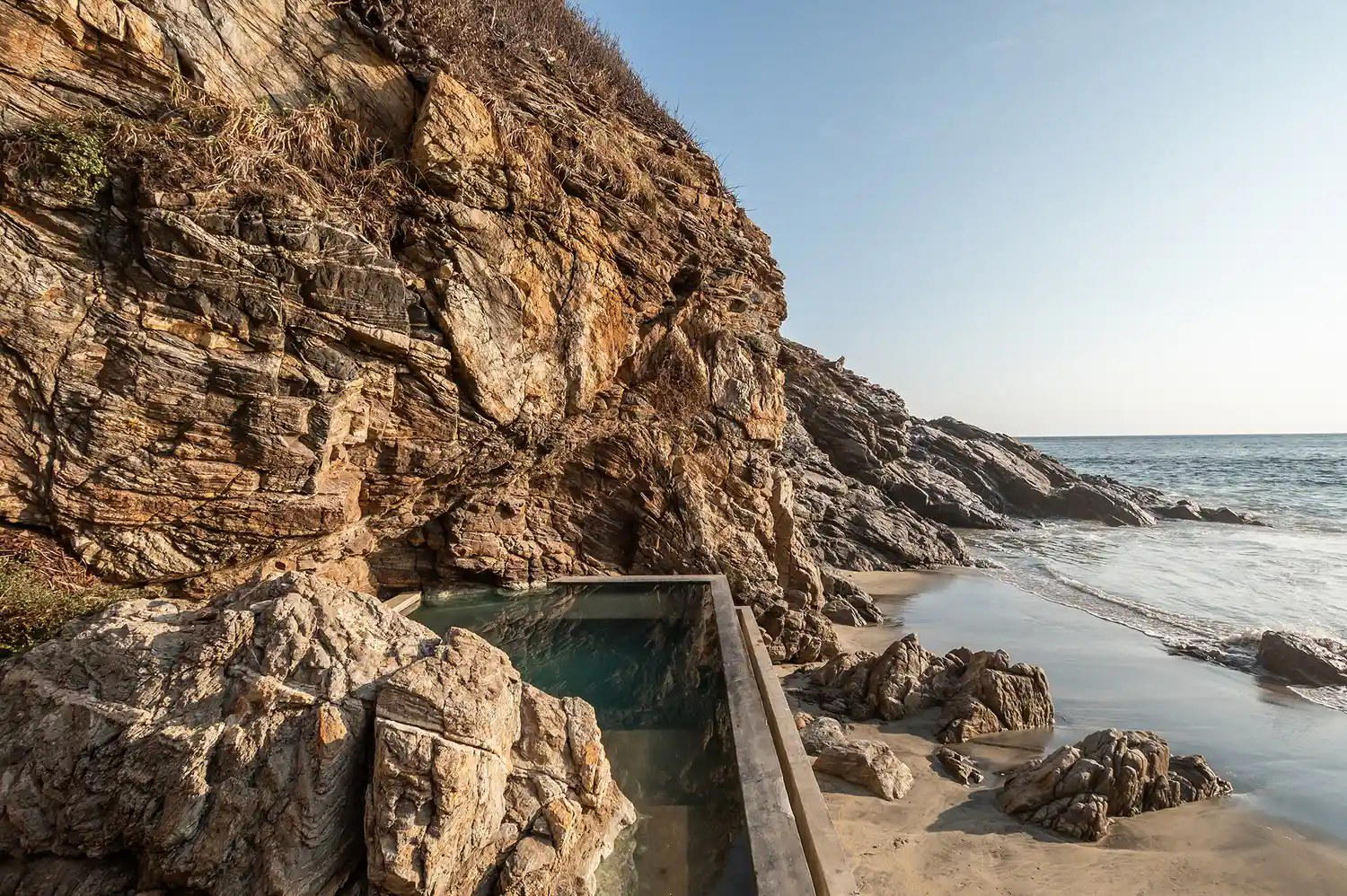
The road into Mazunte gives little warning of what waits above it. The town itself sits low and unhurried, a Pacific surf settlement that operates at the pace of its tides. But just north of the main drag, the coastline shifts register entirely. Tree-covered cliffs rise sharply from craggy inlets, and the Pacific hits harder here, less filtered by the shallow bays that shelter the village. It is on this ridgeline, above a small private bay on the Reserva El Toron, that La Valise Mazunte announces itself, not loudly, but with the quiet confidence of a building that knows exactly where it is.
The project is the work of Alberto Kalach and Ignacio Urquiza, two architects whose respective bodies of work sit at the serious end of Mexican design discourse. Kalach, whose office TAX has shaped some of Mexico City's most debated civic and residential projects, brings a concern for landscape integration that reads clearly in how La Valise meets its site. Urquiza, working through Undurraga Devés Arquitectos and his own collaborations, has a parallel interest in materiality and restraint. Together, what they have produced here is less a hotel in the conventional sense than a considered architectural intervention in a genuinely demanding natural environment.
Design as Position, Not Decoration
Mexico's premium coastal hospitality has spent the past decade sorting itself into two broad groups. The first is the large-footprint international brand, delivering consistency and amenity across significant acreage, the model represented at its most polished by properties like One&Only; Mandarina in Riviera Nayarit, Zadun, A Ritz-Carlton Reserve in Los Cabos, or Montage Los Cabos in Cabo San Lucas. The second group is smaller, architecture-driven, and often tied to a specific landscape logic: fewer keys, more deliberate material choices, and a design approach where the site generates the brief rather than the other way around.
La Valise Mazunte belongs firmly in the second group, and its Oaxacan Pacific address sets it apart from most properties in that niche. While properties like Hotel Esencia in Tulum or Maroma in Riviera Maya operate along the Caribbean coast where design-led boutique hospitality is now well-established, the Pacific coast of Oaxaca remains considerably less developed. That distinction matters architecturally as much as it does commercially. Kalach and Urquiza were not working within an established typology for this landscape. The building had to answer the ridgeline directly.
The result, as described by the project record, is a structure that reads as a masterpiece of design precisely because it does not resist its surroundings. The cliffs and inlets are the composition; the architecture frames them. For guests accustomed to coastal properties where the view is a feature added to a design, rather than the force that shapes it, this represents a different logic entirely.
The Oaxacan Pacific as Context
Understanding La Valise requires some understanding of where Mazunte sits within Mexico's broader geography of design travel. Oaxaca's Pacific coast, sometimes called the Surf Coast or Costa Chica, stretches south from Puerto Escondido through Mazunte and on toward Huatulco. It is not the Mexico of resort infrastructure. Roads are narrow, internet can be intermittent, and the communities along this stretch, including Mazunte, San Agustinillo, and Zipolite, retain a character shaped by fishing, mezcal production, and more recently, a slow tourism that tends toward the independent traveller rather than the package market.
This is both the appeal and the logistical reality. For those who arrive at La Valise, the remoteness is part of what the architecture is responding to. A property in this location, on this ridge, designed by these architects, operates on different terms than comparable design hotels in more accessible destinations. The siting is not incidental; it is the argument. Compare this with the approach taken at Xinalani in Quimixto or Playa Viva in Juluchuca, other Mexican Pacific properties where ecological context and design ambition intersect. La Valise sits in that peer conversation, though the Kalach-Urquiza architecture gives it a different kind of pedigree.
Within Oaxaca specifically, the state has developed a strong design identity across sectors. Casa Silencio in San Pablo Villa de Mitla and Casa Antonieta in Oaxaca City both represent the interest in locally-rooted, architecturally considered hospitality that has made the state one of Mexico's most discussed design destinations. La Valise extends that conversation to the coast, where the material challenges and landscape scale are considerably more demanding.
Planning Your Stay
Reaching Mazunte from Oaxaca City involves roughly a five to six hour drive south along mountain roads, or a flight to Huatulco airport followed by a road transfer of approximately 75 kilometres west along the coast. Neither route is fast, and neither is meant to be. The remoteness functions as a threshold; by the time guests arrive at the ridgeline property, the distance from Mexico City or any international hub is felt in the body. This is by design, in both the logistical and architectural sense.
Booking contact details are not publicly listed in standard directories, which is consistent with small properties of this type that handle reservations directly and with limited availability. Prospective guests are advised to pursue contact through specialist travel advisors or through channels that La Valise maintains at the property level. The limited nature of the accommodation, appropriate to a ridgeline site of this character, means that forward planning is necessary rather than optional, particularly during the dry season months from November through April when Oaxaca's coast draws the most significant visitor traffic.
For those building a wider itinerary around Oaxaca's Pacific, our full Mazunte restaurants guide covers the village's most worthwhile eating options, and Zoa Hotel represents the other significant design-led property on this stretch, offering a useful point of comparison at a different price and scale point.
For those who want to extend beyond Oaxaca's coast into Mexico's broader premium property network, comparable architecture-led stays are available at Las Alamandas in Costalegre, Chablé Yucatán in Merida, or further afield at Four Seasons Resort Punta Mita and Las Ventanas al Paraíso, A Rosewood Resort in San José del Cabo. Each sits in a different coastal context and at a different point on the spectrum from integrated design to resort amenity. La Valise, on its Oaxacan ridgeline, sits at the more austere, more architecturally committed end of that range.
Quick Comparison
Comparable venues nearby, for context on price, style, and recognition.
| Venue | Cuisine | Price | Awards | Notes |
|---|---|---|---|---|
| La Valise MazunteThis venue (the venue you are viewing) | Sustainable cliffside luxury retreat | Not listed | Travel + Leisure It List Hotels · Mr & Mrs Smith Seal of Approval | Not listed |
| Cocolia Hotel | Contemporary eco-boutique resort with minimalist design philosophy emphasizing natural materials and environmental sensitivity. | Not listed | Michelin Selected | Mazunte |
| Zoa Hotel | Barefoot luxury boutique on cliffs with authentic nature connection. | Not listed | 1 Michelin Key | Mazunte |
| Rodavento Valle de Bravo | Contemporary nature-inspired hospitality with wood-and-steel architecture in a forest setting. | $100–200 | Michelin Selected · Mr & Mrs Smith Seal of Approval | Valle de Bravo |
| Park Hyatt Cabo del Sol | Contemporary Mexican resort with biophilic design | Not listed | Star Wine List · Virtuoso Luxury Hotel Partner | Cabo del Sol |
| Montage Los Cabos | Modern coastal estate blending into Baja desert landscape | $1,000–1,500 | 2 Michelin Keys · World's 50 Best #67 | Santa Maria Bay |
Recognition history
Dated appearances from independent guides and award organizations, with the underlying list record or original source where available.
Mr & Mrs Smith Seal of Approval
Mr & Mrs Smith
Travel + Leisure It List Hotels
Travel + Leisure
Small Luxury Hotels of the World Member
Small Luxury Hotels of the World
Continue exploring
More in Mazunte
Details
- Romantic
- Quiet
- Scenic
- Intimate
- Minimalist
- Bohemian
- Honeymoon
- Romantic Getaway
- Wellness Retreat
- Anniversary
- Weekend Escape
- Beachfront
- Infinity Pool
- Panoramic View
- Wi Fi
- Pool
- Spa
- Concierge
- Restaurant
- Bar
- Waterfront
- Garden
- Step Free Entrance
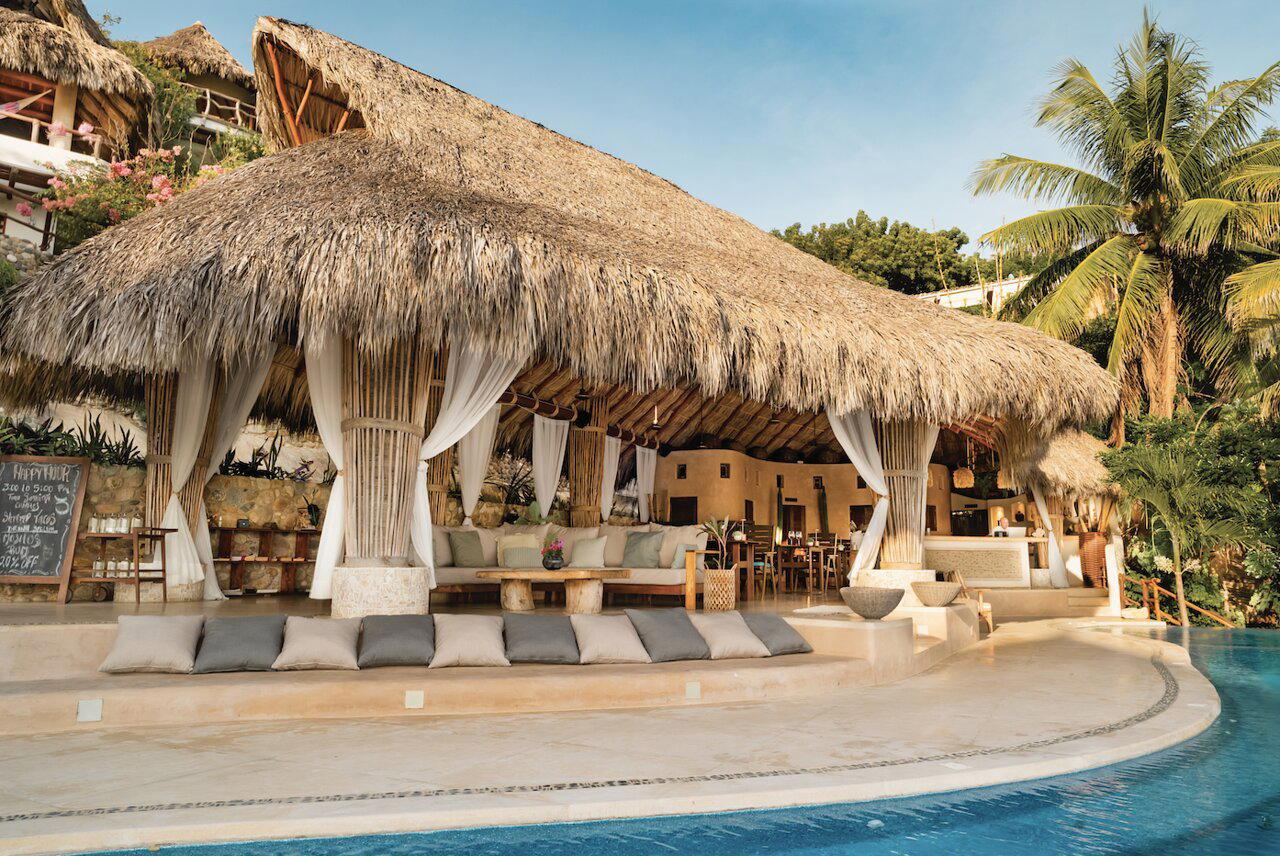
Serene and tranquil with open-air design blending natural beauty, ocean views, and peaceful wave sounds.