
1 Michelin Key
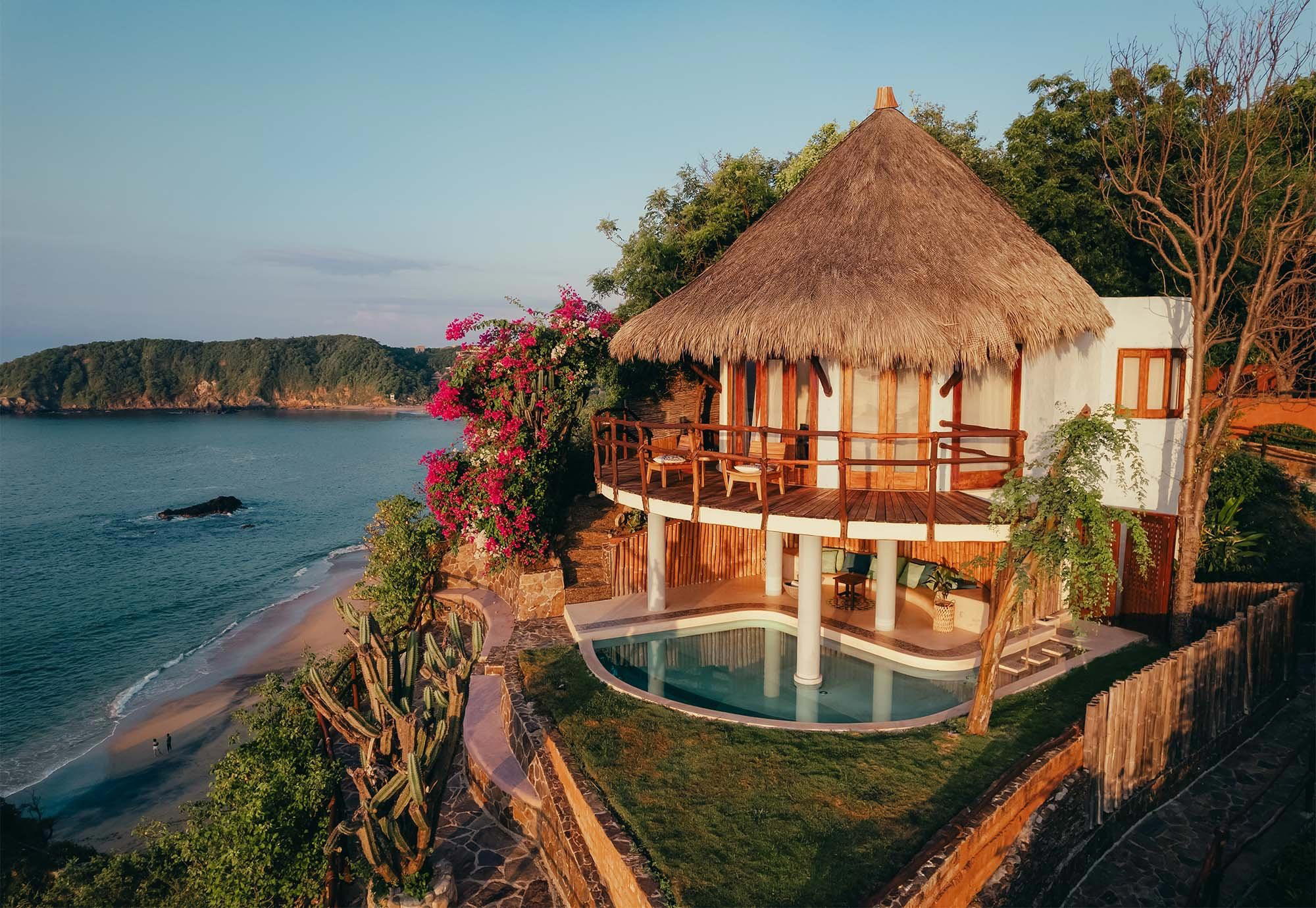
Seven bungalows on a hillside above Oaxaca's Pacific coast, positioned between the beaches of Mazunte and San Agustinillo. Zoa operates as a self-styled 'hotel secreto' with an infinity pool, morning yoga, a seafood-focused restaurant, and an ecological footprint kept deliberately small. Rates from $906 per night place it in the premium tier of a coastline that remains, for now, largely undeveloped.

Pearl is the En Primeur Club membership app, where members save venues, book tables and use the concierge.
The Oaxacan Coast Before It Changes
The Pacific coastline of Oaxaca occupies a particular position in Mexican travel: it is neither unknown nor overrun. The villages of Mazunte and San Agustinillo sit close enough together to share a social scene but far enough apart to retain distinct characters. The road in from Pochutla is slow, the infrastructure is modest, and neither village has the resort machinery that defines Huatulco to the east or Puerto Escondido to the north. That developmental restraint is the defining asset of the area, and the small luxury properties beginning to appear here have, for the most part, understood that working against it would be self-defeating. Zoa is the clearest expression of that understanding on this stretch of coast.
Seven Rooms on a Hillside
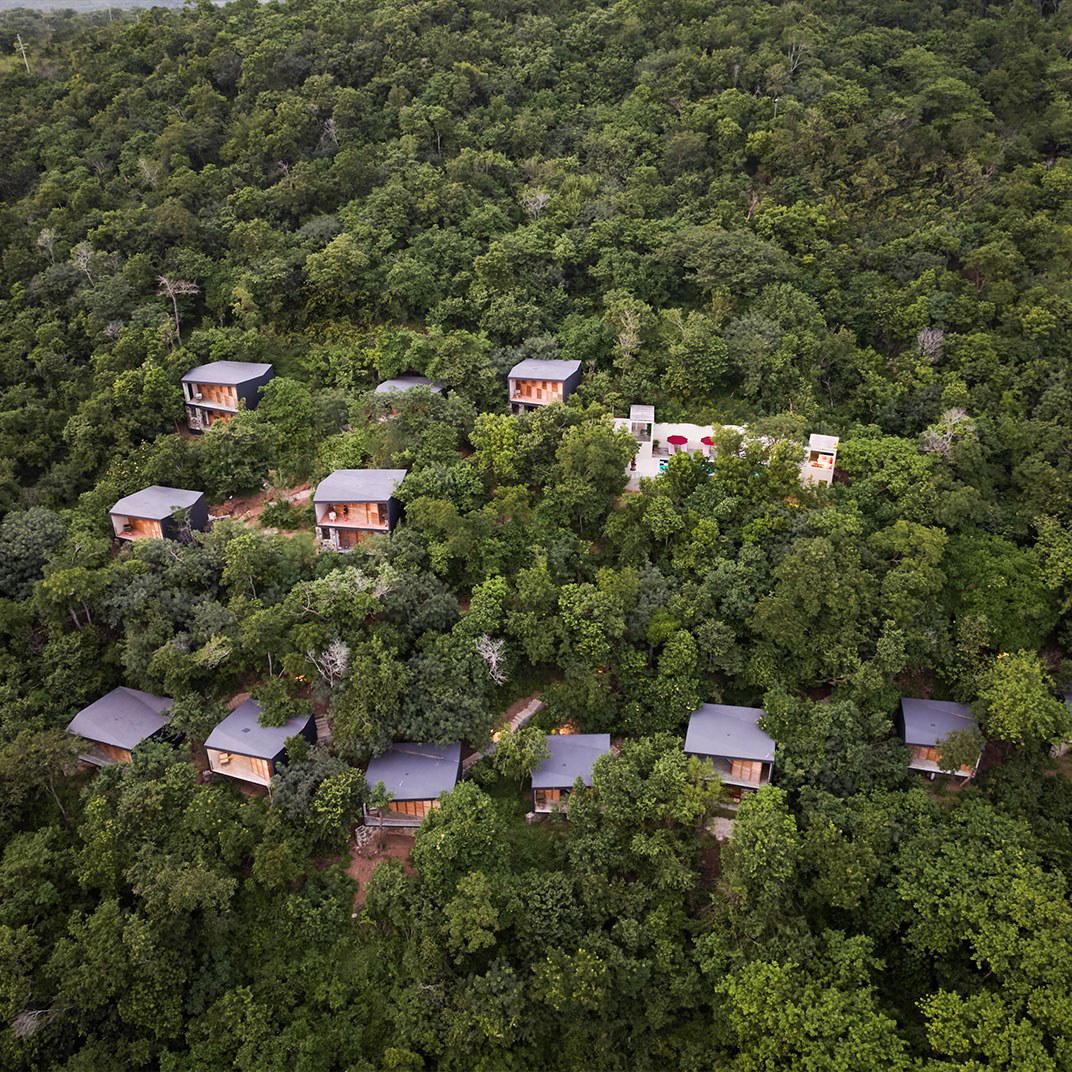
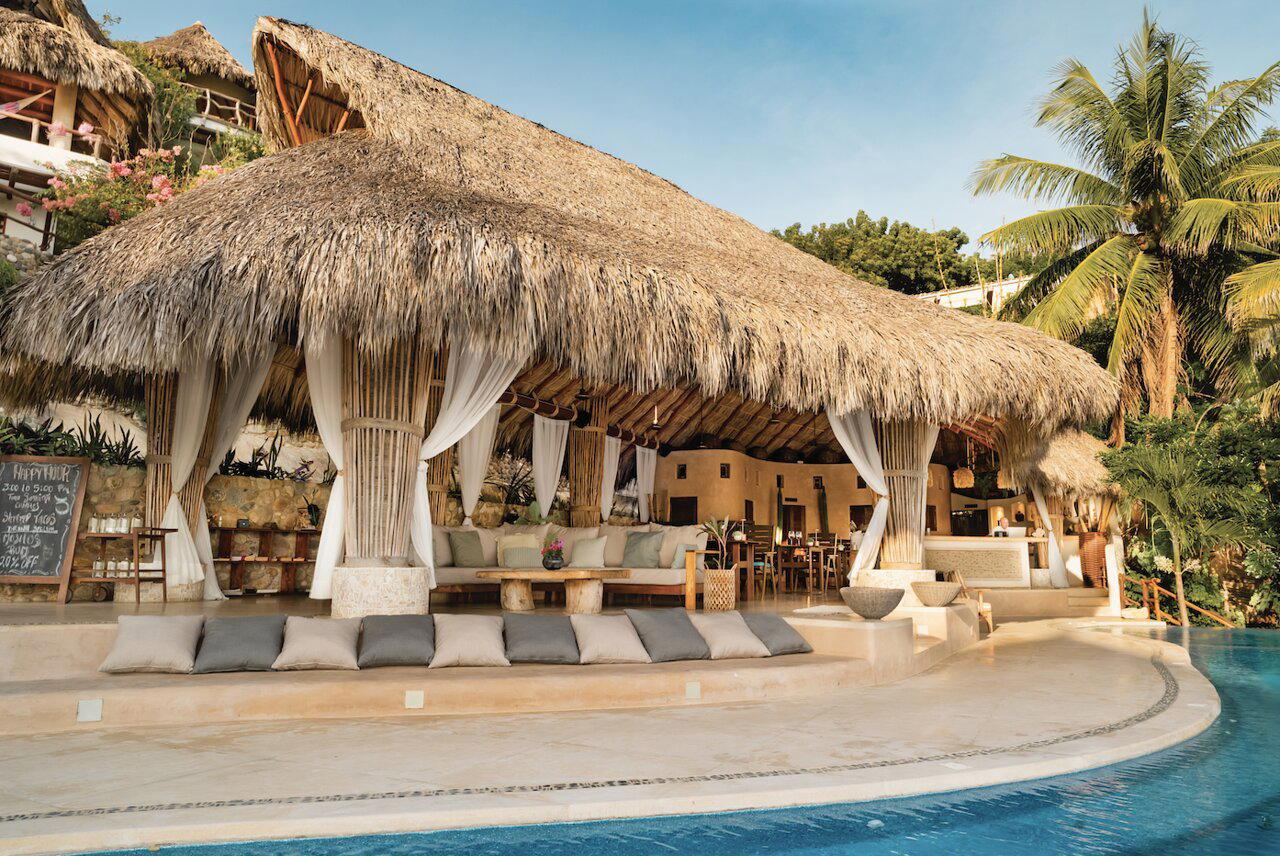
Small-footprint luxury in Mexico tends to split between beach-level palapa hotels with direct sand access and refined properties that trade proximity for panorama. Zoa belongs firmly to the second category. Its seven thatched-roof bungalows sit on a hillside between the two beaches, high enough above the water to command views that extend well out over the Pacific. The elevation also creates a degree of seclusion that flat beachfront layouts cannot offer: there is no strip of shared sand, no ambient noise from a busier neighbouring property, and no visual clutter in the sightlines from the public areas.
That sense of withdrawal is consistent with how the hotel positions itself. The name 'hotel secreto' is, as the property acknowledges, not much of an exaggeration. Seven rooms is a count that keeps the guest experience close to private-house scale, and at rates from $906 per night, the pricing bracket aligns with other design-led boutique properties in Mexico's Pacific corridor rather than with the high-volume all-inclusive resorts that dominate the national luxury market. For comparison, properties like One&Only Mandarina in Riviera Nayarit and Zadun, A Ritz-Carlton Reserve in Los Cabos operate within larger branded frameworks and higher room counts; Zoa's seven rooms place it in a different competitive tier entirely, closer in spirit to La Valise Mazunte, its most direct local peer.
The Restaurant and What It Signals About the Location
In small coastal properties at this scale, the restaurant is rarely a separate editorial story from the hotel. The two are too intertwined: the kitchen defines morning rhythm, evening atmosphere, and how closely the property's ecological claims translate into actual practice. At Zoa, the restaurant's orientation toward ocean-fresh seafood is a direct read of the geography. The Oaxacan Pacific coast is not a region with a complex inland agricultural hinterland feeding high-concept cuisine; it is a coastline with excellent fish, and the most honest cooking here works with that rather than against it.
The hotel's onsite vegetable garden connects the kitchen to its stated ecological values in a concrete way. Biodegradable bath products and a managed vegetable supply are not unusual claims among eco-sensitive properties, but the combination at this scale, where every room counts and the total guest population on any given night might be fourteen people, gives those commitments more weight than they carry at larger operations. The parallel is worth drawing to properties like Playa Viva in Juluchuca, another Pacific Mexico property where ecological practice is woven into the operational model rather than treated as a branding addendum.
For the wider context of where Oaxacan hospitality sits right now, Casa Antonieta in Oaxaca City and Casa Silencio in San Pablo Villa de Mitla offer useful reference points for how the state's accommodation culture operates inland, where the culinary tradition is more elaborate and the property typology more varied. The coast is a different proposition: simpler, more elemental, and less interested in gastronomic complexity than in proximity to the ocean.
Daily Structure and the Activities Programme
The activities on offer at Zoa read as a direct inventory of what the Oaxacan Pacific coast does well rather than a wine programme imposed from outside. Morning yoga sessions, a Zen garden, and the infinity pool with its unbroken Pacific view form the quieter end of the schedule. The more active options, surfing lessons, snorkeling, whale-watching expeditions, and trips to the sea turtle reserve in Mazunte, are all water-dependent and all connected to what makes this particular stretch of coastline worth the journey. The sea turtle reserve is a specific local asset: Mazunte's relationship with sea turtle conservation has shaped the town's identity since the 1990s, when the community shifted away from turtle processing toward ecological tourism, a transition that now defines the village's character and visitor appeal.
That history matters for guests choosing between Mazunte and more developed Pacific alternatives. Properties on the Riviera Maya or in Los Cabos, from Hotel Esencia in Tulum to Las Ventanas al Paraíso in San José del Cabo, operate within ecosystems that have already absorbed significant tourist infrastructure. Mazunte has not reached that point. The trade-off is real: getting here requires commitment, the road infrastructure is basic, and the village amenities are limited. The reward is a coastline that still functions on its own terms.
Guests looking at the broader Mexico wellness and nature-retreat circuit might also consider Xinalani in Quimixto or Palmaïa in Playa del Carmen, both of which offer structured wellness programming within more accessible locations. Zoa's version of that format is quieter, less programmed, and more dependent on the guest's willingness to let the setting do most of the work.
Where It Fits in Mexico's Wider Small-Hotel Story
Mexico's luxury hotel market has bifurcated sharply over the past decade. Branded international operators, including Montage Los Cabos, Maroma in Riviera Maya, and Chablé Yucatán, have raised the floor on facility quality and service consistency in their respective regions. Against that backdrop, properties like Zoa operate in a different register entirely: fewer rooms, stronger site-specificity, and a deliberate absence of the amenity stacking that defines larger resort products. Neither model is objectively superior; they serve different travel intentions.
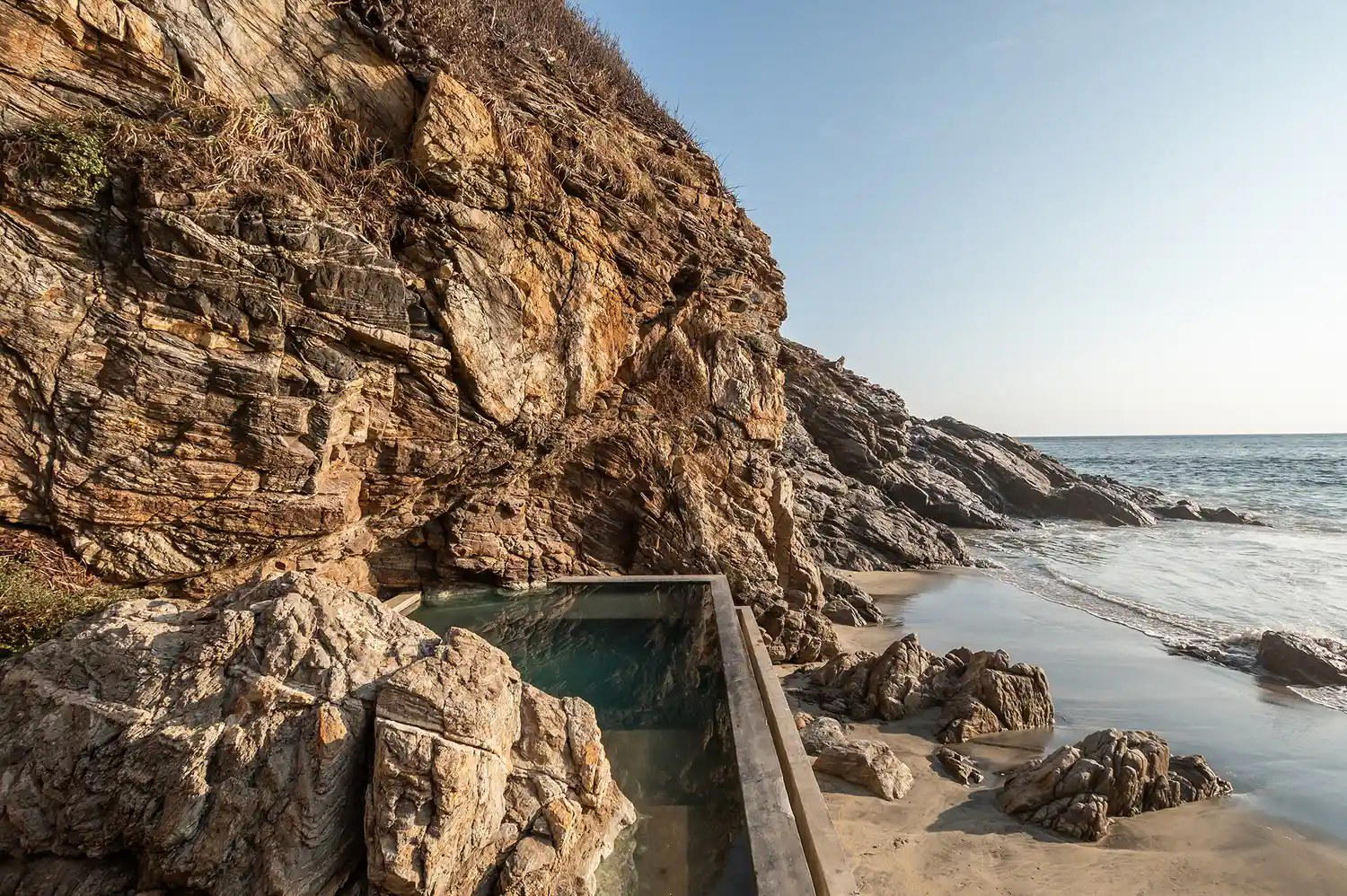
For guests whose primary interest is the quality of a specific place rather than the reliability of a specific brand, the seven-room hillside format at Zoa represents a considered choice. The limited availability, the private beach, and the elevation above the coast create conditions that a larger property on the same coastline could not replicate without fundamentally altering what makes the location worth visiting. See Las Alamandas in Costalegre for a comparable approach on Mexico's Pacific coast, scaled up slightly but operating from a similar philosophy of site-first design.
For more on what Mazunte's small but developing hospitality scene looks like across categories, our full Mazunte restaurants guide maps the wider picture.
Planning a Stay
Zoa sits on a hillside at Cerrada Del Museo De La Tortuga S/N in Mazunte, Oaxaca, accessible from Pochutla, which connects to Oaxaca City by road and is the nearest hub for onward transport. With seven rooms and rates from $906 per night, availability is tight in high season, which on the Oaxacan coast broadly covers December through March and the drier months of July and August. Whale-watching activity is most reliable between December and March, when humpback whales are present in Pacific waters off this coastline. The sea turtle reserve operates year-round, but nesting activity peaks between June and November. Booking well in advance is advisable for any stay during the December-January peak; the limited room count means the property fills quickly once travel plans consolidate around holiday windows.
Price Lens
| Venue | Price | Awards |
|---|---|---|
| Zoa HotelThis venue (the venue you are viewing) | Not listed | 1 Michelin Key |
| One&Only Mandarina | Not listed | 3 Michelin Keys · World's 50 Best #23 |
| Las Ventanas al Paraíso, A Rosewood Resort | $750–1,000 | 2 Michelin Keys · World's 50 Best #25 |
| Montage Los Cabos | $1,000–1,500 | 2 Michelin Keys · World's 50 Best #67 |
| Rosewood Mayakoba | $1,000–1,500 | 2 Michelin Keys · World's 50 Best #95 |
| Zadun, A Ritz-Carlton Reserve | Not listed | 2 Michelin Keys · La Liste Top Hotels |
Recognition history
Dated appearances from independent guides and award organizations, with the underlying list record or original source where available.
Michelin 1 Key
Michelin
Full recognition history (2 entries)
Michelin 1 Key
Michelin
Continue exploring
More in Mazunte
Details
- Quiet
- Scenic
- Bohemian
- Intimate
- Rustic
- Honeymoon
- Romantic Getaway
- Wellness Retreat
- Weekend Escape
- Beachfront
- Infinity Pool
- Panoramic View
- Wi Fi
- Pool
- Spa
- Restaurant
- Room Service
- Concierge
- Beach Access
- Fitness Center
- Laundry Service
- Mountain
- Garden
- Step Free Entrance
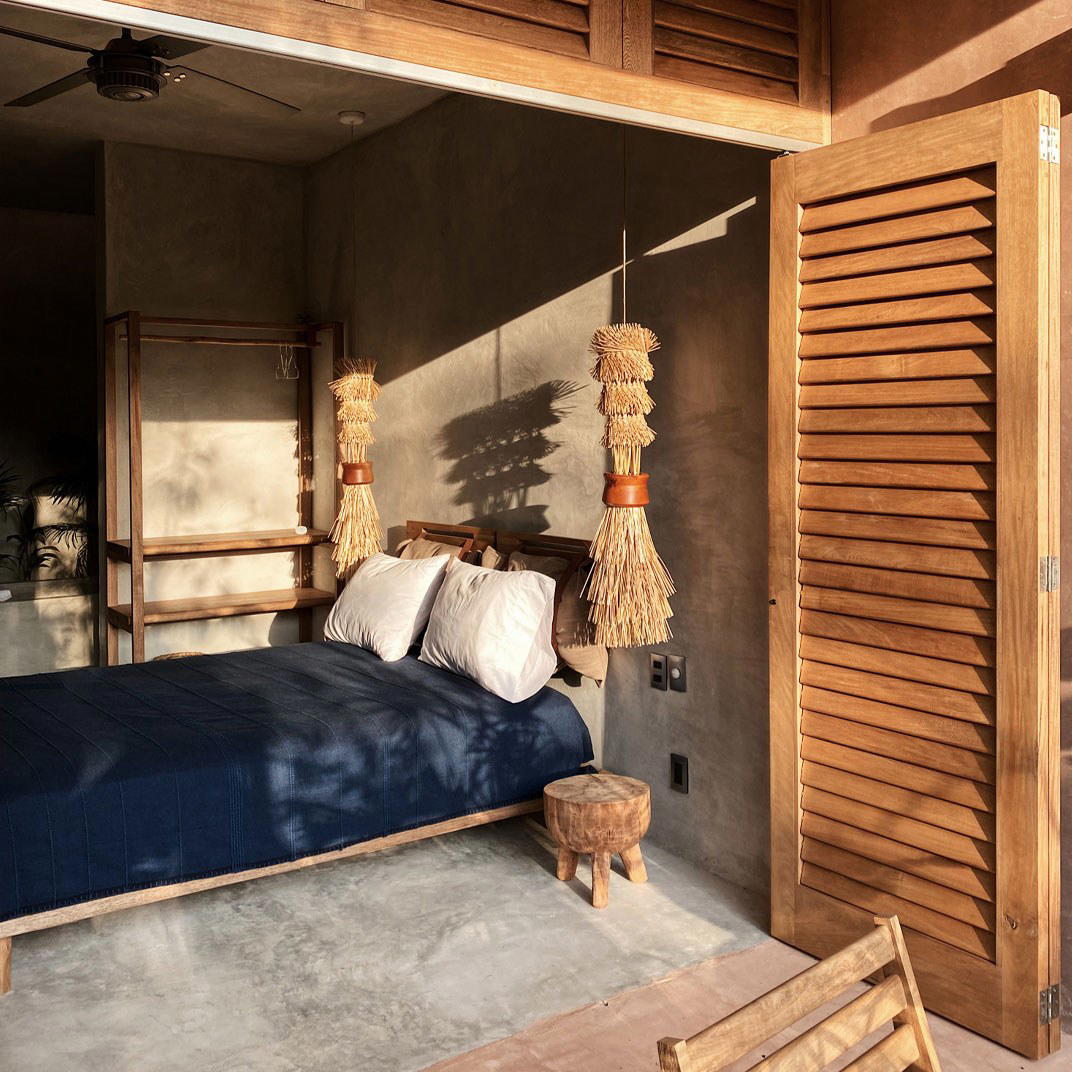
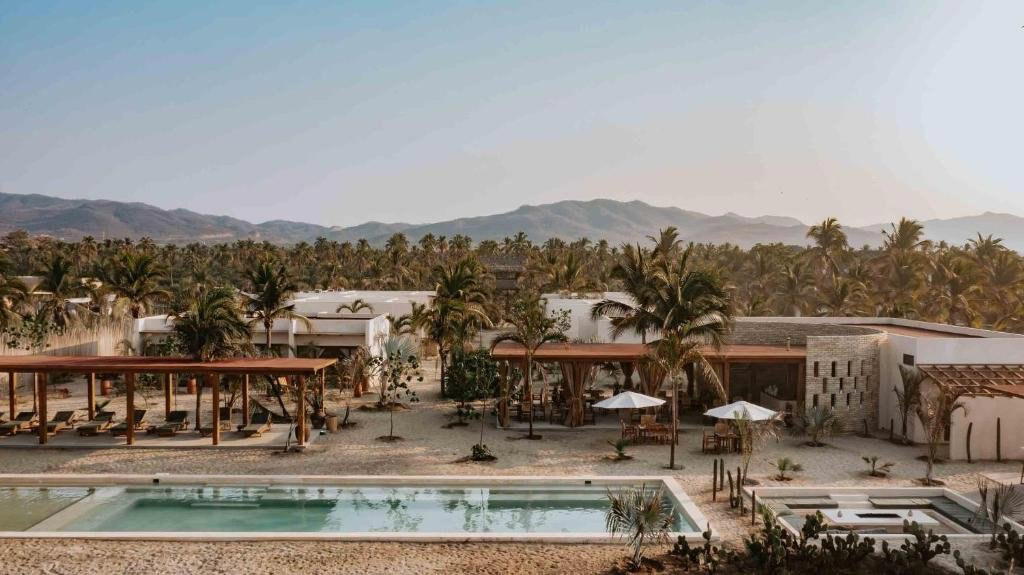
Relaxed earthy atmosphere with natural materials, neutral palette, and serene lighting enhancing ocean and mountain vistas.