


1 Michelin Key · Relais Chateaux Award · Virtuoso Luxury Hotel Partner
A 13th-century fortress turned neo-Gothic estate set across 20 hectares of Umbrian hillside, Borgo dei Conti Resort sits 25 minutes from Perugia and holds 40 rooms across its Villa and Colonica buildings. The Cedri gourmet restaurant occupies a restored Limonaia, while the spa, English-style park, and panoramic pool position the property firmly in the upper tier of central Italian country-house hotels. Rates from US$965 per night.

Pearl is the En Primeur Club membership app, where members save venues, book tables and use the concierge.
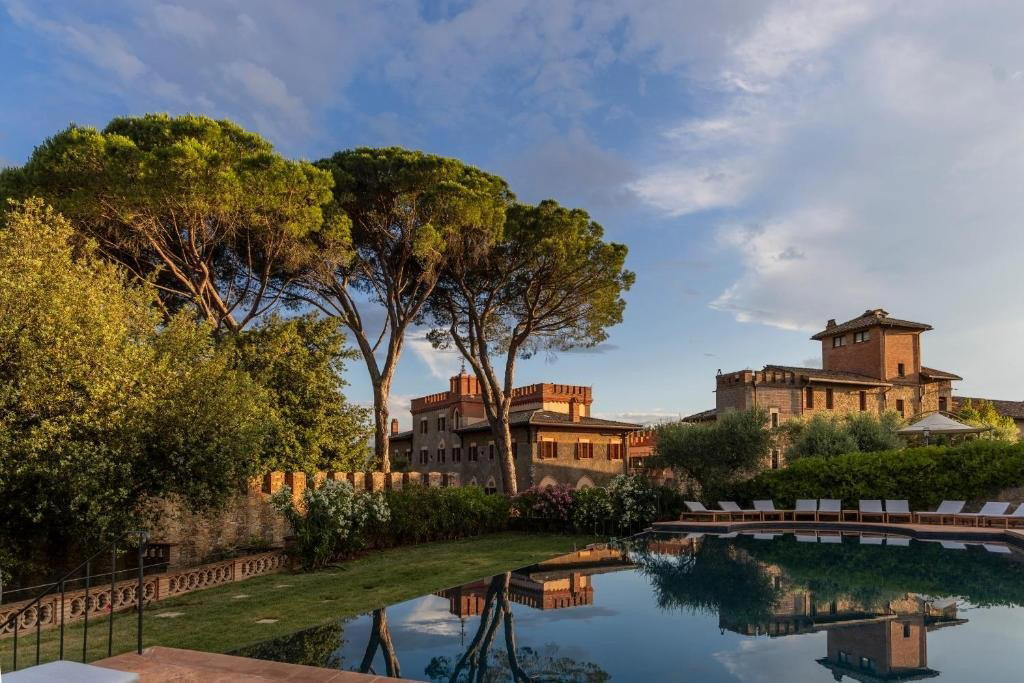
An Estate Built in Layers
The approach to Borgo dei Conti prepares you for one thing and delivers another. The exterior reads as a medieval fortification: battlements, an imposing tower, neo-Gothic stonework cut against the Umbrian skyline. The complex traces its origins to a 13th-century fortress, and the silhouette has changed little in the centuries since. What changed is everything inside. The estate was remade into a noble residence roughly 500 years after its original construction, and a subsequent wave of renovations has produced a 40-room contemporary hotel that bears almost no resemblance to the severity its façade suggests. That gap between exterior signal and interior reality is the defining architectural experience here, and it is handled with more confidence than most Italian country-house conversions manage.
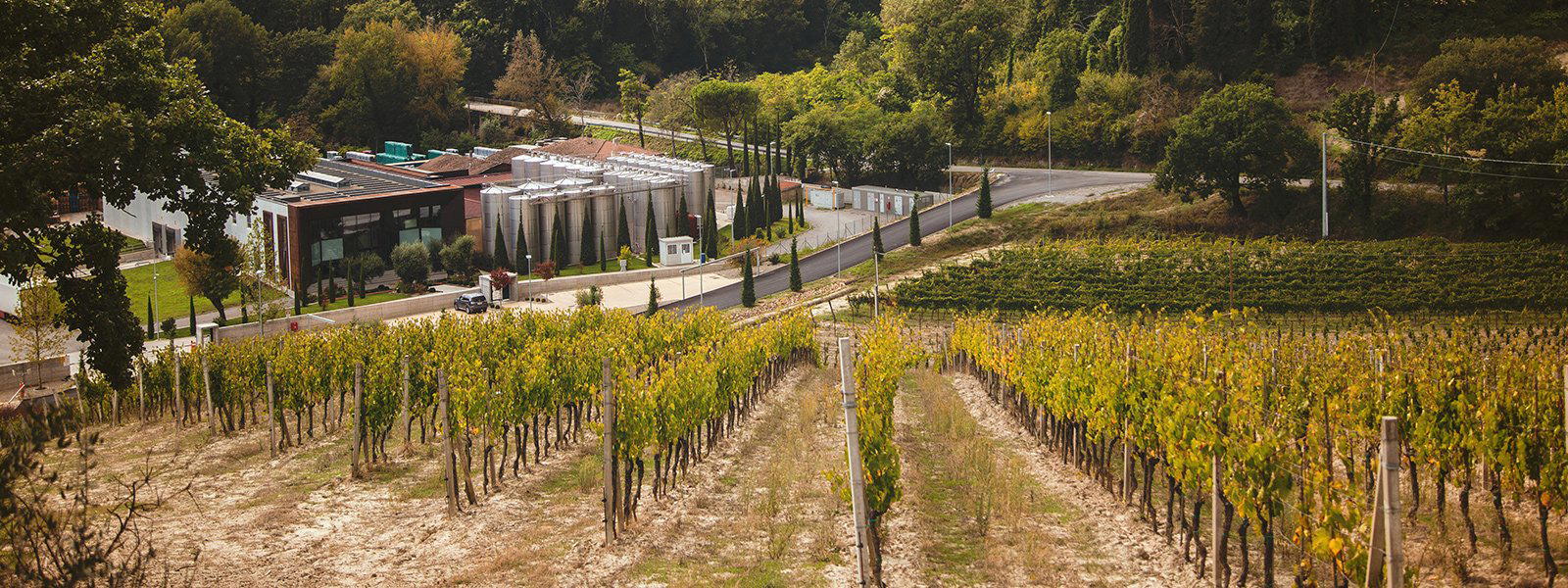
The compound sits across approximately 20 hectares, or around 50 acres, a scale that matters for how the property reads as architecture. Multiple buildings were added at different periods around the original U-shaped nucleus, producing an intentionally composite structure: part fortress, part agricultural estate, part aristocratic villa. The battlements and the tower belong to one era; the agricultural outbuildings, the Limonaia, the barn that became a ballroom, and the structures that held the estate's farming operations, belong to another. Rather than resolving that heterogeneity, the current design holds it in place, allowing each building to carry its own historical register while functioning as a single hospitality complex.
What the Architecture Actually Delivers
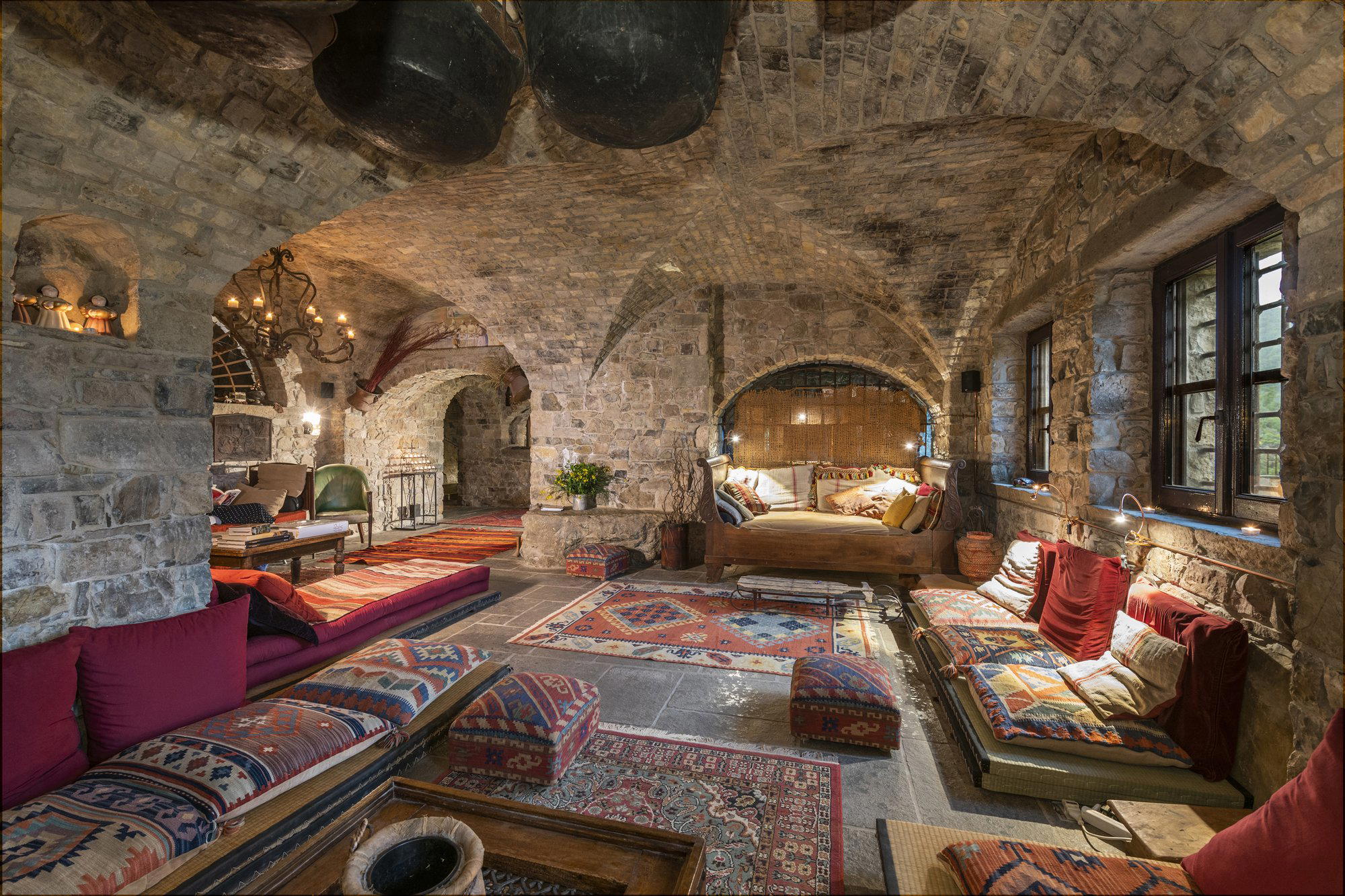
Italian country-house hotels broadly split into two approaches: those that preserve original interiors as atmosphere (cold rooms, uneven floors, antique furniture that cannot be touched) and those that treat the historic envelope as a shell for contemporary comfort. Borgo dei Conti belongs firmly to the second camp. Exposed wooden beams and elaborate stone fireplaces survive, but they operate as texture rather than constraint. The 40 rooms across the Villa and Colonica buildings integrate original structural elements into designs that read as contemporary, without the deliberate rusticity that some rural Italian properties mistake for authenticity.
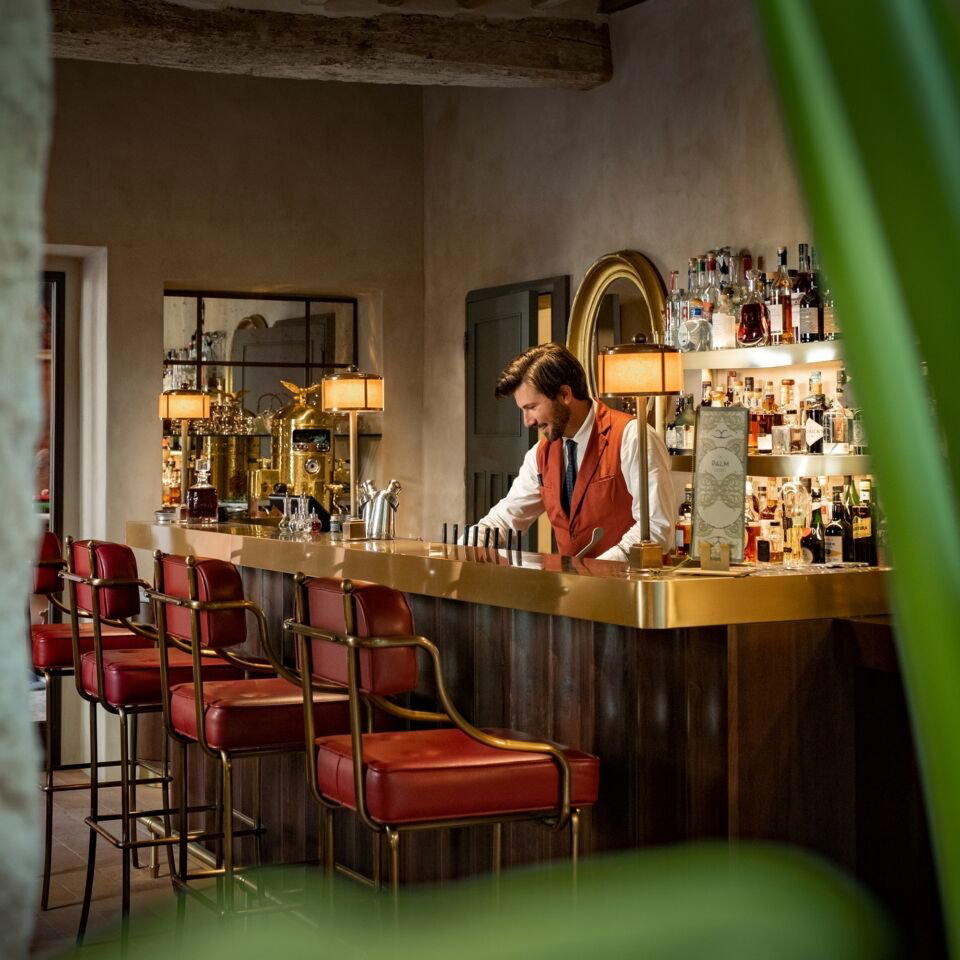
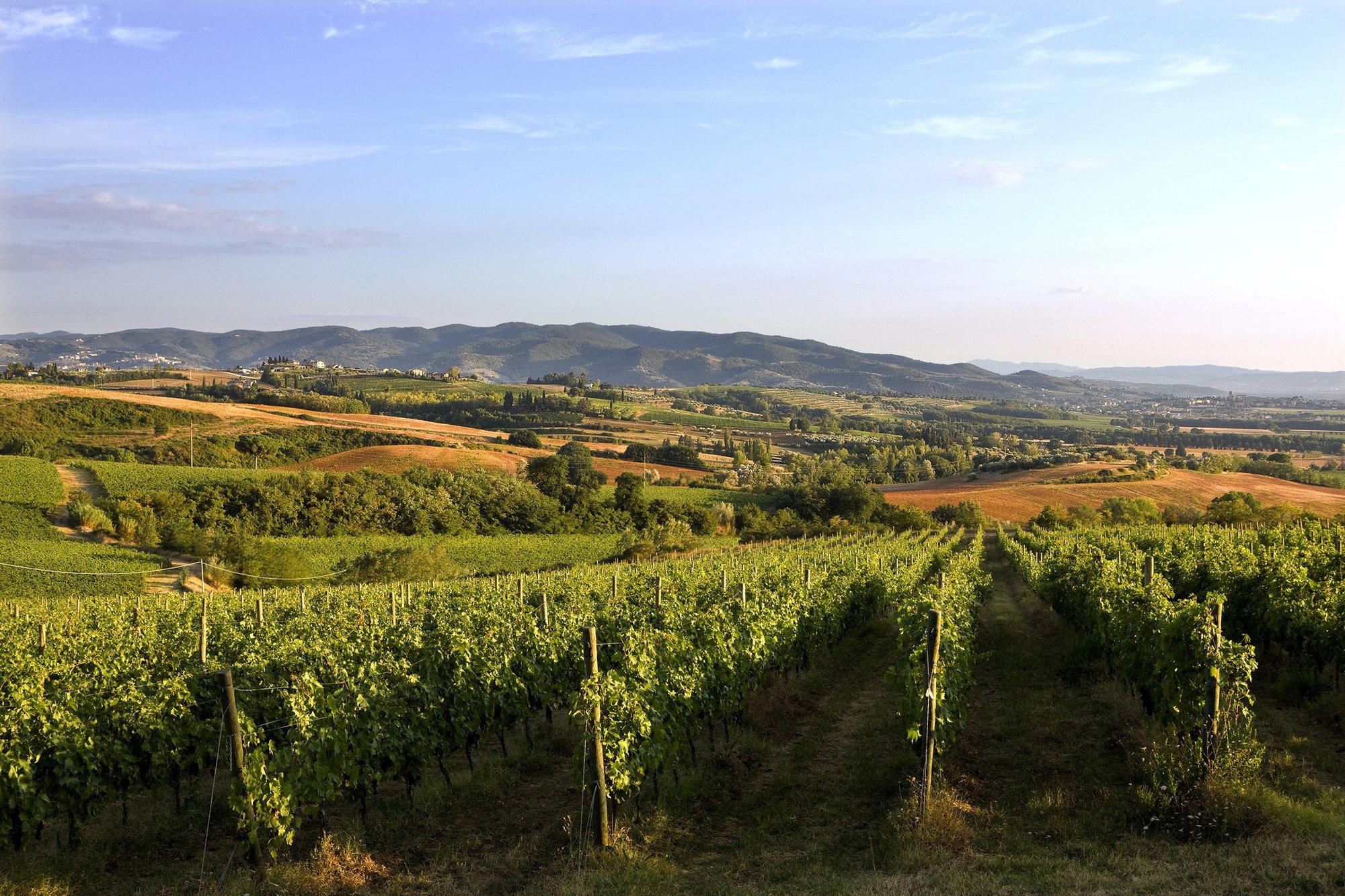
The common areas reinforce this. A billiard room, a library, a wine cellar, and a veranda lounge bar distribute across the property in a way that creates genuine choice about how to occupy the space, rather than routing all guests through a single public room. For properties of this scale and rate, that level of spatial variety across common areas is less common than it should be. The outdoor pool sits on a terrace beneath the building's main façade, framed by gardens and with unobstructed views across Umbrian hills: the kind of setting that makes the architecture legible from a distance.
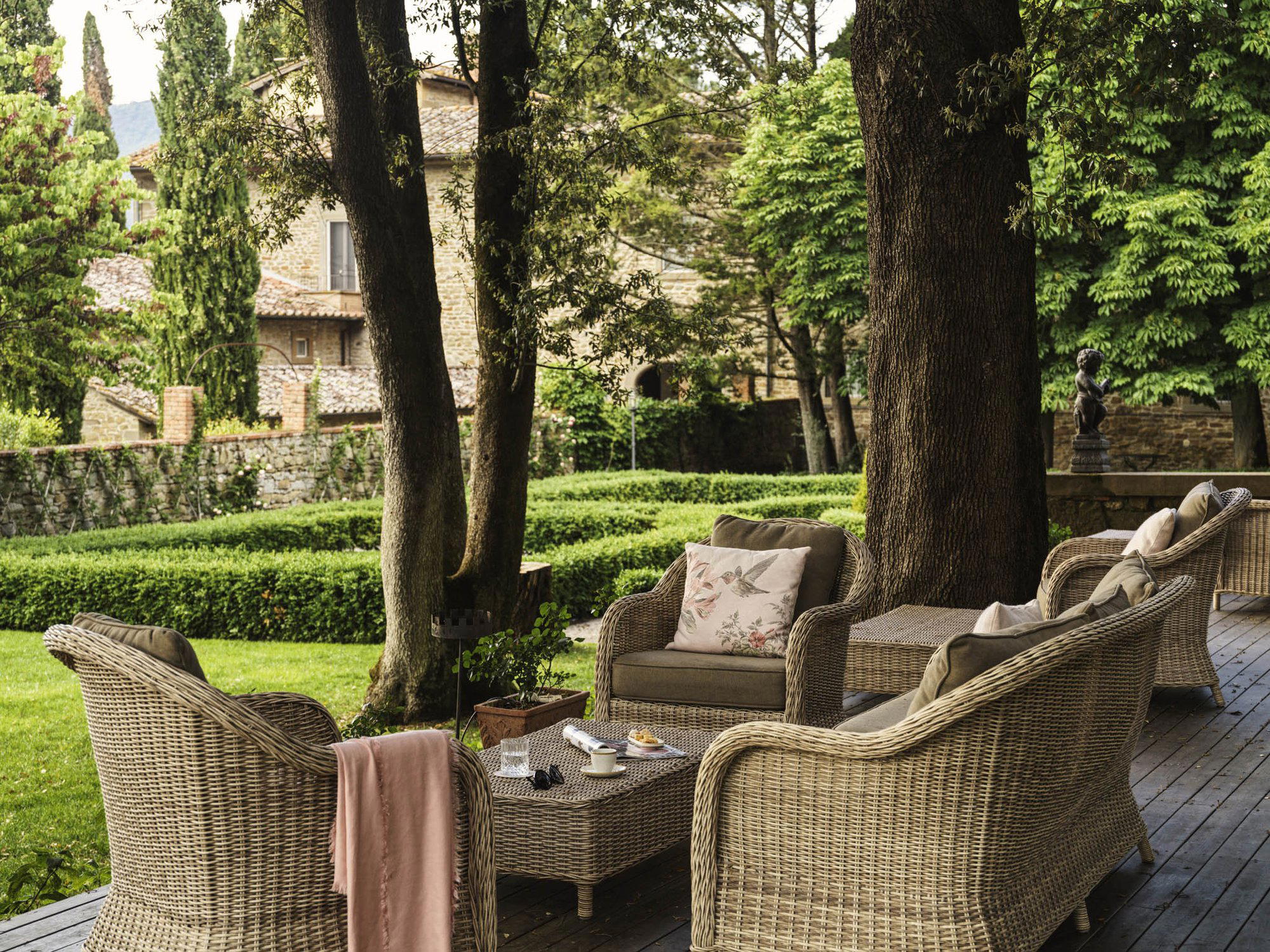
Guests with an interest in the property's older history can follow traces of the original estate use into the park: the remains of an imbarcadero, or pier, that once carried the Countess's boat to a private island in a small lake. It reads as a ruin now, but it gives the English-style park, planted in the 18th century, anchored by secular oak trees and more than 600 olive trees, a biographical texture that most designed landscapes lack.
The Limonaia and the Logic of Cedri
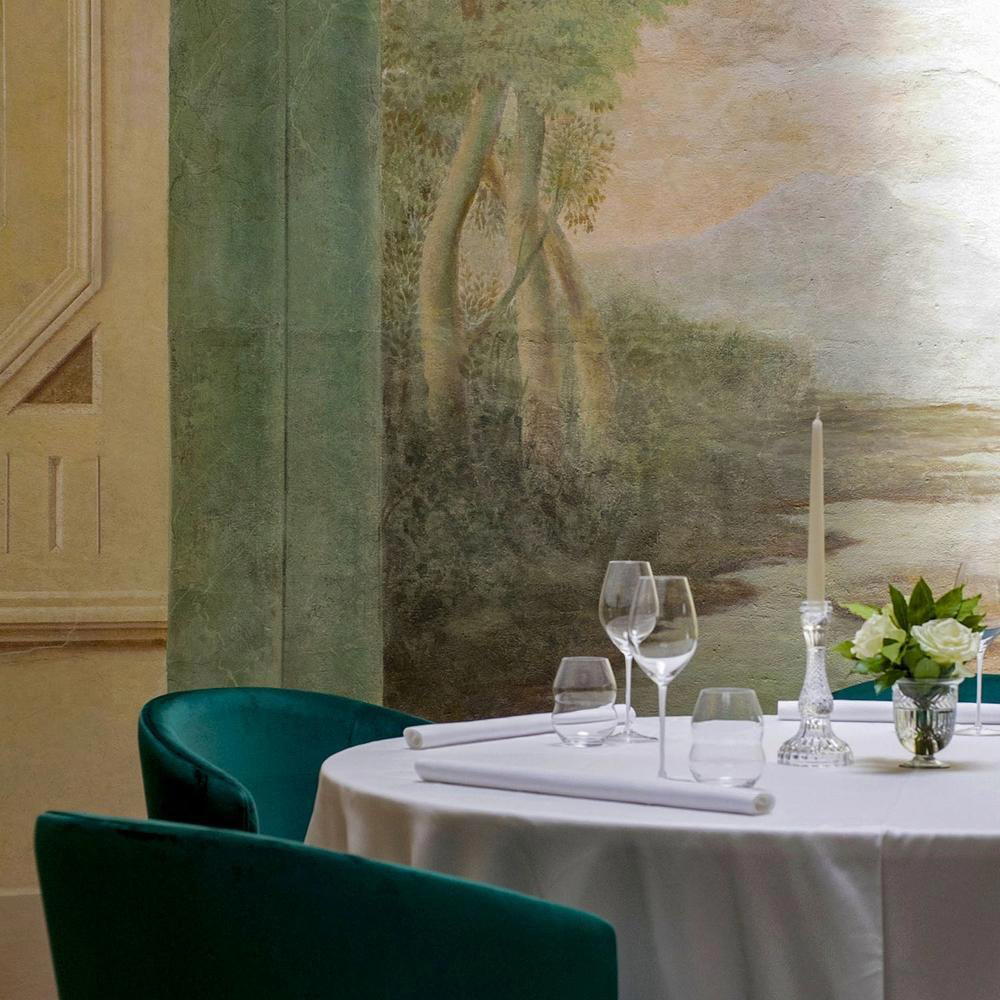
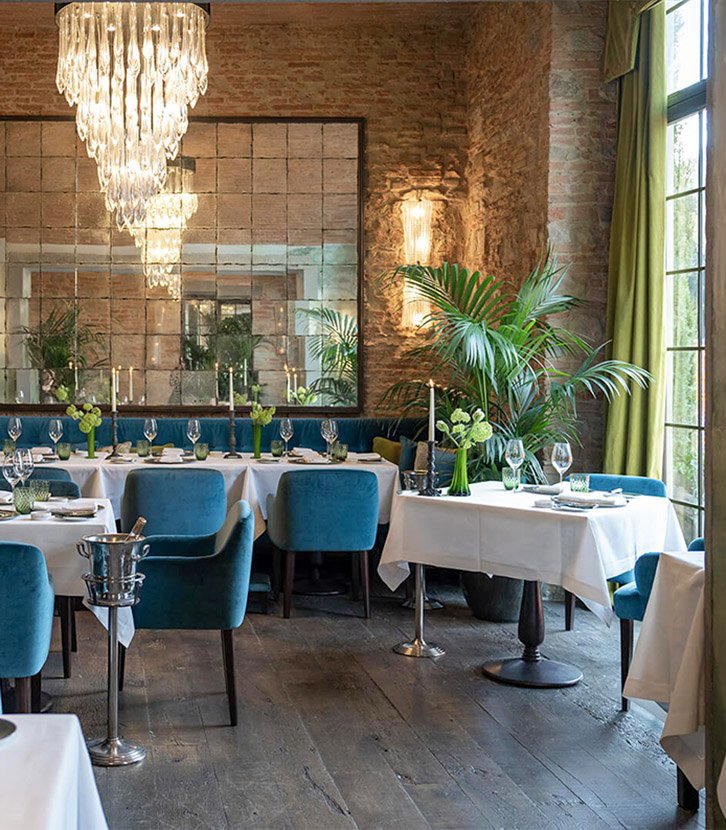
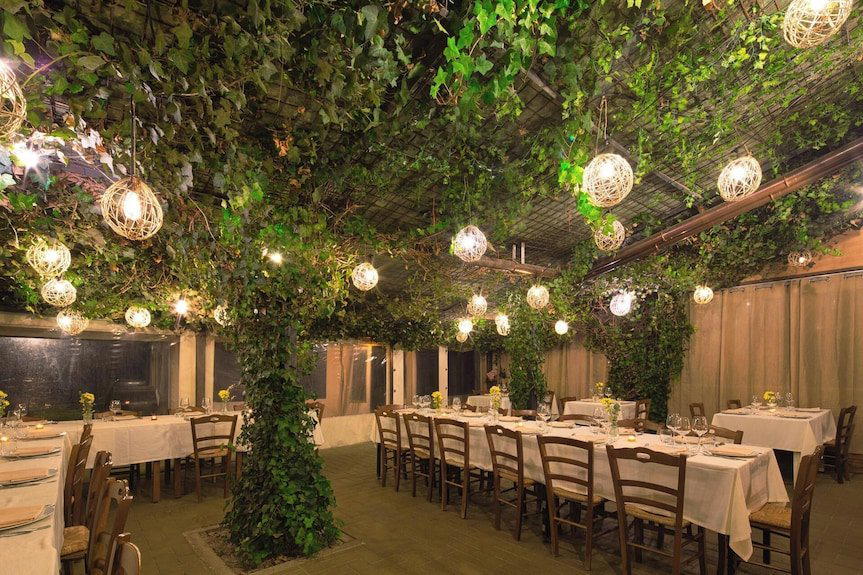
The Cedri restaurant occupies the estate's historic Limonaia, the structure that once housed fruit plants through winter. That adaptive reuse is common in Italian estate conversions, but the architecture here works specifically well for a dining room: large windows open the interior toward the garden, and the relationship between the stone structure and the surrounding planting creates a visual connection to the outdoors that a purpose-built restaurant would struggle to replicate. Under Executive Chef Emanuele Mazzella, the kitchen draws on local, seasonal, and farm produce in a format the property describes as refined, which, in the context of Umbrian estates at this price tier, means a structured dining experience rather than the casual trattoria format that characterises the lower end of agriturismo-style properties.
A separate casual option, Osteria del Borgo, operates seasonally for poolside lunches and informal dinners, which is a practical division: it means the gourmet restaurant does not need to absorb guests who want a lighter meal, and the pool setting gets its own food program rather than a diluted version of the main kitchen's offer. For a property at rates from US$965 per night, having two distinct dining formats with distinct architectural settings is the expected standard; Borgo dei Conti meets it.
The spa adds a wellness layer that has become table stakes for this tier of Italian country-house hotel: Finnish sauna, bio sauna, Turkish bath, jacuzzi, heated pool, and four treatment rooms. The scale is appropriate for 40 rooms. Among comparable Italian estate properties, including Rosewood Castiglion Del Bosco in Montalcino, Borgo San Felice Resort in Castelnuovo Berardenga, and Castelfalfi in Montaione, a full spa and distinct dining formats are now the expected infrastructure; the differentiator is how the architecture integrates them.
Where Borgo dei Conti Sits in the Regional Picture
Umbria occupies a specific position in Italian luxury travel: less trafficked than Tuscany, with fewer international hotel brands, and a slower pace of development that means the independent country-house estate remains the dominant format. Perugia, 25 minutes away, anchors the cultural offer, with Assisi reachable in 40 minutes and Orvieto within an hour. That triangle gives the property genuine day-trip range without requiring guests to base themselves in a city. The nearest train stations are at Perugia and Chiusi, both approximately 20 kilometres from the estate. Florence Airport sits roughly 150 kilometres away; Perugia's own Sant'Egidio airport is closer at 60 kilometres. The property can arrange shuttle transfers on request.
Within Perugia's hotel options, the competitive set is small. Hotel Castello di Monterone offers a historic castle format closer to the city centre, while Sina Brufani provides an urban luxury alternative on Corso Vannucci. Borgo dei Conti operates in a different register from both, functioning as a destination property rather than a base for city exploration. The comparison set stretches more naturally toward Umbrian and Tuscan estate hotels than toward Perugia's urban offerings. For the broader context of Perugia's food and drink scene, see our full Perugia restaurants guide.
Further afield, the property belongs to a cohort of Italian historic-estate conversions that includes Aman Venice in Venice, Casa Maria Luigia in Modena, and Four Seasons Hotel Firenze in Florence, though each occupies a distinct architectural and experiential tier. Castello di Reschio in Lisciano Niccone is the most direct geographic peer, sharing the Umbria-Tuscany border zone and a similar estate format. Other Italian country-house references worth considering include Borgo Santandrea in Amalfi Coast, Il Pellicano in Porto Ercole, Passalacqua in Moltrasio, Castel Fragsburg in Merano, and Borgo Egnazia in Savelletri di Fasano.
For those extending an Italian itinerary, coastal and city alternatives include Portrait Milano in Milan, Bulgari Hotel Roma in Rome, JK Place Capri in Capri, Il San Pietro di Positano in Positano, Bellevue Syrene 1820 in Sorrento, Corte della Maestà in Civita di Bagnoregio, and EALA My Lakeside Dream in Limone sul Garda. For readers whose itinerary extends beyond Europe, Amangiri in Canyon Point, Aman New York in New York City, and The Fifth Avenue Hotel in New York City represent comparable positions in their respective markets.
Planning Your Stay
Rates begin from US$965 per night. The property holds 40 rooms across the Villa and Colonica buildings, a scale that keeps the estate from feeling hotel-like in the impersonal sense. Guests arriving by car from the north should exit the A1 motorway at Valdichiana/Bettolle and follow signs toward Lago Trasimeno and Tavernelle; from the south, the exit at Fabro routes through Panicale and Montepetriolo. Shuttle transfers from Perugia, Chiusi, and major airports can be arranged directly with the property. The GPS coordinates are 43.0064, 12.2274.
Fast Comparison
Comparable venues nearby, for context on price, style, and recognition.
| Venue | Cuisine | Price | Awards | Notes |
|---|---|---|---|---|
| Borgo dei Conti ResortThis venue (the venue you are viewing) | Restored medieval castle and village estate | $200–300 | 1 Michelin Key · Relais Chateaux Award | Not listed |
| Hotel Castello di Monterone | Restored medieval castle blending historic authenticity with subtle modern comforts. | Not listed | 1 Michelin Key | Monterone |
| Tenuta di Murlo | Historic country estate blending aristocratic heritage with refined modern comfort | Not listed | 1 Michelin Key | San Giovanni del Pantano |
| Sina Brufani | Historic luxury palace hotel opened in 1884 with classic elegance. | $100–200 | Virtuoso Luxury Hotel Partner | Piazza Italia |
| Torre di Moravola | Medieval watchtower converted into contemporary luxury retreat | $300–500 | Michelin Selected | Montone |
| Castello di Vicarello | Historic Tuscan castle estate with vineyards and olive groves | Not listed | 1 Michelin Key · Mr & Mrs Smith Seal of Approval | Cinigiano |
Recognition history
Dated appearances from independent guides and award organizations, with the underlying list record or original source where available.
Michelin 1 Key
Michelin
Relais Chateaux Award
Relais Chateaux
Virtuoso Luxury Hotel Partner
Virtuoso
Full recognition history (5 entries)
Michelin 1 Key
Michelin
Relais Chateaux Award
Relais Chateaux
Continue exploring
More in Perugia
Hotels in Perugia
All hotels in Perugia →
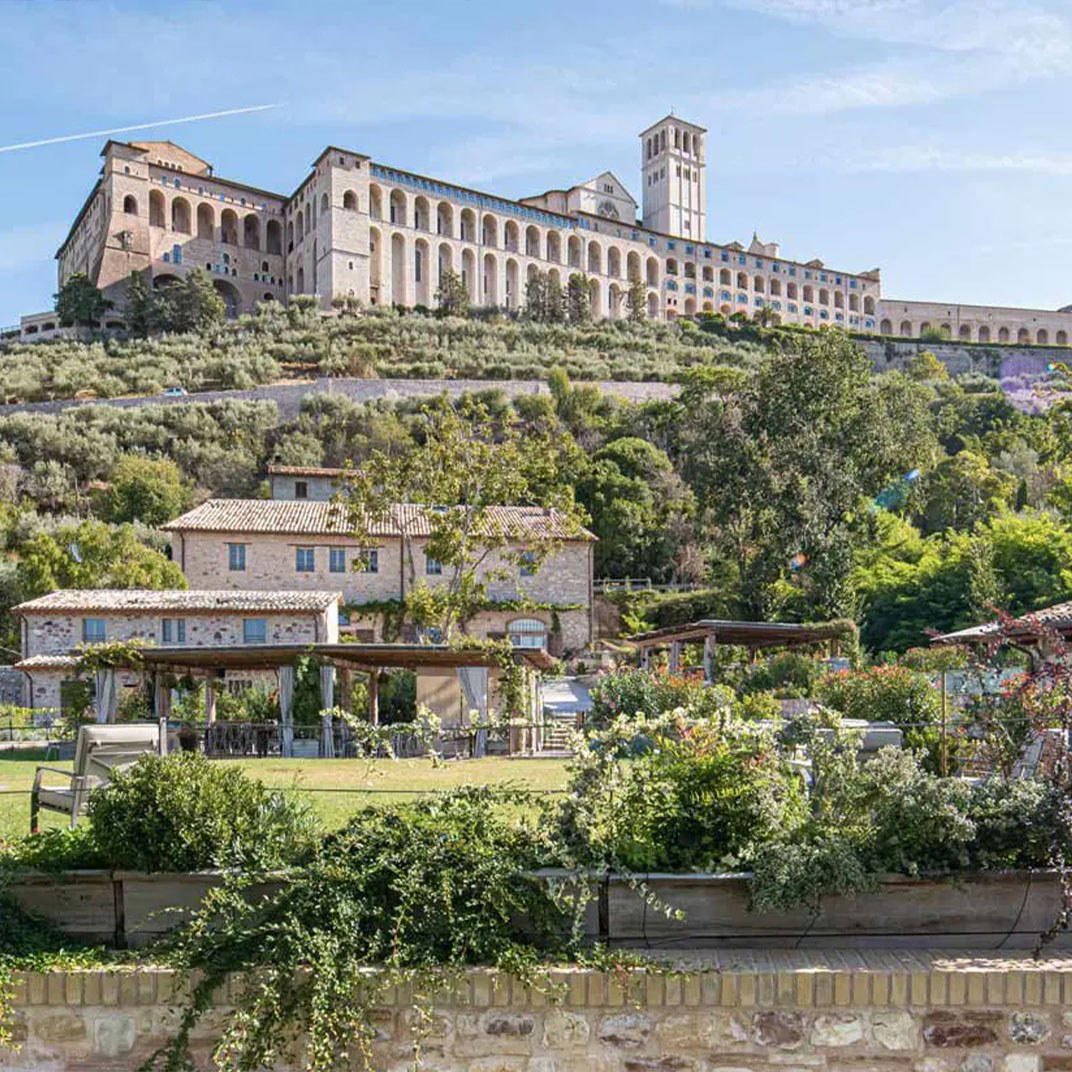
Bars in Perugia
Browse all →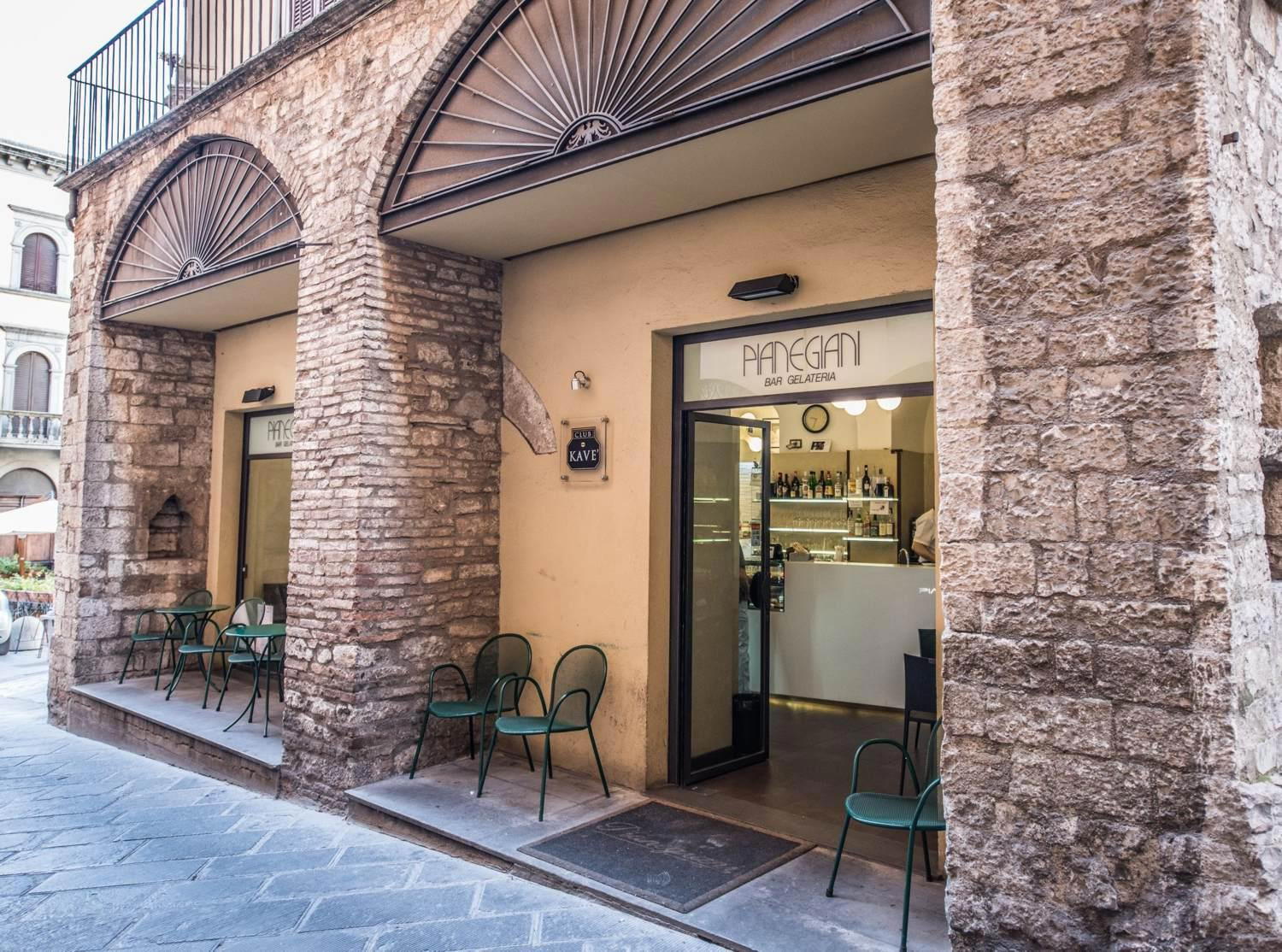
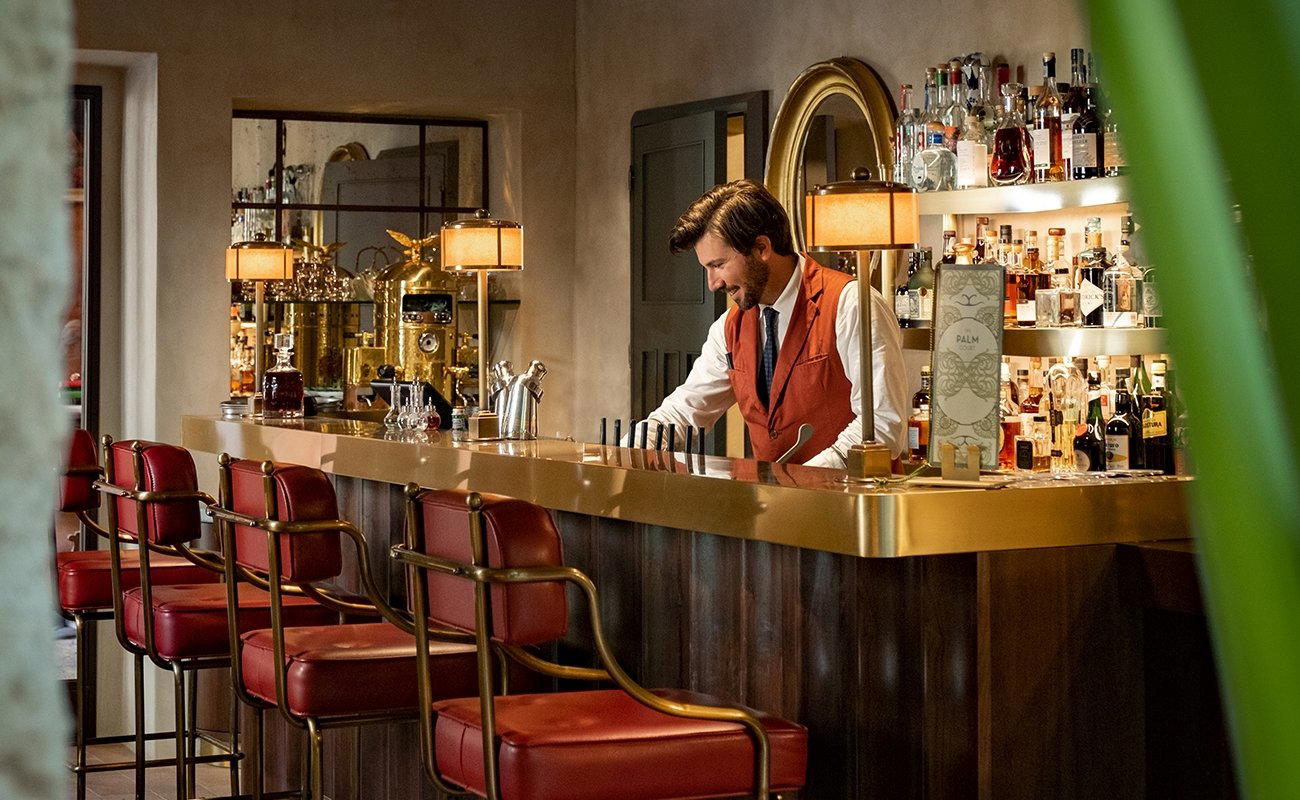
Restaurants in Perugia
All restaurants in Perugia →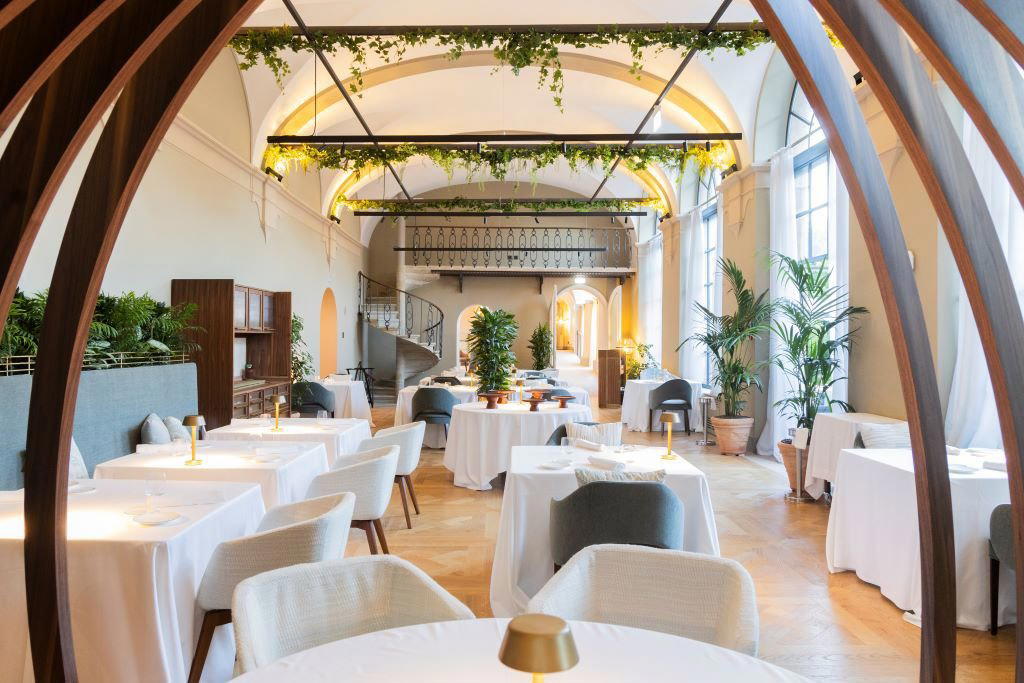
Details
- Romantic
- Elegant
- Scenic
- Rustic
- Sophisticated
- Romantic Getaway
- Honeymoon
- Wellness Retreat
- Anniversary
- Infinity Pool
- Historic Building
- Panoramic View
- Pool
- Spa
- Fitness Center
- Restaurant
- Room Service
- Concierge
- Tennis
- Wi Fi
- Sauna
- Free Parking
- Garden
- Mountain
- Wheelchair Accessible
- Elevator
Contemporary elegant decor blending modern style with historic features like wooden beams and fireplaces, offering a serene and stylish atmosphere.