Beidahu Asian Games Village sits in Jilin City, a northeastern Chinese destination shaped by its winters and its skiing legacy. The facility's connection to competitive winter sports gives it a distinct positioning among China's northern resort clusters, where infrastructure built for elite athletics has gradually reshaped the expectations of leisure travellers arriving from across the region.
 Discover on Pearl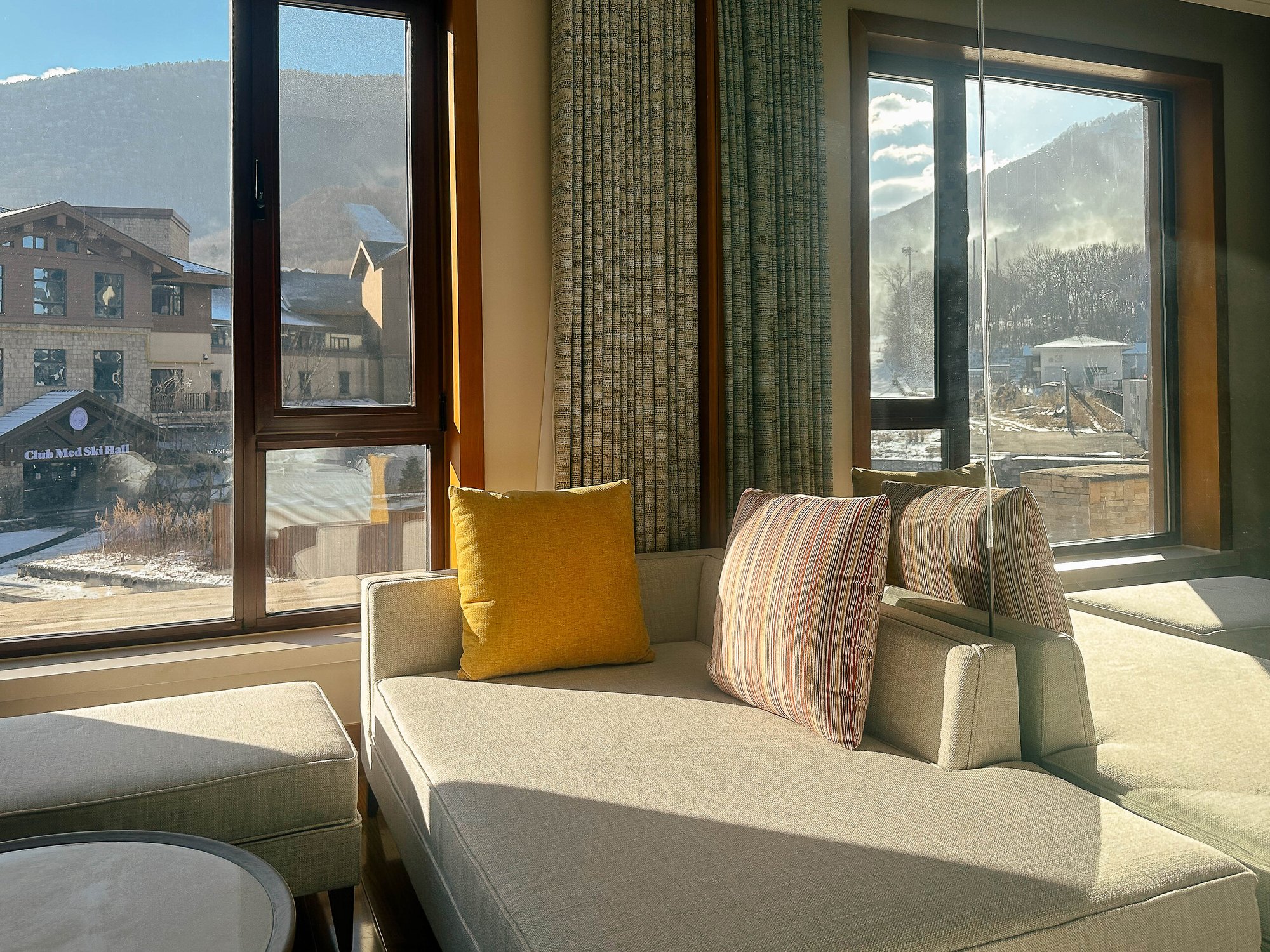
Where Winter Sport Meets Northeast China's Cold-Weather Architecture
Northeast China's ski resorts occupy a distinct position in the country's winter sports map. Jilin province sits at the same latitude as parts of Hokkaido, and the Songhua River basin produces a cold, dry snow that accumulates reliably from November through March. Within this geography, Beidahu Asian Games Village in Jilin City represents a particular tier: a resort complex built around competitive sporting infrastructure and then adapted for leisure visitors, a model common to post-Games venues across East Asia. The physical environment here is shaped first by athletic function, with architecture calibrated to volume, weather protection, and movement — qualities that translate, in varying degrees, to the guest experience.
The Physical Environment and Its Origins
The Asian Games Village designation is not decorative. The complex was developed in the context of major regional competitive events, which means the built environment carries the hallmarks of that lineage: broad circulation corridors, facilities designed for high throughput, and a scale that prioritises collective use over intimate retreat. In Northeast China's resort architecture, this places Beidahu in a different category from the smaller, design-led mountain properties emerging elsewhere in the country. Where a property like Vanke Lake Songhua Yunlu Hotel in Jilin approaches the region's cold-landscape character through a more curated hospitality lens, Beidahu's spatial identity is rooted in sport-first planning.
The shortlist, unlocked.
Hard-to-book tables, cellar releases, and concierge-planned trips.
Get Exclusive Access →That distinction matters for how you read the architecture. The forms are functional rather than expressive, built to process weather, equipment, and bodies efficiently. In winter, when snow loads are substantial and temperatures regularly drop below -15°C, this pragmatism reads as a genuine design virtue. The structures are oriented and clad for thermal performance, and covered walkways between facilities reduce exposure during the months when outdoor movement is genuinely hostile. For travellers accustomed to alpine resorts in Europe or Japan where heritage vernacular softens the engineering, Beidahu's aesthetic will feel more utilitarian, but it is honest to its purpose.
Jilin City in the Northeast China Winter Context
Jilin City is not a resort town in the way that some Chinese ski destinations are marketed. It is an industrial and administrative centre with a significant winter sports infrastructure built around the Beidahu ski area, roughly 60 kilometres southeast of the urban core. The city's broader travel profile is anchored by the rime ice phenomenon on the Songhua River, a natural formation that draws visitors in January and February and has been documented in Chinese tourism literature for decades. The ski resort complex sits apart from this urban draw, functioning as a self-contained destination that visitors typically access by car or organised transfer from Jilin City's rail connections.
Northeast China's rail network has improved considerably in the past decade, with Jilin City now reachable by high-speed rail from Changchun, which in turn connects to Shenyang, Harbin, and Beijing. For international visitors, the practical gateway is Changchun Longjia International Airport, approximately two hours from the resort area by road. This is not a quick weekend proposition from most international origin cities, which positions Beidahu firmly in the longer-stay or dedicated winter-sports-trip category rather than the casual luxury escape market. Travellers comparing it to more accessible Chinese alpine options, or to resorts in Japan's Hokkaido that offer similar snow quality with better international connectivity, should factor that into their planning.
Comparing Northeast China's Winter Resort Tier
China's premium mountain accommodation has bifurcated in recent years between properties affiliated with international hotel groups and locally developed resort villages attached to ski areas. The former category includes properties like Amanfayun in Hangzhou or Banyan Tree Chongqing Beibei in Chongqing, where brand architecture, service training, and room specification follow an internationally standardised framework. Beidahu Asian Games Village sits outside that bracket. Its identity is tied to the competitive sports history of the site rather than to a global hospitality brand, which gives it a different character but also means that the benchmarks for room quality, dining, and service are not set by international comparables.
For context, properties developed around high-altitude or remote landscapes in China that have invested in design credentials, such as Mohe Youran Mountain Residence in Da Hinggan Ling or Xiamen Yunding Resort in Xiamen, demonstrate the range of approaches China's non-urban resort sector has taken. Beidahu occupies a more institutional position within that range — closer to the sports-tourism end of the spectrum than the design-hotel end.
What the Site Offers and Who It Suits
The primary draw of any Asian Games Village-origin property is access to the competitive-grade slopes and facilities that were built to international standards for events. At Beidahu, that means ski runs that have hosted professional and semi-professional competition, a scale of ski area that goes beyond beginner terrain, and infrastructure for ski schools, equipment rental, and on-slope services. For the serious recreational skier based in China, or for group and corporate trips centred on winter activity, this is the relevant selling point. The architecture and accommodation serve that purpose rather than leading the experience independently.
Travellers for whom accommodation quality and design are primary considerations will find more satisfaction at properties that have built their identity around spatial experience, such as Amandayan in Lijiang or Banyan Tree Ringha in , where the physical environment is itself part of the proposition. At Beidahu, the environment is the ski mountain, and the buildings are the support structure for that.
Planning a Stay
The operative ski season runs from approximately November to March, with January and February offering the most reliable snow conditions and the coldest temperatures. Those same months correspond to Chinese New Year holiday periods, during which domestic demand spikes and advance planning becomes necessary. The resort's location outside Jilin City means that most visitors arrive by private car or organised transport; there is no direct public transit link from the city centre. For travellers building a broader Northeast China itinerary, pairing a Beidahu ski stay with time in Jilin City during the rime ice season in January creates a coherent cold-weather programme. Those wanting to extend into urban China can connect efficiently to Harbin or Shenyang by high-speed rail, or to Beijing via the Changchun hub. See our full 吉林市 restaurants guide for dining options in the city proper, where the culinary scene runs on Jilin's strong northeastern Chinese kitchen tradition rather than anything resort-inflected. Other reference points for premium China travel include Mandarin Oriental Qianmen in Beijing, JW Marriott Hotel Shanghai at Tomorrow Square, Andaz Shenzhen Bay, Conrad Guangzhou, Hyatt Place Nanjing Xuanwu, Altira Macau, and 1 Hotel Haitang Bay, Sanya.
Frequently Asked Questions
- What should I expect atmosphere-wise at Beidahu Asian Games Village?
- The atmosphere is shaped by the site's competitive sports heritage. Expect a functional, high-volume environment oriented around ski access and group activity rather than intimate hospitality design. In peak winter months, the resort draws domestic sports tourism groups, which gives the property an energetic but utilitarian character. Travellers seeking a quiet, design-led retreat will find the scale and orientation here different from smaller curated properties in China's mountain sector.
- What is the most popular accommodation format at Beidahu Asian Games Village?
- Given the village-format development and the site's sports-event origins, the property is structured around group-compatible accommodation rather than boutique room types. Specific room categories and pricing are not published in the current EP Club database; prospective guests should contact the property directly or use a China-based booking platform for current availability and configuration details.
- What is the main draw of Beidahu Asian Games Village?
- The ski area itself is the primary draw. Jilin province's cold, dry snowfall and the resort's competition-grade runs attract serious recreational skiers from across Northeast China and beyond. The Asian Games infrastructure means the slope variety and vertical drop exceed what most purpose-built leisure resorts in the region offer, placing Beidahu in a smaller peer set of technically credible Chinese ski destinations.
- Is Beidahu Asian Games Village suitable for international skiers comparing it to Japanese or European alternatives?
- The snow quality in Jilin province is genuinely comparable to Hokkaido , cold, dry powder that accumulates reliably through February , and the competition-grade terrain at Beidahu covers more technical ground than many Chinese resort alternatives. The gap relative to Hokkaido or the Alps is primarily in international accessibility and hospitality infrastructure rather than snow or slope quality. Travellers prioritising terrain and snow conditions over accommodation design will find Beidahu a credible Northeast China option; those for whom hotel experience is central should compare carefully with what the property currently offers before booking.
Fast Comparison
These are the closest comparables we have in our database for quick context.
| Venue | Cuisine | Price | Awards | Notes |
|---|---|---|---|---|
| Beidahu Asian Games Village | This venue | |||
| Aman Summer Palace | ||||
| Amanfayun | ||||
| Amanyangyun | ||||
| Andaz Xintiandi, Shanghai | ||||
| Banyan Tree Hangzhou |
Preferential Rates?
Our members enjoy concierge-led booking support and priority upgrades at the world's finest hotels.
Get Exclusive AccessThe shortlist, unlocked.
Hard-to-book tables, cellar releases, and concierge-planned trips.
Get Exclusive Access →