Anantara Santorini Abu Dhabi Retreat

World Travel Awards
Positioned between Abu Dhabi and Dubai in the quieter coastal corridor of Ghantoot, Anantara Santorini Abu Dhabi Retreat brings a Cycladic design vocabulary to the Arabian Gulf shore. The 2025 World Travel Awards named it the UAE's Leading Retreat — a signal of where the region's wellness-focused accommodation tier is heading. The property operates as a genuine withdrawal from the urban hotel circuit rather than an extension of it.

Pearl is the En Primeur Club membership app — saves, bookings, and concierge access live there. Same editors, same standards.
- Address
- Al Jarf 22, Ghantoot - Al Samha - Al Jarf - Abu Dhabi - United Arab Emirates
- Website
- anantara.com
- Directions
- Get directions
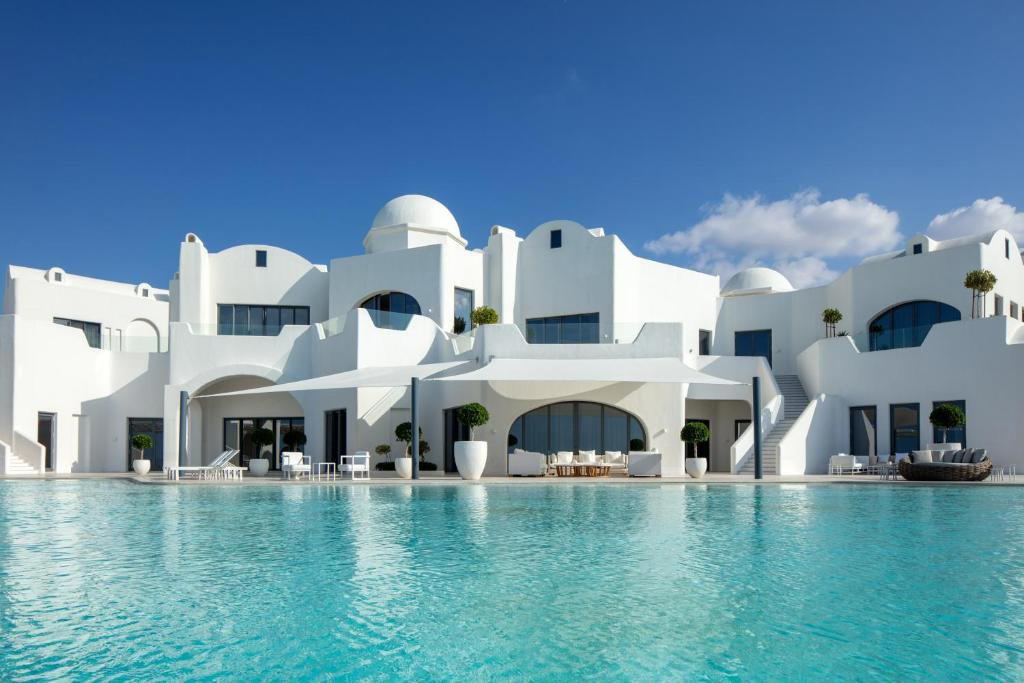
White Geometry on a Gulf Shoreline
The Cycladic architectural tradition was built around a specific environmental logic: thick whitewashed walls to deflect heat, curved forms to channel sea breezes, terraced layouts that cascade toward water. Santorini's villages developed this grammar over centuries in response to volcanic terrain and an Aegean climate. What makes Anantara Santorini Abu Dhabi Retreat a compositionally interesting proposition is how that same grammar has been transposed onto the Gulf coast at Ghantoot, where the Al Jarf coastline offers a low, horizontal horizon rather than the sheer caldera drops of Oia or Fira. The result is a design exercise in selective translation — keeping the white volumes, the cave-like recesses, and the blue-accent punctuation while acknowledging that the drama here comes from water meeting flat desert rather than cliff meeting sea.
Ghantoot sits in a corridor that most visitors to the UAE pass through rather than stop in. Located on the Abu Dhabi emirate side of the Dubai-Abu Dhabi border zone, the area has historically been a transitional stretch — palm farms, equestrian clubs, and the occasional resort property, rather than a destination in its own right. That relative quiet is, in this context, the point. Retreats in the Gulf have increasingly bifurcated between large urban properties with wellness amenities bolted on and smaller, deliberately remote properties where the withdrawal from city density is the primary offer. Anantara Santorini Abu Dhabi Retreat positions itself firmly in the second category, and the location at Al Jarf 22 is as much a design decision as any architectural choice on the property itself.
How the Design Reads on the Ground
Cycladic architecture succeeds when its forms create enclosure without oppression, the sensation of being held by a space rather than confined by it. Done well, the whitewashed curves and stepped terraces produce a visual quiet that is quite distinct from the marble-and-height luxury vocabulary common across UAE hospitality. Properties like Conrad Abu Dhabi Etihad Towers or Fairmont Bab Al Bahr operate in an entirely different aesthetic register: vertical, monumental, skyline-conscious. The Santorini-referencing approach inverts that logic, keeping volumes low and surfaces matte, letting the Gulf water read as the vertical element in the composition.
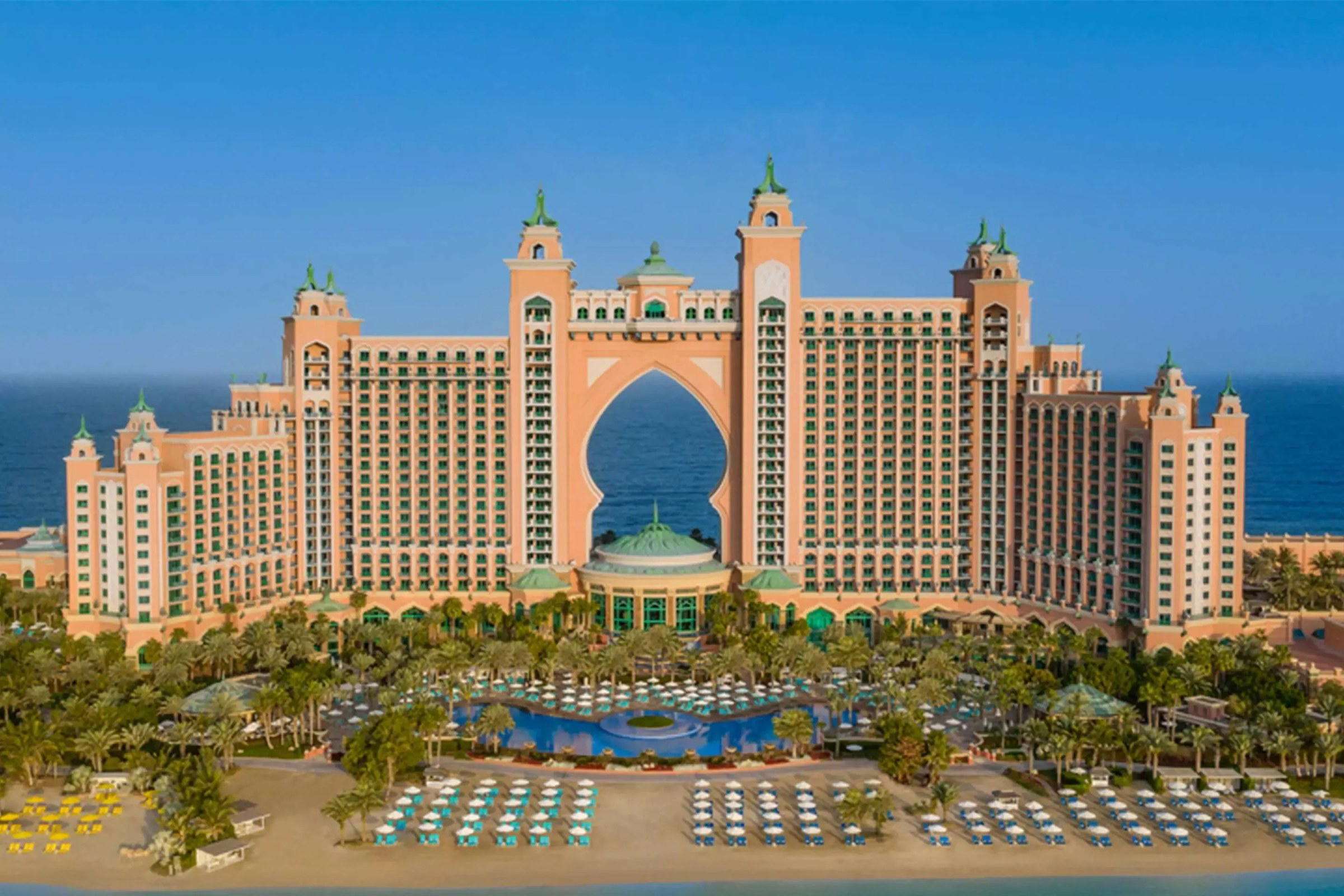
For guests arriving from Dubai's density, or from a property like Atlantis The Royal in Dubai, which occupies the far end of the Gulf hospitality spectacle spectrum, the tonal shift is immediate. The white-and-blue palette absorbs rather than amplifies. This is relevant to the retreat category specifically: the design is not decorative but functional, calibrated to reduce visual stimulation as a precondition for the wellness programming that defines how the property operates.
Globally, this design-led retreat model has strong precedents. Amangiri in Canyon Point uses poured concrete that mirrors surrounding canyon geology. Castello di Reschio in Lisciano Niccone works within a restored Umbrian estate. Hotel Esencia in Tulum uses jungle enclosure as its primary design gesture. Each of these properties uses its physical environment as a structural argument for why the stay feels different. Anantara Santorini Abu Dhabi Retreat makes the same argument through Mediterranean-referencing geometry set against Gulf light.
Where It Sits in the UAE Retreat Market
The 2025 World Travel Awards named Anantara Santorini Abu Dhabi Retreat the UAE's Leading Retreat, a category distinction that separates it from the broader hotel market. In a country where hospitality investment has been concentrated in urban towers, waterfront mega-resorts, and desert camps, the retreat designation covers a narrower and more specific tier: properties where programming, pace, and seclusion carry as much weight as room design or F&B; credentials.
Within the Anantara portfolio specifically, the UAE presence spans different environments and scales. Anantara Qasr al Sarab Desert Resort in the Liwa Desert offers a dune-immersion model that is geographically and aesthetically remote. Desert Islands Resort and Spa by Anantara in Al Dhafra works from a conservation-island premise. The Santorini property adds a third environmental logic to the portfolio: coastal and architecturally referential, positioned between Abu Dhabi and Dubai in a way that gives it accessibility without forfeiting separation from urban pace.
For comparison across the broader region, Al Badayer Retreat by Sharjah Collection in Sharjah operates from a desert dune setting with a similarly low-key, low-density premise. Anantara Mina Ras Al Khaimah Resort in Ras Al Khaimah occupies yet another coastal typology. The UAE's premium accommodation market has quietly developed genuine range across terrain types, and the Ghantoot property slots into that range at the architecture-led, retreat-specific end.
Guests drawn to the broader category of design-conscious retreats elsewhere, whether at Cheval Blanc Paris, Hotel Du Cap-Eden-Roc in Cap d'Antibes, or La Réserve Paris, will recognize the underlying proposition: that the physical environment of a property is not backdrop but programme, and that getting the architecture right is inseparable from getting the guest experience right.
Atmosphere and Practical Approach
The atmosphere at properties of this type is calibrated around subtraction. There is less noise, less visible staff traffic, less visual complexity than at a comparable-tier urban hotel. The Cycladic design reinforces this: the absence of sharp angles, glass towers, or maximalist ornamentation creates an environment where the Gulf horizon becomes the room's dominant feature regardless of which direction you face.
Ghantoot's positioning means the property is accessible from both Abu Dhabi and Dubai without belonging operationally to either. Guests travelling from Abu Dhabi's hotel corridor, which includes properties like Emirates Palace Mandarin Oriental and Conrad Abu Dhabi Etihad Towers, will find the drive short enough to be easy and different enough in character to feel like genuine displacement. For those arriving from the Dubai side, the context is similarly clear: this is not a city hotel with a spa wing, but a property where the pace of stay is structured around stillness. For an alternative take on what Abu Dhabi-adjacent retreats offer, Arabian Nights Village Rd in Abu Dhabi provides a desert contrast, while Jebel Hafeet in Al Ain offers a mountain-leading alternative for those covering the wider emirate. See our full Ghantoot guide for additional context on what the area offers beyond this property.
What the World Travel Awards designation does confirm is that in 2025, within the UAE's own hospitality industry assessment, this property was placed at the head of its specific category.
Side-by-Side Snapshot
Comparable venues nearby, for context on price, style, and recognition.
| Venue | Cuisine | Price | Awards | Notes |
|---|---|---|---|---|
| Anantara Santorini Abu Dhabi RetreatThis venue — the venue you are viewing | Greek-island-inspired ultra-luxury adults-only beachfront retreat | Not listed | World Travel Awards | Not listed |
| Gran Meliá Dubai | Luxury Mediterranean-inspired urban beachfront resort positioned as a flagship Gran Meliá property in Dubai Jumeirah. | Not listed | Not listed | Port de La Mer, Jumeirah 1 |
| Rixos Premium Dubai JBR | luxury beach resort | Not listed | World Travel Awards | Al Sufouh 2 |
| One&Only Royal Mirage | Luxurious Arabian palace resort with three distinct wings: Arabian Court, Palace, and Residence. | Not listed | Michelin Selected · La Liste Top Hotels | Al Sufouh 2 |
| Sofitel Dubai Downtown | Luxury urban tower with French-inspired sophistication | $500–750 | Michelin Selected | Downtown Dubai |
| Telal Resort Al Ain | Luxury desert oasis blending traditional Arabic heritage with contemporary amenities, positioned as an upscale wellness and adventure retreat. | $200–300 | World Travel Awards | Remah |
Recognition history
Dated appearances from independent guides and award organizations, with the underlying list record or original source where available.
World Travel Awards
World Travel Awards
Details
- Romantic
- Quiet
- Elegant
- Sophisticated
- Scenic
- Intimate
- Ornate
- Honeymoon
- Romantic Getaway
- Wellness Retreat
- Anniversary
- Weekend Escape
- Beachfront
- Infinity Pool
- Private Villa
- Panoramic View
- Wi Fi
- Pool
- Spa
- Fitness Center
- Room Service
- Concierge
- Business Center
- Valet Parking
- Waterfront
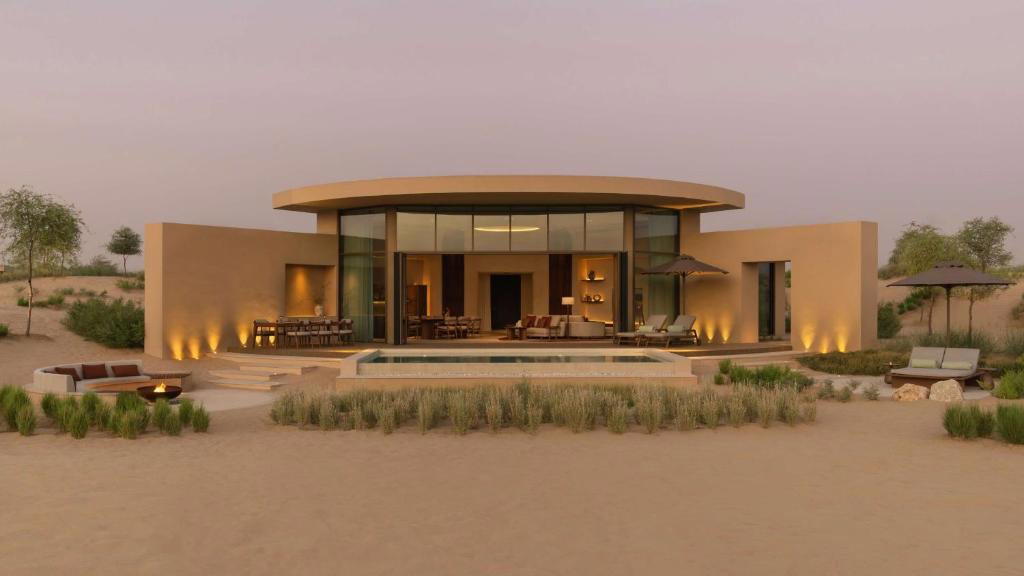
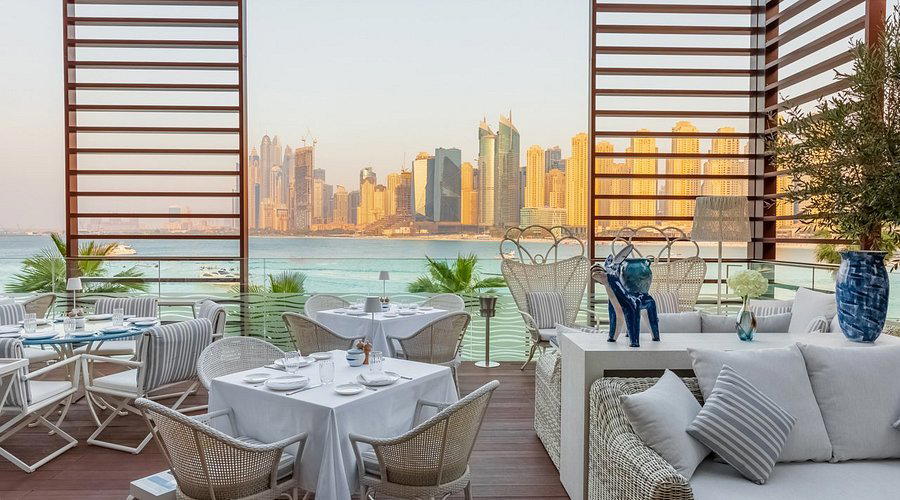
Serene and tranquil with a sophisticated, relaxing atmosphere featuring Cycladic-inspired white architecture against the azure sea, praised for its peaceful luxury and immaculate serenity.