Arabian Nights Village Rd
Arabian Nights Village in Abu Dhabi's Mshayrif district occupies a category that few desert experiences in the UAE attempt: a fixed-structure encampment designed to read as traditional Bedouin architecture rather than a temporary tent installation. The property sits outside the city's hotel corridor, positioning it as a destination in its own right for travellers seeking the desert as environment rather than backdrop.

Pearl is the En Primeur Club membership app, where members save venues, book tables and use the concierge.
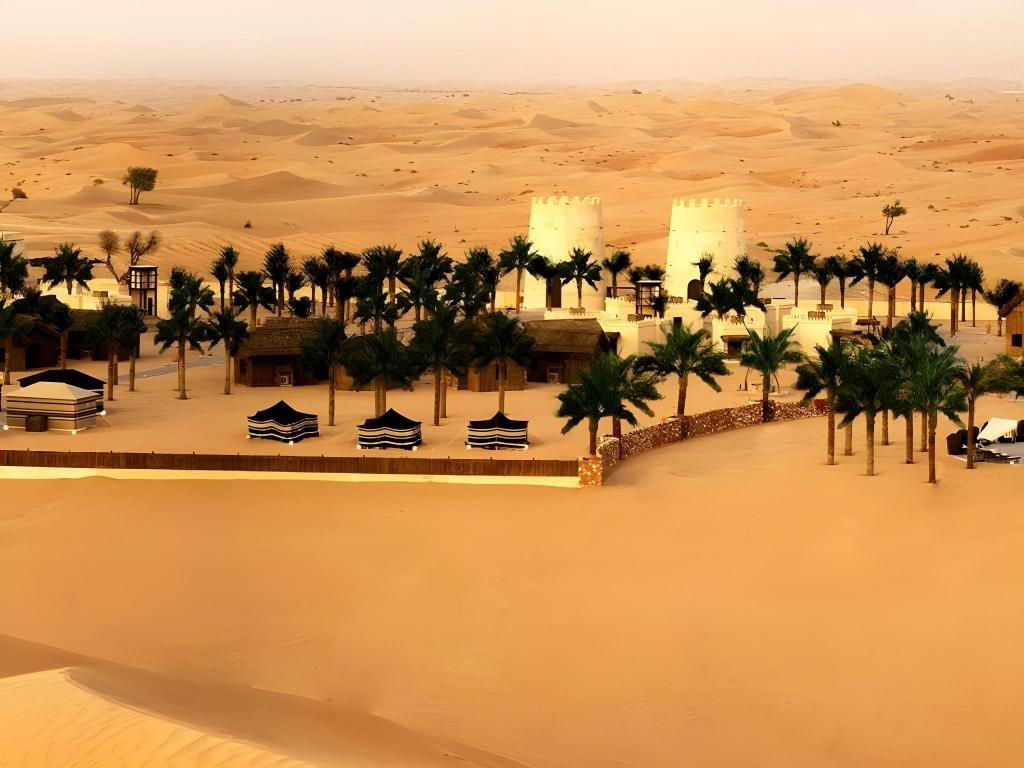
Where the Desert Becomes the Design
Abu Dhabi's approach to desert hospitality has split into two distinct camps over the past decade. The first is the resort-annexed desert experience: a manicured dune view from a pool terrace, packaged inside a five-star urban property. The second is the immersive overnight format, where the desert itself functions as the architecture. Arabian Nights Village sits firmly in that second category, occupying the Mshayrif area outside the city and operating as a self-contained destination rather than an excursion add-on to a property like the Emirates Palace Mandarin Oriental, Abu Dhabi or the Four Seasons Hotel Abu Dhabi at Al Maryah Island.
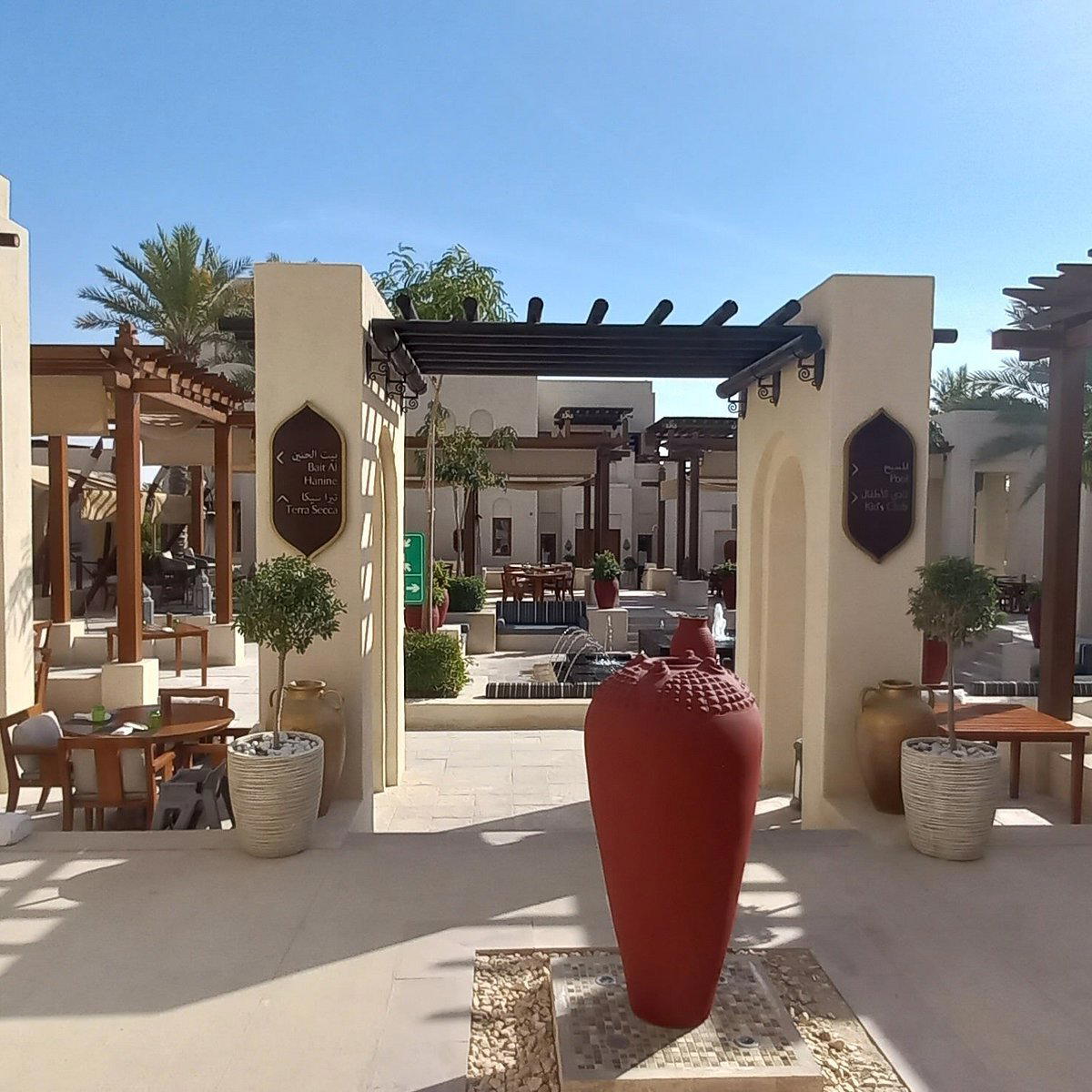
The distinction matters architecturally. Where resort desert camps typically deploy canvas marquees and modular furniture, Arabian Nights Village uses fixed mud-brick and palm-frond construction that references the traditional Bedouin winter encampment. The structures are low, earth-toned, and deliberately irregular in their massing, sitting against the dune horizon without the visual intrusion of imported materials or contemporary lines. This is a design posture, not an accident: the property is arguing, through its built form, that authenticity is a spatial condition as much as a cultural one.
The Architecture of Intentional Restraint
The Gulf's premium desert segment has long wrestled with a tension between comfort expectation and environmental character. Properties like Anantara Qasr al Sarab Desert Resort in Liwa Desert resolve this tension through scale and landscaping, creating a palatial idiom that reads as Arabian fortress rather than encampment. Arabian Nights Village takes the opposite approach, keeping structures close to the ground and proportioned to the scale of a working seasonal settlement rather than a destination resort.
This restraint is most visible in how the accommodation units relate to the surrounding landscape. Rather than orienting rooms toward curated views framed by designed terraces, the spatial logic here is more porous: the threshold between interior and exterior is intentionally soft, with open courtyard areas and low-walled enclosures that place guests inside the dune environment rather than above it. Travellers arriving from city properties like the Andaz Capital Gate Abu Dhabi will find the tonal shift significant. The Andaz's deconstructivist tower, an 18-degree inclined structure in the capital's urban core, represents one end of the UAE's architectural ambition spectrum; Arabian Nights Village represents the deliberate inverse.
The analogy extends internationally. Design-led low-intervention properties like Amangiri in Canyon Point have built international reputations around a similar premise: that architecture in extreme landscapes earns its authority through material honesty and spatial deference rather than contrast or spectacle. Arabian Nights Village operates in that same philosophical territory, though within a regional vernacular specific to the Arabian Peninsula.
Positioning Within Abu Dhabi's Desert Offer
Abu Dhabi's desert hospitality offer is geographically dispersed in a way that shapes how properties compete. The Liwa corridor, some two hours southwest of the capital, hosts the Rub' al Khali fringe and attracts travellers specifically seeking the Empty Quarter's scale. Properties along the coast like Anantara Sir Bani Yas Island Al Yamm Villa Resort compete on wildlife and marine access rather than dune landscape. Al Wathba, a Luxury Collection Desert Resort and Spa, positioned closer to the capital, competes on spa programming and branded luxury infrastructure.
Arabian Nights Village in the Mshayrif area occupies a different register: closer to the city than Liwa, less branded than Al Wathba, and more architecturally committed to traditional form than most competitor properties. It is pitched at travellers for whom the built environment of the stay is itself part of the cultural proposition. Those seeking the broadest range of curated desert options across the Emirates should also consult Al Badayer Retreat by Sharjah Collection in Sharjah and Anantara Mina Ras Al Khaimah Resort in Ras al Khaimah as reference points for how the broader regional offer is structured.
The Seasonal Logic of Desert Architecture
Desert architecture in the Gulf is inherently seasonal in its use logic. The October-to-April window is when ambient temperatures allow outdoor engagement, fire-lit evening programming, and the kind of extended dusk-to-midnight experience that the Bedouin encampment format is designed around. Arabian Nights Village's architectural approach is calibrated to this season: open courtyards, shaded but not enclosed communal spaces, and the use of fire as both heat source and atmospheric anchor all function at their intended level during the cooler months. Arriving in the summer window reverses these advantages, as the same spatial openness that reads as atmospheric in February becomes a thermal liability in July.
This is a general truth about the category, not a specific limitation: the same seasonal logic applies to the desert tented camps of the Wadi Rum in Jordan, the sand-belt properties of Rajasthan, and the canyon retreats of the American Southwest. Amangiri manages this through deep overhangs and underground-cooled public spaces; Arabian Nights Village relies more directly on the natural rhythm of the desert year. For Abu Dhabi visitors planning around this, the city's hotel scene, covered in detail in our full Abu Dhabi guide, offers strong alternatives at other times of year: the Fairmont Bab Al Bahr, ERTH Abu Dhabi Hotel, and Conrad Abu Dhabi Etihad Towers all hold their value year-round in the city proper.
Planning a Stay
Arabian Nights Village is located in the Mshayrif area outside Abu Dhabi, accessible by car from the capital. For travellers combining the experience with broader UAE travel, the property pairs logistically with desert region visits to Desert Islands Resort and Spa by Anantara in Al Dhafra or with a circuit that includes Jebel Hafeet in Al Ain. Those whose itinerary extends to Dubai can cross-reference against Atlantis The Royal in Dubai, which occupies the opposite end of the experiential spectrum: maximalist, waterfront, spectacle-led. The Mshayrif location is leading visited during the cooler half of the year, with November through March offering the most aligned conditions for an encampment-format stay.
How It Stacks Up
| Venue | Price | Awards |
|---|---|---|
| Arabian Nights Village RdThis venue (the venue you are viewing) | $200–300 | Not listed |
| Conrad Abu Dhabi Etihad Towers | Not listed | 1 Michelin Key · La Liste Top Hotels |
| Emirates Palace Mandarin Oriental, Abu Dhabi | Not listed | 2 Michelin Keys · La Liste Top Hotels |
| Fairmont Bab Al Bahr | Not listed | Michelin Selected · Forbes 4-Star |
| Four Seasons Hotel Abu Dhabi at Al Maryah Island | $300–500 | 1 Michelin Key · La Liste Top Hotels |
| Jumeirah Saadiyat Island | $750–1,000 | 1 Michelin Key · La Liste Top Hotels |
Continue exploring
More in Abu Dhabi
Hotels in Abu Dhabi
All hotels in Abu Dhabi →
Bars in Abu Dhabi
All bars in Abu Dhabi →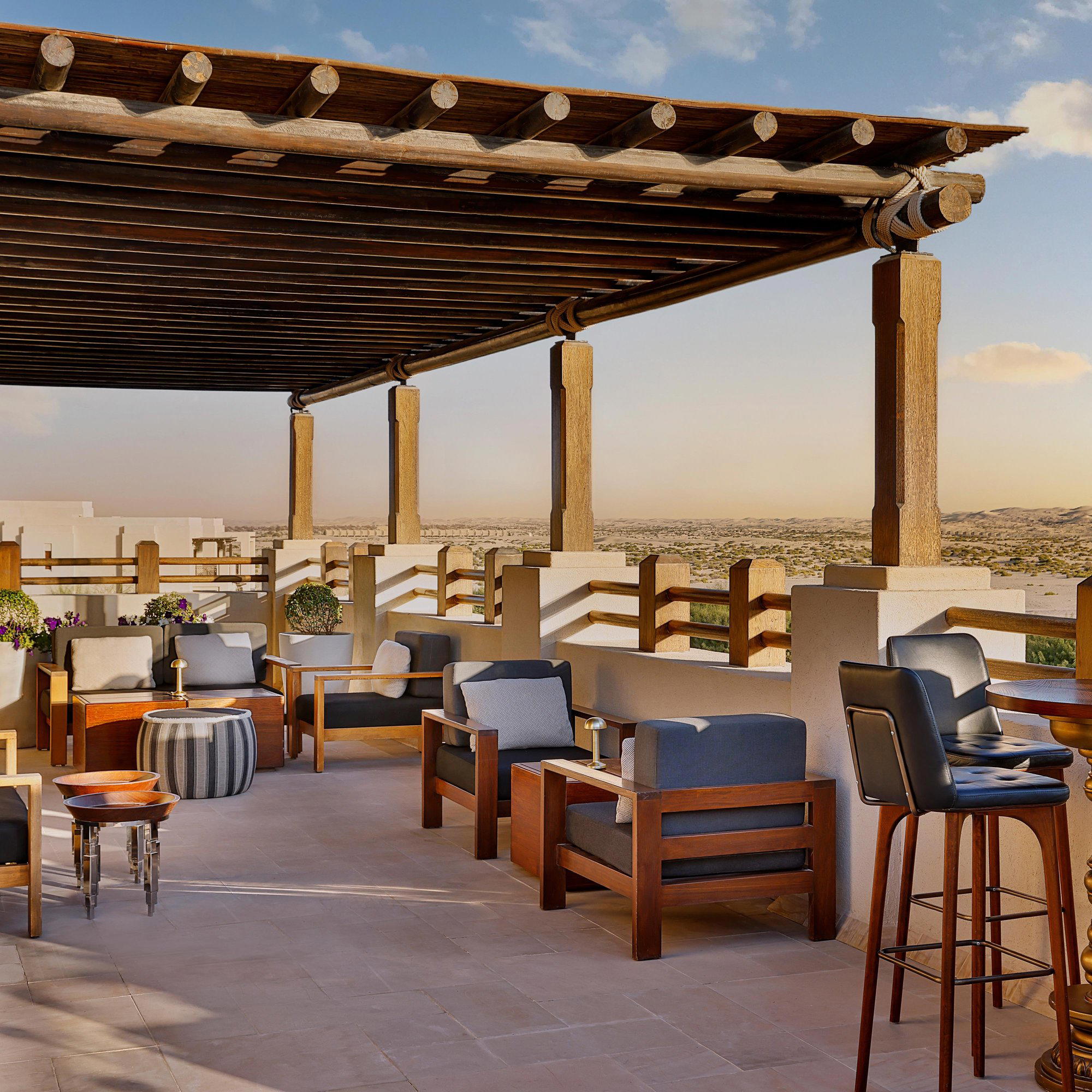
Details
- Romantic
- Scenic
- Rustic
- Elegant
- Whimsical
- Bohemian
- Romantic Getaway
- Family Vacation
- Weekend Escape
- Celebration
- Group Retreat
- Private Villa
- Panoramic View
- Garden
- Terrace
- Historic Building
- Destination Spa
- Pool
- Restaurant
- Free Parking
- Wi Fi
- Room Service
- Concierge
- Garden
Magical desert atmosphere with ambient lighting along paved walkways, fire pits under starlit skies, and traditional Arabian interiors featuring dark woods, Arabian weaves, and natural materials.