Al Badayer Retreat by Sharjah Collection

World Luxury Hotel Awards WLHA Continent Winner
Al Badayer Retreat by Sharjah Collection sits in the Al Madam desert corridor, holding double recognition as Global Winner for Luxury Desert Resort and Continent Winner for Luxury Cultural Retreat. It represents a deliberate counterpoint to the UAE's coastal hotel model, placing guests inside the dunes rather than beside the sea. For travellers orienting around landscape, architecture, and Emirati cultural depth, it occupies a clear position at the top of the desert-retreat category.

Pearl is the En Primeur Club membership app — saves, bookings, and concierge access live there. Same editors, same standards.
- Address
- Al Madam - Sharjah - United Arab Emirates
- Phone
- +971 6 801 2000
- Website
- sharjahcollection.ae
- Directions
- Get directions
The Desert as Design Brief
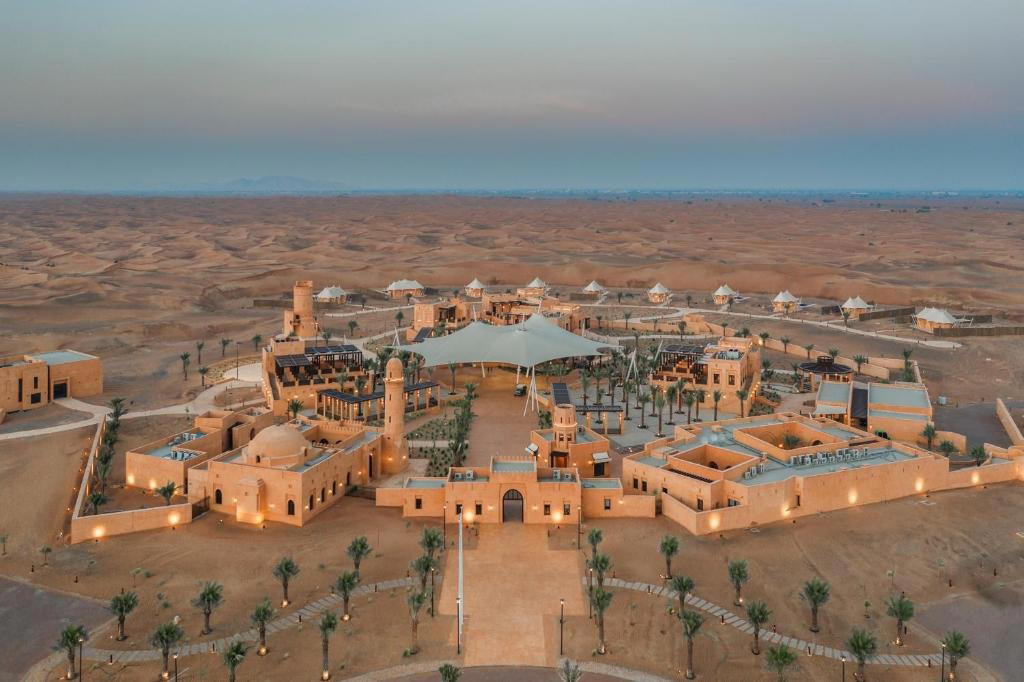
The UAE's luxury hotel market has, for decades, organised itself around coastline. Palm islands, marina frontages, and beach clubs define the competitive vocabulary of Dubai and Abu Dhabi's dominant properties. What the Al Madam corridor in Sharjah represents is a deliberate inversion of that logic: the desert not as backdrop, but as the entire architectural and experiential premise. Al Badayer Retreat by Sharjah Collection operates within that inversion, and the World Luxury Hotel Awards have recognised it twice over — as Global Winner for Luxury Desert Resort and Continent Winner for Luxury Cultural Retreat. Those two awards, held simultaneously, are not redundant. They reflect two distinct judgements: one about the physical environment and hospitality infrastructure, the other about how well the property engages with Emirati heritage as a substantive subject rather than decorative motif.
Desert retreats across the Gulf tend to split between two models. The first uses the dunes as scenery for amenities that could exist anywhere: infinity pools, international dining, spa menus drawn from Balinese or Ayurvedic traditions. The second makes the desert itself the content, subordinating conventional luxury signals to landscape immersion and local cultural programming. Al Badayer Retreat belongs firmly to the second category, a positioning confirmed by its Luxury Cultural Retreat recognition at the continental level. For properties like Anantara Qasr Al Sarab Desert Resort in the Liwa Desert or the Arabian Nights Village in Abu Dhabi, the desert-immersion model is also the operating premise, which makes the Al Madam area a genuinely competitive tier rather than an isolated outpost.
Architecture in the Dunes: Reading the Physical Language
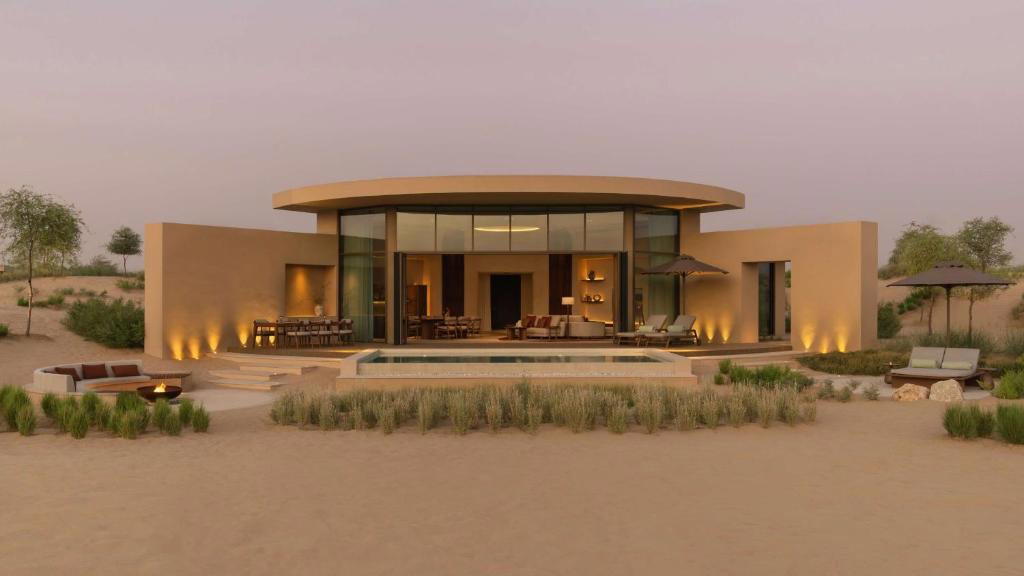
The Al Madam area sits inland from Sharjah's urban coast, within reach of the red-sand dune systems that define this part of the emirate. Desert architecture at this latitude faces a specific set of constraints: solar gain, wind-driven sand, the need for shade without visual enclosure, and the challenge of building at a scale that reads as human rather than industrial against an open horizon. The design response at Al Badayer leans toward the vernacular, using forms and materials that echo traditional Gulf construction rather than importing a generic contemporary aesthetic. This is a common approach among the stronger desert properties in the region, but execution varies considerably.
The architectural conversation in premium desert hospitality has shifted significantly over the past decade. Properties that once prioritised dramatic formal gestures — cantilevers, glass facades, feature lighting visible from a kilometre away, have given ground to a quieter approach that treats the site as sovereign. The retreat model, by definition, asks its architecture to recede in certain ways while still delivering spatial experiences worth travelling for. Globally, properties like Amangiri in Canyon Point have set a high reference point for this kind of landscape-integrated architecture, where the building appears to emerge from rather than impose upon the terrain. Al Badayer's placement in the Sharjah Collection portfolio positions it within that international conversation, even if it operates at a regional scale.
Sharjah's Cultural Infrastructure and What It Means for Guests
Choosing Al Badayer is, in part, a choice about Sharjah as an emirate. Sharjah has cultivated a distinct identity within the UAE, more conservative in social policy than Dubai, more invested in arts, heritage, and Islamic cultural programming than most of its neighbours. It holds UNESCO Creative City of Culture status, operates a significant museum network, and actively distinguishes its tourism offer from the nightlife and spectacle economy of Dubai. For the type of traveller drawn to Al Badayer's cultural retreat designation, this emirate-level context matters. The property does not exist in isolation from Sharjah's broader institutional investment in heritage tourism.
Guests travelling to the Al Madam area are, practically speaking, some distance from Sharjah's urban museum quarter and from Dubai's international connectivity. This is a feature for the right traveller and a friction point for others. The Al Faya Retreat by Sharjah Collection offers a comparable desert-and-heritage positioning within the same collection, and Kingfisher Retreat by Sharjah Collection extends the portfolio into a different landscape register. Together they suggest that the Sharjah Collection is building a network of immersive, culturally grounded properties rather than a single flagship, a strategy closer to what Castello di Reschio in Umbria does with estate-based hospitality than anything resembling a conventional hotel group.
Situating Al Badayer in the UAE's Desert-Luxury Tier
The Gulf desert-resort tier has attracted significant international brand investment. Desert Islands Resort and Spa by Anantara in Al Dhafra combines wildlife programming with luxury infrastructure. Anantara Mina Ras Al Khaimah Resort works a different coastal-desert edge. Jebel Hafeet in Al Ain draws on mountain desert topography. What differentiates Al Badayer within this competitive set is the explicit cultural-retreat framing alongside the desert-resort designation. Most desert properties in the region are primarily experiential, dune bashing, camel trekking, stargazing, with culture as a secondary layer. The Continent Winner for Luxury Cultural Retreat recognition implies a different balance, one where Emirati cultural programming carries genuine structural weight in the guest experience.
This positions Al Badayer closer in spirit to how properties like Hotel Esencia in Tulum integrate local cultural context into their hospitality model, or how Aman Venice uses its palazzo setting as substantive content rather than scenic container. The comparison is not about scale or price but about the role that cultural specificity plays in the guest proposition.
Planning Your Stay
Al Badayer Retreat by Sharjah Collection is located in the Al Madam area of Sharjah, inland from the coast and accessible by road from both Sharjah city and Dubai. The optimal travel window for the UAE's interior desert runs from October through April, when daytime temperatures are manageable and evenings in the dunes drop to genuinely cool. Summer months in this region involve extreme heat that limits outdoor programming significantly. Booking through the Sharjah Collection directly is advisable, as the collection's retreats operate as destination properties where pre-arrival communication about programming and logistics is part of the experience. For travellers comparing UAE desert options in a wider regional context, the full Sharjah restaurants and hotels guide provides broader orientation, and properties like Atlantis The Royal in Dubai or Fairmont Ajman represent the coastal-luxury alternative for those weighing different UAE experiences.
Quick Comparison
Comparable venues nearby, for context on price, style, and recognition.
| Venue | Cuisine | Price | Awards | Notes |
|---|---|---|---|---|
| Al Badayer Retreat by Sharjah CollectionThis venue — the venue you are viewing | Traditional Emirati tents and low-rise buildings blending desert luxury with cultural authenticity | Not listed | World Luxury Hotel Awards WLHA Continent Winner | Not listed |
| Al Faya Retreat by Sharjah Collection | Contemporary architectural icon blending heritage with luxe modernity in desert setting | Not listed | Michelin Selected · World Luxury Hotel Awards WLHA Continent Winner | Al Madam |
| Kingfisher Retreat by Sharjah Collection | Luxury eco-glamping resort blending traditional Emirati design with contemporary comfort, positioned as a conservation-focused destination. | $300–500 | World Luxury Hotel Awards WLHA Continent Winner | Kalba |
| The Chedi Al Bait | Boutique heritage resort preserving Emirati manor houses with modern luxury. | $300–500 | Michelin Selected · Mr & Mrs Smith Seal of Approval | Heart of Sharjah |
| FORM Hotel Dubai, member of Design Hotels | Contemporary Art Deco sanctuary in historical Al Jaddaf District | Not listed | World Luxury Hotel Awards WLHA Country Winner | Jaddaf |
| Bvlgari Resort & Mansions Abu Dhabi | Ultra-luxury Bvlgari-branded island palace resort integrating hotel, villas and branded mansions around a marina and yacht club. | Not listed | Not listed | .private island off Abu Dhabi Corniche near Qasr Al Watan |
Recognition history
Dated appearances from independent guides and award organizations, with the underlying list record or original source where available.
World Luxury Hotel Awards WLHA Continent Winner
World Luxury Hotel Awards
Full recognition history (2 entries)
World Luxury Hotel Awards WLHA Global Winner
World Luxury Hotel Awards
Details
- Romantic
- Quiet
- Elegant
- Scenic
- Rustic
- Intimate
- Ornate
- Romantic Getaway
- Family Vacation
- Wellness Retreat
- Weekend Escape
- Private Villa
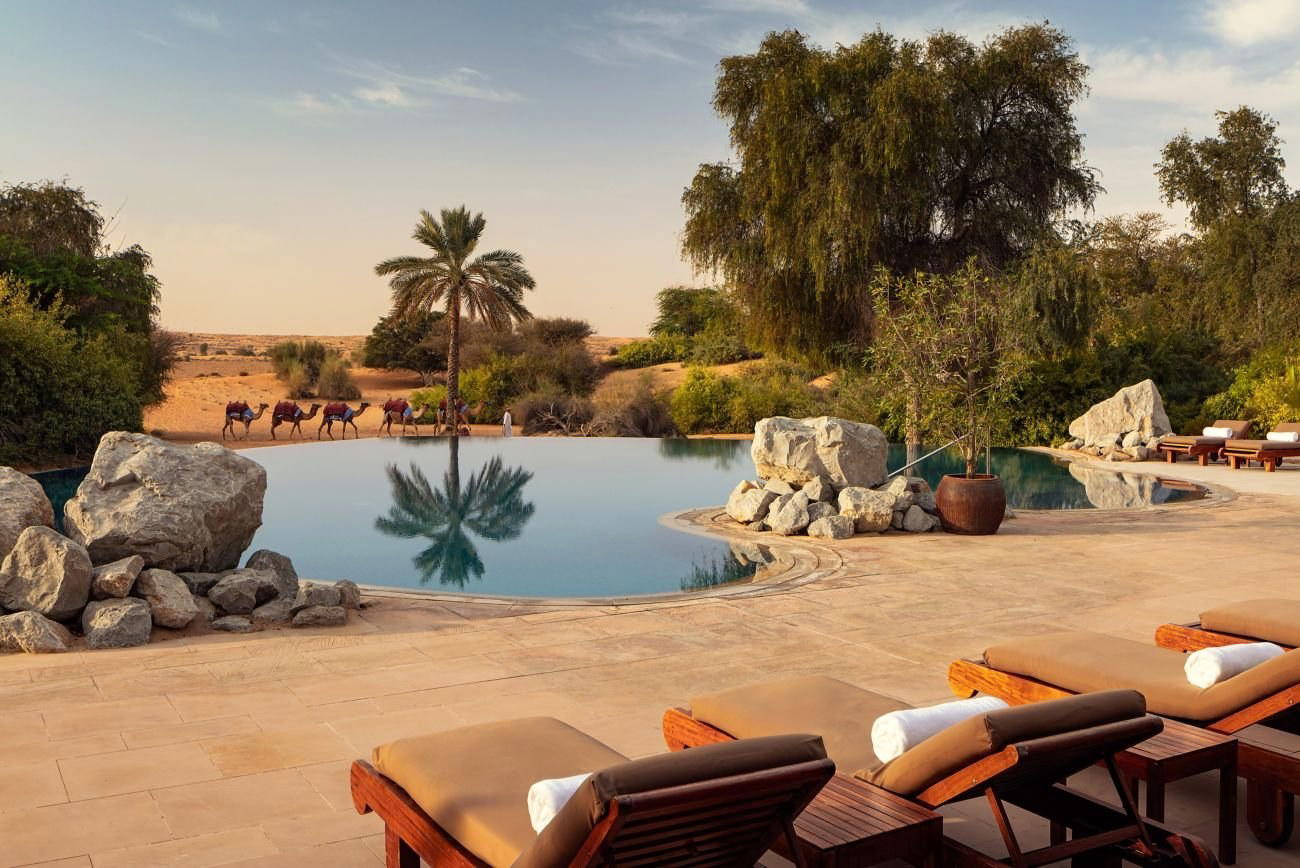
- Infinity Pool
- Panoramic View
- Terrace
- Wi Fi
- Pool
- Spa
- Fitness Center
- Room Service
- Concierge
- Indoor Pool
- Outdoor Pool
- Wheelchair Accessible
- Elevator
- Step Free Entrance
- Accessible Parking
Peaceful and relaxing desert atmosphere with traditional Middle Eastern luxury, enhanced by spellbinding sunrises and sunsets over vast dunes.