Thirteen Water
On East 7th Street in the East Village, Thirteen Water occupies a corner of Lower Manhattan where sustainability-minded drinking has quietly taken hold. The bar's address places it within walking distance of the neighborhood's most considered cocktail programs, and its approach to sourcing and waste sits closer to the ethical-sourcing tier than the volume-driven cocktail bars nearby.
Pearl is the En Primeur Club membership app — saves, bookings, and concierge access live there. Same editors, same standards.
- Address
- 208 E 7th St, New York, NY 10009
- Phone
- +1 718 598 8556
- Website
- thirteenwater.com
- Directions
- Get directions
 Saves & bookings on Pearl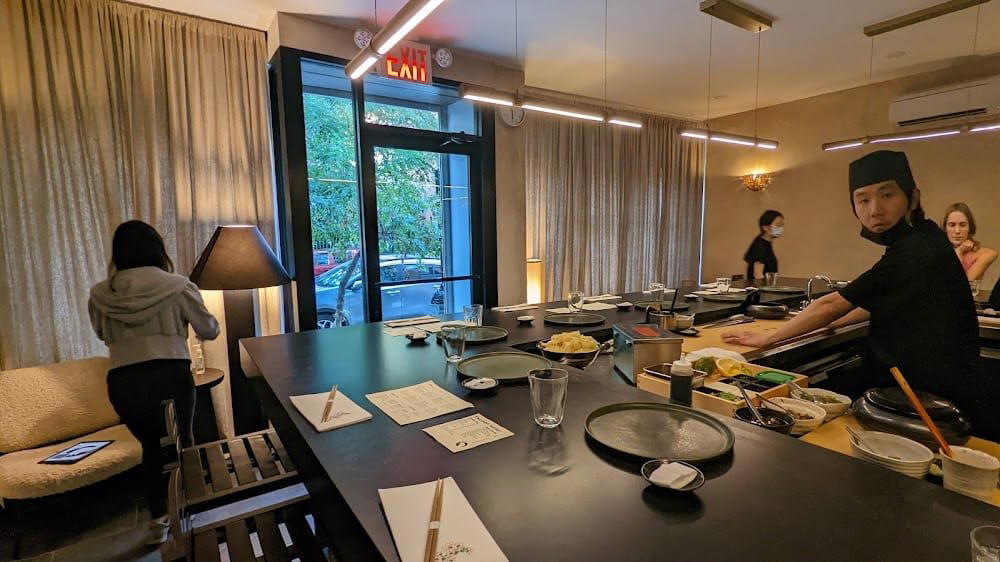
East Village Drinking, Redrawn Around What Gets Poured Down the Drain
The East Village has never been short of bars with a point of view. What has changed in the past several years is the nature of that point of view: the neighborhood's most interesting programs have moved away from provenance-as-theater and toward sourcing and process as genuine operating logic. Thirteen Water, a bar at 208 E 7th St in New York's East Village, has a price tier of about $80 per person. Its address alone puts it in conversation with some of the more thoughtful small-footprint cocktail rooms in Lower Manhattan, and the questions worth asking about it are the same questions that now define serious bar programming across the city: where does the spirit come from, what happens to what's left over, and does the glass tell you anything true about those decisions.
How East Village Cocktail Culture Got Here
New York's cocktail scene spent the better part of a decade organizing itself around the speakeasy format: hidden doors, theatrical concealment, and menus that rewarded those in the know. That era produced some genuinely precise programs, but it also produced a lot of atmosphere without substance. The correction has been toward transparency, both literally and operationally. Bars like Amor y Amargo, with its amaro-forward approach and educational lean, demonstrated that constraint and specificity could be a program's whole identity. Attaboy NYC pushed further into the guest-led, no-menu format that demands real depth of knowledge from its bartenders. Angel's Share, still operating in the East Village, represents an earlier vintage of the no-fuss, high-craft Japanese-influenced model that predates most of what followed.
Thirteen Water enters this neighborhood with sustainability as its organizing logic rather than format novelty. That's a meaningfully different starting point. Where the speakeasy era built identity around access and secrecy, and the technical era built it around method, the sustainability frame builds it around consequence: what does it mean to run a bar responsibly in a city that generates waste at scale, and can that responsibility show up in the glass rather than just on a framed mission statement.
The Sustainability Frame and What It Actually Means in a Bar
Sustainability in hospitality is one of those terms that has been diluted by overuse. A recycled paper straw on a well-traveled spirit does not constitute a program. At the more serious end of the spectrum, ethical sourcing means relationships with distilleries that pay fair agricultural wages, spirits made from crops grown without petrochemical fertilizers, and suppliers who can name the farm. Waste reduction means closed-loop programs: citrus peels turned into cordials, spent botanicals repurposed rather than composted or landfilled, and batch preparation that reduces the margin of error and the excess.
The bars that have committed to this most visibly across American cities tend to share certain structural features. They run tighter menus with more deliberate ingredient selection. They batch where batching serves quality and reduces waste without sacrificing freshness. They tend to have a longer timeline between menu changes, which requires each drink to hold up across a season rather than generating novelty at the cost of depth. Kumiko in Chicago has done this through a Japanese-influenced lens with notable rigor. ABV in San Francisco built a whole room around the idea that the bottle list and the cocktail program should reflect the same sourcing logic. Allegory in Washington, D.C. has folded botanical sourcing into a narrative-driven format. Bar Leather Apron in Honolulu and Jewel of the South in New Orleans have each demonstrated that regional spirit identity and careful sourcing can coexist with serious technical execution. Julep in Houston has made Southern agricultural sourcing a structural part of its identity rather than a seasonal footnote.
Where Thirteen Water lands within this national conversation is, at this point, something visitors will need to assess in person. What the address does confirm is that it is operating in a neighborhood that has set a high bar for what considered drinking looks like, and the sustainability angle it appears to be pursuing has clear precedents against which any serious assessment would measure it.
Placement in the East Village Tier
The East Village's current cocktail scene splits broadly between high-volume bars that trade on neighborhood energy and lower-capacity programs that trade on depth. Thirteen Water, at its East 7th Street address, is within easy walking distance of both types. The sustainability frame typically correlates with the lower-capacity, higher-intention format: you need enough margin to source carefully, and that margin usually comes from lower throughput rather than higher volume. That is not a rule without exceptions, but it is the pattern that holds across most of the programs mentioned above.
For the visitor plotting a serious East Village evening, the pairing logic is direct. Superbueno on the Lower East Side offers a Latin-inflected, technically rigorous alternative nearby if the itinerary extends beyond a single stop. The neighborhood also rewards the kind of early-evening start that allows for unhurried time at a program like this one, where the point is not speed but attention.
The broader context for anyone arriving from outside New York is that the East Village cocktail room, at its better end, operates on a different register than the hotel bar or the nightlife-adjacent cocktail lounge. The rooms are smaller, the menus are more considered, and the expectation is that the guest is there for the drink rather than the room or the scene. The Parlour in Frankfurt operates on a similar register in the European context: the room is incidental to the glass. That is the tradition the bar appears to be working within.
Planning Your Visit
Know Before You Go
- Address: 208 E 7th St, New York, NY 10009
- Neighborhood: East Village, Manhattan
- Phone: Not currently listed
- Website: Not currently listed
- Hours: Confirm directly before visiting
- Booking: Contact venue to confirm reservation policy
- Getting there: The L train (1st Ave) and F/M trains (2nd Ave) both place you within a short walk of East 7th Street
full New York City restaurants and bars guide.
Comparable Options
Comparable venues nearby, for context on price, style, and recognition.
| Venue | Cuisine | Price | Notes |
|---|---|---|---|
| Thirteen WaterThis venue — the venue you are viewing | sake_bar | $$$ | Not listed |
| Temple Bar | cocktail_bar | $$$ | Greenwich Village |
| Gallow Green | rooftop_bar | $$$ | Chelsea-Hudson Yards |
| NR | cocktail_bar | $$$ | Upper East Side-Lenox Hill-Roosevelt Island |
| New Mulan | Bar | $$$ | Flushing-Willets Point |
| The Press Lounge | rooftop_bar | $$$ | Midtown West |
Continue exploring
More in New York City
Bars in New York City
Browse all →
Restaurants in New York City
Browse all →
Hotels in New York City
Browse all →




At a Glance
- Modern
- Intimate
- Trendy
- Date Night
- Special Occasion
- Design Destination
- Counter Only
- Sake
Current opening hours
- Monday
- Closed
- Tuesday
- 2–4 PM, 5–10 PM
- Wednesday
- 2–4 PM, 5–10 PM
- Thursday
- 2–4 PM, 5–10 PM
- Friday
- 2–4 PM, 5–10 PM
- Saturday
- 2–4 PM, 5–10 PM
- Sunday
- 2–4 PM, 5–10 PM
Hours can change for holidays and private events. Last verified .
Intimate sushi counter with lively energy focused on notable culinary craftsmanship in omakase dining.