Beyond Proof
Beyond Proof belongs to Boston’s growing zero-proof bar conversation, where cocktail technique matters even without alcohol. The draw is the category itself: composed nonalcoholic drinks paired with Mediterranean bites, a format that suits a city increasingly comfortable treating abstention, pacing, and flavor as serious bar decisions rather than compromises.

Pearl is the En Primeur Club membership app — saves, bookings, and concierge access live there. Same editors, same standards.
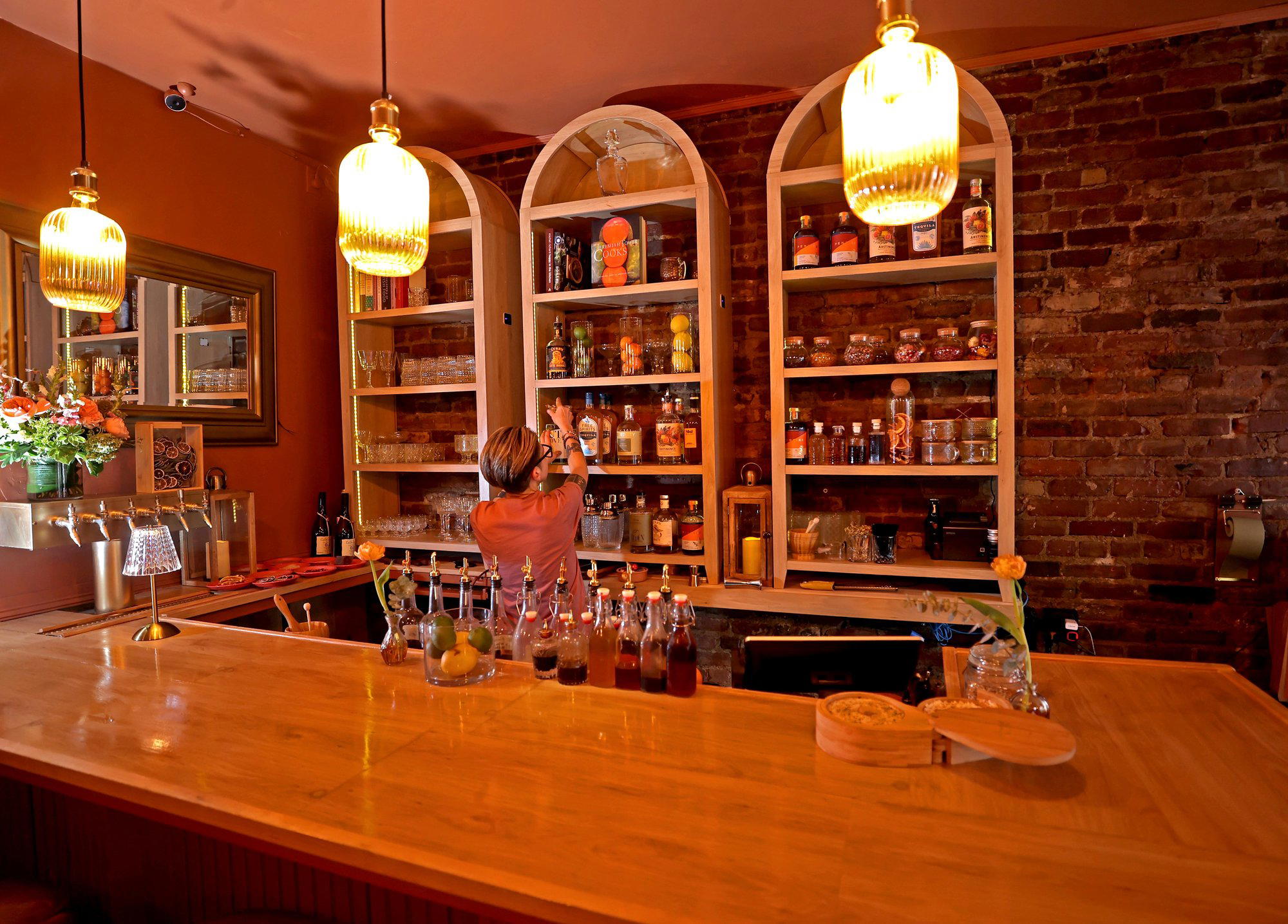
Zero-proof drinking gets a sharper Boston frame
Approach a contemporary zero-proof bar and the cues are familiar before the first order: glassware, citrus, ice, bar tools, and the low theatre of a drink being built with intention. The difference is not absence but structure. In Boston, where serious drinking has long meant brown spirits, hotel martinis, craft beer, and restaurant-led cocktail lists, Beyond Proof enters a newer lane: zero-proof cocktails with Mediterranean bites. That category matters because it changes what a bar is asked to do. Without alcohol carrying weight, heat, aroma, and ritual, the drink program has to find architecture elsewhere, through acidity, bitterness, texture, dilution, spice, and pacing.
Boston’s bar culture is not short on established formats. There are polished steakhouse rooms such as Abe & Louie's, hotel bars such as Avery Bar, and restaurants where the bar is tightly tied to the kitchen, including Baleia. A zero-proof specialist sits outside those familiar tracks. Its value is not measured by how closely it imitates a Negroni or a sour, but by whether the program treats nonalcoholic drinking as its own discipline. Beyond Proof’s recorded focus, zero-proof cocktails and Mediterranean bites, places it in that conversation rather than in the soft-drink corner of a conventional menu.
The cocktail programme is the story, not the loophole
Zero-proof bars have improved because bartenders stopped treating alcohol as the only source of adult complexity. The stronger programs now work from the grammar of cocktails, not the mimicry of spirits. Bitterness can come through aperitif-style infusions or teas; body can be built through syrups, aquafaba, dairy, saline, or carbonation; length can come from tonic, soda, or clarified fruit bases. The point is balance. A drink without alcohol that leans too sweet exposes itself quickly, while one built with tannin, acid, and texture can hold attention over several rounds.
That is the editorial reason Beyond Proof is interesting in Boston. The city has plenty of places where ordering a nonalcoholic drink means scanning for a single menu line. A bar built around the category reverses that hierarchy. The guest is not asking the bartender to make an exception. The whole format assumes that the nonalcoholic drink deserves the same menu space, glassware, and sequencing as a classic cocktail. In a market shaped by universities, hospitals, finance, tech, late dinners, early mornings, and a winter social calendar that can run hard, that shift feels practical rather than pious.
The Mediterranean-bites detail also matters. It suggests a food pairing model based on salt, herbs, olive oil, acid, grains, legumes, vegetables, and small-plate pacing rather than heavy drinking food. A nonalcoholic aperitif-style drink has an easier time beside briny, herb-led food than beside a plate designed mainly to absorb whiskey.
Boston’s sober-curious moment is more adult than abstinent
The national bar conversation has moved beyond January abstinence and designated-driver menus. New York, Chicago, Miami, Houston, Honolulu, New Orleans, and European cocktail cities have all produced bars where technique is the headline. The comparison is useful because it prevents Boston from being read in isolation. A room such as Superbueno in New York City shows how identity-driven drinks can anchor a bar; Kumiko in Chicago illustrates the precision end of cocktail service; Café La Trova in Miami ties drinks to live hospitality culture; Jewel of the South in New Orleans reminds readers that historical cocktail cities keep renewing old forms. The zero-proof field borrows lessons from all of that while removing the ingredient many guests once assumed was essential.
Boston’s advantage is a different kind of seriousness. The city can be conservative in its drinking habits, but it rewards places with a clear reason to exist. A zero-proof cocktail room has to be precise about that reason. It cannot rely on a rare bottle list, an age-stated whiskey, or a Champagne label to imply quality. The program is exposed. Technique, menu language, and pacing become the evidence. That exposure is useful for guests: it becomes clear quickly whether the drinks have been engineered as cocktails or assembled as flavored beverages.
Peer references also show how broad the modern bar category has become. Bar Leather Apron in Honolulu works in a high-detail cocktail register; Julep in Houston frames drinks through Southern drinking culture; The Parlour in Frankfurt on the Main sits in a European cocktail context. Beyond Proof is not competing with those bars on awards data in the record, because no awards are listed. The comparison is category-based: all serious bars need a point of view, and zero-proof bars need one that can survive without alcoholic intensity.
Where it fits among Boston drinking options
Boston’s stronger drinking rooms tend to fall into several camps. There are hotel bars built around ceremony and service; restaurant bars where the kitchen sets the tone; neighborhood cocktail rooms that trade on regulars; and newer concept-driven formats that ask the guest to choose an experience before choosing a drink. Beyond Proof belongs to the last group. Its defining information is the format: zero-proof cocktails, Mediterranean bites, Boston.
That makes the venue useful for several kinds of nights. It suits mixed groups where some guests are drinking and others are not, provided the plan is built around nonalcoholic cocktails rather than alcohol with alternatives. It suits early-evening social drinking when the next day matters. It also suits diners who want the cadence of a bar, ordering a drink, sharing small plates, staying for another round, without the effects that usually follow. This is where zero-proof programs earn their place: not by moralizing, but by making the decision feel socially normal and technically considered.
Readers building a broader Boston itinerary should compare the format rather than forcing every bar into one ranking. Equal Measure belongs in the local cocktail discussion as another reference point, while Our full Boston restaurants guide is the better tool for placing drinks around dinner plans, neighborhood movement, and late reservations. Beyond Proof’s narrower appeal is also its strength: it answers a specific demand in a city where many menus now acknowledge nonalcoholic drinking, but fewer rooms are organized around it.
Planning the visit
The practical data is limited, which is itself useful intelligence. That means planning should be conservative: confirm current operating details through a verified channel before setting a fixed plan, especially for groups, weekend evenings, or a visit tied to dinner reservations elsewhere in Boston.
The absence of awards in the available record should not be treated as a quality verdict. For newer, smaller, or category-specific bars, recognition often lags behind the format, and zero-proof programs are not always assessed cleanly by traditional cocktail-award frameworks. The stronger question is whether the room gives nonalcoholic drinking full attention. If the menu reads like a proper cocktail list and the Mediterranean food supports multiple rounds, the value proposition becomes clear: the guest is paying for bar craft, not for ethanol.
- Smoked Old Fashioned
- First Light
- Settle
- Abstinence in Bloom
- Dirty Martini (zero-proof)
- Espresso Martini (zero-proof)
Comparable Venues
Comparable venues nearby, for context on price, style, and recognition.
| Venue | Cuisine | Price | Awards | Notes |
|---|---|---|---|---|
| Beyond ProofThis venue — the venue you are viewing | Not listed | $30–50 | Not listed | Not listed |
| Over the Charles Rooftop Bar | Not listed | $30–50 | Not listed | Allston, rooftop_bar |
| Stillwater | Chinatown, lounge | $30–50 | Not listed | Not listed |
| China Pearl Restaurant | Chinatown, Bar | Not listed | Not listed | Not listed |
| NAMU Distilling Company | Not listed | $20–30 | Star Wine List | Back of the Hill, cocktail_bar |
Continue exploring
More in Boston
Bars in Boston
All bars in Boston →
Restaurants in Boston
All restaurants in Boston →
Hotels in Boston
All hotels in Boston →
Wineries in Boston
All wineries in Boston →
Beyond Proof
The drinks
- Craft cocktails
- Zero-proof drinks
Signature drinks: Smoked Old Fashioned, First Light, Settle, Abstinence in Bloom, Dirty Martini (zero-proof), Espresso Martini (zero-proof).
Details
- Cozy
- Intimate
- Trendy
- Bohemian
- Date Night
- Casual Hangout
- Group Outing
- Solo
- Celebration
- Standalone
- Design Destination
- Seated Bar
- Lounge Seating
- Booth Seating
- Craft Cocktails
- Zero Proof
A snug, neighborhood bar-restaurant with warm rose walls, pink velvet banquettes, a lush floral mural, shelves of glassware and zero-proof bottles behind the bar, and nostalgic pop playing softly, creating an inviting, low-key space for sober and sober‑curious guests.