A Tasca do Chico occupies a narrow room on Rua do Diário de Notícias in the Bairro Alto, operating as one of Lisbon's most persistently attended fado houses. The format is tight: shared tables, unpretentious Portuguese cooking, and live fado that dominates the room from the first song. It draws a mix of locals and informed visitors who know that the best fado in Lisbon rarely announces itself loudly.

Pearl is the En Primeur Club membership app, where members save venues, book tables and use the concierge.
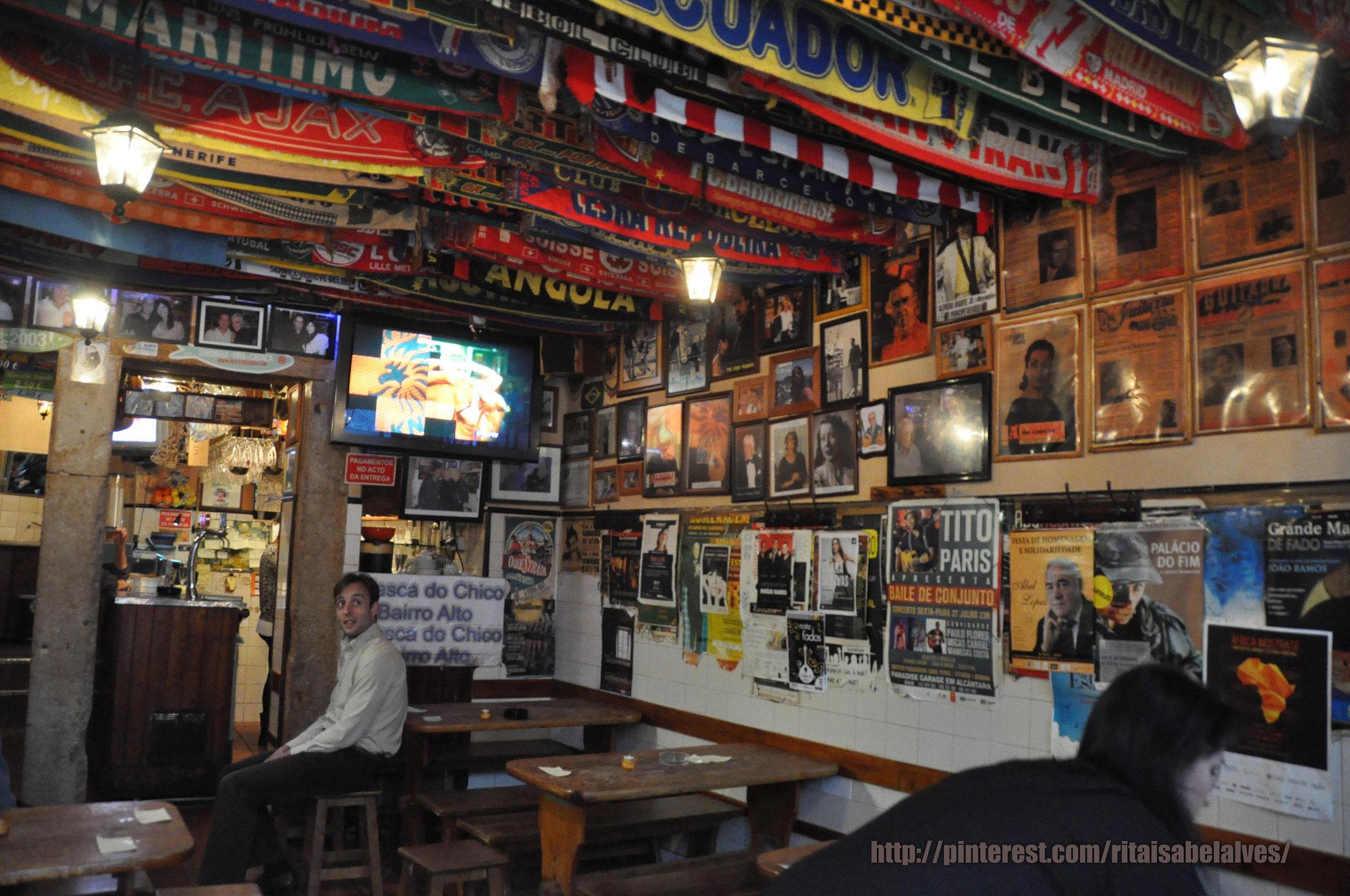
A Room That Does Not Need to Try
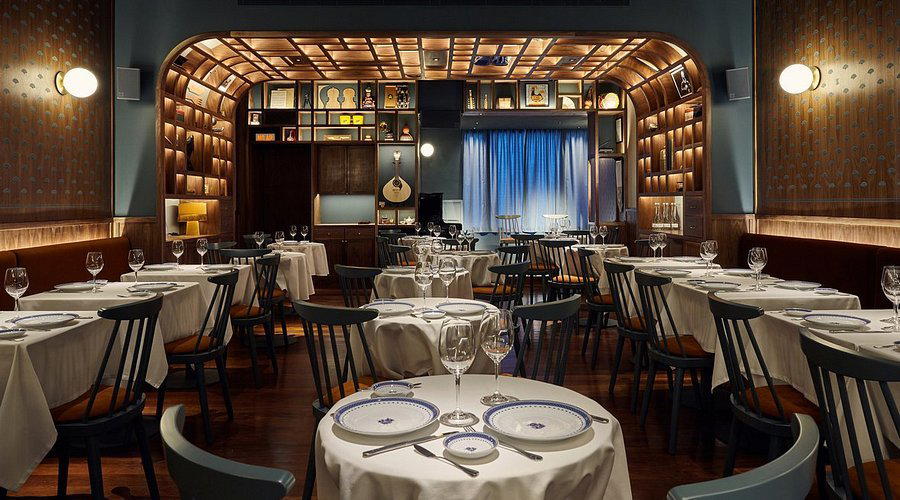
Rua do Diário de Notícias runs through the lower edge of Bairro Alto in a way that feels more residential than touristic, even as the neighbourhood around it has grown considerably more self-conscious over the past decade. A Tasca do Chico sits along this street in a space that communicates nothing from the outside, no dramatic signage, no curated window display. The door opens onto a room where the lighting is low, the tables are close together, and the walls carry the accumulated visual weight of decades of fado photography and memorabilia. In Lisbon's current dining scene, where atmospheric design is increasingly intentional and expensive, spaces like this survive on a different logic entirely: the atmosphere is a byproduct of continuity, not a construction.
That distinction matters more than it might appear. Lisbon's fado houses have split into two distinct tiers over the past twenty years. One tier consists of larger, tourist-facing venues with fixed menus, theatrical lighting, and professional staging that packages fado as a dinner-show format. The other tier operates in smaller, rougher rooms where the music is less predictable, the audience more mixed, and the overall experience more contingent on who happens to perform that night. A Tasca do Chico belongs firmly to the second category, and the address on Rua do Diário de Notícias, 39 places it deep enough into Bairro Alto that it requires the specific intention of someone who knew to look for it.
What the Space Does to the Music
In any room of this size, acoustics are a function of architecture rather than design. The compressed dimensions of a traditional Lisbon tasca mean that fado is heard at proximity rather than at distance, singers occupy the same floor as the audience, without a raised stage creating the formal separation that larger venues depend on. This arrangement changes the emotional register of the music considerably. Fado performed at close range, in a room where conversation drops the moment the first chords sound, carries an immediacy that seated-theatre formats lose by definition.
The furniture and fittings are deliberately unadorned. Wooden chairs, tiled or whitewashed walls, the kind of Portuguese table linen that suggests utility over styling. Lisbon's most discussed restaurant openings in recent years have moved in the opposite direction, commissioning architects and spending heavily on interiors to signal ambition. A Tasca do Chico operates as a counter-signal to that trend, though not through any articulated philosophy, it simply has not needed to change, because the function of the room and what happens in it remains sufficient. For a certain kind of visitor, that kind of spatial honesty is more persuasive than any amount of considered design.
Eating and Drinking in a Working Tasca
The food at a venue of this type is grounded in the same principles as the room itself: recognisable Portuguese cooking, competently executed, oriented around providing a foundation for the wine and music rather than demanding attention in its own right. Traditional tascas across Lisbon have historically served a short rotation of dishes, bacalhau preparations, petiscos, grilled meats, seasonal soups, drawn from the same culinary vocabulary that has structured Portuguese domestic cooking for generations. The wine list in rooms like this tends to favour house pours and regional bottles from the Alentejo, Douro, and Lisbon appellations, chosen for price and reliability rather than for any curatorial ambition.
Eating here is not the primary proposition, and the room does not pretend otherwise. The experience is structured so that food and drink support rather than compete with the music. Dishes arrive when the kitchen sends them; the evening's rhythm is set by the performers, not by a timed tasting sequence. Visitors who arrive expecting a full restaurant experience with attentive service and a formal menu will be calibrating their expectations against the wrong frame of reference. Those who understand a tasca as a social institution, a place organised around convivial eating, drinking, and listening in roughly equal measure, will find the format coherent and satisfying on its own terms.
For broader context on how venues like this fit into Lisbon's wider hospitality offer, see our full Lisbon restaurants guide. Lisbon's bar scene has its own distinct character, with places like Red Frog representing the city's more technically ambitious cocktail programming, and neighbourhood spots like A Cabreira and A Ginjinha anchoring the older, more traditional end of the drinking spectrum. For seafood-focused eating in a similarly unpretentious register, A Marisqueira do Lis operates on comparable principles.
Bairro Alto and the Geography of Fado
Bairro Alto's association with fado is older than its current reputation as a bar district, though the two histories now coexist uneasily. The neighbourhood developed its fado culture across the mid-twentieth century, when small working rooms served a local residential population and a circuit of performers who moved between them on a given night. That circuit has thinned considerably, but it has not disappeared. The venues that remain, including A Tasca do Chico, occupy an interesting position: they are genuinely embedded in a tradition that predates tourism as the primary economic driver, while also drawing visitors precisely because that embeddedness is increasingly rare and therefore more visible to those who know to look for it.
The geographic positioning of Rua do Diário de Notícias reinforces this character. The street sits between the more commercial fado venues further into the Alfama district and the bars and restaurants that have concentrated along Rua do Norte and Rua da Atalaia. A Tasca do Chico is neither in the tourist-facing heart of Bairro Alto nightlife nor in Alfama's established fado trail, it occupies a residential pocket that maintains the character of an earlier version of the neighbourhood.
For visitors extending beyond Lisbon, the same pattern of tradition-rooted venues can be traced across Portugal. Base Porto in Porto and Venda Velha in Funchal both anchor their respective cities' more grounded hospitality registers. Along the Atlantic coast, Bar do Guincho in Alcabideche and Bar e Duna da Cresmina in Cascais e Estoril offer a different version of the same Atlantic-facing informality. Estoril adds a layer of historic coastal character, while Epicur Wine Boutique and Food in Faro represents the Algarve's more considered approach to regional wine and food. For a point of international comparison in small-room, high-attention hospitality, Bar Leather Apron in Honolulu operates in a similar register of intimacy over scale.
Planning a Visit
A Tasca do Chico is located at Rua do Diário de Notícias 39, in the Bairro Alto. The venue is small, which means capacity is constrained and arriving without a reservation on nights when fado is scheduled carries real risk of being turned away. Fado houses of this type typically run their musical programme across the middle and later portions of the evening, meaning a table secured before 8pm can provide access to the full progression of the night. Dress is informal; the neighbourhood etiquette here is practical rather than styled. The cost of an evening fits within the mid-range bracket for Lisbon dining when food, wine, and any cover charge associated with live fado are factored together, a structure common to this category of venue across the city.
Where It Fits
| Venue | Cuisine | Price | Awards |
|---|---|---|---|
| A Tasca do ChicoThis venue (the venue you are viewing) | This venue | $10–20 | Not listed |
| Red Frog | World's 50 Best | $10–20 | World's 50 Best #94 · Falstaff Bar - 95 Falstaff Points |
| Black Sheep | Not listed | $10–20 | Star Wine List |
| Boca D'uva | Not listed | $30–50 | Star Wine List |
| Cinco Lounge | Not listed | $20–30 | Top 500 Bars Best Bars #458 · Falstaff Bar - 94 Falstaff Points |
| Club des Châteaux | Not listed | $30–50 | Star Wine List |
Continue exploring
More in Lisbon
Bars in Lisbon
All bars in Lisbon →
Restaurants in Lisbon
All restaurants in Lisbon →

Details
- Cozy
- Intimate
- Classic
- Late Night
- Casual Hangout
- Live Music
- Historic Building
- Seated Bar
- Standing Room
- Conventional Wine
Current opening hours
- Monday
- 7 PM–2 AM
- Tuesday
- 7 PM–2 AM
- Wednesday
- 7 PM–2 AM
- Thursday
- 7 PM–2 AM
- Friday
- 7 PM–3 AM
- Saturday
- 7 PM–3 AM
- Sunday
- 7 PM–2 AM
Hours can change for holidays and private events. Hours as of .