Shinjuku From the 17th Floor: What Bar Culture Looks Like at Altitude Tokyo's cocktail scene has spent the past decade pulling in two directions at once. On one side, basement and ground-floor specialist bars, the kind of intimate, low-lit counters that populate Ginza and Shibuya, have doubled down on craft credentials, long-aged spirits, and technique-first menus. On the other, a wave of hotel bars has staked a claim on the city's upper floors, where the view becomes part of the proposition and the drinks programme has to be serious enough to justify the altitude premium. 86, on the 17th floor of the Kimpton Shinjuku Tokyo in Nishi-Shinjuku, sits in that second category and appears to take the brief seriously. The Kimpton brand, known in Asia for design-led properties with programming that leans toward a younger international traveller, opened its first Tokyo outpost in Shinjuku, a neighbourhood that has historically housed both the city's largest transit hub and a dense cluster of after-dark venues ranging from dive bars to high-end whisky counters. A hotel bar at this address competes not just against other hotel bars but against the kind of specialist operators that define Tokyo's international bar reputation: places like Bar Benfiddich, where botanical sourcing shapes the menu, or Bar High Five, where classical Japanese bartending technique is the entire point. That competitive context matters when reading what 86 is trying to do. The Name as Programme Statement Bar names in Tokyo's serious drinking circuit often carry meaning. "86" is bartending shorthand for removing an item from service, a dish or drink that's run out or been pulled. As a name for a cocktail bar, it gestures at impermanence, at the idea that what's on offer at any given moment is finite and considered rather than static and permanent. Whether that translates into a rotating seasonal menu, a nightly selection of off-menu specials, or simply a well-edited list is something the programme itself would need to confirm. What the name signals, at minimum, is an awareness of drinks culture's internal language, a credential that positions the bar closer to the craft end of the hotel bar spectrum than the standard lobby-lounge format. That positioning matters in Tokyo, where the bar-going public has access to some of the most technically accomplished cocktail makers in the world. Bars like Bar Libre and Bar Orchard Ginza have trained local drinkers to expect precision, correct dilution, house-made ingredients, thoughtful glassware choices, as baseline rather than distinction. A hotel bar that wants to compete in that environment needs a programme with genuine depth, not just a cocktail menu attached to a view. The Hotel Bar Format in Tokyo's Wider Bar Geography Tokyo's bar scene distributes across neighbourhoods in ways that reflect different drinking philosophies. Ginza concentrates the classical Japanese whisky and cocktail counters, places where bartenders trained over decades in the Ueno or Suntory tradition still practice measured, unhurried service. Shibuya and Harajuku have absorbed the natural wine and casual cocktail wave. Shinjuku sits at a crossroads: it has the volume traffic of a major transit node, the density of Golden Gai's micro-bars, and increasingly, a cluster of internationally branded hotels bringing their own bar formats to the neighbourhood. A 17th-floor position changes the experience in specific ways. The physical remove from street level affects pacing, guests arrive by elevator rather than stumbling in from the pavement, and the view over Nishi-Shinjuku's office tower district provides a particular version of the Tokyo-at-night spectacle. That view is a genuine draw, especially for visitors calibrating an itinerary between neighbourhood deep-dives and moments of perspective. For context, comparable altitude bars in Tokyo include the Andaz Rooftop Bar in Toranomon and the Park Hyatt's New York Bar in Shinjuku itself, the latter carrying decades of cultural weight that any newer arrival in the same neighbourhood is measured against. Beyond Tokyo, Japan's serious cocktail culture extends into Osaka's Bar Nayuta, Nara's Lamp Bar (which has held World's 50 Best Bars recognition), and Kyoto's Bee's Knees, a circuit worth building a multi-city itinerary around if the drinks are the primary interest. Further afield, Yakoboku in Kumamoto and the bar at Hotel Okura Kyoto represent how Japan's regional bar culture has developed well beyond the two major cities. For a different calibration entirely, Café La Trova in Miami shows how hotel-adjacent bar programming operates in a completely different tradition. And for those whose Japan itinerary extends to dining, Tempura Tarojiro in Osaka offers a point of comparison for how Osaka's food-and-drink culture operates at the premium end. Who Drinks Here and When Hotel bars in Tokyo's international properties tend to attract a specific mix: hotel guests who want to stay in the building, international visitors who discover the bar through the hotel's marketing, and a local contingent that uses the address as a comfortable meeting point with a guaranteed level of consistency. The 17th-floor format at 86 positions it well for the pre-dinner drink or the late-evening wind-down rather than the kind of session drinking that characterises Golden Gai or the long-haul whisky counters of Ginza. For anyone building a Tokyo bar itinerary, the practical read is this: 86 works as an entry point to Shinjuku's bar scene or as a higher-altitude complement to the street-level specialists. It does not obviously compete with the classical counters on technical grounds alone, but it offers a different proposition, a hotel-grade consistency, a panoramic position, and the design sensibility of a Kimpton property, that serves a genuine purpose in a well-structured evening. See our full Tokyo restaurants and bars guide for how to sequence this alongside the city's broader options. Planning Your Visit 86 is located on the 17th floor of the Kimpton Shinjuku Tokyo at 3 Chome-4-7 Nishishinjuku, Shinjuku City. The address places it within walking distance of Shinjuku Station's west exit, making access direct from most of the city's major rail lines. Given the hotel setting, booking ahead for weekend evenings is advisable, hotel bars at this tier in Tokyo tend to operate without the rigid reservation structures of standalone bars, but peak hours fill quickly, particularly when the Shinjuku office district empties on Friday nights. Dress expectations at Kimpton properties generally align with smart-casual, in keeping with the brand's design-forward but unpretentious positioning. Frequently Asked Questions About 86, Tokyo What's the must-try cocktail at 86? What the bar's name signals, borrowing directly from bartending's operational lexicon, is an emphasis on a considered, edited programme rather than a long static list. In Tokyo's hotel bar context, where bars like Bar High Five have set a high technical bar, the expectation is that the house specials rather than spirit-forward classics will leading represent the programme's direction. Asking the bartender for an off-menu recommendation, a practice that Tokyo's cocktail culture actively rewards, is usually the most reliable route. What is 86 known for? 86 is the cocktail bar on the 17th floor of the Kimpton Shinjuku Tokyo, one of the brand's first Asian properties. In Shinjuku's bar scene, a neighbourhood with significant range from Golden Gai's micro-bars to whisky-specialist counters, it occupies the hotel bar tier, where the combination of design-led interiors, city views, and a drinks programme shaped for an international clientele defines its appeal. Should I book 86 in advance? Hotel bars at this level in Tokyo generally accept walk-ins, but the 17th-floor format and the Kimpton's positioning as a design destination mean weekend evenings carry real demand. Arriving before 8pm on busier nights reduces the risk of a wait. Who is 86 best for? If you are staying at the Kimpton Shinjuku Tokyo or based in Shinjuku for the evening, 86 offers a higher-altitude option that complements rather than replaces a deeper dive into the neighbourhood's specialist bars. It suits travellers who want a consistent, design-forward hotel bar experience with a view over the Nishi-Shinjuku skyline. Those primarily interested in classical Japanese bartending technique or rare whisky depth will find more dedicated formats at Ginza's specialist counters or at Bar Libre and Bar Orchard Ginza. How does 86 compare to Tokyo's other craft cocktail bars? Tokyo's craft cocktail circuit, anchored by basement and ground-floor specialists in Ginza, Shibuya, and Shinjuku, generally prizes intimate counter seating, long-form bartender interaction, and deep technical programmes built around specific spirit categories or techniques. 86, as a hotel bar on the 17th floor, operates in a different register: broader in audience, more accessible in format, and shaped by the Kimpton brand's international design sensibility. That is not a criticism but a category distinction. For the depth of technical craft that defines Tokyo's global bar reputation, bars with dedicated award recognition such as Bar High Five or Bar Benfiddich set the reference point.

Pearl is the En Primeur Club membership app, where members save venues, book tables and use the concierge.
Shinjuku From the 17th Floor: What Bar Culture Looks Like at Altitude
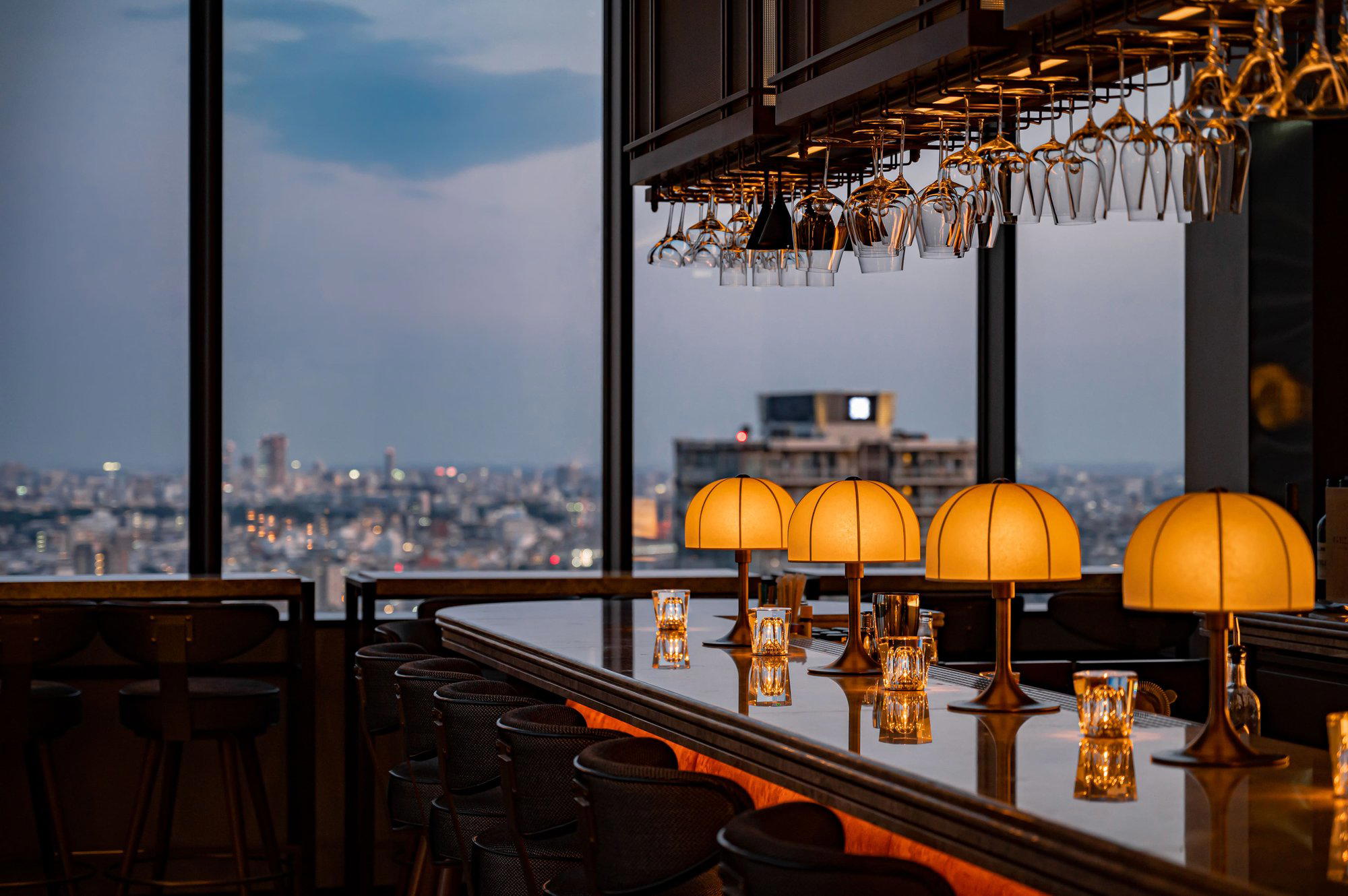
Tokyo's cocktail scene has spent the past decade pulling in two directions at once. On one side, basement and ground-floor specialist bars, the kind of intimate, low-lit counters that populate Ginza and Shibuya, have doubled down on craft credentials, long-aged spirits, and technique-first menus. On the other, a wave of hotel bars has staked a claim on the city's upper floors, where the view becomes part of the proposition and the drinks programme has to be serious enough to justify the altitude premium. 86, on the 17th floor of the Kimpton Shinjuku Tokyo in Nishi-Shinjuku, sits in that second category and appears to take the brief seriously.
The Kimpton brand, known in Asia for design-led properties with programming that leans toward a younger international traveller, opened its first Tokyo outpost in Shinjuku, a neighbourhood that has historically housed both the city's largest transit hub and a dense cluster of after-dark venues ranging from dive bars to high-end whisky counters. A hotel bar at this address competes not just against other hotel bars but against the kind of specialist operators that define Tokyo's international bar reputation: places like Bar Benfiddich, where botanical sourcing shapes the menu, or Bar High Five, where classical Japanese bartending technique is the entire point. That competitive context matters when reading what 86 is trying to do.
The Name as Programme Statement
Bar names in Tokyo's serious drinking circuit often carry meaning. "86" is bartending shorthand for removing an item from service, a dish or drink that's run out or been pulled. As a name for a cocktail bar, it gestures at impermanence, at the idea that what's on offer at any given moment is finite and considered rather than static and permanent. Whether that translates into a rotating seasonal menu, a nightly selection of off-menu specials, or simply a well-edited list is something the programme itself would need to confirm. What the name signals, at minimum, is an awareness of drinks culture's internal language, a credential that positions the bar closer to the craft end of the hotel bar spectrum than the standard lobby-lounge format.
That positioning matters in Tokyo, where the bar-going public has access to some of the most technically accomplished cocktail makers in the world. Bars like Bar Libre and Bar Orchard Ginza have trained local drinkers to expect precision, correct dilution, house-made ingredients, thoughtful glassware choices, as baseline rather than distinction. A hotel bar that wants to compete in that environment needs a programme with genuine depth, not just a cocktail menu attached to a view.
The Hotel Bar Format in Tokyo's Wider Bar Geography
Tokyo's bar scene distributes across neighbourhoods in ways that reflect different drinking philosophies. Ginza concentrates the classical Japanese whisky and cocktail counters, places where bartenders trained over decades in the Ueno or Suntory tradition still practice measured, unhurried service. Shibuya and Harajuku have absorbed the natural wine and casual cocktail wave. Shinjuku sits at a crossroads: it has the volume traffic of a major transit node, the density of Golden Gai's micro-bars, and increasingly, a cluster of internationally branded hotels bringing their own bar formats to the neighbourhood.
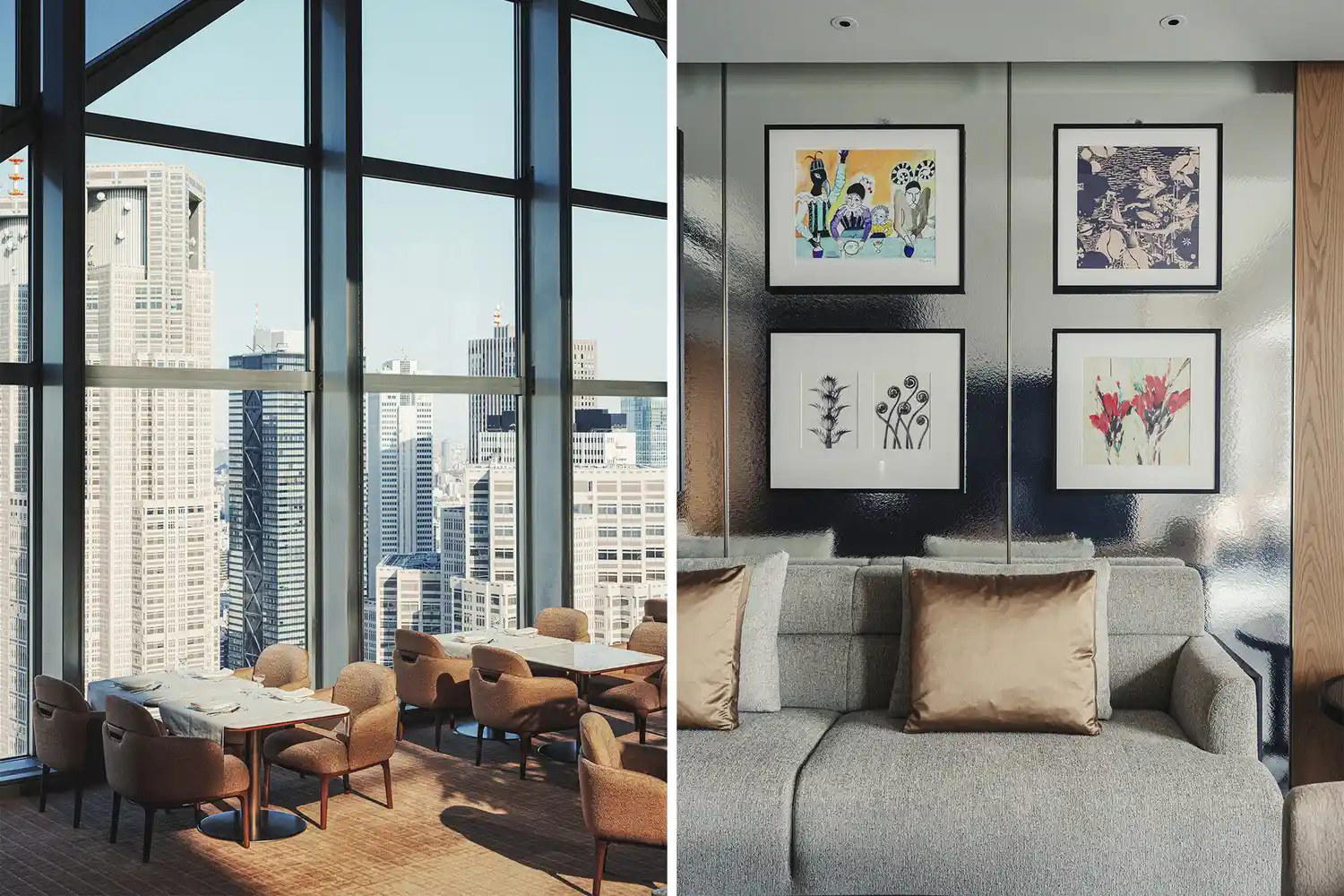
A 17th-floor position changes the experience in specific ways. The physical remove from street level affects pacing, guests arrive by elevator rather than stumbling in from the pavement, and the view over Nishi-Shinjuku's office tower district provides a particular version of the Tokyo-at-night spectacle. That view is a genuine draw, especially for visitors calibrating an itinerary between neighbourhood deep-dives and moments of perspective. For context, comparable altitude bars in Tokyo include the Andaz Rooftop Bar in Toranomon and the Park Hyatt's New York Bar in Shinjuku itself, the latter carrying decades of cultural weight that any newer arrival in the same neighbourhood is measured against.
Beyond Tokyo, Japan's serious cocktail culture extends into Osaka's Bar Nayuta, Nara's Lamp Bar (which has held World's 50 Best Bars recognition), and Kyoto's Bee's Knees, a circuit worth building a multi-city itinerary around if the drinks are the primary interest. Further afield, Yakoboku in Kumamoto and the bar at Hotel Okura Kyoto represent how Japan's regional bar culture has developed well beyond the two major cities. For a different calibration entirely, Café La Trova in Miami shows how hotel-adjacent bar programming operates in a completely different tradition. And for those whose Japan itinerary extends to dining, Tempura Tarojiro in Osaka offers a point of comparison for how Osaka's food-and-drink culture operates at the premium end.
Who Drinks Here and When
Hotel bars in Tokyo's international properties tend to attract a specific mix: hotel guests who want to stay in the building, international visitors who discover the bar through the hotel's marketing, and a local contingent that uses the address as a comfortable meeting point with a guaranteed level of consistency. The 17th-floor format at 86 positions it well for the pre-dinner drink or the late-evening wind-down rather than the kind of session drinking that characterises Golden Gai or the long-haul whisky counters of Ginza.
For anyone building a Tokyo bar itinerary, the practical read is this: 86 works as an entry point to Shinjuku's bar scene or as a higher-altitude complement to the street-level specialists. It does not obviously compete with the classical counters on technical grounds alone, but it offers a different proposition, a hotel-grade consistency, a panoramic position, and the design sensibility of a Kimpton property, that serves a genuine purpose in a well-structured evening. See our full Tokyo restaurants and bars guide for how to sequence this alongside the city's broader options.
Planning Your Visit
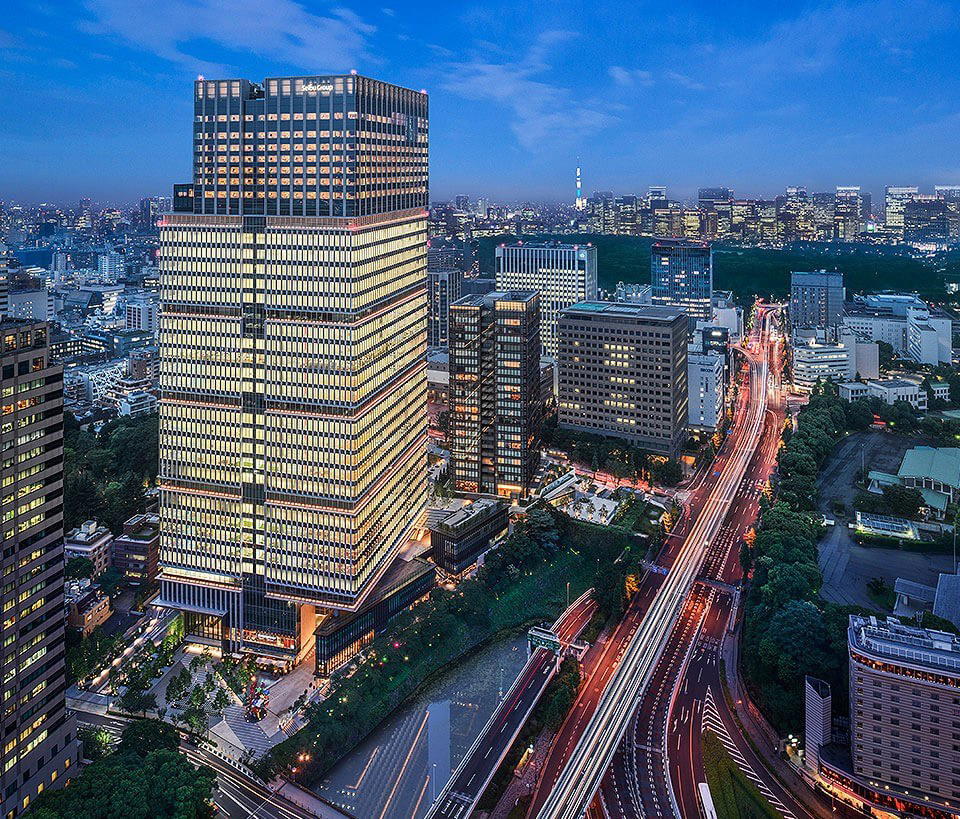
86 is located on the 17th floor of the Kimpton Shinjuku Tokyo at 3 Chome-4-7 Nishishinjuku, Shinjuku City. The address places it within walking distance of Shinjuku Station's west exit, making access direct from most of the city's major rail lines. Given the hotel setting, booking ahead for weekend evenings is advisable, hotel bars at this tier in Tokyo tend to operate without the rigid reservation structures of standalone bars, but peak hours fill quickly, particularly when the Shinjuku office district empties on Friday nights. Dress expectations at Kimpton properties generally align with smart-casual, in keeping with the brand's design-forward but unpretentious positioning.
Continue exploring
More in Tokyo
Bars in Tokyo
All bars in Tokyo →

Restaurants in Tokyo
All restaurants in Tokyo →





86
The drinks
- Craft cocktails
- Classic cocktails
Signature drinks: Signature cocktails, Forgotten cocktails, Prohibition-era cocktails.
Details
- Cozy
- Elegant
- Sophisticated
- Trendy
- Intimate
- Date Night
- Special Occasion
- Late Night
- Rooftop
- Hotel Bar
- Panoramic View
- Lounge Seating
- Outdoor Terrace
- Craft Cocktails
- Classic Cocktails
- Skyline
Current opening hours
- Monday
- 6–11 PM
- Tuesday
- 6–11 PM
- Wednesday
- 6–11 PM
- Thursday
- 6–11 PM
- Friday
- 6 PM–12 AM
- Saturday
- 6 PM–12 AM
- Sunday
- 6–11 PM
Hours can change for holidays and private events. Hours as of .
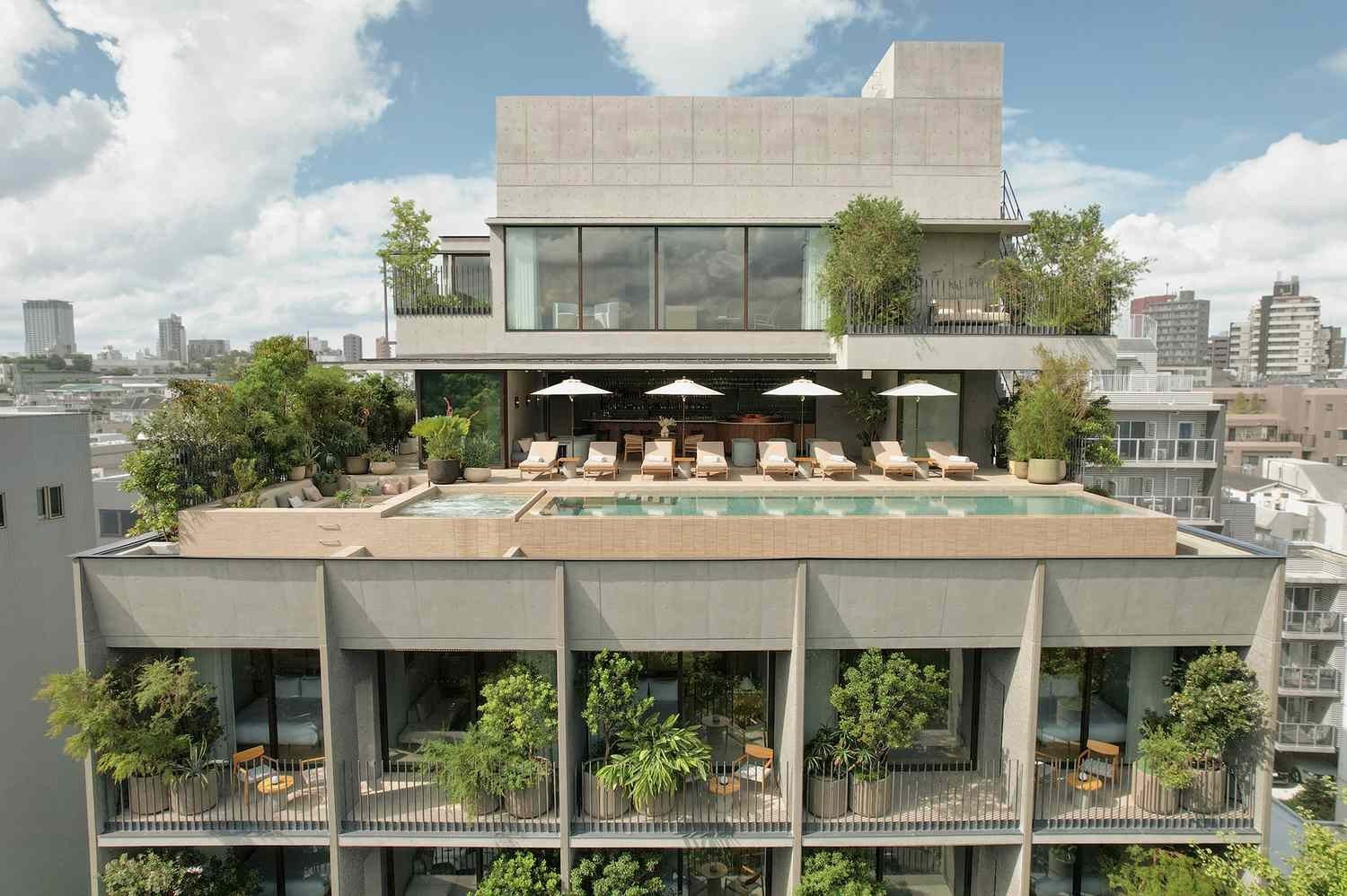
Exclusive, stylish, and cozy New York penthouse vibe with large windows and open terrace overlooking the city lights.