
A Pearl 2 Star Prestige-rated heuriger in Vienna's 19th district, Weingut Fuhrgassl-Huber operates from a vine-draped address at Neustift am Walde 68, where the Wienerwald hillside format has defined local wine culture for generations. The property sits within the tight cluster of estate producers that make Vienna one of the few capital cities with a functioning wine appellation, placing it in a peer set that rewards unhurried visits and serious bottles.
 Discover on Pearl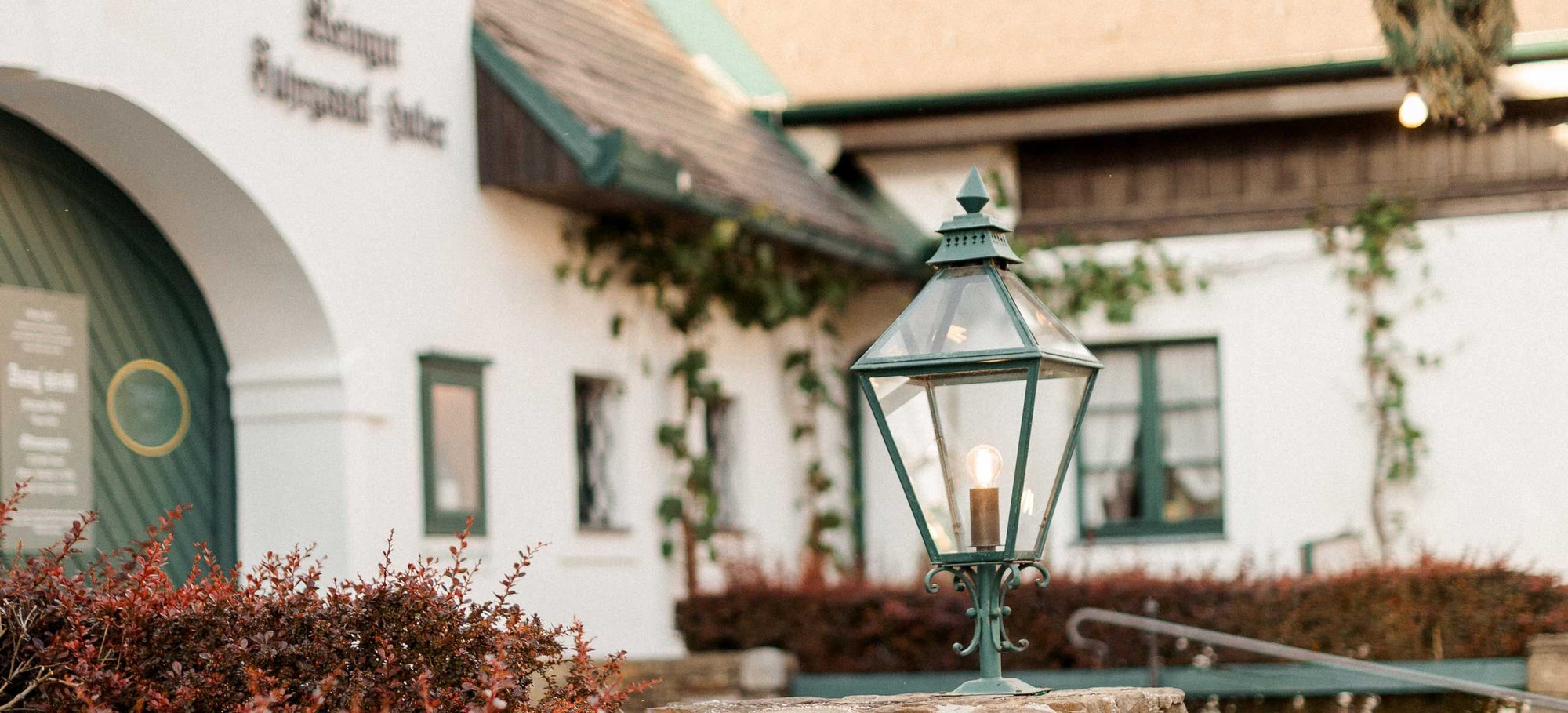
Where the Vineyards Reach the City Edge
The 19th district of Vienna does something no other European capital quite manages at the same scale: it lets working vineyards run almost to the tram stops. Along the Neustift am Walde corridor, the urban density of the Innere Stadt gives way to hillside estate rows, and the heuriger tradition — the licensed seasonal wine tavern that Viennese producers have operated under imperial-era law since the late 18th century — continues in the same terraced gardens and low-ceilinged rooms it has occupied for well over a century. Weingut Fuhrgassl-Huber sits in this corridor at Neustift am Walde 68, and its 2025 Pearl 2 Star Prestige recognition places it among the more formally assessed properties in a neighbourhood that can otherwise blur into a pleasant but undifferentiated stretch of outdoor benches and open carafes.
The distinction matters because the heuriger format is genuinely easy to misread. From the outside, even a serious estate producer can look identical to a simple garden tavern. What separates the tiers is the quality and provenance of what ends up in the glass, the attentiveness of the service when you ask questions about the wine, and whether the visit leaves you with a more precise understanding of what Vienna's urban wine appellation actually produces. At Fuhrgassl-Huber, the Pearl 2 Star Prestige award signals that the operation clears that bar with room to spare.
Vienna's Urban Appellation in Context
Vienna is one of the only cities in the world with a recognised wine appellation producing estate wine within its municipal boundaries. The vineyards of Grinzing, Nussdorf, Neustift am Walde, and Stammersdorf collectively occupy roughly 700 hectares, most of it planted to Grüner Veltliner and Riesling, with Gemischter Satz , the traditional field blend of co-planted varieties harvested together , qualifying since 2013 as a DAC appellation in its own right. That classification, Wiener Gemischter Satz DAC, was a significant moment for Viennese producers: it formalised what had been an informal tradition and gave the city's estate wines a legal identity distinct from Lower Austria's surrounding regions.
Neustift am Walde specifically sits at the western edge of the Wienerwald foothills, where the elevation and aspect differ meaningfully from the flatter, more productive sites around Stammersdorf to the north-east. Wines from these hillside positions tend toward leaner, more mineral profiles than the fuller, fruit-forward expressions the lower Viennese sites can produce. Within this geography, Fuhrgassl-Huber is part of a cluster of estate producers that includes Weingut Fritz Wieninger, Weingut Mayer am Pfarrplatz, and Weingut Rainer Christ, all of whom have pursued appellation-level credentials while maintaining the open-door heuriger format that defines the visitor experience in this part of the city.
For visitors looking beyond Vienna's own boundaries, the reference points shift. Schloss Gobelsburg in Langenlois and Weingut Emmerich Knoll in Dürnstein represent the Kamptal and Wachau benchmarks against which serious Austrian white wine is calibrated , properties with longer international reputations and more restricted production. Vienna's estate producers, Fuhrgassl-Huber among them, occupy a different register: more accessible in format, embedded in the city, and oriented toward an experience that is as much about the setting and the tradition as it is about chasing scores.
The Tasting Experience at Neustift am Walde
The heuriger model is not a tasting room in the Napa or Burgundy sense. There is no appointment-only counter, no guided flight with printed tech sheets, no somm circling the table. What it offers instead is something more integrated: you arrive, you find a seat in the garden or the Stube, and the wine arrives by the glass or by the bottle alongside food that typically runs to cold platters, bread, and seasonal Austrian kitchen preparations. The experience is structured around time spent rather than content delivered.
At the prestige end of this format, however, the informality is not an absence of seriousness. A Pearl 2 Star Prestige-rated property is assessed against criteria that reward genuine wine quality alongside the hospitality context, and that dual standard is what makes addresses like Fuhrgassl-Huber worth seeking out over the many unremarkable garden taverns that cluster along the same streets. The difference shows most clearly in the quality of the Grüner Veltliner and Gemischter Satz poured by the glass: in a standard heuriger, the house wine is functional and priced to move; at an estate of this tier, even the glass pours draw from vineyard-specific production that would otherwise require a retail hunt to access.
The address at Neustift am Walde 68 places the estate toward the quieter upper end of the village street, which tends to mean a slightly less tourist-dense atmosphere than the properties closer to the tram terminus. The format also differs from the more production-forward visit experiences offered by wineries like Weingut Heinrich Hartl in Oberwaltersdorf, where the cellar and the technical side of winemaking take a larger role in shaping the visit. At Fuhrgassl-Huber, the emphasis stays closer to the table.
Planning a Visit
The heuriger calendar in Vienna operates on a traditional cycle: estates open for defined periods, typically marked by the pine branch hung above the door that signals the current vintage is being poured. Visitors should confirm opening dates in advance, as periods of closure between heuriger seasons are common and can catch out those who arrive without checking. The 19th district is served by tram from the city centre, making the journey direct without a car; Neustift am Walde is reachable in under 30 minutes from the 1st district by public transport, which matters given that a serious afternoon in a Viennese heuriger is not compatible with driving back.
Those building a broader Vienna wine itinerary might cross-reference our full Vienna wineries guide, which maps the estate producers across the city's wine districts. For context beyond wine, our full Vienna restaurants guide, our full Vienna bars guide, and our full Vienna hotels guide cover the wider city, and our full Vienna experiences guide includes programming that extends beyond the table. For visitors whose interests run to spirits and brewing alongside wine, 1516 Brewing Company Distillery and Weingut Walter Wien Distillery represent different facets of Vienna's producer culture. Further afield, Abadía Retuerta in Sardón de Duero and Aberlour in Aberlour offer reference points for how estate hospitality operates in very different wine and spirits traditions.
Frequently Asked Questions
- What's the leading wine to try at Weingut Fuhrgassl-Huber?
- The most meaningful wines to seek out at any Viennese heuriger estate operating at this level are the estate-grown Grüner Veltliner and Wiener Gemischter Satz DAC , the field blend that became an official appellation in 2013. At a Pearl 2 Star Prestige-rated producer in Neustift am Walde, both categories should reflect the hillside terroir of the western Wienerwald edge, which tends toward leaner, mineral-accented profiles compared to lower-lying Vienna sites. The Gemischter Satz in particular is the most historically rooted expression of Viennese viticulture and the most useful point of comparison with other city estates.
- What's the defining thing about Weingut Fuhrgassl-Huber?
- It is a formally assessed estate producer operating within the heuriger tradition: open-door, garden-facing, rooted in a neighbourhood wine culture that stretches back to the 18th century, but calibrated at the Pearl 2 Star Prestige level rather than the generic tavern tier that fills the same streets. Vienna is one of the few capital cities with a functioning wine appellation, and Fuhrgassl-Huber at Neustift am Walde 68 represents that appellation at the serious end of its hospitality format.
- How hard is it to get in to Weingut Fuhrgassl-Huber?
- The heuriger format is generally walk-in during open seasons, without the advance reservation requirements common at destination restaurants or appointment-only tasting rooms. That said, popular Viennese heuriger addresses fill quickly on warm weekends and during the autumn harvest period, when the city's appetite for new-vintage Grüner Veltliner peaks. Checking the estate's current opening calendar before visiting is advisable, since heuriger properties close between seasons. The 19th district's proximity to central Vienna by tram makes a same-day visit feasible, but arriving early on busy days secures a garden seat.
- How does Weingut Fuhrgassl-Huber compare to other wine estates in the Vienna hills?
- Vienna's 19th district wine corridor contains several estate producers at different quality tiers, from basic garden taverns to Pearl-rated prestige addresses. Fuhrgassl-Huber's 2025 Pearl 2 Star Prestige recognition places it in the upper band of that local peer set, alongside addresses like Weingut Fritz Wieninger and Weingut Mayer am Pfarrplatz. The distinction at this level is not primarily about scale or international export presence but about the quality consistency of what is poured on-site, which is where a formal award carries the most practical guidance for a visitor choosing between addresses on the same street.
Peer Set Snapshot
These are the closest comparables we have in our database for quick context.
| Venue | Awards | Notes |
|---|---|---|
| Weingut Fuhrgassl-Huber | Pearl 2 Star Prestige | This venue |
| 1516 Brewing Company Distillery | Pearl 2 Star Prestige | |
| Alt Wiener Schnapsmuseum | Pearl 1 Star Prestige | |
| Koskij Distillery | Pearl 1 Star Prestige | |
| Lederhaas Distillery | Pearl 1 Star Prestige: 0pts | |
| Stock Austria Distillery | Pearl 1 Star Prestige |
Access the Cellar?
Our members enjoy exclusive access to private tastings and priority allocations from the world's most sought-after producers.
Get Exclusive Access