
Weingut Fritz Wieninger operates from Stammersdorf, Vienna's northern wine-growing district, and holds a Pearl 2 Star Prestige rating for 2025. The estate sits within the city's working Heuriger belt, producing wines that speak directly to Vienna's tradition of urban viticulture. For anyone tracing serious Austrian wine production inside city limits, Wieninger is a reference point rather than a footnote.
 Discover on Pearl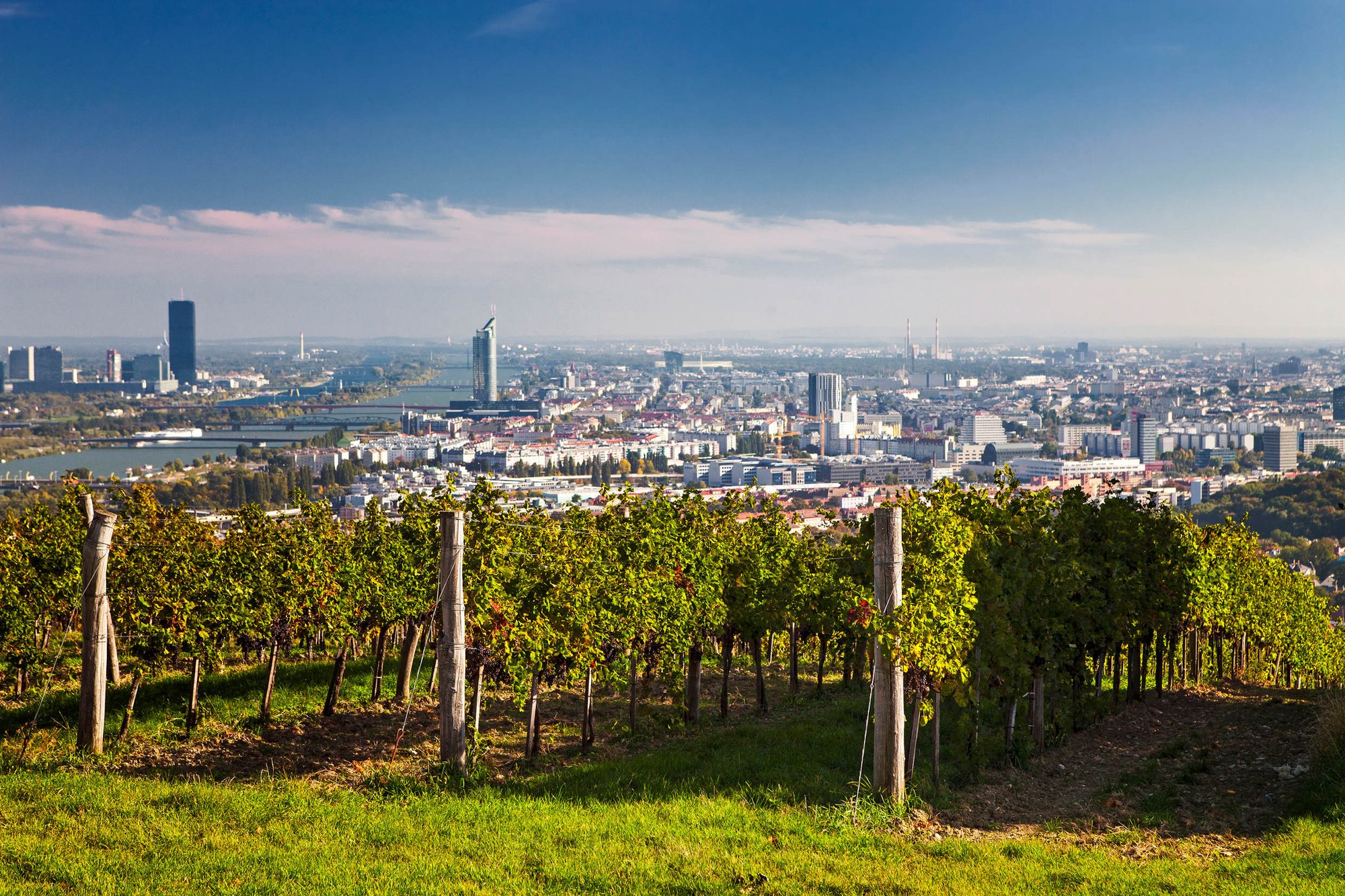
Vienna's Northern Vineyards and the Estate That Defines Them
The road out to Stammersdorf, along the northern edge of Vienna's 21st district, passes through a landscape that most wine capitals can't claim: working vineyards within the city boundary, flanked by Heuriger signs and gravel paths that lead between rows of Grüner Veltliner and Gemischter Satz. This is not a wine region adjacent to an urban centre — it is wine production inside one of Europe's great cities, and Weingut Fritz Wieninger, at Stammersdorfer Strasse 31, sits at the heart of it. The estate's Pearl 2 Star Prestige recognition for 2025 places it among a short list of operations in the Vienna wine scene that carry verifiable critical weight, not just local charm.
Vienna's position as a wine-producing capital is one of the more genuinely unusual facts in European viticulture. No other major European capital maintains active, quality-focused wine estates within its administrative borders at this scale. The wines grown here — particularly Gemischter Satz, the traditional field blend of multiple grape varieties co-planted and co-harvested , carry DAC (Districtus Austriae Controllatus) protection, a regulatory signal that this tradition has been taken seriously enough to formalise. Wieninger is among the producers most closely associated with the revival and credentialling of Wiener Gemischter Satz as a serious wine category rather than a regional curiosity.
Winemaking Philosophy Inside City Limits
The editorial angle that matters most at Wieninger is not the address or the acreage , it is the approach to making wine from urban vineyards that compete, at least in critical terms, with Austria's better-known rural appellations. Vienna's wine producers operate under a particular constraint and freedom simultaneously: the vineyards are small, the land is expensive, and the proximity to the city's Heuriger culture creates a default market that could easily pull production toward volume over quality. The decision to pursue a different path , and to earn recognition for it , reflects a broader shift in how Austrian wine has repositioned itself internationally since the 1990s.
Grüner Veltliner and Riesling from Vienna's terraced sites above the Danube and on the slopes around Nussberg and Bisamberg have attracted growing attention from critics who previously looked almost exclusively to Wachau, Kamptal, and Kremstal for serious Austrian white wines. Wieninger's standing within that conversation is confirmed by the 2025 Pearl 2 Star Prestige award, which positions the estate within the upper tier of Vienna's producing wineries. For context, Vienna holds roughly 700 hectares of vineyards across its districts, and only a fraction of estates producing from that land carry this level of formal recognition. For further reference across the Austrian wine context, Weingut Emmerich Knoll in Dürnstein and Schloss Gobelsburg in Langenlois represent the kind of rural-appellation benchmarks against which Vienna-based producers are increasingly willing to be measured.
Stammersdorf: The District Behind the Label
Stammersdorf is not the most visited part of Vienna. It lacks the baroque streetscapes of the first district and the gallery density of the seventh. What it has is a working wine culture that has survived urbanisation on three sides, with vineyards that climb the Bisamberg slopes and a village centre still organised around wine production and seasonal Heuriger trade. Arriving here from central Vienna by tram , the D line runs close before connecting toward the northern districts , places you within an entirely different register of the city, one where the relationship between food, wine, and land is embedded in the street pattern rather than performed for visitors.
Within this neighbourhood, Wieninger occupies a position comparable to what Weingut Mayer am Pfarrplatz holds in Heiligenstadt or Weingut Rainer Christ holds in Jedlersdorf: a producing estate with serious critical standing that also functions as a point of access to Vienna's Heuriger tradition. The comparison is worth making because these estates operate in a peer set defined not by geographic proximity but by shared commitment to quality production within city limits. Weingut Fuhrgassl-Huber and Weingut Walter Wien Distillery round out a group of Vienna producers each carving a distinct identity within the same viticultural zone.
What the Prestige Rating Signals
The Pearl 2 Star Prestige designation for 2025 carries weight precisely because it places Wieninger within an assessed tier rather than simply acknowledging its existence. In a wine city where the volume of Heuriger culture could obscure serious production, formal recognition functions as a signal to visitors who want to distinguish between an afternoon of pleasant local wine and an encounter with something that holds up under critical scrutiny. Wieninger's recognition in this bracket suggests the wines are being evaluated , and succeeding , on terms that extend well beyond their local context.
For comparison outside Austria, Abadía Retuerta in Sardón de Duero demonstrates how an estate can carry critical recognition that travels internationally, which is the level at which Vienna's serious producers are beginning to compete. Closer in scope, Weingut Heinrich Hartl in Oberwaltersdorf shows how Lower Austrian producers just outside Vienna operate within a similar quality conversation.
Planning a Visit
Weingut Fritz Wieninger is located at Stammersdorfer Strasse 31, 1210 Wien, in Vienna's 21st district. Given the absence of published phone and web contact details in current records, the most reliable approach for planning a visit is to contact the estate directly on arrival or through Austrian wine tourism resources that maintain updated booking information. The northern districts are accessible by public transport from central Vienna, and the journey places the estate within reach as a half-day excursion. Visitors should be aware that Vienna's Heuriger culture operates seasonally, with many estate wine taverns following traditional open-house calendars rather than fixed restaurant hours , arriving without prior confirmation of opening times is a risk worth mitigating.
For those building a wider Vienna wine itinerary, the full Vienna wineries guide maps the producing estates across all districts. The Vienna restaurants guide, Vienna hotels guide, Vienna bars guide, and Vienna experiences guide provide the broader framework for building a stay around the city's food and drink culture. For those whose interests extend to production beyond wine, 1516 Brewing Company Distillery represents Vienna's craft spirits and brewing side, while Aberlour in Aberlour offers a very different distillery benchmark for context on how serious production estates communicate provenance and craft at the visitor level.
Frequently Asked Questions
Peer Set Snapshot
These are the closest comparables we have in our database for quick context.
| Venue | Awards | Notes |
|---|---|---|
| Weingut Fritz Wieninger | Pearl 2 Star Prestige | This venue |
| 1516 Brewing Company Distillery | Pearl 2 Star Prestige | |
| Alt Wiener Schnapsmuseum | Pearl 1 Star Prestige | |
| Koskij Distillery | Pearl 1 Star Prestige | |
| Lederhaas Distillery | Pearl 1 Star Prestige: 0pts | |
| Stock Austria Distillery | Pearl 1 Star Prestige |
Access the Cellar?
Our members enjoy exclusive access to private tastings and priority allocations from the world's most sought-after producers.
Get Exclusive Access