Ballymaloe House Hotel

Set on 300 acres of working farmland in County Cork, Ballymaloe House Hotel has shaped Irish country house hospitality for decades. Positioned a short drive from the Ballymaloe Cookery School, it operates at the intersection of agriculture, craft cooking, and Georgian architecture. For travellers seeking a grounded alternative to castle-circuit hotels, this is where the Irish farm-to-table tradition has its clearest expression.
Pearl is the En Primeur Club membership app — saves, bookings, and concierge access live there. Same editors, same standards.
- Address
- Ballymaloe More, Shanagarry, Co. Cork, P25 Y070
- Phone
- +353 21 465 2531
- Website
- ballymaloe.ie
- Directions
- Get directions
 Saves & bookings on Pearl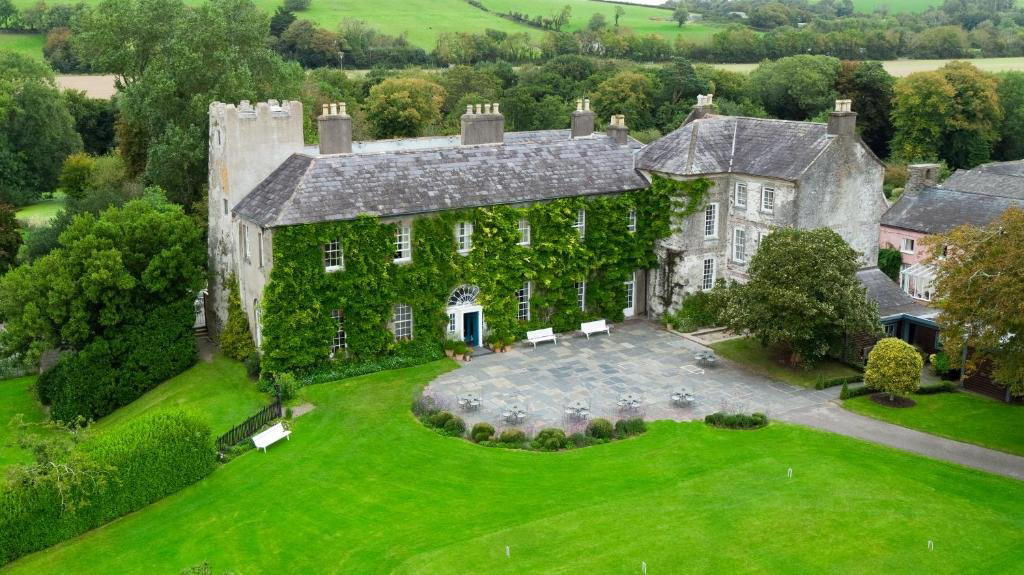
Where the Irish Country House Tradition Takes Its Most Literal Form
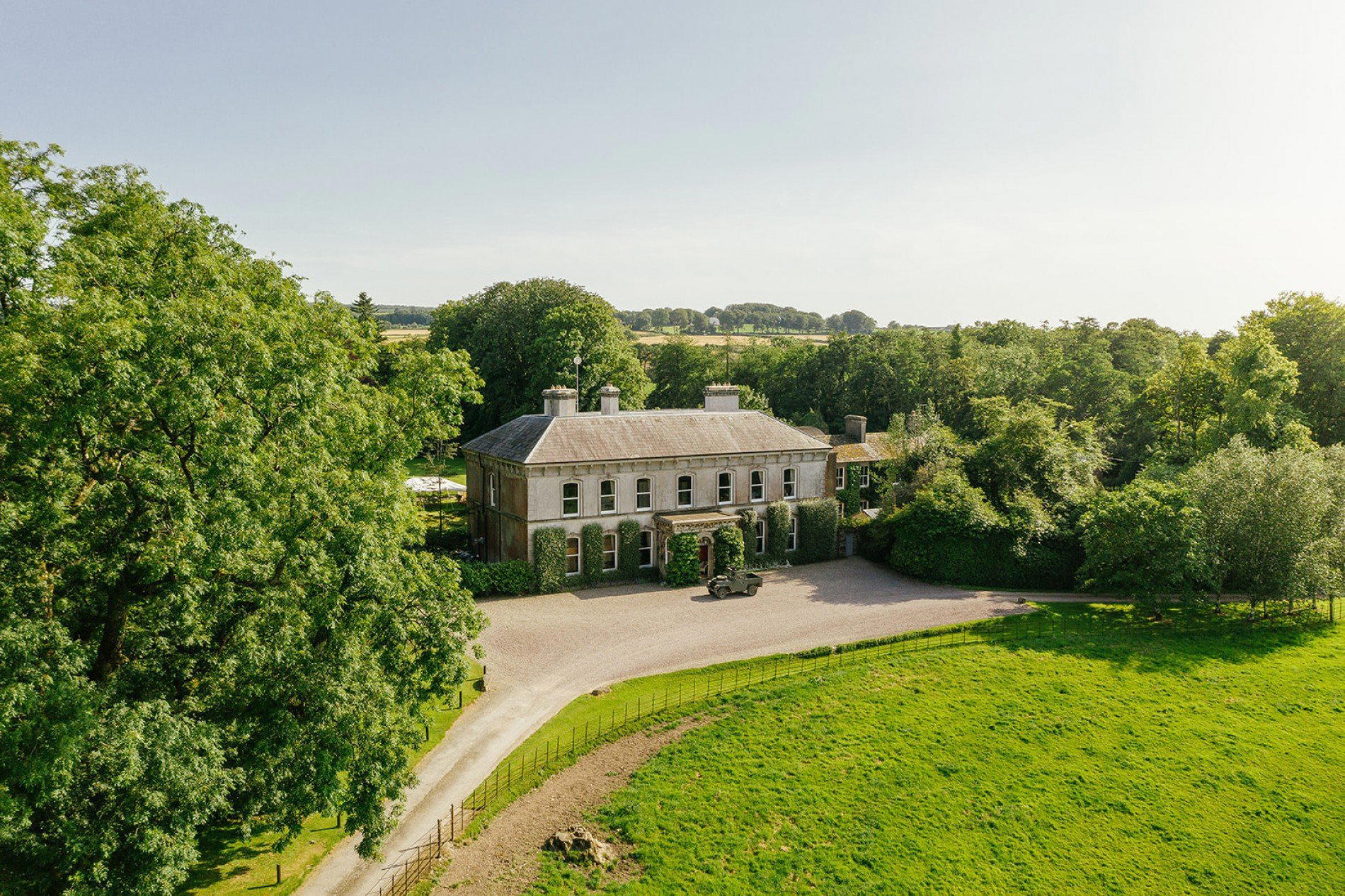
Irish country house hotels broadly split between two modes: the restored castle, dressed in heraldic detail and aimed at a grand-tour visitor, and the working estate, where the land itself generates the identity of the stay. Ballymaloe House Hotel in Shanagarry, County Cork, sits firmly in the second category. The 300-acre property operates as a genuine farm, with kitchen gardens, woodland, and agricultural land that inform the house rather than merely surround it. Arriving here, the first thing that reads is not a forecourt designed for photographs, but a working landscape in which the house happens to stand.
That distinction matters when placing Ballymaloe in its competitive set. Properties like Ashford Castle in Cong, Adare Manor, and Dromoland Castle in Newmarket on Fergus compete on architectural spectacle and resort amenity. Ballymaloe competes on something harder to replicate: deep institutional credibility in the Irish food tradition. It is not a hotel that has added a kitchen garden as a design feature; it is a farm that has long housed guests. The sequence matters.
The Architecture of Restraint
The house itself is a Georgian structure, the kind of understated Irish country house that reads as plain until you understand how much considered restraint went into it. Wisteria covers established sections of the exterior, the growth of decades rather than of recent planting, which tells you something about how long this place has held its character. Unlike the aggressively restored interiors you find at Ballyfin Demesne or Kilkea Castle in Castledermot, Ballymaloe has not been architecturally reinvented. The design logic here is continuity: layers of lived-in use rather than a single curatorial vision imposed after renovation.
That approach places Ballymaloe in a niche that smaller, characterful Irish properties occupy alongside it. Gregans Castle Hotel in Ballyvaughan and Ballyvolane House in Castlelyons share a similar register: houses that feel inhabited rather than staged. At Ballymaloe, the interiors carry period detail without the tension of preservation anxiety. Objects accumulated over generations sit alongside practical furnishings. The effect is a house that looks as if it has always been full of people, because it largely has been.
The Cookery School Proximity and What It Signals
Ballymaloe House sits in close proximity to the Ballymaloe Cookery School, an institution that has trained professional cooks and serious home cooks from across the world for several decades. That proximity is not incidental. The school and the house share a philosophy rooted in produce drawn directly from the land, and the school's international reputation means that Ballymaloe as a place carries weight in food-informed travel circles that extends well beyond its county. Guests who arrive knowing the school's reputation arrive with a specific expectation: that what appears on the table is traceable, seasonal, and handled with literacy.
This positions Ballymaloe differently from, say, Parknasilla Resort and Spa in Kerry or Aghadoe Heights Hotel and Spa in Killarney, which are resort-first properties where dining is one amenity among several. At Ballymaloe, the food and farming context is the primary draw for a significant share of its guests. That is an unusual competitive position for an Irish country house, and it has proven durable.
County Cork's East Coast and Why Shanagarry Holds Its Own
Shanagarry itself is a small East Cork village that does not feature prominently in standard Irish tourism itineraries, which tend to route visitors south and west toward Kerry and West Cork. That routing pattern means the area around Shanagarry has developed a food and craft identity largely on its own terms, without the commercial pressure that comes with high visitor volume. The coastline here, including the beaches at Ballycotton and Garryvoe, is within easy reach. Cork city, with its market culture centred on the English Market, is approximately forty minutes by road, making Ballymaloe a credible base for Cork-focused visits without being suburban to it.
For context on where the broader Irish hotel market sits, the gap between a property like Ballymaloe and the international-group managed end of Irish hospitality is significant. Carton House in Maynooth, managed under the Fairmont flag, operates in a different register entirely. Ballymaloe is family-owned and has remained so, which is itself a form of editorial positioning in a market where independent Irish country houses are a shrinking category.
How It Fits the Broader Irish Country House Picture
Ireland's premium country house sector covers a wide range of property types. At the more architecturally dramatic end, Ballyfin in Laois and Castle Leslie Estate in Glaslough offer restoration-led grandeur. At the wilderness-adjacent end, Ballynahinch Castle in Recess and Lough Eske Castle in Donegal trade on landscape scale. Ballymaloe's claim is different from either. Its 300 acres work as productive land, not as scenic backdrop, and the house functions as an argument about how country house hospitality can be grounded in agricultural reality rather than aristocratic aesthetics.
That argument has had influence. The farm-to-table movement in Irish restaurants over the past two decades draws on a model that Ballymaloe has practised longer than the trend has existed. Properties like Liss Ard Estate in Skibbereen and Cliff House Hotel in Ardmore occupy adjacent territory in West Cork and Waterford, but neither carries quite the same institutional weight in the Irish food conversation.
Planning a Stay: What to Know
Ballymaloe House Hotel is located at Shanagarry, Co. Cork, P25 Y070, on a property of 300 acres that includes kitchen gardens and woodland walks accessible to guests. The surrounding East Cork area rewards slow exploration: the fishing village of Ballycotton to the south, the pottery tradition in Shanagarry itself, and the market culture of Cork city. Guests interested in the food context should note that the Ballymaloe Cookery School runs courses ranging from a half-day to twelve weeks, and coordinating a visit around a short course is a format some guests pursue deliberately. Booking directly through the property is the standard approach for a house of this type. For a broader view of what the region offers in dining and hospitality, see our full Shanagarry restaurants guide.
Travellers building a Cork-focused itinerary might also consider Hotel Isaacs Cork as a city-based alternative, or extend westward to Cashel Palace in Cashel and Kilronan Castle Estate and Spa in Ballyfarnon for a multi-property Irish circuit. Those seeking the urban end of premium Irish hospitality will find a different register again at Number 31 in Dublin. For international comparison points in the country house with strong design identity category, Glenlo Abbey Hotel and Estate in Galway and Gregans Castle Hotel in Ballyvaughan offer instructive contrasts.
How Ballymaloe House Hotel Shanagarry compares with similar nearby venues.
| Venue | Awards |
|---|---|
| Ballymaloe House Hotel | Small Luxury Hotels of the World Member (2025) |
Recognition history
Dated appearances from independent guides and award organizations, with the underlying list record or original source where available.
Small Luxury Hotels of the World Member
Small Luxury Hotels of the World
Continue exploring
More in Shanagarry
Hotels in Shanagarry
Browse all →
Bars in Shanagarry
Browse all →
Restaurants in Shanagarry
Browse all →

At a Glance
- Romantic
- Quiet
- Elegant
- Classic
- Cozy
- Scenic
- Sophisticated
- Romantic Getaway
- Anniversary
- Weekend Escape
- Garden
- Historic Building
- Terrace
- Wi Fi
- Pool
- Spa
- Fitness Center
- Room Service
- Concierge
- Tennis
- EV Charging
- Garden
- Wi Fi
- Pool
- Spa
- Fitness Center
- Room Service
- Concierge
- Tennis
- EV Charging
Warm and cozy atmosphere in character-filled rooms with fireplaces, artwork, and a peaceful countryside setting emphasizing relaxation and no TVs for tranquility.
Know Before You Go
- Getting there
- Ballymaloe More, Shanagarry, Co. Cork, P25 Y070