Tin Shed Brewery/Distillery (Alice Springs)

A brewery and distillery operating in Alice Springs under the Central Australian sun, Tin Shed holds a Pearl 2 Star Prestige rating for 2025, placing it among a small cohort of recognised producers in one of Australia's most geographically isolated drink-making environments. The address on Palm Circuit puts it squarely in the red-dirt fringe of a town where almost nothing about conventional production applies.
 Discover on Pearl
Pearl is the En Primeur Club membership app — saves, bookings, and concierge access live there. Same editors, same standards.
- Address
- 39 Palm Cct, Ross NT 0873
- Phone
- +61 8 7904 4007
- Website
- alicespringsbrewingco.com.au
Craft Production at the Edge of the Australian Interior
Alice Springs sits roughly 1,500 kilometres from the nearest major city in any direction, and that isolation shapes everything that gets made here. The climate is extreme by any production standard: summer temperatures regularly exceed 40 degrees Celsius, humidity swings are violent by seasonal comparison, and the red ferrous soil of the MacDonnell Ranges country bleeds into the character of every local enterprise that takes the environment seriously. Against that backdrop, a brewery and distillery operating at 39 Palm Circuit represents something worth examining on its own geographic terms, independent of whatever is in the glass.
Tin Shed Brewery/Distillery earned a Pearl 2 Star Prestige rating in 2025, a designation that places it inside a tier where production quality and consistency are assessed against broader national benchmarks rather than adjusted for postcode. That matters in context. Central Australia has no established craft drinks corridor, no dense cluster of peer producers setting competitive reference points the way the Barossa or Hunter Valley do for wine. A recognised rating here carries different weight than the same rating would in a region with many neighbours doing comparable work.
What Extreme Terroir Actually Means for Production
The concept of terroir, applied most rigorously in wine, translates into something rougher and more physical when applied to spirits and beer in an interior desert setting. The water source, the ambient fermentation temperature, the mineral content of local ingredients, and the sheer thermal stress placed on any liquid sitting in a vessel through an Alice Springs summer all contribute to outcomes that cannot be replicated further south. Producers in more temperate climates who talk about environment as a differentiator are often making a marketing argument. Here, it is a practical constraint that becomes, for the right producer, a genuine fingerprint.
Australian distilling has expanded considerably over the past decade. Operations like Archie Rose Distilling Co in Sydney have demonstrated that domestic spirits can attract serious national recognition when production discipline is applied consistently. But Sydney's temperate coastal climate and access to an established hospitality ecosystem are entirely different production conditions from what any Alice Springs operation contends with. The comparison shows why geography-specific production in Central Australia occupies a distinct category rather than simply being a smaller or regional version of east-coast craft.
Rum distillers like the Bundaberg Rum Distillery in Bundaberg offer a different parallel: Queensland's subtropical climate creates specific maturation conditions that have defined that operation's character over more than a century. The logic of climate-as-ingredient runs through both cases, even where the spirit styles are entirely different.
Approaching the Venue: What the Setting Signals
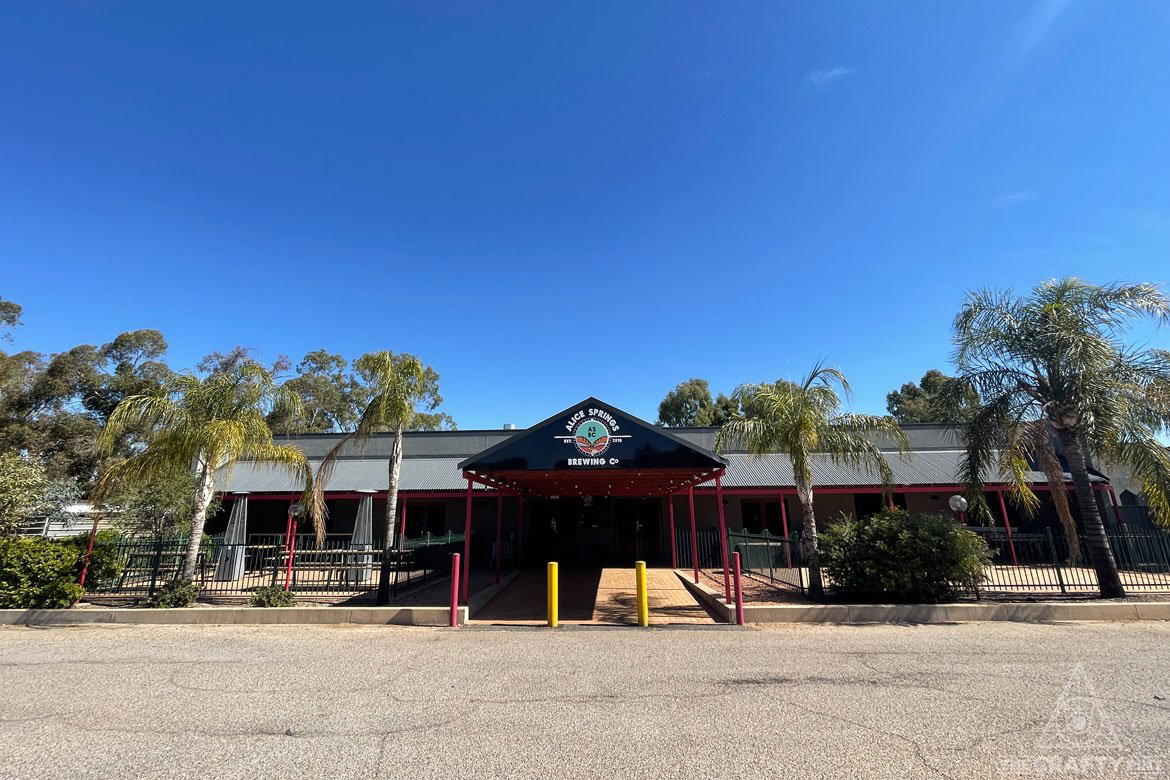
Palm Circuit is a residential-fringe address by Alice Springs standards, which means approaching the venue feels less like arriving at a polished tasting room and more like finding a working production space that has made room for visitors on its own terms. That physical character is itself a signal about what kind of operation this is. The model here is closer to the working-shed distillery aesthetic that some of Australia's more credible small producers have adopted, where the environment of production and the environment of consumption are the same room rather than carefully separated zones designed to manage the visitor impression.
Atmosphere at this type of venue is defined by what is present rather than what has been staged. Fermentation vessels, still infrastructure, and the sensory evidence of active production create a context that polished hospitality fit-outs cannot replicate. Visitors who have spent time at production-forward operations elsewhere in Australia will recognise the register immediately; those arriving expecting a conventional bar or tasting lounge may need to recalibrate their expectations before the visit becomes legible on its own terms.
Where It Sits Among Australian Producers
The Australian craft drinks space has several distinct tiers. At one end sit the long-established wine estates with documented generational histories: operations like All Saints Estate in Rutherglen, Henschke, and Penfolds, whose credentials are built on decades of production records and critical recognition. At another tier sit newer producers making a case for quality through awards and consistency rather than history. Tin Shed occupies a space where the Pearl 2 Star Prestige rating for 2025 functions as the primary external validation, placing it in a credentialed cohort even without the historical record that older estates carry.
For comparison, wine producers like Angove Family Winemakers in Renmark and Brown Brothers in King Valley operate from regions with established climate profiles and comparable venues that define expectations. What makes Central Australian production legible to a national audience is not comparability with those operations but rather the specific argument it makes about place. That argument, when it holds up to scrutiny, is more interesting than regional conformity.
Smaller, quality-focused producers like Bass Phillip in Gippsland or Bird in Hand in Adelaide Hills have made the case that Australian geography outside the canonical regions can produce serious, award-worthy drink. The structural argument Tin Shed makes is the same, applied to a far more extreme set of environmental conditions.
Planning a Visit
Alice Springs is served by regular flights from Sydney, Melbourne, and Adelaide, with the airport sitting close to the town centre. The drive from central Alice Springs to Palm Circuit is short by any measure, though visitors arriving without a vehicle will want to arrange transport in advance given the relative lack of rideshare density compared to major cities.
Those are also the months when the landscape around the MacDonnell Ranges reads at its most legible, with low-angle light hitting the red rock in ways that make the geographic argument for regional terroir self-evident to anyone paying attention.
Further Context: Australian Craft and Regional Identity
The craft drinks movement in Australia has followed a path familiar from comparable markets: early-stage proliferation, quality divergence, and then a consolidation around producers who can sustain recognition over multiple vintages or production cycles. Operations with awards history and consistent ratings tend to anchor the category in their respective regions. In Central Australia, that anchoring role is structurally unusual because there is no dense peer cluster to define the category around. A single credentialed producer in this geography carries more definitional weight than the same producer would in a region with thirty comparable neighbours.
For readers interested in the broader spectrum of Australian regional production, the work being done at Brokenwood in Hunter Valley, Cape Mentelle in Margaret River, Leading's Wines in Great Western, and Blue Pyrenees Estate in Pyrenees offers a useful comparative map of how place-specific production arguments get made across different climates and traditions. The international reference points, from Aberlour in Aberlour to Accendo Cellars in St. Helena, extend that frame further for readers thinking about how geography shapes production at a global level.
Tin Shed's 2025 recognition does not arrive in a vacuum. It arrives at a moment when Australian regional identity in craft production is being taken more seriously by national and international observers than at any previous point, and when the argument for extreme-climate terroir has accumulated enough evidence across categories to be worth following closely.
How It Stacks Up
Comparable venues nearby, for context on price, style, and recognition.
| Venue | Cuisine | Price | Awards | Notes |
|---|---|---|---|---|
| Tin Shed Brewery/Distillery (Alice Springs)This venue — the venue you are viewing | Central Australia | $ | 1 recognition | |
| The Story Wines | Syrah, Shiraz | $$ | , | Moorabbin |
| Joshua Cooper Wines | Winery | , | 1 recognition | Heathcote |
| Baldwin Distilling Company | Winery | , | 1 recognition | Canberra |
| Garagiste | Chardonnay, Pinot Noir | $$$ | 1 recognition | Mornington Peninsula |
| Cupitt's Estate | Winery | $$$ | , | Ulladulla |
At a Glance
- Group Outing
Rustic industrial with a focus on craft beer and spirits.