

One of the oldest Champagne houses with a first vintage recorded in 1522, Philipponnat operates from Aÿ-Champagne with a focus on single-vineyard and prestige cuvées that have earned it a Pearl 3 Star Prestige rating in 2025. Under winemaker Charles Philipponnat, the house is particularly known for its commitment to extended aging and Clos des Goisses, its storied monopole on the Marne riverbank.
 Discover on Pearl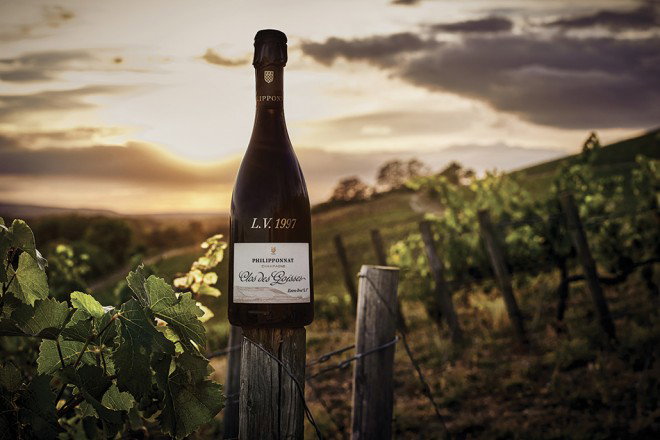
Five Centuries of Cellar Logic in Aÿ-Champagne
The village of Aÿ sits at the geographic and historical centre of Champagne production. Its hillside grand cru vineyards have supplied grapes to négociants and growers alike for centuries, and the town's compact streets contain a concentration of serious Champagne houses that rivals any single address in the appellation. Among its neighbours — Bollinger, Deutz, and Ayala — Philipponnat occupies a particular position: a house old enough to have been established before the modern bottle was invented, operating with a philosophy shaped almost entirely by what happens after the grapes leave the press.
With a first vintage recorded in 1522, Philipponnat predates the codified Champagne method itself. That depth of history is not merely a marketing footnote , it signals a house culture in which decisions about aging, blending, and disgorgement date accumulation are treated as ongoing experiments rather than standardised protocols. The 2025 Pearl 3 Star Prestige award from EP Club positions Philipponnat firmly in the top tier of prestige Champagne production, where it competes on the basis of cellar craft rather than volume or brand recognition.
What Happens After Harvest: The Cellar Argument
The most instructive way to read Philipponnat is through its aging decisions. Prestige Champagne houses have taken divergent paths on how long wine spends on lees before disgorgement, and how long it rests post-disgorgement before release. The houses that hold bottles longest , sometimes years beyond the legal minimums , tend to build a flavour profile that emphasises integration, oxidative complexity, and what sommeliers describe as vinous depth rather than fresh effervescence. Philipponnat, under winemaker Charles Philipponnat, sits in that patient camp.
The cellar approach at houses like Philipponnat reflects a broader argument within Champagne: that the region's finest wines are not sparkling wines that happen to age, but age-structured wines that happen to be sparkling. That distinction matters because it changes what the winemaker is optimising for at each stage , not just primary fruit and bead quality, but the arc of development across years of lees contact and post-disgorgement evolution.
This approach finds its most precise expression in Clos des Goisses, Philipponnat's monopole vineyard on a steep south-facing slope above the Marne river. Single-vineyard Champagnes of this type are relatively rare in the appellation , most houses blend across plots and communes to achieve consistency , and the commitment to a monopole source imposes a discipline on the winemaking team. Each vintage must be read on its own terms. Blending latitude is minimal. The cellar decisions become the only lever available for managing variation, which is why extended aging is so central to the house's identity.
Positioning Inside the Aÿ Peer Set
Aÿ functions as something of a micro-universe within Champagne. Its grand cru classification applies to the entire commune, and the density of serious producers on its streets means that visitors who spend a day here will encounter a genuine cross-section of Champagne house styles. Bollinger is the most internationally visible name in the village, with a style built on high Pinot Noir content and oak-influenced reserve wines. Deutz operates with a lighter, more Chardonnay-inflected profile. Lallier, also based here, has built its identity around rated prestige cuvées and a more recent international profile.
Philipponnat sits to one side of this comparison set: smaller in commercial footprint than Bollinger, more vineyard-anchored than most, and carrying a cellar philosophy that prioritises the single-site argument above blend-based house style. For visitors building a comparative tasting programme across Aÿ, Philipponnat represents the most explicit case study in what monopole viticulture and patient élevage produce at the prestige tier.
Beyond Aÿ, the broader Champagne conversation about cellar philosophy connects producers with very different base styles. Billecart-Salmon, based in Mareuil-sur-Aÿ just a short distance away, has built its reputation on a different axis , precision and freshness , while sharing the broader appellation's commitment to controlled, long-matured prestige expressions. The contrast between houses is instructive for anyone trying to understand how geography, grape sourcing, and cellar decisions interact in Champagne.
The Regional Context Beyond Champagne
The kind of institutional patience that defines Philipponnat's cellar programme has parallels in other European traditions. Albert Boxler in Niedermorschwihr applies a similarly unhurried approach to Alsatian Riesling and Gewurztraminer, holding wines back from release when the winemaking team judges they need more time. Abadía Retuerta in Sardón de Duero has made extended barrel and bottle maturation central to its flagship Tempranillo programme. Even in spirits, the logic of patient aging surfaces consistently: Aberlour in Aberlour and Chartreuse in Voiron both operate on timescales that prioritise complexity over speed to market.
What these producers share is an understanding that the cellar is not merely a storage facility but an active part of the production argument , the place where the most consequential decisions are made. Philipponnat's five-century record provides the most extended case study of that logic within Champagne itself.
Planning a Visit to Aÿ
Aÿ is accessible from Épernay in under ten minutes by car, and the village itself is compact enough to cover on foot once you arrive. The address at Rue Nicolas Philipponnat places the house within the central cluster of producers in town. Visiting Champagne in the autumn months , from harvest through November , gives the clearest view of how active wineries operate, though cellar appointments at prestige houses typically require advance contact rather than walk-in access. For visitors building a broader itinerary around Aÿ, the full Aÿ wineries guide covers the complete picture of what the village offers. Dining, accommodation, and evening programming are covered in the Aÿ restaurants guide, hotels guide, and bars guide, and the Aÿ experiences guide covers structured visits and tasting formats across the appellation. Given the house's prestige-tier positioning and its EP Club Pearl 3 Star Prestige rating, allocating dedicated time for Philipponnat , rather than treating it as a stop in a compressed day , is the approach that produces the most from a visit to this address.
For visitors with access to Château Bastor-Lamontagne in Preignac, the comparison between a Sauternes house operating on long sweet-wine aging timescales and a Champagne house with comparable patience on lees is a productive one , both represent European fine wine traditions in which the cellar programme is, in effect, the product.
Frequently Asked Questions
Peer Set Snapshot
These are the closest comparables we have in our database for quick context.
| Venue | Awards | Notes |
|---|---|---|
| Philipponnat | 50 Best Vineyards #76 (2025); Pearl 3 Star Prestige | This venue |
| Bollinger | 50 Best Vineyards #15 (2025); Pearl 4 Star Prestige | Gilles Descôtes, Est. 1829, 2.5 million bottles, Premier Cru |
| Billecart-Salmon | 50 Best Vineyards #27 (2024); Pearl 4 Star Prestige | Florent Nys, Est. 1818 |
| Ayala | Pearl 4 Star Prestige | Caroline Latrive, Est. 1882 |
| Deutz | Pearl 4 Star Prestige | Michel Davesne |
| Lallier | Pearl 3 Star Prestige |
Access the Cellar?
Our members enjoy exclusive access to private tastings and priority allocations from the world's most sought-after producers.
Get Exclusive Access