

Masi holds a Pearl 2 Star Prestige rating (2025) among Veneto's most closely watched producers, operating from Sant'Ambrogio di Valpolicella at the heart of the appellation's historic core. The estate sits where Valpolicella's indigenous grape varieties and the appassimento tradition converge most directly, making it a reference point for understanding how the region's terroir translates into Amarone, Ripasso, and beyond.
 Discover on Pearl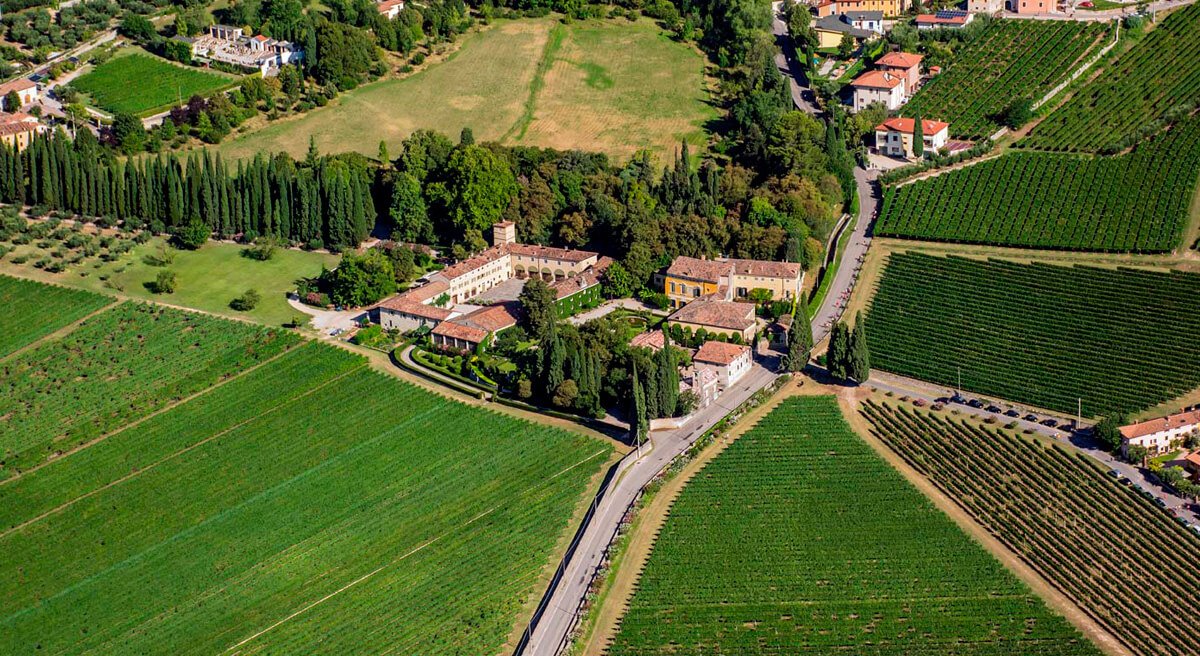
Valpolicella From the Inside Out
Sant'Ambrogio di Valpolicella sits in the Classico zone, the original, tightly bounded western strip of hills where Corvina, Rondinella, and Molinara have been cultivated for centuries before the appellation expanded outward into the broader plains. The drive in from Verona takes you through a landscape that shifts quickly: flat agricultural land gives way to tiered vineyards on volcanic and alluvial soils, with pergola-trained vines catching the specific combination of Lake Garda's moderating air and the Lessini mountains' altitude influence. This is the corridor where Valpolicella's most concentrated expressions originate, and where the appassimento technique, the slow drying of harvested grapes in open lofts called fruttai, acquires its clearest logic. The grapes dry here not because producers chose drama, but because the hillside ventilation makes controlled desiccation possible without rot.
Masi Agricola S.p.A., based at Via Monteleone 26 in Sant'Ambrogio, has accumulated a Pearl 2 Star Prestige rating from EP Club in 2025, placing it within the upper tier of Veneto producers assessed under that framework. The rating positions Masi alongside a relatively small group of Italian estates whose combination of appellation rootedness and documented production quality meets the Prestige threshold.
Terroir as Argument
Valpolicella Classico's soils read like a geologist's argument for complexity: calcareous clay in the valley bottoms, basalt and tufa on the mid-slopes, and limestone-rich terrain higher up. Each soil type pulls the indigenous varieties in a different direction. Corvina, which typically anchors blends here, expresses brighter red-fruit character on the volcanic basalt and more structured, darker profiles on the limestone. The appassimento process then amplifies whichever base the terroir has established, concentrating sugars and phenolics over roughly 90 to 120 days of drying before fermentation. The result in Amarone is not a single flavor profile but a range that reflects where precisely the fruit came from within the Classico hills.
This is why estate address and vineyard sourcing matter so much in this appellation. Producers operating from within Sant'Ambrogio and the adjacent communes of Fumane, Marano, and San Pietro in Cariano have direct access to the older, more complex vineyard sites. Producers sourcing from the extended Valpolicella DOC zone further east work with different soil compositions and tend to produce wines at different price and quality tiers. Masi's position in Sant'Ambrogio places it geographically inside the argument for typicity.
The broader Italian fine wine context offers useful calibration. Estates like Antinori nel Chianti Classico in Tuscany and Biondi-Santi Tenuta Greppo in Montalcino occupy comparable positions in their respective appellations: historically significant addresses within tightly defined classic zones, where terroir claims are substantiated by decades of documented viticulture. In Piedmont, Aldo Conterno in Monforte d'Alba and Bruno Giacosa in Neive function similarly for Barolo and Barbaresco: the estate address itself carries information about the wine's likely character before a bottle is opened. Masi holds that kind of locational authority within Valpolicella.
The Appassimento Tradition and Its Stakes
Appassimento is not unique to Valpolicella, but nowhere else does it define an appellation's identity as completely. Amarone della Valpolicella DOCG requires a minimum drying period and mandates that grapes reach specific sugar concentrations before pressing. The technique predates the DOCG designation by centuries, and the Classico producers in Sant'Ambrogio and its neighboring communes have the longest documented relationship with it. The risk in appassimento is real: humidity fluctuations can trigger botrytis, which collapses the drying fruit rather than concentrating it. The margin between great Amarone and failed Amarone is narrower than it appears from the outside, and the Classico hillside ventilation that mitigates that risk is a genuine terroir advantage, not a marketing claim.
Ripasso, the second major wine type in the appellation, adds another layer. The technique involves referementing Valpolicella DOC wine over the leftover skins from Amarone production, picking up additional structure, color, and dried-fruit character. It sits in price and weight between basic Valpolicella and Amarone, and it has grown substantially as a commercial category. The quality tier of Ripasso produced by a given estate correlates closely with the quality of its Amarone skins, which in turn reflects vineyard sourcing. This chain of dependency makes estate integrity a more visible factor in Valpolicella than in appellations where techniques are less interlinked.
Visiting the Classico Zone
Sant'Ambrogio di Valpolicella is approximately 20 kilometers northwest of Verona, accessible by car via the SS12 through the Adige valley or via the SP4 through the hills. Public transport connections are limited, and the practical reality for most visitors is that a car is necessary to reach individual estates and move between the Classico communes. Verona serves as the natural base: it has direct rail connections to Milan, Venice, and beyond, and a good range of accommodation at multiple price points. For those spending time specifically in the wine zone, our full Sant'Ambrogio di Valpolicella hotels guide covers local options, while our Sant'Ambrogio di Valpolicella restaurants guide maps the food scene in the area.
The harvest and drying season, roughly September through December, is the period when the appassimento process is most visible and when the air around the fruttai carries the concentrated scent of drying Corvina. Spring tastings, typically April and May, offer access to newly released Valpolicella and Ripasso vintages alongside older Amarone releases from producers using extended cellaring before release. Both windows offer something distinct, and the choice depends on whether a visitor wants to observe production or focus on finished wines.
For a broader map of the region's producers and what distinguishes them by zone, our full Sant'Ambrogio di Valpolicella wineries guide provides comparative context. The Sant'Ambrogio di Valpolicella experiences guide covers structured tastings, vineyard walks, and other formats available in the zone. Those also spending time in the nearby towns can use our bars guide to find appropriate places for informal wine drinking between estate visits.
For comparison across northern Italian regions, Ca' del Bosco in Erbusco represents the Franciacorta benchmark in Lombardy, and Castello di Volpaia in Radda in Chianti occupies a comparable hillside-estate position in Tuscany. Both sit within their respective Classico equivalents, reinforcing the pattern that geographic specificity within an appellation correlates with production seriousness at the prestige tier. Internationally, Abadía Retuerta in Sardón de Duero and Aberlour in Aberlour illustrate how estate identity anchored in a specific place functions across different wine and spirits categories, while Campari in Milan represents the northern Italian drinks tradition from a different angle entirely.
Frequently Asked Questions
- What's the general vibe of Masi?
- Masi operates from Sant'Ambrogio di Valpolicella within the Classico zone, the historically significant core of the appellation. The setting is agricultural and hill-town in character rather than resort-styled, consistent with how the serious Veneto producers present themselves. The EP Club Pearl 2 Star Prestige rating (2025) places it within a tier where production seriousness and appellation identity take precedence over visitor spectacle.
- What's the must-try wine at Masi?
- Amarone della Valpolicella is the definitive expression of this appellation and the wine type most directly shaped by the appassimento process that defines the Classico zone's identity. Any producer holding a Prestige-tier rating in the Veneto context will have Amarone as its reference wine. Specific current releases and tasting notes are leading confirmed directly with the estate before visiting.
- What's the standout thing about Masi?
- The combination of geographic address within Sant'Ambrogio, one of the Classico zone's core communes, and a Pearl 2 Star Prestige rating from EP Club in 2025 places Masi within a small group of Veneto producers where terroir specificity and documented quality converge. In an appellation where location within the Classico boundary carries meaningful production implications, that address is substantive information, not background detail.
- How hard is it to get in to Masi?
- Specific booking requirements, visiting formats, and availability windows are not confirmed in current data. For Prestige-rated estates in the Veneto, contacting the winery directly in advance is the standard approach, particularly during harvest season (September to December) and spring tasting periods when demand from trade and serious collectors is highest. The estate's website should be the first point of contact for current visit arrangements.
- Why does Masi's location within the Classico zone matter for the wines it produces?
- The Valpolicella Classico boundary defines which producers have direct access to the original hillside vineyard sites in communes including Sant'Ambrogio, Fumane, and Marano. These sites carry the specific soil compositions and ventilation conditions that make controlled appassimento most reliable. Masi, rated Pearl 2 Star Prestige by EP Club in 2025 and based at Via Monteleone 26 in Sant'Ambrogio, operates from within that boundary, meaning its sourcing access to Classico fruit is structural rather than dependent on purchasing arrangements with growers outside the historic zone.
Peer Set Snapshot
These are the closest comparables we have in our database for quick context.
| Venue | Awards | Notes |
|---|---|---|
| Masi | 50 Best Vineyards #83 (2025); Pearl 2 Star Prestige | This venue |
| Masi Agricola S.p.A. | Pearl 4 Star Prestige | |
| Ceretto | 50 Best Vineyards #19 (2025); Pearl 3 Star Prestige | |
| Castello Banfi | 50 Best Vineyards #61 (2025); Pearl 4 Star Prestige | |
| Tenuta Cavalier Pepe | 50 Best Vineyards #81 (2025); Pearl 2 Star Prestige | |
| Azienda Agricola Arianna Occhipinti | 50 Best Vineyards #78 (2025); Pearl 4 Star Prestige |
Access the Cellar?
Our members enjoy exclusive access to private tastings and priority allocations from the world's most sought-after producers.
Get Exclusive Access