Ilegal (Palenque Mal de Amor)

Ilegal (Palenque Mal de Amor) sits along the Carretera Oaxaca-Istmo at km 46.2 in Santiago Matatlán, the municipality that produces more mezcal than any other in Mexico. Awarded a Pearl 2 Star Prestige in 2025, it represents a tier of palenque where production method and agave sourcing are central to the identity of what ends up in the bottle.
 Discover on Pearl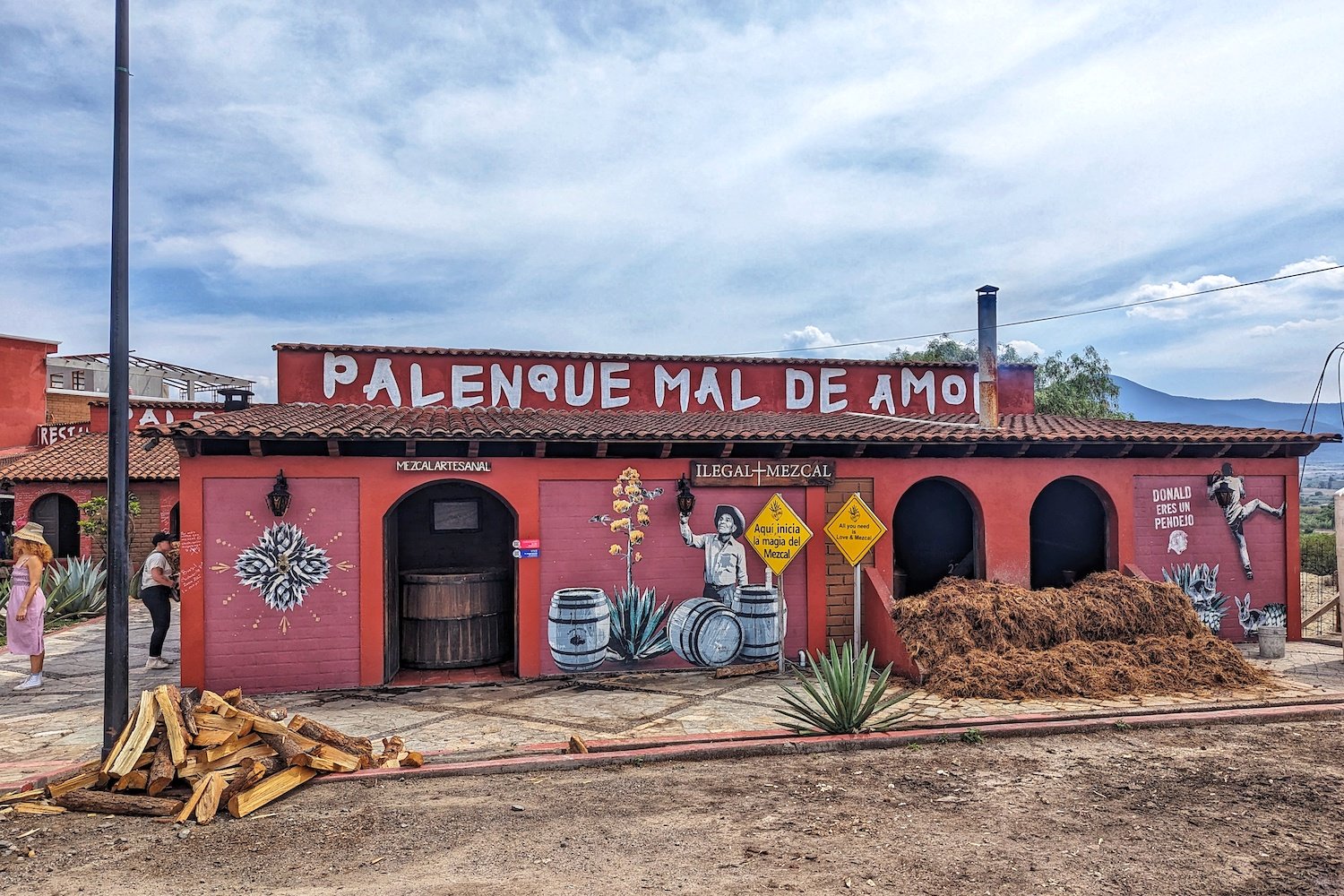
The Road Into Mezcal Country
The drive along the Carretera Oaxaca-Istmo through the Valles Centrales is, in a very literal sense, the approach to the world's most concentrated mezcal-producing corridor. By kilometre 46.2, the agave fields have been thickening for miles — rows of espadin and, less commonly, tobalá and tepeztate scattered across the hillsides in various stages of maturity. The air carries a faint smokiness even before you reach any particular gate. This is Santiago Matatlán, and the smell is the product of dozens of palenques operating in and around the town, each at some stage of roasting, fermenting, or distilling agave. Ilegal (Palenque Mal de Amor) is positioned on that same road, embedded physically and culturally in the production tradition rather than removed from it.
A 2025 Pearl 2 Star Prestige in Context
EP Club's 2025 Pearl 2 Star Prestige designation places Ilegal in a tier that signals consistent quality and serious production standards, not entry-level volume output. Santiago Matatlán has palenques operating at every point on the quality spectrum: informal family operations selling by the litre to passing trucks, mid-tier producers supplying urban mezcalerías in Oaxaca City, and a smaller group receiving formal recognition from programmes that scrutinise sourcing, distillation method, and provenance transparency. The 2 Star Prestige rating positions Ilegal in that last group, alongside peers like Los Danzantes, El Cortijo (palenque), El Rey Zapoteco, Fidencio, and Gracias a Dios, all operating in the same municipality with similar pressures around agave supply, traditional method, and what it means to produce at scale without abandoning craft standards.
Agave as a Long-Cycle Crop — and Why It Changes Everything
The sustainability conversation around mezcal is structurally different from the one surrounding wine, whisky, or even tequila. Agave is not an annual crop. Espadin, the most commercially planted species, takes a minimum of seven years to reach maturity; wild-harvested varieties like tobalá or tepeztate can require two to three decades. This means that production decisions made today in Santiago Matatlán will play out in scarcity or abundance fifteen or twenty years from now. The palenques that have weathered multiple cycles of mezcal's commercial expansion , the international boom of the early 2010s, the cocktail-bar adoption that followed, and the premiumisation wave now driving allocations to European and North American markets , have generally done so by treating agave cultivation as an agricultural commitment, not a commodity procurement exercise.
For a producer with a 2 Star Prestige rating operating along the Carretera Oaxaca-Istmo, that framing is not incidental. Recognition at this level within the EP Club framework correlates with sourcing depth: whether agave is cultivated on dedicated plots, what species diversity looks like across the portfolio, and whether the production model accounts for regeneration timelines rather than just current yield. The name Mal de Amor , roughly, the sickness of love , carries a literary register that signals self-awareness about the relationship between producer and plant. That relationship, in the better palenques of Santiago Matatlán, is understood as one with obligations running in both directions.
Traditional Method in a Mechanising Market
Mezcal production in its traditional form is one of the least industrialised distillation processes still operating at commercial scale anywhere in Mexico. Agave hearts (piñas) are roasted in earthen pits over wood and stone, a process that takes several days and generates the smoke character the spirit is known for. Fermentation typically happens in open-air wooden vats using ambient wild yeasts , no added cultures, no temperature-controlled tanks. Distillation is conducted in clay or copper pot stills, often in two passes. The entire sequence is labour-intensive, weather-dependent, and resistant to the kind of standardisation that has transformed tequila production over the past forty years.
This is the production tradition that Los Danzantes and others in the Matatlán corridor have worked to document and formalise, in part because traditional mezcal holds a Denomination of Origin and because the NOM certification system distinguishes between artisanal, ancestral, and industrial production methods. A palenque operating at the prestige tier is, almost by definition, working within artisanal or ancestral classification , which means the earthen pit, the open fermentation, the pot still, and the wood fire are not affectations but production requirements that carry legal and commercial weight.
Santiago Matatlán as a Production District
The municipality's claim to being the mezcal capital of the world is substantiated by output volume, density of producers, and the concentration of agave cultivation in the surrounding valley. The Tlacolula sub-valley, where Santiago Matatlán sits, has soil and elevation conditions that support a wider agave species range than many other production zones within Oaxaca. This has historically allowed producers here to offer a broader portfolio than palenques in more climatically constrained areas. The comparison extends beyond Oaxaca: mezcal production zones in Guerrero, Michoacán, and San Luis Potosí each produce spirits under the same denomination but with distinct terroir signatures. Within Oaxaca itself, the Cañada and Sierra Juárez regions offer further variation. Santiago Matatlán is not the only place making serious mezcal, but it remains the administrative and commercial centre of the category in a way that shapes pricing, distribution, and how international buyers approach the market.
For context on how Santiago Matatlán fits into the broader Mexican spirits geography, it is worth noting that the tequila corridor , anchored by producers like Jose Cuervo (La Rojeña) in Tequila and La Primavera (Don Julio) in Atotonilco El Alto , operates at an entirely different industrial scale and with blue agave monoculture as its structural base. The mezcal model, particularly at the artisanal tier, is essentially the opposite: multi-species, small-batch, and tied to a specific community's agricultural calendar. Cooperative models such as Banhez (UPADEC cooperative) in San Miguel Ejutla represent another structural approach within the broader agave spirits category, using collective ownership to move through the same agave sourcing pressures that individual palenques face alone.
Planning a Visit
Ilegal (Palenque Mal de Amor) is located at Carretera Oaxaca-Istmo, km 46.2, in Santiago Matatlán, Oaxaca. The road from Oaxaca City runs southeast through Tlacolula and reaches Santiago Matatlán in approximately one hour by car, making it accessible as a day visit from the city. Most serious palenque visits in the region happen as part of a structured tour or by appointment; arriving without contact is possible along this road but reduces the likelihood of a guided production experience. Booking logistics are leading confirmed before departure from Oaxaca City. No phone or website data is currently held in the EP Club database for this address. For planning across the wider area, see our full Santiago Matatlán wineries guide, our full Santiago Matatlán restaurants guide, our full Santiago Matatlán hotels guide, our full Santiago Matatlán bars guide, and our full Santiago Matatlán experiences guide. For comparison with distillery visits in other categories and countries, Abadía Retuerta in Sardón de Duero and Aberlour in Aberlour illustrate how single-producer visits operate in European wine and Scotch whisky contexts , structured, appointment-led, and centred on production transparency.
Frequently Asked Questions
- What is Ilegal (Palenque Mal de Amor) famous for?
- Ilegal operates within Santiago Matatlán's artisanal mezcal tradition, a production zone that holds the highest density of mezcal producers in Mexico. The palenque received a Pearl 2 Star Prestige award from EP Club in 2025, placing it in the quality tier associated with traditional production methods, agave sourcing rigour, and small-batch output. No specific winemaker or production lead is listed in the current EP Club database record.
- What makes Ilegal (Palenque Mal de Amor) worth visiting?
- The 2025 Pearl 2 Star Prestige rating positions this palenque among the recognised producers in Santiago Matatlán, a municipality that defines the commercial and cultural centre of Oaxacan mezcal. For visitors travelling from Oaxaca City, the Carretera Oaxaca-Istmo route passes through some of the most agave-dense agricultural land in the valley, and the palenque sits at km 46.2 on that road. Price data is not currently available in the EP Club database.
- What is the leading way to book Ilegal (Palenque Mal de Amor)?
- No phone number or website is currently listed in the EP Club database for this address. The most reliable approach is to arrange contact through Oaxaca City-based mezcal tour operators or local guides who maintain working relationships with palenques along the Carretera Oaxaca-Istmo. Given its 2025 Pearl 2 Star Prestige designation, the producer may be represented at Oaxaca City mezcalerías, which can sometimes assist with direct introductions.
- Who tends to enjoy visiting Ilegal (Palenque Mal de Amor) most?
- If you are interested in agave spirits production at the artisanal level and want to understand the sourcing and distillation decisions that separate palenques in the recognised tier from volume producers, this address in Santiago Matatlán will be relevant. The 2 Star Prestige rating signals a production operation that rewards the attention of visitors who come with questions about method, species selection, and harvest timing rather than those looking for a retail tasting room experience.
- How does Ilegal (Palenque Mal de Amor) relate to the broader agave sustainability conversation in Oaxaca?
- Santiago Matatlán's recognised producers, including those at the Pearl 2 Star Prestige tier, operate under pressure from accelerating international demand for artisanal mezcal, which has raised questions about agave replenishment timelines across the valley. A palenque producing at the prestige level in this context is understood, within the EP Club framework, as one that engages seriously with species diversity and cultivation cycles rather than relying entirely on wild harvest or spot-market agave sourcing. The 2025 award signals that Ilegal belongs to that more considered production tier within the Oaxacan mezcal category.
Peer Set Snapshot
These are the closest comparables we have in our database for quick context.
| Venue | Awards | Notes |
|---|---|---|
| Ilegal (Palenque Mal de Amor) | Pearl 2 Star Prestige | This venue |
| El Cortijo (palenque) | Pearl 2 Star Prestige | |
| El Rey Zapoteco | Pearl 2 Star Prestige | |
| Fidencio | Pearl 2 Star Prestige | |
| Gracias a Dios | Pearl 2 Star Prestige | |
| Los Danzantes | Pearl 3 Star Prestige |
Access the Cellar?
Our members enjoy exclusive access to private tastings and priority allocations from the world's most sought-after producers.
Get Exclusive Access