
Gimli Distillery sits on the western shore of Lake Winnipeg in Manitoba, operating from a site with deep roots in Canadian whisky production and carrying a Pearl 2 Star Prestige rating for 2025. The distillery draws on the particular climate and water conditions of the Interlake region, placing it within a small comparable set of Canadian producers working outside the country's major distilling corridors.
Pearl is the En Primeur Club membership app — saves, bookings, and concierge access live there. Same editors, same standards.
- Address
- 19107 Seagram Rd, Gimli, Manitoba, R0C
- Phone
- (204) 642-5123
 Saves & bookings on Pearl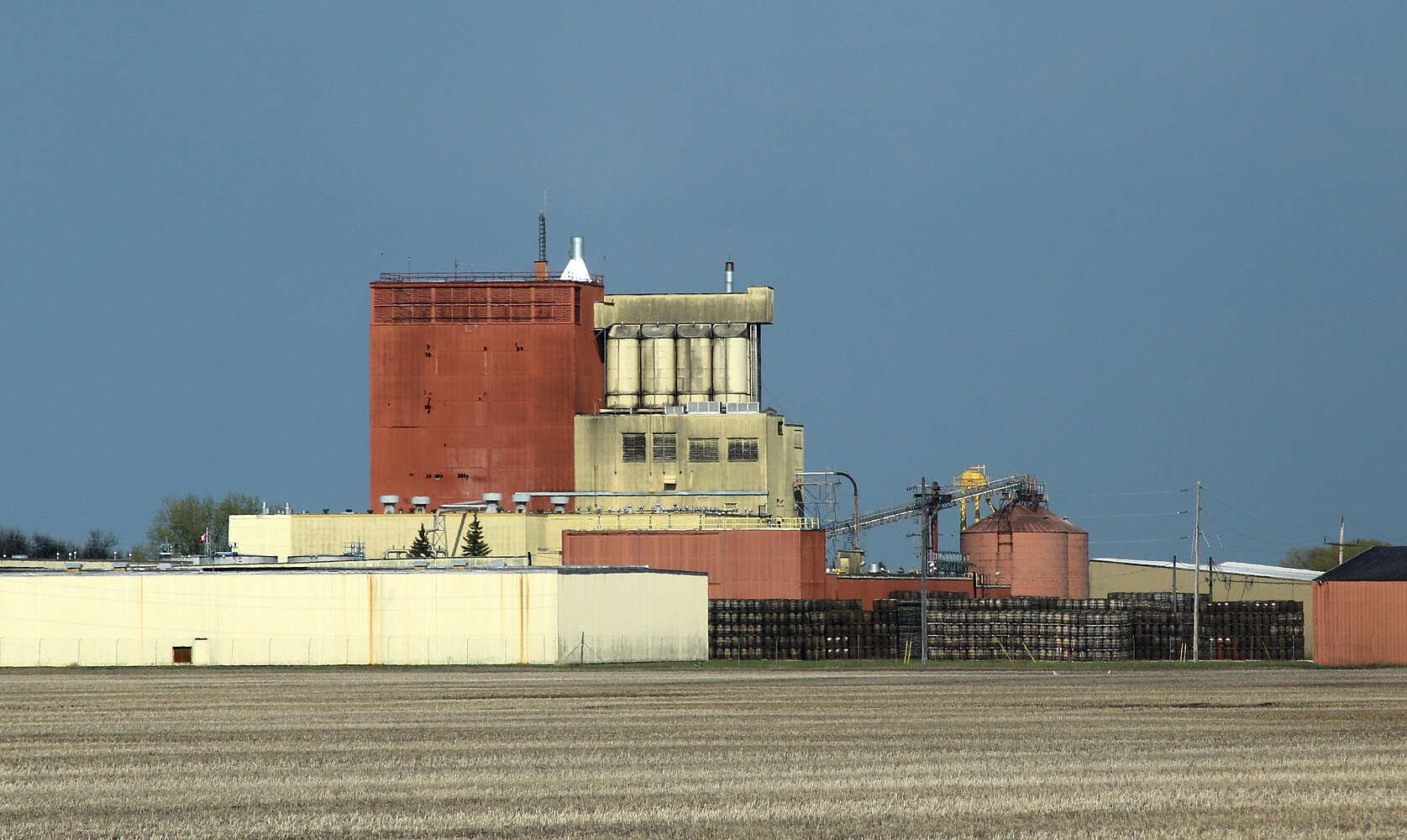
Where the Interlake Meets the Still
Gimli Distillery is a winery in Gimli, Manitoba, at 19107 Seagram Rd, with a 2025 Pearl 2 Star Prestige and a price tier of 3. The western shore of Lake Winnipeg does not announce itself with drama. The drive into Gimli along Manitoba's Interlake region is flat, wide, and largely agricultural, the kind of landscape that strips away pretension and gets to the point. Arriving at 19107 Seagram Rd, you are already reading the history in the address: this site carries the DNA of Canadian whisky's industrial era, when the Seagram corporation was one of the most consequential spirits producers on the continent. That context matters. Gimli Distillery is not a craft-scale newcomer working out of a converted barn; it is a working industrial facility with historical weight, operating in a town better known internationally for its Icelandic heritage festival than for its contributions to the whisky shelf.
The physical environment here is shaped entirely by the lake. Lake Winnipeg is one of the largest freshwater lakes in the world by surface area, and its presence defines the microclimate of the Interlake strip in ways that have direct implications for maturation. The temperature swings between Manitoba summers and winters are severe by any standard, which means barrels here cycle through expansion and contraction at a rate that accelerates interaction between spirit and wood. That is not a marketing claim; it is a function of the climate, and it produces whisky that behaves differently from spirits matured in more temperate conditions. For readers interested in how Canadian geography shapes what ends up in the glass, Gimli offers one of the more legible case studies in the country.
Canadian Whisky's Geographic Spread
Canada's major distilleries do not cluster in one region the way, say, Scotland's Speyside producers do. The country's whisky identity has always been tied to grain-growing corridors and water access rather than to a single appellation. Black Velvet Distillery in Lethbridge operates in Alberta's foothills, drawing on Rocky Mountain water. Alberta Distillers in Calgary has built a reputation around single-grain production from prairie rye. Further east, Canadian Mist Distillery in Collingwood works with Georgian Bay water, and Forty Creek Distillery in Grimsby has carved out a more craft-oriented position in Ontario's Niagara Escarpment. Gimli sits in a different node entirely: the central Canadian prairies, with access to Lake Winnipeg water and the specific maturation conditions that an extreme continental climate produces. Each of these sites produces whisky that reflects its geography, and Gimli's product is among the more climatically distinct in the comparable set.
Beyond Canada, the conversation about terroir in distilling is also playing out internationally. Shelter Point Distillery on Vancouver Island is building a case for maritime Pacific influence on single malt. In Tasmania, Sullivan's Cove in Cambridge has demonstrated that extreme southern hemisphere conditions can produce whisky that competes with Scotch benchmarks. Even wine regions are grappling with similar questions: Mission Hill Family Estate in West Kelowna and Inniskillin in Niagara Falls have both made arguments for Okanagan and Niagara terroir respectively. The principle applies across categories: place shapes product, and producers in climatically extreme locations increasingly make that argument as a point of differentiation rather than an obstacle to overcome.
The 2025 Pearl 2 Star Prestige Rating
Gimli Distillery carries a Pearl 2 Star Prestige rating for 2025, which places it within the upper tier of the EP Club recognition framework. In the context of Canadian whisky producers, this positions the distillery alongside facilities that have demonstrated consistent quality rather than occasional excellence. The rating is a trust signal for readers planning a visit or a purchase decision, and it functions as a peer-set marker: the distillery belongs in a conversation with producers who have earned formal recognition, not simply those with good regional reputations.
For comparison, other internationally recognised producers in the spirits and wine space that EP Club tracks include Aberlour in Scotland's Speyside, which operates at the premium end of single malt production, and Accendo Cellars in St. Helena, where Napa Cabernet commands allocation-list pricing. Gimli's rating does not suggest equivalence with those categories, but it does confirm that the distillery is operating at a level where formal assessment produces a defensible result rather than a courtesy acknowledgement.
Visiting Gimli: Context and Planning
Gimli the town sits roughly 75 kilometres north of Winnipeg on Highway 9, making it accessible as a day trip from the city but remote enough that most visitors plan with some deliberateness. The distillery address at 19107 Seagram Rd is industrial in character rather than tourism-oriented, which shapes expectations appropriately. This is not a site where a manicured visitor centre and curated tasting room are the primary draw. The draw is the facility itself, its history, and what it produces within a specific geographic and climatic context.
The broader Gimli area rewards a longer stay: the town's Icelandic heritage is genuine rather than decorative, the lake shore is accessible, and the summer months bring the Islendingadagurinn festival, which has run annually for over a century and draws a dedicated crowd. Visiting outside festival dates typically means quieter conditions and easier access to the surrounding area.
For readers building a broader Manitoba or Prairie whisky itinerary, Gimli functions as the geographically distinctive anchor. Winnipeg's food and drink scene has developed considerably over the past decade and merits its own exploration.
What to Taste and How to Approach It
Specific tasting room programming should be confirmed on-site. What can be stated with confidence is that whisky produced under Manitoba's continental climate will typically show a different maturation character than equivalent age-statement products from more temperate Canadian regions. The barrel interaction is more aggressive, which tends to produce spirit that carries more wood-driven character at younger ages. Whether that manifests as vanilla concentration, spice extraction, or tannin presence depends on the specific cooperage and entry proof choices made at filling, details that are explored directly with staff.
For readers interested in comparing Canadian whisky styles across the spectrum, the distillery's position in the Seagram lineage gives it a particular reference point. Canadian whisky has historically been a blended category, and the Gimli site has been part of that tradition. How the current operation interprets that heritage is a question worth asking on arrival. Producers at Crowded Barrel Whiskey Co. in Austin and internationally at Achaia Clauss in Patras both illustrate how facilities with long institutional histories move through the tension between heritage production and contemporary market expectations. Gimli operates within that same tension, which makes it more interesting than a purely modern startup would be.
For those cross-referencing against wine-centric producers in the EP Club network, Naked Mountain Winery and Vineyard in Markham and Shadowfax Wines in Victoria both offer useful contrasts in how different New World producers frame place-driven production narratives, even though the category gap between wine and whisky is significant.
Tone and Format
Gimli Distillery reads as casual rather than formal. The industrial site, the town's working character, and the historical Seagram context all point toward a producer that earns its recognition through output rather than ceremony. Visitors arriving with boutique winery expectations will need to recalibrate, since appointments are required. Visitors arriving curious about how a continental Canadian climate shapes spirit character, and what the Seagram lineage means for a facility still operating in 2025 with a Pearl 2 Star Prestige rating, will find the trip worth making.
Side-by-Side Snapshot
Comparable venues nearby, for context on price, style, and recognition.
| Venue | Cuisine | Price | Notes |
|---|---|---|---|
| Gimli DistilleryThis venue — the venue you are viewing | rye, corn | $$$ | |
| Revolution Spirits | Winery | , | Austin |
| Tito’s Handmade Vodka (Distillery) | Winery | , | Austin |
| Naked Mountain Winery & Vineyard | Winery | , | Markham |
| Shadowfax Wines | Winery | , | Victoria |
| Crowded Barrel Whiskey Co. | Winery | , | Austin |
Continue exploring
More in Gimli
Bars in Gimli
Browse all →
At a Glance
- Industrial
- Iconic
- Scenic
- Group Outing
- Wine Education
- Corporate Event
- Barrel Room
- Estate Grounds
- Historic Building
- Sustainable
- Waterfront
Industrial and awe-inspiring with massive fermentation tanks, sprawling warehouses, and steam billowing across the property overlooking Lake Winnipeg.