
In the Trentino valley south of Trento, Distilleria Marzadro has built a reputation around grappa production rooted in the Alpine terroir of the Adige corridor. The distillery earned a Pearl 3 Star Prestige award in 2025, placing it among Italy's recognised spirits producers. For visitors exploring the region's craft traditions, Nogaredo offers an alternative lens on how northern Italian agriculture translates into the glass.
 Discover on Pearl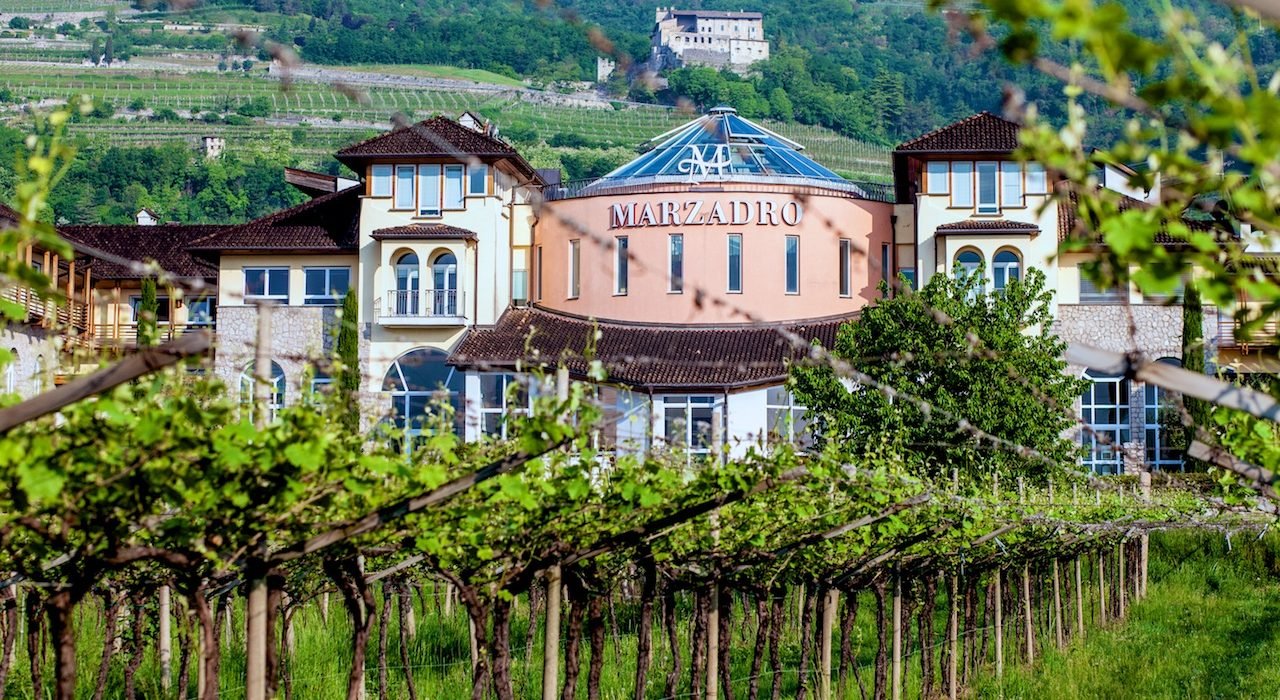
Where the Alps Meet the Still: Grappa Country in the Adige Valley
The drive south from Trento along the Adige river corridor tells you something important before you arrive anywhere. The valley narrows, the vineyards climb the slopes at angles that would seem impractical anywhere outside the Alps, and the agriculture shifts from the tourist-facing wine routes of the north toward something quieter and more productive. Nogaredo sits in this middle stretch, a working agricultural comune in Trentino where the distinction between wine and spirits production has always been practical rather than philosophical. Grapes grow here not just for wine but as the raw material for distillation, and Distilleria Marzadro, located on Via per Brancolino, operates squarely within that tradition.
Italy's grappa-producing regions cluster in the northeast, with Trentino alongside Friuli and the Veneto forming the geographic core of the category. The logic is partly climatic: the Alpine terroir produces grape varieties, particularly Nosiola, Teroldego, and Marzemino in Trentino, whose pomace carries aromatic compounds that reward careful distillation. Where Cognac and Armagnac begin with wine, grappa begins with what remains after pressing, which means the distiller's relationship with raw material is fundamentally different. Quality depends on how quickly pomace reaches the still after pressing, how well it has been kept, and what distillation method is applied. These are agricultural and technical decisions as much as aesthetic ones, and they shape the category's hierarchy in ways that parallel, say, the relationship between a Barolo producer's decisions in the vineyard and what ends up in the bottle from estates like Aldo Conterno in Monforte d'Alba or Bruno Giacosa in Neive.
The 2025 Pearl 3 Star Prestige: What the Award Signals
Distilleria Marzadro received a Pearl 3 Star Prestige designation in 2025. Within the Italian spirits evaluation framework, a three-star prestige classification at Pearl level represents recognition of consistent quality across production, not a single exceptional release. It is the kind of credential that positions a producer within a peer set of serious craft distilleries rather than industrial grappa houses. For context, Italian spirits recognition at this level functions similarly to how Michelin or Gambero Rosso operate in food and wine: the award signals a repeatable standard rather than a one-off achievement.
That consistency matters in grappa more than in some other categories. Because pomace quality varies vintage to vintage depending on the harvest, and because single-variety grappas expose the distiller's decisions with less buffer than a blended product, maintaining a recognisable quality standard across years requires deliberate process control. The 2025 award, coming in a period when Italian craft spirits have attracted increasing international attention, places Marzadro in a tier that serious collectors and spirits buyers track. Comparable recognition in adjacent Italian traditions would be the kind of sustained critical attention that producers like Ca' del Bosco in Erbusco have built in Franciacorta, or the long-form reputation that Biondi-Santi Tenuta Greppo in Montalcino maintains for Brunello.
Trentino's Distilling Tradition in Context
Grappa as a category carries more complexity than its reputation in northern European markets sometimes suggests. Outside Italy, it is often reduced to the fiery digestivo poured from unlabelled bottles at the end of a trattoria meal. Inside Italy, particularly in Trentino and Friuli, the conversation is considerably more layered. Single-variety grappas made from named Trentino cultivars carry geographic and varietal identity in a way that rhymes with wine's appellation logic. Aged expressions, rested in small barrique or large casks, develop a different structural profile than young, unaged grappas and sit in a different part of the market.
The Trentino region occupies a specific position within this landscape. It is distinct from Friuli in varietal focus and from the Veneto in scale. The mountain-valley geography imposes lower yields, and the region's agricultural identity is tied to a smaller set of native varieties. Producers here, including Marzadro, work within those constraints and in doing so produce spirits with a regional character that serious buyers can distinguish from generic Italian grappa. That specificity is part of what the Pearl 3 Star Prestige award appears to recognise.
For comparison, the relationship between place and spirit in Trentino grappa parallels what regional identity means for producers like Antinori nel Chianti Classico in Tuscany or Castello di Volpaia in Radda in Chianti. The place is not merely a backdrop; it is an argument. In spirits, that argument is made through raw material sourcing, distillation method, and aging decisions rather than through viticulture alone, but the logic is structurally similar.
Planning a Visit: What to Expect in Nogaredo
Nogaredo is a small comune, and visiting Distilleria Marzadro requires some advance planning. The distillery is located at Via per Brancolino, 10, accessible by road from Trento, which sits approximately fifteen kilometres to the north. Trento itself connects by rail to Verona and Bolzano on the main Brenner line, making it a practical base for visitors arriving without a car. Rovereto, the nearest larger town to Nogaredo, offers additional accommodation options and connects the area to the broader cultural circuit of southern Trentino.
Visitors to the area should approach Nogaredo as part of a wider Trentino itinerary rather than as a standalone destination. The valley's wine producers, walking routes through the Adige corridor, and the cultural resources of Trento and Rovereto all reward time in the region. For those building a spirits-focused trip, pairing a distillery visit with exploration of the wine estates that supply the pomace gives context to what ends up in the bottle. Our full Nogaredo wineries guide covers the regional producers in more detail, and our full Nogaredo restaurants guide maps the local dining options worth building a meal around.
Hours and booking arrangements for distillery visits should be confirmed directly before travelling, as production facilities in Italy frequently operate on appointment schedules that differ from standard hospitality hours. Those staying in the region can also consult our full Nogaredo hotels guide and full Nogaredo bars guide for accommodation and evening options, and our full Nogaredo experiences guide for broader activities in the area.
Italian Spirits Producers in a Wider Frame
Grappa sits within a broader Italian spirits conversation that increasingly includes aged categories, botanical liqueurs, and regional specialties drawing international attention. The recognition that Marzadro has received in 2025 arrives at a moment when that conversation has widened considerably. Premium Italian spirits now circulate in the same critical channels as wine, with dedicated coverage in trade publications and increasing representation at international spirits competitions.
Within that frame, a Pearl 3 Star Prestige designation from a Trentino distillery carries weight not just domestically but as a signal to international buyers who track Italian craft production. The category's overlap with wine culture, specifically the dependence on named Italian grape varieties and regional terroir, gives it credibility with an audience already fluent in the logic of appellation and provenance. For those familiar with producers like Ceretto in Alba or Campari in Milan, Marzadro's position in the Trentino craft tier represents a related but distinct tradition worth understanding on its own terms. Those interested in how distilling traditions intersect with wine culture in other European contexts can also look at Aberlour in Aberlour or Abadía Retuerta in Sardón de Duero for comparison points across different producing traditions.
Frequently Asked Questions
Peer Set Snapshot
These are the closest comparables we have in our database for quick context.
| Venue | Awards | Notes |
|---|---|---|
| Distilleria Marzadro | Pearl 3 Star Prestige | This venue |
| Aldo Conterno | Pearl 3 Star Prestige | |
| Allegrini | Pearl 2 Star Prestige | |
| Altesino | Pearl 2 Star Prestige | |
| Amarischia | Pearl 1 Star Prestige | |
| Amaro dell'Etna | Pearl 2 Star Prestige |
Access the Cellar?
Our members enjoy exclusive access to private tastings and priority allocations from the world's most sought-after producers.
Get Exclusive Access