d'Arenberg


World's 50 Best #32 · Falstaff Winery - Listed
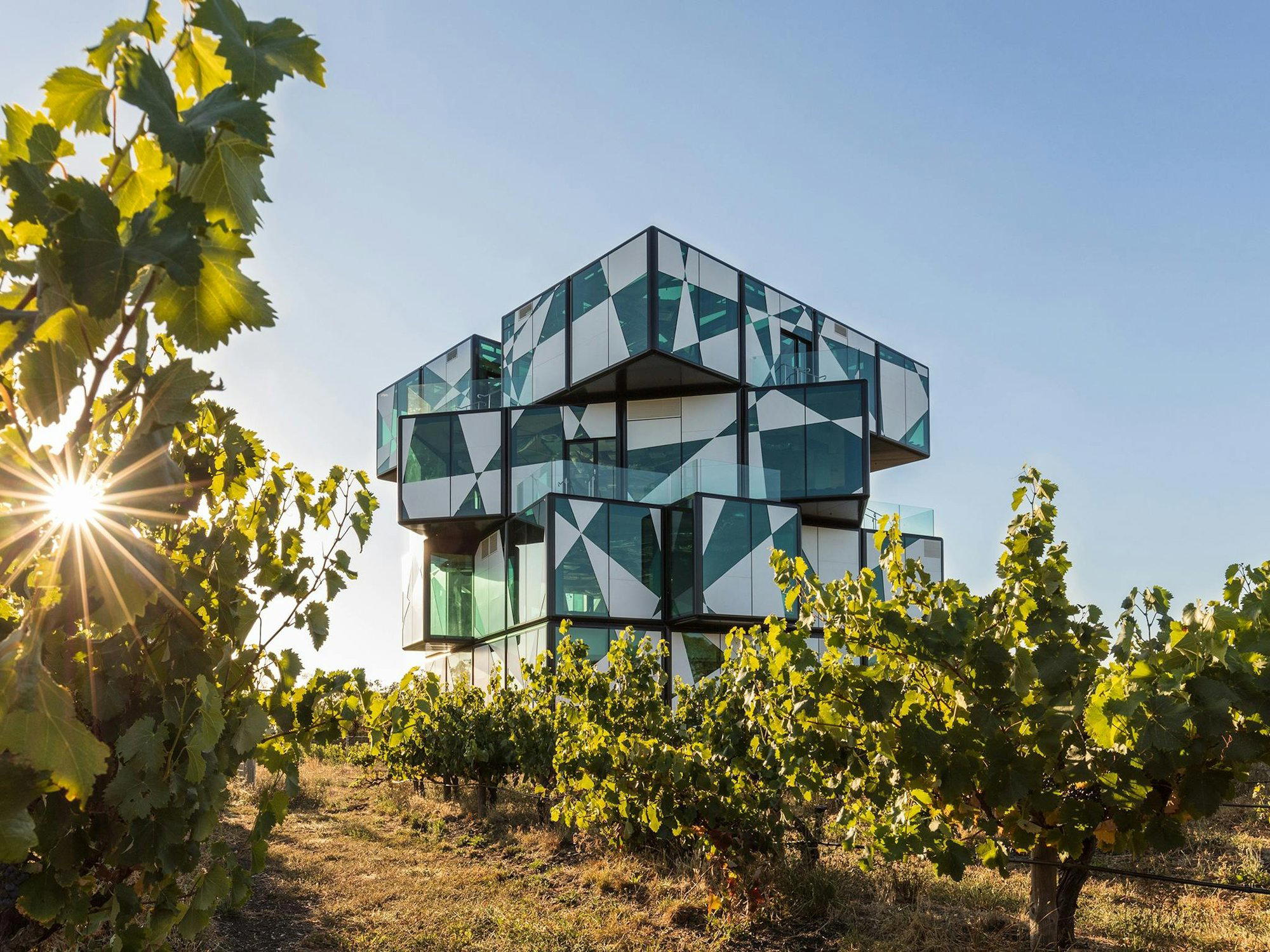
d'Arenberg sits at Osborn Road in McLaren Vale, where its Rubik's Cube-inspired architecture announces a winery that operates at the intersection of serious viticulture and deliberate spectacle. Approach the building and you'll hear weather converted into audio wavelengths — a sensory prologue that sets the register for everything that follows.

Pearl is the En Primeur Club membership app — saves, bookings, and concierge access live there. Same editors, same standards.
- Address
- Osborn Rd, McLaren Vale SA 5171
- Phone
- +61 8 8329 4888
- Website
- darenberg.com.au
- Directions
- Get directions
Where McLaren Vale Gets Strange, and Serious
McLaren Vale's wine identity has always rested on two pillars: iron-rich soils that push Shiraz into a darker, more structured register than Barossa, and a producer community willing to experiment at the margins. Most visitors arrive expecting cellar doors, barrel halls, and views across the Willunga escarpment. d'Arenberg, on Osborn Road, delivers the views — but it arrives at them via a building that looks, without exaggeration, like a solved Rubik's Cube balanced on a hillside. Before you reach the entrance, you hear something unusual: the sound of weather, translated into audio wavelengths and broadcast from speakers around the structure. That decision — to turn meteorological data into ambient sound, signals the operating philosophy of the whole property. This is a winery where the sensory experience is constructed with the same deliberateness applied to fermentation.
That positioning matters in the McLaren Vale context. The region sits roughly 40 minutes south of Adelaide, close enough for day-tripping but far enough that visitors make a deliberate choice to come here. Producers like Hardys (Tintara), Bondar Wines, and Kay Brothers each occupy distinct points on the spectrum between heritage gravity and contemporary ambition. d'Arenberg occupies its own coordinate: a property where the architecture, the audio installation, and the wine program are all part of a single, coherent statement about what a McLaren Vale winery experience can be.
The Cube as Context
Unusual architecture at wineries has become a category in itself across Australia's wine regions. Some projects lean into tourism infrastructure, restaurants, galleries, event spaces layered onto production facilities. Others use design as a direct expression of winemaking philosophy. d'Arenberg's cube building sits at the more conceptually ambitious end of that spectrum. The Rubik's Cube reference is not arbitrary: the building's form, with its irregular grid of glass and steel, evokes puzzle and possibility in equal measure. Inside, multiple levels house restaurant dining, a surrealist art installation, and tasting spaces that look out over old vine blocks stretching toward Gulf St Vincent.
For the visitor, this means the property functions at several registers simultaneously. You can arrive for a tasting, spend an hour in the art spaces, take lunch with wine pairings, and leave having engaged with something that resists easy categorisation. That density of offering is not common in regional Australian wine tourism, which more typically separates the production experience from hospitality and culture. The integration here is the point.
Elsewhere in McLaren Vale, Dandelion Vineyards and Gemtree Wines represent the region's tighter focus on certified organic and biodynamic viticulture, with cellar door experiences scaled closer to the winery itself. d'Arenberg operates at a different scale and ambition, a destination in the fuller sense of the word, where the building earns its own visit independent of the wines.
The Wines: McLaren Vale Through a Distinctive Lens
McLaren Vale's strength in Shiraz is well-documented, and d'Arenberg has operated within that tradition for decades while consistently pushing at its edges. The region's soils, a patchwork of clay, sand, and ironstone across a relatively compact footprint, produce Shiraz with more tannin grip and savouriness than the fruit-forward profiles typical of warmer inland regions. Grenache, Mourvèdre, and Tempranillo also perform well here, and the cooler gully sites toward the ranges can produce white wine with genuine freshness.
d'Arenberg's wine naming conventions have become part of its identity: titles drawn from family history and local reference, applied across a range that spans entry-level bottles to prestige releases. That breadth is a deliberate strategy in a market where single-tier wineries struggle to maintain relevance across both on-trade and cellar-door sales. That rating confirms what the property's reputation has implied for some time: the wine program sustains the ambition of the architecture around it.
Planning a Visit: What the Property Rewards
Osborn Road sits in the heart of McLaren Vale's production corridor, and d'Arenberg benefits from proximity to the region's other serious producers. A day that includes stops at Bondar Wines and Kay Brothers gives useful contrast: Bondar's precision-focused small-batch approach and Kay Brothers' historical depth both illuminate what makes d'Arenberg's broader, more theatrical program a different kind of proposition.
McLaren Vale's wine season peaks from late summer through to autumn, roughly February to May, when harvest activity adds energy to the region and the light across the Gulf St Vincent on clear afternoons is at its most compelling. Winter visits are quieter, and the cellar door and restaurant remain operational through the cooler months, which can suit visitors who prefer the property without peak-season crowds. The drive from Adelaide takes approximately 40 minutes via the Southern Expressway, and the property is accessible by car rather than requiring a specialist transfer.
For those building a broader South Australian wine itinerary, d'Arenberg pairs naturally with a visit to Bird in Hand in Adelaide Hills, where the cooler elevation produces a contrasting wine style. Those extending south or east might consider Angove Family Winemakers in Renmark for a different register of South Australian viticulture entirely. Our full McLaren Vale restaurants guide covers the region's broader hospitality offering, including dining options beyond the property itself.
For those travelling across Australian wine regions more broadly, the comparison with All Saints Estate in Rutherglen is instructive: both properties use architecture and heritage to anchor a wine tourism experience that extends beyond the tasting room, though the idioms, Rutherglen's Victorian castle versus McLaren Vale's deconstructed puzzle building, reflect very different regional identities. Internationally-minded visitors comparing destination wineries might also look at Accendo Cellars in St. Helena for a Napa equivalent in the prestige-small-production tier, or Aberlour in Aberlour for a sense of how Scottish distillery tourism handles the intersection of production heritage and visitor experience. Closer to home, Archie Rose Distilling Co in Sydney and Blue Pyrenees Estate in Pyrenees represent the range of ways Australian producers are using physical space to tell a production story.
Comparable Spots
Comparable venues nearby, for context on price, style, and recognition.
| Venue | Cuisine | Price | Awards | Notes |
|---|---|---|---|---|
| d'ArenbergThis venue — the venue you are viewing | Shiraz, Grenache | $50–100 | World's 50 Best #32 · Falstaff Winery - Listed | Not listed |
| S.C. Pannell | Grenache, Shiraz | Not listed | Falstaff Winery - Listed | McLaren Vale |
| Oliver's Taranga | Shiraz, Grenache | $20–30 | Not listed | McLaren Vale |
| Rosemount Estate | Winery | Not listed | Not listed | McLaren Vale |
| Gemtree Wines | Shiraz, Chardonnay | Not listed | Not listed | McLaren Vale |
| Yangarra Estate Vineyard | Grenache, Shiraz | $10–20 | Not listed | Blewitt Springs |
Recognition history
Dated appearances from independent guides and award organizations, with the underlying list record or original source where available.
World's 50 Best Vineyards #32
World's 50 Best
Falstaff Winery - Listed
Falstaff
Full recognition history (6 entries)
World's 50 Best Vineyards #17
World's 50 Best
World's 50 Best Vineyards #31
World's 50 Best
World's 50 Best Vineyards #34
World's 50 Best
World's 50 Best Vineyards #29
World's 50 Best
Continue exploring
More in McLaren Vale
Wineries in McLaren Vale
Browse all →
Bars in McLaren Vale
Browse all →
Restaurants in McLaren Vale
Browse all →

Details
- Scenic
- Well Known
- Whimsical
- Sophisticated
- Group Outing
- Wine Education
- Romantic Getaway
- Family
- Special Occasion
- Estate Grounds
- Panoramic View
- Historic Building
- Design Destination
- Private Tasting
- Vineyard Tour
- Organic
- Biodynamic
- Dry Farmed
- Vineyard
- Mountain
- Garden
- Shiraz
- Grenache
- Cabernet Sauvignon
- Chardonnay
- Viognier
- Marsanne
- Pinot Noir
- Sauvignon Blanc
- Mourvèdre
- Tempranillo
- Still Red
- Still White
- Sparkling
- Fortified
- Dessert
- Shared Tasting
- Private Tasting
- Blending Bench Experience
- Degustation With Wine Pairing
- English
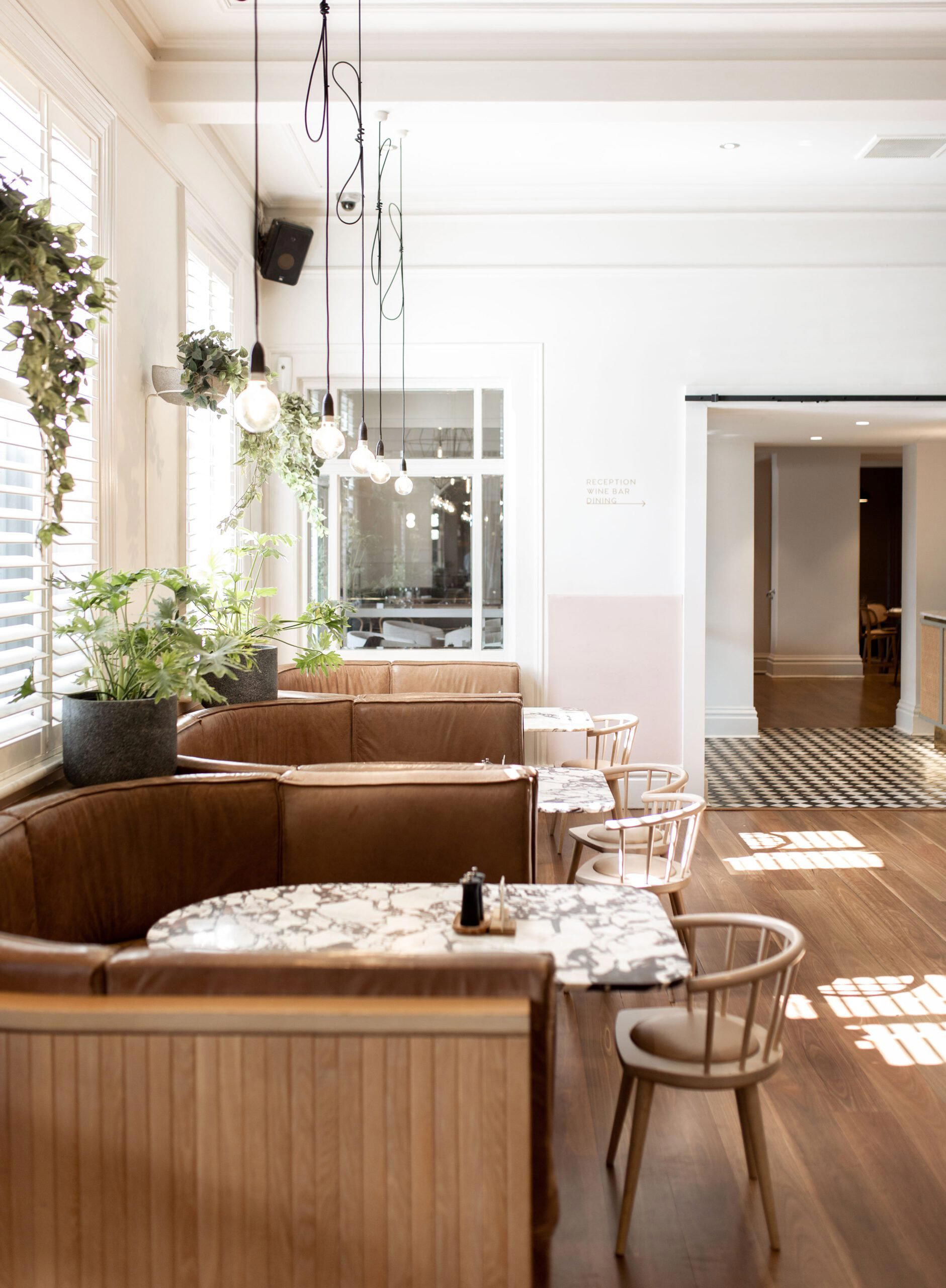
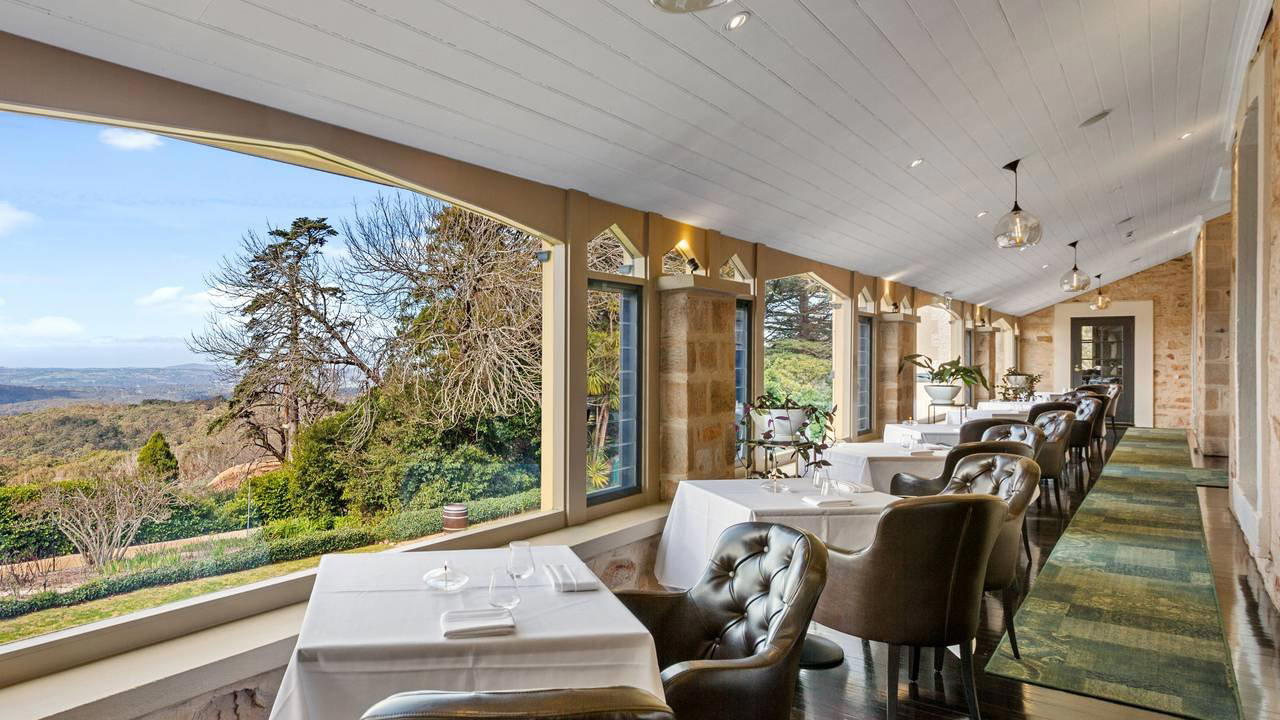
Modern architectural marvel with panoramic views across rolling hills and vineyards; bright, airy tasting spaces with natural light; lively energy from the innovative design contrasted with traditional winemaking heritage.